Introduction
Epoxy flooring is a popular choice for garages, warehouses, factories, and commercial spaces due to its durability, chemical resistance, and sleek finish. However, one critical question often arises: “How thick should epoxy flooring be?”
The thickness of your epoxy floor directly impacts its longevity, load-bearing capacity, and resistance to wear. Too thin, and it may peel or chip. Too thick, and it could crack or become unnecessarily expensive.
This guide will cover:
✔ Recommended epoxy flooring thickness for different applications.
✔ Factors affecting epoxy thickness (traffic, chemicals, surface condition).
✔ Risks of epoxy that’s too thin or too thick.
✔ How to choose the right thickness for your project.
1. How Is Epoxy Flooring Thickness Measured?
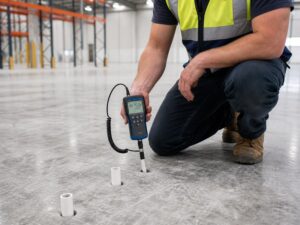
Epoxy flooring thickness is typically measured in mils (1 mil = 0.001 inch) or millimeters (mm).
- Thin epoxy coatings (2-4 mils / 0.05-0.1 mm) – Used for light-duty areas (e.g., residential storage rooms).
- Standard epoxy coatings (8-20 mils / 0.2-0.5 mm) – Ideal for most homes and commercial spaces.
- Thick epoxy systems (20-100+ mils / 0.5-2.5 mm) – Required for industrial floors with heavy machinery.
Why Does Epoxy Thickness Matter?
✅ Durability – Thicker epoxy resists scratches, impacts, and abrasion.
✅ Chemical resistance – Thick coatings better withstand oils, acids, and solvents.
✅ Longevity – Properly applied epoxy lasts 10-20 years, while thin coatings may degrade in 3-5 years.
2. Recommended Epoxy Flooring Thickness for Different Applications
(1) Residential Epoxy Flooring (Garages, Basements, Workshops)
- Recommended thickness: 8-12 mils (0.2-0.3 mm)
- Best for:
- Car parking (sedans, SUVs).
- DIY workspaces.
- Areas needing dustproofing and easy cleaning.
- Budget option: 4-8 mils (less durable but cheaper).
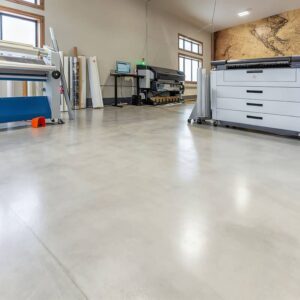
(2) Commercial & Light Industrial Epoxy Flooring (Showrooms, Auto Shops, Restaurants)
- Recommended thickness: 12-20 mils (0.3-0.5 mm)
- Best for:
- Medium foot traffic (retail stores, gyms).
- Auto repair shops (oil & chemical resistance).
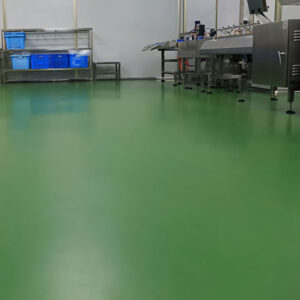
- Food processing areas (water & detergent resistance).
- Add anti-slip aggregates (quartz sand) for safety.
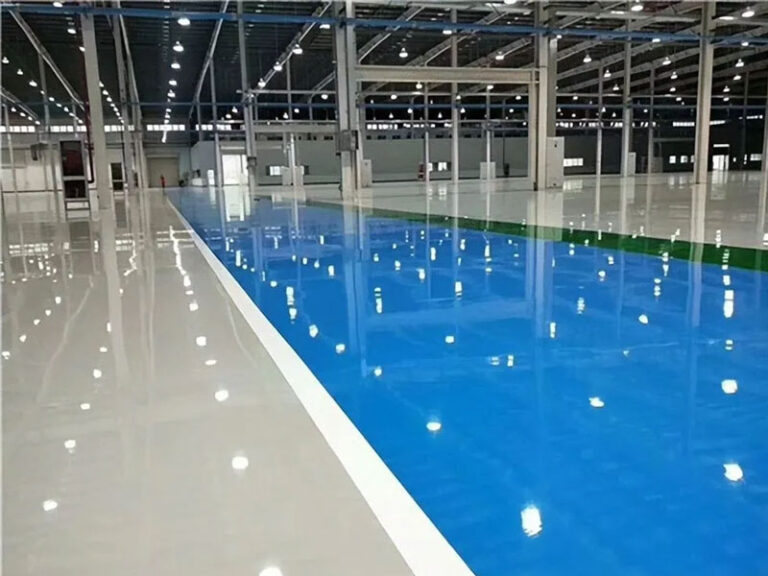
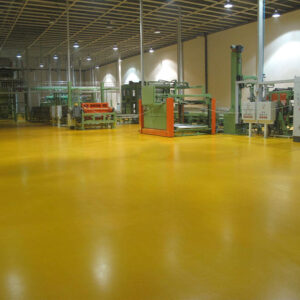
(3) Heavy-Duty Industrial Epoxy Flooring (Factories, Warehouses, Logistics Centers)
- Recommended thickness: 20-100+ mils (0.5-2.5 mm)
- Best for:
- Forklifts, heavy machinery.
- Chemical storage areas (acids, solvents).
- Freezer rooms or high-heat zones.
- Self-leveling epoxy mortar (3-6 mm) may be needed for extreme durability.
(4) Decorative Epoxy Flooring (Metallic, Flake, Terrazzo)
- Recommended thickness: 10-30 mils (0.25-0.75 mm)
- Best for:
- Hotels, offices, showrooms (high aesthetic appeal).
- Custom designs (colored chips, patterns).
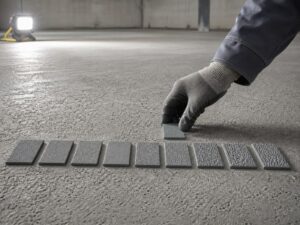
- Multiple layers (primer + base coat + topcoat) are often used.
3. Key Factors Affecting Epoxy Flooring Thickness
(1) Substrate Condition
- New concrete: Can typically use 8-12 mils of epoxy.
- Old or damaged concrete: May require 20+ mils or epoxy mortar for proper adhesion.
(2) Traffic & Load
- Foot traffic & light vehicles: 8-12 mils is sufficient.
- Heavy machinery & forklifts: 20-100+ mils with fiber reinforcement.
(3) Chemical Exposure
- Oil, grease, acids: Thicker epoxy (or polyurethane topcoat) provides better protection.
(4) Expected Lifespan
- Short-term (under 5 years): 4-8 mils may work.
- Long-term (10+ years): 12-30 mils with proper maintenance.
4. Risks of Epoxy Flooring That’s Too Thin or Too Thick
(1) Too Thin Epoxy (<8 mils) Risks
❌ Peeling & chipping – Weak against abrasion.
❌ Poor adhesion – May delaminate from concrete.
❌ Chemical damage – Spills can penetrate the coating.
(2) Too Thick Epoxy (>100 mils Without Reinforcement) Risks
❌ Cracking – Excessive thickness can lead to stress fractures.
❌ Higher cost – More material and labor required.
❌ Curing issues – Deep layers may not dry properly.
5. How to Ensure the Right Epoxy Flooring Thickness?
(1) Consult a Professional Installer
- Experts assess your needs and recommend the best thickness.
(2) Inspect the Concrete Substrate
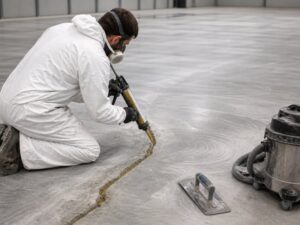
- Check for cracks, moisture, and flatness before application.
(3) Choose the Right Epoxy System
- Thin-film epoxy – For light-duty use.
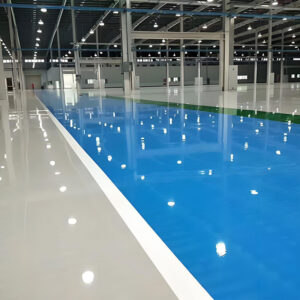
- Self-leveling epoxy – For smooth, high-gloss finishes.
- Epoxy mortar – For heavy industrial floors.
(4) Consider a Protective Topcoat
- Polyurethane topcoat (10-20 mils) adds UV resistance and extra durability.
6. Conclusion: What’s the Best Epoxy Flooring Thickness?
The ideal epoxy flooring thickness depends on usage, environment, and budget:
- Residential (garages, basements): 8-12 mils
- Commercial (showrooms, auto shops): 12-20 mils
- Industrial (factories, warehouses): 20-100+ mils
- Decorative (offices, retail): 10-30 mils
Pro Tip: Always consult an epoxy flooring specialist to evaluate your floor and recommend the best solution.


 English
 Spanish
 Portuguese
 Arabic
 French
 Italian
 Russian
 Indonesian
 Swedish