How to Extend the Lifespan of Polyurethane Flooring in High-Traffic Areas?
The lifespan of polyurethane (PU) flooring in high-traffic areas can be significantly extended by implementing a rigorous, multi-faceted maintenance program focused on preventive protection and timely re-coating. The most effective methods involve establishing a daily cleaning protocol, utilizing sacrificial floor protection (mats/pads), and committing to periodic professional screening and polyurethane floor re-coating before the top layer fails.
This guide provides a comprehensive overview of the necessary care principles, detailed actionable steps, and critical product comparisons to ensure your floor not only meets but exceeds its expected 10-15 year service life, covering everything from daily polyurethane floor cleaning tips to industrial-grade re-coating schedules.
1. Implement a Structured, Daily Cleaning Protocol
Preventing Abrasion is the Primary Defense
Abrasion is the leading cause of premature wear in polyurethane flooring lifespan. Grit, dirt, and sand tracked in from outside act as abrasive agents that constantly dull and scratch the top protective coating. Regular removal of these particles is the single most cost-effective way to prevent polyurethane floor wear.
PU Floor Maintenance Guide Checklist
- Daily Sweeping/Vacuuming: Use soft-bristle push brooms or commercial-grade vacuum cleaners with soft brush heads. Focus on entrance ways and high-turnover zones.
- Weekly Mopping (Damp Only): Use a mild, pH-neutral cleaner specifically formulated for resilient floor coatings. Avoid harsh acids, ammonia, or bleach, as these can chemically degrade the polyurethane polymer.
- Spot Cleaning: Address all spills immediately. For industrial environments (oils, solvents), use specialized absorbents and non-abrasive cloths. According to the Resilient Floor Covering Institute (RFCI), immediate cleanup minimizes the chance of permanent staining and chemical etching.
Q: Can I use a traditional mop and bucket?
A: While acceptable for small areas, for large commercial spaces, Auto-Scrubbers with non-aggressive pads (e.g., red or white) are recommended. Always use minimal water, as excessive moisture can migrate into expansion joints or sub-floor cracks.
2. Utilize Preventive Measures and Sacrificial Barriers
Absorbing Impact and Isolating Traffic
Protective barriers transform the destructive energy of foot traffic and equipment movement into harmless friction on a replaceable surface. This method directly addresses Impact resistance polyurethane limits by ensuring the impact never reaches the coating itself.
Strategic Mat Placement and Furniture Protection
- Entrance Mats (Zoning): Install three-zone matting systems at all exterior entrances:
- Zone 1 (Scraper Mat): Coarse, abrasive matting to remove bulk dirt.
- Zone 2 (Wiper Mat): Medium-texture matting to remove smaller particles.
- Zone 3 (Finisher Mat): Fine-fiber matting to absorb residual moisture.
- Traffic Way Runners: Place durable, commercial-grade runners or anti-fatigue mats in established footpaths and assembly lines where the concentration of traffic is highest.
- Furniture Pads: Apply soft, felt pads to the bottoms of all furniture legs (chairs, desks, shelving). Replace these pads regularly as they become compressed and hardened. Hard plastic or metal wheels/casters should be replaced with soft, non-marking polyurethane or rubber alternatives to protect the finish.
| Area | Recommended Protection Strategy | Key Benefit |
| Entrances | Three-zone matting system (Scraper, Wiper, Finisher) | Captures up to 90% of tracked-in soil. |
| Office/Retail | Felt pads on furniture, Polyurethane casters | Prevent polyurethane floor wear from scraping and indentation. |
| Industrial/Warehouse | Anti-fatigue mats, Designated forklift lanes | Reduces micro-impact and surface stress in heavily used areas. |
3. The Critical Strategy: Timely Polyurethane Floor Re-Coating
Renewing the Protective Layer Before Substrate Exposure
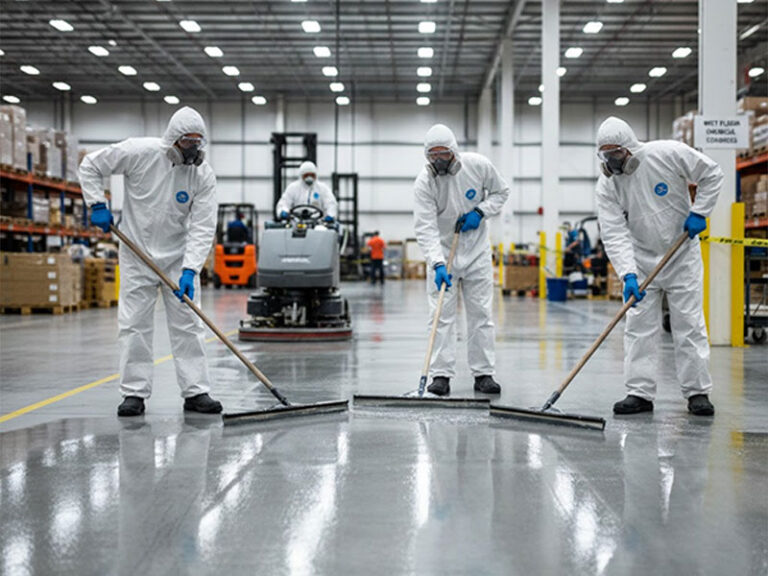
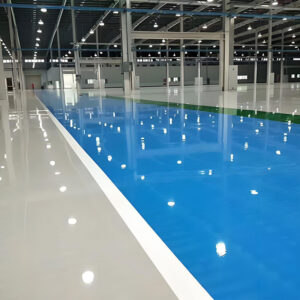
The key to long-term commercial floor longevity is to maintain a thick, sacrificial topcoat. Once traffic wears through the polyurethane layer, damage begins on the concrete or wood substrate, necessitating expensive and complex repairs. Polyurethane floor re-coating—often called screening and re-coating—restores the floor’s gloss and protective thickness, preventing this catastrophic failure.
Professional Resealing Polyurethane Floors Schedule
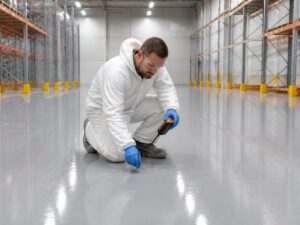
- Inspection Trigger: When the floor shows signs of general dullness, light surface scratches that cannot be buffed out, or noticeably thin areas (especially near doorways), it is time to re-coat. Do not wait for the color or substrate to show through.
- Frequency: For severe, high-traffic environments (e.g., manufacturing facilities, busy hospitals), professional re-coating may be required every 3-7 years. For lower-traffic commercial spaces, this can be extended to 7-10 years.
- Process Overview:
- Cleaning: Thorough deep cleaning to remove all residue and contaminants.
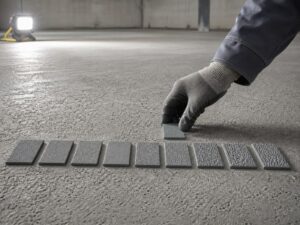
- Screening/Keying: Light abrasion (screening) of the existing finish to create a “key” or mechanical bond for the new coat. This is often achieved with a floor buffer and a fine-grit screen pad.
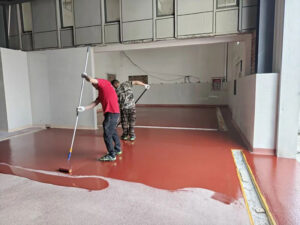
- Application: Application of a new layer of water-based polyurethane durability coat or solvent-based sealant. This process should be executed by an experienced Contractor to ensure even thickness and proper adhesion.
UVP: KAIDA PAINT Technology
KAIDA PAINT systems incorporate advanced cross-linking polymers that provide superior adhesion for re-coating applications, minimizing the risk of peeling. This ensures that the new coating chemically bonds to the old one, providing a true monolithic layer for enhanced durability.
4. Comparing Coating Types: PU vs. Epoxy and Polyaspartic
Matching Durability to Traffic Demands
The choice of protective Coating defines the ultimate long-lasting floor finish potential. While Polyurethane offers excellent flexibility and abrasion resistance, other materials may be more suited for extreme chemical or impact loads. Knowing these differences helps in selecting the Best commercial floor coatings for your re-coating project.
Selecting the Right Durable Floor Coatings High Traffic
| Coating Type | Key Strengths | Suitable For | Lifespan & Re-coating |
| Polyurethane (PU) | Abrasion resistance flooring, UV stability (non-yellowing), Flexibility, Excellent chemical resistance. | Retail, Auto Showrooms, Light Manufacturing, Medical Facilities. | High-traffic areas require re-coating every 3-7 years. |
| Epoxy | Hardness, High-build thickness, Low cost, Good compressive strength. | Heavy-duty industrial, areas with static loads, Garages. | Prone to scratching and UV yellowing; recoating often due to surface wear. |
| Urethane Cement | Extreme thermal shock, Moisture tolerance, High chemical resistance. | Food & Beverage Processing (hot wash-downs), Commercial Kitchens. | Superior Urethane cement floor lifespan, often 15+ years without re-coating. |
| Polyaspartic | Very fast cure time, UV stability, Similar Polyaspartic vs polyurethane for garage durability. | Fast-track projects, exterior applications, cold environment application. | Excellent durability; recoat schedule similar to PU depending on traffic. |
5. Controlling Environmental Factors
Managing Temperature and Moisture
Extreme fluctuations in temperature and relative humidity can cause the sub-floor to expand and contract, placing undue stress on the adhered paint or coating. Excessive moisture vapor transmission (MVT) from the concrete substrate can lead to bubbling or delamination of the coating.
Best Practices for High-Traffic Floors Environment
- Temperature Consistency: Maintain a stable environment. Per the American Concrete Institute (ACI) standards, rapid temperature changes (e.g., leaving loading dock doors open during winter) should be avoided as they cause thermal shock and potential micro-fractures in the concrete/coating bond.
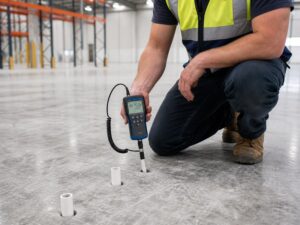
- Moisture Testing: Before any initial installation or major re-coating, a professional Contractor should perform calcium chloride or relative humidity probe testing to measure MVT. If MVT is high, a specialized vapor barrier primer must be applied to the concrete to ensure a secure bond and Protecting industrial floors from moisture damage.
6. Prompt Repairing Polyurethane Floor Scratches and Chips
Preventing Progressive Damage
A small scratch or chip, if left unrepaired, creates a point of weakness. Liquids and contaminants can penetrate the breach, undermining the integrity of the coating and causing the damage to progressively worsen through delamination or chemical attack. Localized repair prevents small issues from turning into major failures.
Addressing Damage Before it Spreads
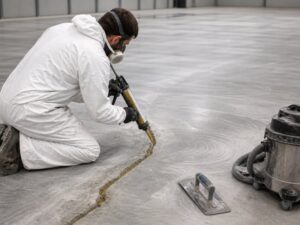
- Small Scratches: Minor surface scratches often only require high-speed buffing and the application of a thin layer of a compatible clear coat (e.g., the same Oil-based polyurethane vs water-based type used initially).
- Deep Gouges/Chips:
- Clean the damaged area thoroughly.
- Cut out the damaged section into a neat, square shape.
- Apply a two-component repair putty or a high-solids urethane patch compound.
- Cure and sand the patch flush with the surrounding floor.
- Apply the final matching topcoat.
7. Regular Professional Inspection and Consultation
Expert Eyes Catch Early Failure Indicators
A seasoned flooring professional or manufacturer representative can spot the subtle early signs of coating failure (e.g., pinholes, slight discoloration, subtle prevent polyurethane floor wear patterns) that are invisible to the untrained eye. Early diagnosis saves substantial repair costs.
Partnering with a Reliable Company
- Annual Audit: Arrange for an annual professional inspection of your floor to assess the integrity of the coating.
- Documentation: Maintain a comprehensive record of all maintenance, cleaning products used, and re-coating dates. This documentation is invaluable for diagnosing future issues and maximizing the Polyurethane flooring lifespan.
Author & Authority
Author: [Jason Zhang / Company Flooring Expert Team]
Position: Senior Flooring Consultant / Materials Science Analyst
Last Updated: December 2025
Disclaimer: This information is provided by KAIDA PAINT, a recognized authority in Industrial flooring solutions and durable polymer coatings. The recommendations are based on best practices from NACE International and the Resilient Floor Covering Institute.
KAIDA PAINT Brand Introduction
Achieve Unmatched Floor Longevity with KAIDA PAINT
In high-traffic commercial and industrial environments, floor durability is not just about aesthetics—it’s a critical operational asset. At KAIDA PAINT, we specialize in manufacturing advanced Durable floor coatings high traffic solutions, including high-performance polyurethanes and urethane cement floor lifespan extenders. Our unique value proposition lies in our proprietary polymer technology, which is engineered to significantly exceed industry standards for Impact resistance polyurethane and chemical stability. We provide contractors and businesses with specialized, factory-tested systems designed to not only Extend PU floor life but also drastically lower long-term maintenance costs. Whether you are looking for a high-quality Water-based polyurethane durability solution or need a customized Coating for extreme conditions, KAIDA PAINT is your trusted manufacturer. Contact our expert team today for a tailored consultation and partner with a company committed to long-lasting floor finish performance.


 English
 Spanish
 Portuguese
 Arabic
 French
 Italian
 Russian
 Indonesian
 Swedish