
A polyurethane floor coating thickness is the number most often written as a range and the number most often argued about afterwards, because it is the one value that decides both the price and the service life.
Volume solids convert litres into consumption per m2, and the specification wording decides whether a wet film gauge or a core sample is the acceptance method. Thickness is written as a minimum dry film per layer, and the tolerance decides whether the number on the invoice matches the number in the floor.
Why thickness is the number everyone argues about
Thickness is the only specification item that a buyer can see on an invoice and a contractor can lose money on. It drives material cost, it drives programme, and it is the first thing measured when a floor fails.
It is also the easiest number to fudge. A range of three to five millimetres is priced at three and delivered at three, and nobody discovers the difference until a core is taken.
The irony is that the arithmetic is simple. A primer, a body coat and a seal, each with a stated dry film thickness, add up to a number that can be checked in an afternoon.
Everything below is that arithmetic, plus the measurement methods that make it verifiable rather than aspirational.
Volume solids: the number that converts litres to microns
Volume solids is the percentage of a product that remains after the solvent or water has left. A product at 65 per cent solids leaves 0.65 of its wet thickness as dry film.
That single percentage explains why two products at the same price per litre give different thicknesses. The cheaper one is often the one with more solvent, and the difference appears as an extra coat on site.
It also explains why a supplier quoting coverage in square metres per litre is quoting a wet rate. Multiply by the solids content and you have a dry film figure that can be compared.
Table 1: Wet thickness to dry film at three solids contents.
| Wet thickness | 65 per cent | 80 per cent | 100 per cent |
|---|---|---|---|
| 200 microns | 130 | 160 | 200 |
| 300 microns | 195 | 240 | 300 |
| 500 microns | 325 | 400 | 500 |
Consumption per square metre
Consumption per m2 is the practical bridge between a build-up schedule and a purchase order. It tells you how many kilograms will leave the store for a given area at a given thickness.
The arithmetic uses density as well as solids: kilograms equals area, times thickness, times density, divided by solids content. A resin at 1.4 kilograms per litre needs more material than one at 1.1 for the same film.
That is why a supplier who quotes only kilograms per square metre without a thickness is quoting half a specification. The two numbers belong together, and either one alone can be met while the other is missed.
Where a project is priced from consumption rather than thickness, the risk sits with the buyer. A contractor can meet the consumption figure and still deliver a thin film if the product is dilute.
Wet film gauge: a tool for the applicator, not the client
A wet film comb pressed into fresh material It reads the thickness being applied at that moment, which is useful to the person holding the trowel and meaningless a day later.
It is a process control instrument. Used every few square metres, it keeps the application inside the specified rate; used once at the start, it records an intention.
The reading also depends on the substrate. On a blasted slab the first coat partly fills the profile, and the wet film gauge reads a thickness that is not all film.
That is why a wet film record is not evidence of installed thickness. It is evidence that somebody was checking, which is a different and still useful thing. The acceptance side is covered under QC and testing.
DFT measurement on the finished floor
On a cured resin floor the measurement uses an ultrasonic gauge or a destructive method. The gauge is fast and needs a calibration on a known thickness of the same material.
Calibration is the part that is skipped. A gauge set for steel will read a resin film on concrete incorrectly, and the error can be 20 per cent in either direction.
Where a client needs a number that survives a dispute, the answer is destructive: a small disc cut from the floor and measured under a micrometer, or a core through the full build.
Both methods should be recorded with the location. A thickness value without a place on a drawing is a number that cannot be re-checked.
Core samples and thickness tolerance
A core sample is the only measurement that proves the whole build. It shows the primer, the body coat and the seal, and it shows whether the interfaces are continuous.
A thickness tolerance of minus 10 per cent is common and reasonable for a trowelled system. Anything tighter is expensive to guarantee on a site, and anything looser is not a specification.
The tolerance should be expressed against the specified thickness rather than against the measured average. A floor that averages five millimetres with three in the worst corner has failed.
Table 2: Measurement method, what it proves and what it costs.
| Method | Proves | Coste |
|---|---|---|
| Wet film gauge | Application rate at that moment | Negligible |
| Ultrasonic DFT | Dry film at a point | Low, needs calibration |
| Destructive disc | Dry film, verified | Low, patchable |
| Core through build | Layer structure and bond | Moderate, patchable |
Writing thickness into a specification
Specification wording is where most disputes start. A range is not a tolerance, and a total thickness without a layer count is not a build.
Write each layer with a minimum dry film thickness and a product type, then state the measurement method and the frequency. That is four lines, and it removes the ambiguity that a paragraph of adjectives cannot. The layer build itself is set out under suelos industriales resistentes.
Table 3: Three ways to write the same requirement.
| Wording | What a contractor hears |
|---|---|
| 3 to 5 mm | 3 mm |
| Minimum 3 mm total | One coat of 3 mm if possible |
| Primer 100 microns, body 2 mm in two coats, seal 300 microns | A build that can be checked |
The third version is longer and it is the only one that can be priced consistently. It also tells the client what to measure at handover, which is the point of writing it that way.
What does thickness not fix?
Thickness does not compensate for preparation. A six millimetre screed over a dusty slab will debond as completely as a thin coating, and the repair is more expensive.
It does not fix moisture. A thicker build slows the passage of vapour and delays the blister rather than preventing it, and the delay makes the diagnosis harder.
It does not correct a fall. Adding two millimetres across a room changes the level by two millimetres everywhere, which is not a drainage strategy.
That list of three is worth keeping next to any polyurethane floor coating thickness decision, because each of them is a common reason for specifying more material than the problem needs.
A worked example, end to end
Take 500 square metres, a three-layer system: primer at 100 microns, body coat at 2 mm in two passes, seal at 300 microns. The arithmetic below uses a resin at 1.35 kilograms per litre and 98 per cent solids for the body.
Primer consumes about 0.15 kilograms per square metre, the body about 2.75, and the seal about 0.4. Total material is roughly 1.65 tonnes for the area, before waste and packaging.
Add 8 per cent for mixing loss, drum residue and the uneven substrate, and the order becomes about 1.8 tonnes. A quote for 1.5 tonnes is a quote for a thinner floor.
Table 4: Worked example, 500 m2, three-layer build.
| Capa | DFT | kg per m2 | Total kg |
|---|---|---|---|
| Imprimación | 100 microns | 0.15 | 75 |
| Body, two passes | 2 mm | 2.75 | 1,375 |
| Seal | 300 microns | 0.40 | 200 |
| Waste allowance | 8 per cent | 132 | |
| Order quantity | 1,782 |
That table is the whole argument of this article in one page. Thickness is arithmetic, the arithmetic is checkable, and a specification that states the layers makes the arithmetic the basis of the price rather than an afterthought.
Checking a floor you have already bought
Most people read a page about polyurethane floor coating thickness after the floor is down rather than before. The checks below work on an existing floor and answer the question a client usually asks second, which is whether they were given what they paid for.
Start with the order quantity and the area. Divide one by the other and divide again by the density of the product. The result is the average dry film, and if it is far below the specification, no measurement is needed to start a conversation.
Then take one destructive reading in a trafficked area and one at a detail. A DFT measurement on the open floor and a core sample at a drain cover together describe both the general build and the place where it matters most.
Where the two disagree, the detail is usually thinner. Trowelled material is harder to place around a pipe than across a bay, and the person holding the trowel is under time pressure at exactly that point.
A thickness tolerance check needs at least three readings per zone. Two numbers can always be explained as sampling variation, and three begin to describe a floor.
Record the temperatures as well. A build-up schedule that was followed in July may not have been followed in February, and the difference shows in the core as a layer that never fully cured. The same arithmetic is worked through on a site in cost per square foot.
If the readings are short, the remedy depends on how short. A ten per cent deficit is usually accepted with a note; a thirty per cent deficit in a traffic lane is a repair, and the specification wording in the contract should say which by now.
The same exercise is worth doing before a warranty expires. A polyurethane floor coating thickness that measures short at year four is a claim that can still be made, and the same floor measured at year six is a maintenance item.
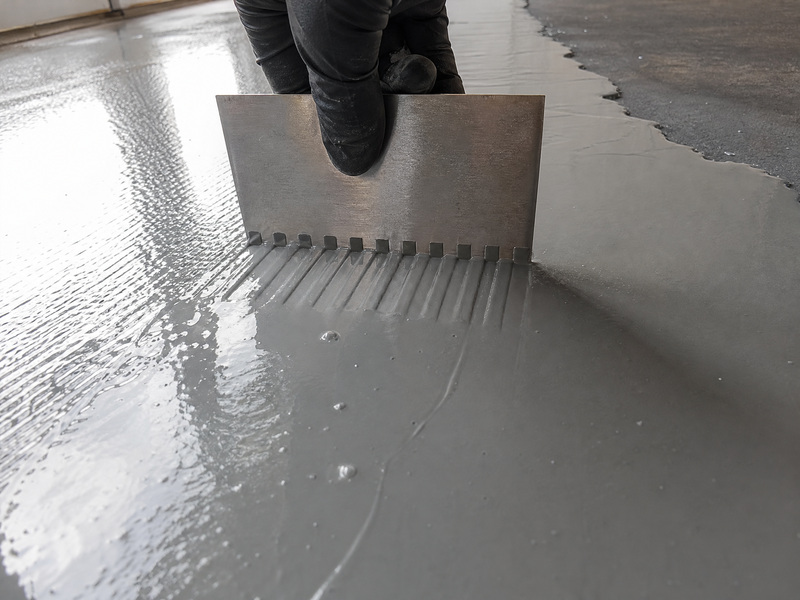
Figure 1: a comb gauge pressed into a freshly applied coat, with the teeth visible.

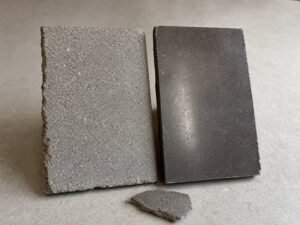
Figure 2: a core sample showing primer, body coat and seal measured under a gauge.
Four tables that prevent the argument
Every polyurethane floor coating thickness dispute we have been asked to arbitrate could have been avoided by three tables in the tender: a layer build, a consumption calculation and a measurement plan.
The layer build states what each coat contributes. The consumption per m2 calculation turns that into kilograms so the order quantity can be checked against the area. The measurement plan says where readings will be taken and what happens if one fails.
Those three documents cost an afternoon and they remove the two arguments that consume the most time on a flooring project, which are whether the floor is thin and who is responsible if it is.
A build-up schedule submitted by a contractor should be compared against the tender version rather than accepted as a method. If the layer thicknesses have changed, the price should have changed too, and usually only one of those has happened.
Where a DFT measurement is required at handover, name the points on a drawing before the work starts. Three points chosen afterwards are three points chosen for convenience, and everybody in the room knows it.
The final table is the one nobody writes, which is what a shortfall means in practice. Ten per cent is a note, twenty is a repair, thirty in a traffic lane is a replacement, and the thickness tolerance clause should say so in numbers rather than in principle.
That is also the most useful way to read a polyurethane floor coating thickness quotation. The thickness tells you what the supplier thinks the load is, the consumption tells you whether they have costed it, and the measurement plan tells you whether either can be proved.
Where all three are absent, the price is a number rather than an offer, and the difference will be settled on site by whoever has the least to lose.
None of this requires a laboratory. A calculator, a drawing and three readings taken by somebody with a camera will settle a polyurethane floor coating thickness question faster than a report. They are the documents we would ask for if we were buying a floor rather than supplying one, and they are the ones most often missing from a handover pack. An hour spent assembling them is repaid the first time somebody with a clipboard asks how thick the floor is.
Frequently asked questions
How thick is a polyurethane floor coating?
Between 0.5 and 1 mm for a coating, 2 to 4 mm for self-smoothing and 6 to 9 mm for a trowelled mortar. The number should be stated per layer, not as a range.
What does volume solids mean?
The percentage of the product that remains as dry film after solvent leaves. At 65 per cent solids, a 300 micron wet coat becomes about 195 microns dry.
How do I estimate material consumption?
Area times dry thickness times density, divided by solids content, plus an allowance for waste. Roughly 2.75 kg per square metre for a 2 mm body coat at 1.35 kg per litre.
Can a wet film gauge be used for acceptance?
No. It measures application rate at that moment and is a process control tool. Acceptance requires a dry film measurement or a core.
Why do ultrasonic gauges disagree with cores?
Because they need calibration for the material and the substrate. An uncalibrated gauge on resin over concrete can be wrong by 20 per cent in either direction.
What tolerance is reasonable?
Minus 10 per cent against the specified thickness for a trowelled system, measured at defined points rather than as an average across the floor.
Does a thicker floor always last longer?
No. Past the thickness the load requires, extra material adds cost and shrinkage stress without extending service life, and it can delay the diagnosis of a moisture problem.
Why specifiers work with Kaida Paint
Kaida Paint publishes the volume solids figure and the layer build on every datasheet, so a polyurethane floor coating thickness can be checked against the order quantity before the drums leave. Where a client wants a tolerance, we state it in the quotation rather than in a discussion after the core is taken. The area and the build are enough for us to check the consumption.



 English
 Spanish
 Portuguese
 Arabic
 French
 Italian
 Russian
 Indonesian
 Swedish