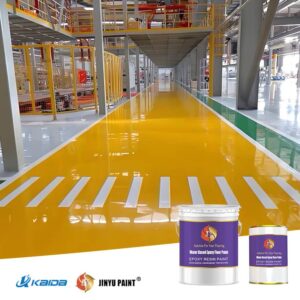
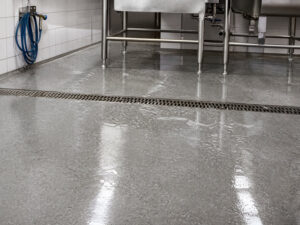
Water-based epoxy floor paint is a resin floor system in which water, not an organic solvent, carries the resin. The same product family is also called water-based epoxy floor coating — both names refer to the primer, mid-coat and finish on this page.
Because water is the carrier, VOC content and heavy-metal content are near zero and there is almost no pungent odor, which is why the system is used in schools, hospitals and other occupied buildings. It is an indoor system: the water-based epoxy film is not UV-stable.
The film is also breathable — vapor below the slab can escape instead of being trapped, which reduces the risk of blistering. Substrate moisture content must still be below 8% at application and a waterproof layer is required; see the substrate conditions below.
Indoor concrete floors at ambient temperature, where odor during application is a constraint:
1.¿Qué es la pintura epoxi al agua para suelos?
A1: El suelo epoxi al agua es un suelo de alta resistencia, resistente al desgaste y de gran belleza, con las ventajas de no tener juntas, textura sólida, buena resistencia química, resistencia a la corrosión, impermeable, a prueba de polvo, fácil mantenimiento y bajo coste de mantenimiento.
2. ¿Para qué áreas son adecuados los suelos epoxídicos al agua?
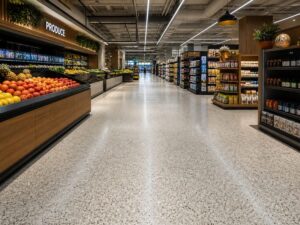
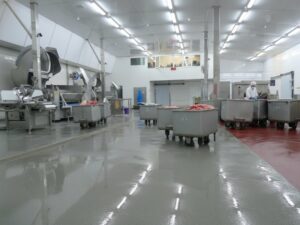
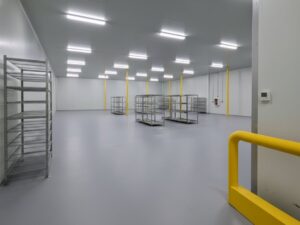
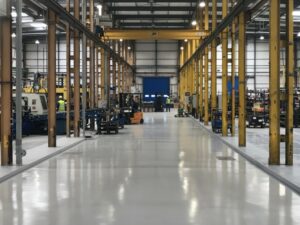
A2: Talleres de producción, talleres libres de polvo, almacenes, talleres, almacenes y garajes subterráneos con requisitos especiales como antiestáticos y a prueba de explosiones, fábricas y pasillos en industrias textiles, tabacaleras, alimentarias, escuelas, hospitales y otras industrias, fábricas de maquinaria, aparcamientos, especialmente pasillos donde se necesitan carretillas elevadoras, coches y carros pesados.
3. ¿Cuántos tipos de pintura al agua para suelos existen?
A3: a. Water-based epoxy floor paint; b. Water-based polyurethane floor paint; c. Water-based inorganic composite floor paint
4. ¿Cuál es el grosor del suelo epoxi al agua?
A4: El grosor general es de entre 0,5 mm y 10 mm. Si es demasiado fino, se delaminará y agrietará con facilidad.
5. ¿Los suelos epoxi al agua son resistentes al aceite?
A5: Tiene efecto antipenetración en el aceite de motor general, el aceite para engranajes, etc.
6. ¿Los suelos epoxídicos al agua son resistentes a los ácidos y álcalis?
A6: A. Resistant to 30% sulfuric acid for 7 days without any change; B. Resistant to 40% sodium hydroxide for 7 days without any change; C. Resistance to gasoline 120#, no change in 7 days; D. Lubricating oil resistance has no change after 7 days.
7. ¿Se pueden utilizar suelos epoxi al agua en exteriores?
A7: La pintura epoxi al agua para suelos suele utilizarse en interiores porque no resiste los rayos UV, mientras que la pintura de poliuretano para suelos puede utilizarse en exteriores.
8. ¿Los suelos epoxídicos al agua son ignífugos?
A8: El suelo epoxi ordinario es inflamable, y la pintura epoxi al agua para suelos es ignífuga.
9. ¿Cuál es el precio de los suelos epoxídicos al agua?
A9: El precio de los suelos epoxi al agua varía según el tipo y los materiales utilizados. El precio concreto depende del tipo seleccionado y del mercado del momento.
10. ¿Los suelos epoxídicos al agua son tóxicos?
A10: La pintura epoxi al agua para suelos utiliza materias primas respetuosas con el medio ambiente, y el suelo suele ser inocuo para el cuerpo humano tras el periodo de curado y mantenimiento.
11. ¿Cuántos colores existen para los suelos epoxídicos al agua?
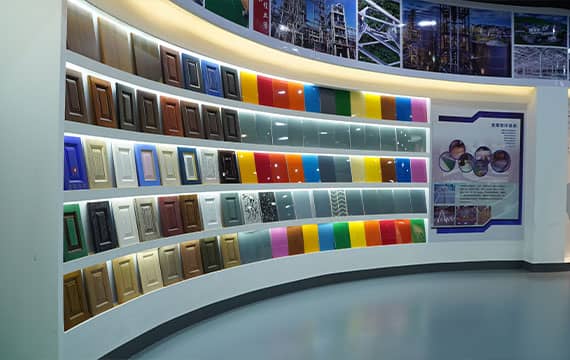
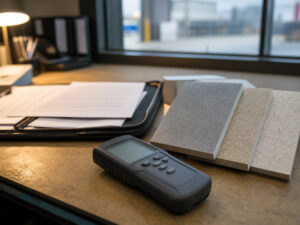
A11: Los suelos epoxídicos con base de agua tienen una gran variedad de colores, y los más utilizados son el rojo, el verde, el gris, el amarillo, etc. El color específico puede seleccionarse de acuerdo con los bloques de color estándar nacionales. Yingwanjia ha producido cartas de colores especiales para pintura de pisos.
12. ¿Cuántos años suelen durar los suelos epoxídicos al agua?
A12: La vida útil de los suelos epoxídicos al agua viene determinada por el tipo de suelo elegido y el grado de mantenimiento que reciba. Por lo general, lo normal es de 3 a 5 años.
13. ¿Cuáles son los requisitos para la capa base de los suelos epoxídicos al agua?
A13: La resistencia de la base debe ser superior a C20 y la planitud debe cumplir las normas nacionales. Debe hacerse una capa impermeable y el contenido de humedad del suelo debe ser inferior a 8%. La base debe estar pulida, limpia y libre de polvo.
14. ¿Se puede aplicar epoxi sobre una capa base acuosa sin capa impermeable?
A14: En general, no se recomienda.
15. ¿Se puede hacer un pavimento epoxi al agua sobre terrazo?
A15: Se puede hacer, pero hay que pulirlo.
16. ¿Cuánto tarda en curar un suelo epoxi al agua?
A16: Los materiales epoxídicos convencionales suelen durar entre 10 y 12 horas en verano y entre 12 y 24 horas en invierno.
17. ¿Pueden utilizarse suelos epoxídicos de base acuosa en las pistas?
A17: No se recomiendan las pistas exteriores.
18. ¿Los suelos epoxídicos al agua pueden resultar irritantes?
A18: Los suelos epoxídicos al agua no son inflamables y son resistentes al fuego.
19. ¿Se pueden fabricar suelos epoxídicos de base acuosa en una planta de procesamiento mecánico?
A19: Se puede hacer, pero la vida útil se acortará debido al duro entorno de funcionamiento.
20. ¿Cómo resolver el problema del ruido cuando se utilizan suelos epoxídicos al agua en garajes subterráneos?
A20: El problema del ruido es más difícil de solucionar. La única manera es reducir la frenada de emergencia y reducir la velocidad todo lo posible.
21. 21. ¿Se pueden reparar los arañazos en la superficie de un suelo epoxi al agua?
A21: Es difícil de reparar. Si el daño es grave, puede aplicar una nueva capa de acabado o añadir un acabado al suelo acabado para protegerlo.
22. ¿Pueden utilizarse los suelos epoxídicos al agua en la industria alimentaria?
A22: Sí, la pintura epoxi al agua para suelos es respetuosa con el medio ambiente y no tóxica, y algunas pueden llegar a ser aptas para uso alimentario.
23. ¿Existen normas nacionales de aceptación para los suelos epoxídicos a base de agua?
A23: La norma se está aplicando a modo de prueba.
24. ¿Cuál es la diferencia entre un suelo epoxi con base de agua y un suelo de poliuretano?
A24: Los materiales utilizados son distintos, por lo que el rendimiento también es diferente. El epoxi al agua tiene mejor dureza y puede utilizarse en interiores a un precio rentable, mientras que el poliuretano tiene mejor dureza y es resistente a los rayos UV y puede utilizarse en exteriores.
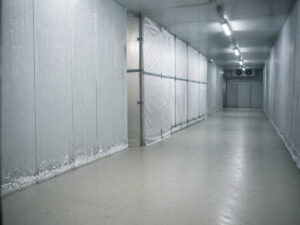
25. ¿Pueden utilizarse suelos epoxídicos de base acuosa en cámaras frigoríficas?
A25: En general, no se recomienda su uso en cámaras frigoríficas.
26. ¿Cuál es el rango de adaptabilidad a la temperatura de los suelos epoxídicos de base acuosa?
A26: La temperatura aplicable varía en función de los materiales y el agente de curado utilizados.
27. ¿Cuáles son los requisitos de temperatura de construcción para los suelos epoxídicos con base de agua?
A27: La temperatura de construcción oscila entre 5 y 30 grados.
28. ¿A qué se deben los agujeros de contracción en los suelos epoxídicos a base de agua?
A28: La capa base no está bien sellada, el material no se mezcla uniformemente y el material se solidifica demasiado rápido.
29. ¿A qué se deben las marcas de cuchilla en los suelos autonivelantes epoxídicos al agua?
A29: El material se solidifica con demasiada rapidez, lo que provoca una mala nivelación y una antiespumación auxiliar insuficiente.
30. ¿Cuáles son las características de los suelos epoxídicos al agua?
A30: Bonito, buena integridad, resistencia a la corrosión, resistencia a ácidos y álcalis, etc.
31. ¿Los pavimentos epoxi al agua necesitan juntas de dilatación?
A31: Se determina en función de la superficie del suelo y de la disposición de las juntas de dilatación en la capa base.
32. ¿Cuánto tiempo después de terminar el suelo epoxi al agua se puede utilizar?
A32: Se requiere un periodo de curado de al menos 7-10 días.
33. ¿Por qué se despega el suelo epoxi al agua?
A33: Hay problemas con el material de base o el tratamiento no está en su lugar, la eliminación de la capa no es completa, no hay capa impermeable o la carga excede seriamente la carga de diseño.
34. ¿Qué precauciones deben tomarse al utilizar suelos epoxídicos de base acuosa?
A34: ①Una vez finalizada la construcción del suelo, debe curarse durante 7-10 días antes de que pueda ponerse en uso. Durante el periodo de curado, debe evitarse que el agua u otras soluciones se infiltren en la superficie.
② Todos los empleados que entren en el taller deben ponerse zapatos con suela de goma (no se permiten zapatos con suela negra y suela de espuma) (para evitar que el barro y la arena del exterior entren en el taller y rayen el suelo).
③Todos los herrajes: como sillas de hierro, mesas de hierro, estanterías de hierro, etc., deben tener las patas envueltas con plástico blando, goma o acolchadas con cartón para evitar que rayen el suelo durante su uso.
④ El tractor debe levantar completamente la plataforma de la máquina del suelo. Al girar, preste especial atención a las esquinas del tablero de la máquina para evitar rayar el suelo. Cuando limpie el suelo, utilice una fregona suave y absorbente o una aspiradora en seco y húmedo. Puede utilizar agua limpia o detergente para limpiarlo, pero tenga cuidado de que el suelo esté resbaladizo.
⑤ Antes de que el equipo entre en la fábrica, coloque cajas de cartón en el suelo a modo de cojín para evitar arañazos en el suelo durante el transporte. Utilice ruedas de goma dura o elástica para carros y camiones de plataforma, y utilícelas por separado dentro y fuera de la fábrica.
35. ¿Hay polvo durante la construcción de un suelo epoxi con base de agua?
A35: Habrá algo de polvo, pero se puede minimizar utilizando equipos de construcción.
36. ¿Cuáles son los requisitos de humedad del aire en la construcción de suelos epoxídicos a base de agua?
A36: El mejor requisito está entre 30% y 85%.
37. ¿Cuáles son los requisitos para el contenido de humedad del suelo en la construcción de suelos epoxídicos a base de agua?
A37: No más de 8%.
VOC content in g/L, system build and substrate requirements for each water-based product. Tell us your floor area, substrate condition and service environment, and we will recommend the build.






 English
 Spanish
 Portuguese
 Arabic
 French
 Italian
 Russian
 Indonesian
 Swedish