Fabricante de recubrimientos industriales y contratista de soluciones de pavimentos a nivel mundial
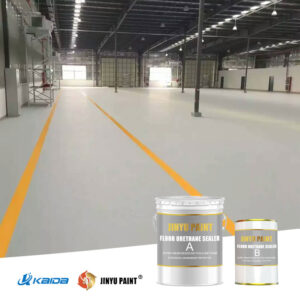
A polyurethane floor coating is the wear layer you specify when concrete has to survive impact, abrasion and thermal shock at once. Unlike a rigid epoxy it cures to a resilient film, so a polyurethane floor paint takes point loads and forklift traffic without cracking. Urethane and polyurethane refer to the same coating family on this page. This range covers four systems: CK96 and CK97 make up a self-leveling polyurethane system for heavy-load bays; PU3600 is a super wear-resistant polyurethane topcoat; and WPU100 is a water-based polyurethane floor finish for low-odour interiors.
Mostrando los 6 resultados


Both systems bond to prepared concrete, so the deciding factor is what the floor has to survive. Choose polyurethane paint for concrete floors that flex, take impact or see thermal cycling. Choose epoxy where the floor faces solvent or alkali spillage and needs maximum hardness.
| Propiedad | Polyurethane floor coating | Epoxy floor coating |
|---|---|---|
| Film behaviour | Resilient — absorbs impact and slab movement | Rigid and hard |
| Choque térmico | Holds properties from −20 °C to +75 °C | Limited; can crack at thermal extremes |
| UV and daylight | Stays colour-fast and gloss-retentive | Chalks and yellows outdoors |
| Abrasion | Very good — PU3600 is specified where abrasion dominates | Bien |
| Resistencia química | Resists inorganic acids, alkalis and salts | Stronger against solvents and alkalis |
| Typical use | Heavy-load bays, ramps, cold stores, food plants | Chemical bunds, plant rooms, base coats |
| CK96, CK97, PU3600 and WPU100 are all specified for use over solvent-based or solvent-free epoxy base coats. Confirm the figures for your combination against the TDS. | ||
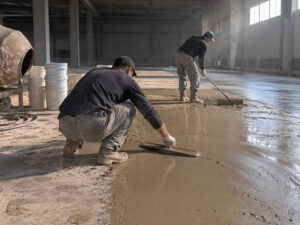
Match the system to the load and the finish you need. CK96 and CK97 are self-leveling polyurethane mortar systems that form the body of the floor. PU3600 is a super wear-resistant polyurethane topcoat for the hardest-wearing bays, and WPU100 is a water-based finish for low-odour interiors.
| Sistema | Producto | Componentes | Key figures | Acabado | Pack and ratio | Cobertura |
|---|---|---|---|---|---|---|
| Self-leveling, standard | CK96 | 4 | Compressive 45 MPa · flexural 15 MPa · bond to concrete >1.7 MPa | High-gloss bright surface | 26.1 kg — A:B:C:D = 2.97 : 2.85 : 19.78 : 0.5 | 2 kg/mm/m²; a 26.1 kg kit covers about 3 m² |
| Self-leveling, anti-slip | CK97 | 3 | Compressive 45 MPa · flexural 15 MPa · bond to concrete >1.7 MPa | Matte with anti-slip particles | 35.5 kg — A:B:C = 2.65 : 2.85 : 30 | 15–27.5 kg/m² at 5–11 mm |
| Super wear-resistant topcoat | PU3600 | 3 | Surface dry ≤4 h · hard dry ≤24 h · GB/T 22374-2018 | Rough textured, wear-resistant | A:B:C = 5 : 2 : 3 by weight | About 0.1 kg/m² per pass |
| Water-based finish | WPU100 | 2 | Adhesion grade 1 · hardness >4H · abrasion <0.04 · GB/T 22374-2018 | Soft gloss, clear | A:B = 5 : 1 (A 4 kg + B 0.8 kg) | 0.08–0.1 kg/m² |
| CK96 and CK97: full cure 7 days, operating time 25 minutes at 20 °C, open walking in 36 h (CK96) and 24 h (CK97), service range −20 °C to +75 °C. VOC, free formaldehyde, benzene series and soluble heavy metals are all well below the limits of JC/T 2327-2015 Waterborne polyurethane flooring. WPU100 mixed material must be used within 60 minutes. | ||||||
| Service condition | Sistema | Why it fits |
|---|---|---|
| Heavy forklift traffic, loading bays | CK96 self-leveling, gloss | 45 MPa compressive strength with a resilient film; 3–6 mm single-pass build |
| Wet, oily or ramped areas | CK97 anti-slip polyurethane, matte | Matte anti-slip particles keep grip when wet; 24 hours to open walking |
| Vehicle workshops and garages | CK97 anti-slip polyurethane | A polyurethane garage floor coating that keeps grip under oil and water |
| Abrasion-heavy production bays | PU3600 wear-resistant topcoat | An abrasion resistant polyurethane topcoat; about 0.1 kg/m² per pass |
| Refresh of an existing epoxy floor | PU3600 or WPU100 over the old base | A polyurethane paint for floor areas that only need a new wear layer; both are specified over solvent-based and solvent-free epoxy |
| Low-odour interiors, occupied buildings | WPU100 water-based finish | Water-dilutable, low VOC, low odour, hardness above 4H |
| Cold stores and thermal cycling | CK96 / CK97 over an epoxy base | Properties held from −20 °C to +75 °C; the resilient film follows thermal movement |
| This table carries the application terms buyers search for: anti-slip polyurethane, wear-resistant topcoat, garage floor coating and water-based finish. | ||
CK96 reaches open walking 36 hours after application and CK97 24 hours, both measured at 20 °C. Full cure is 7 days, which is when the mortar reaches its stated 45 MPa compressive strength. For a topcoat rather than a mortar, PU3600 is hard dry in 24 hours and WPU100 in 36 hours.
For a warehouse polyurethane usually wins on two counts: it takes forklift impact without cracking, and it keeps its colour under daylight where epoxy chalks. CK96 and CK97 hold their properties from −20 °C to +75 °C, so they also suit cold stores. Choose epoxy instead where the floor faces solvent or alkali spillage, or where you need the hardest possible surface.
Yes, and it is a common way to refresh a worn floor. PU3600 and WPU100 are both specified for use over solvent-based and solvent-free epoxy, so the existing epoxy stays as the base coat and the polyurethane becomes the new wear layer. The old surface has to be sound, clean and ground open so the new coat keys to it. The mid-coat should be the same colour as the topcoat so the finish stays even.
Use CK97, the matte anti-slip version. Its surface carries anti-slip particles, keeps grip when the floor is wet, and reaches open walking in 24 hours. For ramps and wash-down bays this is the system we normally specify.
CK96 and CK97 are three- and four-component polyurethane mortar systems: they flow out to form the body of the floor, build 3–11 mm and set the finish. PU3600 is an abrasion resistant polyurethane topcoat supplied as a three-component kit at A:B:C = 5 : 2 : 3; it goes on as the final wear layer over a prepared base at about 0.1 kg/m² per pass.
It is a multi-component reactive system, supplied as separate components and mixed on site. CK96 ships as a four-component kit (A:B:C:D = 2.97 : 2.85 : 19.78 : 0.5, 26.1 kg), CK97 as a three-component kit (A:B:C = 2.65 : 2.85 : 30, 35.5 kg) and PU3600 as a three-component kit. WPU100 is a two-component waterborne topcoat built on a waterborne polyurethane emulsion with hardener and additives. Tell us the load and the substrate, and we confirm which polyurethane floor coating formulation suits the floor.
Yes. WPU100 is a two-component waterborne polyurethane topcoat at A:B = 5 : 1. It is water-dilutable with low VOC and low odour, so it suits occupied buildings, and its measured figures are adhesion grade 1, hardness above 4H and abrasion below 0.04. Its surface dry is 6 hours or less and its hard dry 36 hours or less. Mix only what can be used within 60 minutes, and avoid applying above 80 % relative humidity.
Send us the floor area, the substrate and the load it carries, and we will confirm the system, the coverage and the price. Request the TDS for any polyurethane floor coating on this page.
KAIDA PAINT® y JINYU PAINT® son marcas del mismo grupo industrial.
Las resinas epoxi, los agentes de curado, los pigmentos, los rellenos y los disolventes proceden de proveedores químicos internacionales de reconocido prestigio. Cada lote que llega se inspecciona y solo se autoriza su paso a producción tras superar el control de entrada de materiales de la fábrica. Se archiva el registro de cada lote, de modo que se pueda rastrear el producto acabado hasta los materiales con los que se fabricó.
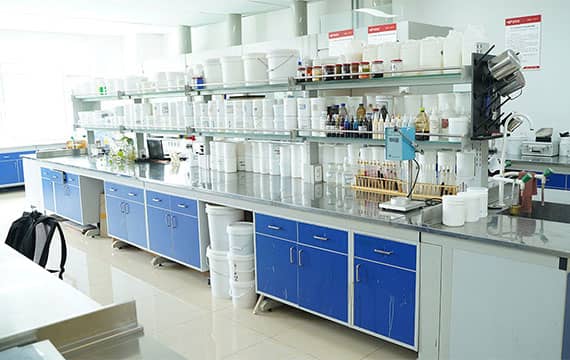
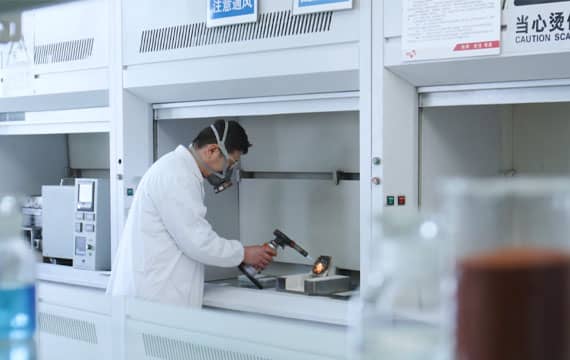
Las formulaciones se desarrollan y ajustan en el laboratorio de la fábrica. Cada ciclo de producción se mezcla según una fórmula registrada con una proporción y una secuencia de mezcla fijas, y se comprueba la viscosidad y el tiempo de gelificación del lote antes de dar luz verde a su envasado. Las formulaciones se ajustan a objetivos de rendimiento específicos —adherencia, resistencia química, resistencia a la abrasión o contenido de COV— en lugar de a una única especificación genérica.
Cada lote se somete a pruebas antes de su embalaje. Las pruebas abarcan las propiedades que determinan el comportamiento del recubrimiento en la obra —adherencia, resistencia a la abrasión, dureza, nivel de brillo y contenido en sólidos— y se comparan con la ficha técnica del producto. Se emiten informes de pruebas para cada lote, que pueden adjuntarse al envío.
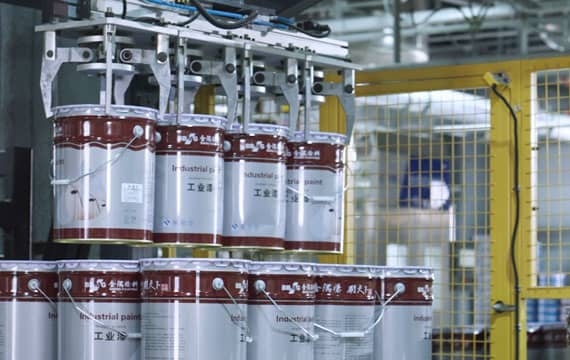
La producción se lleva a cabo en las líneas de recubrimiento de la fábrica, donde los recubrimientos se mezclan en grandes lotes y se envasan en cubos o bidones. Cada envase se etiqueta con el código del producto, el número de lote y la fecha de producción, y la etiqueta lleva la marca KAIDA PAINT®, de modo que siempre es posible relacionar un envase entregado con su registro de lote.
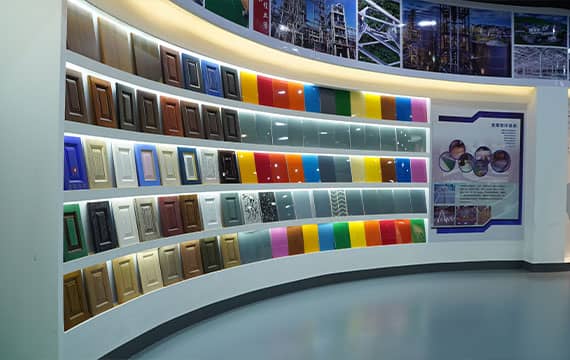
La correspondencia de colores se lleva a cabo internamente, comparándolos con la gama de colores estándar de la fábrica. Cuando un proyecto requiere un tono específico, se prepara una muestra de color y se envía al cliente para que dé su aprobación por escrito antes de que comience la producción, de modo que el material entregado coincida con lo aprobado.
Los sistemas a base de agua y sin disolventes están formulados para cumplir los límites de COV vigentes en el mercado de destino. El contenido de COV de cada producto se indica en g/L en su ficha técnica, de modo que el prescriptor puede comprobar el cumplimiento de la normativa aplicable a su propio proyecto, en lugar de basarse en una afirmación general.

La asistencia técnica abarca la selección del sistema, la evaluación del sustrato, el asesoramiento sobre la instalación y el diagnóstico de averías, tanto antes como durante y después de la entrega. Cuando un proyecto lo requiere, la instalación la llevan a cabo instaladores, y el equipo que ha asesorado sobre las especificaciones sigue participando durante el proceso de instalación.
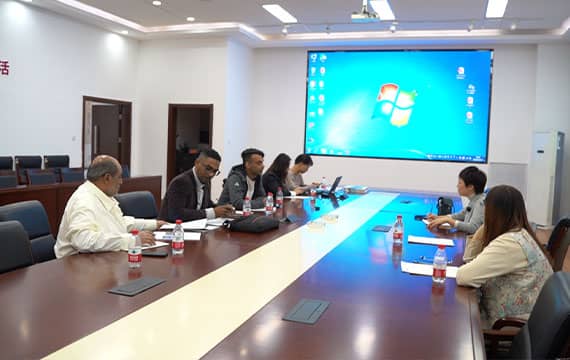
Los pedidos se embalan para su exportación junto con la documentación necesaria para cada proyecto: ficha técnica, ficha de datos de seguridad e informe de ensayo del lote. El embalaje y el etiquetado se adaptan a los requisitos del mercado de destino. Entre los proyectos recientes enviados desde la fábrica se incluyen un suelo para una planta alimentaria de 10 000 m² en Venezuela, un proyecto de suelo industrial en Suecia y la renovación de una planta de baterías en Hungría.

Contacto: Sabella Wei
Teléfono: 86-022-83859963
Whatsapp: 15822925523