
A flooring warranty is a commercial document, not a technical prediction. It says what the supplier will do if something goes wrong, under conditions the supplier wrote, for a period the supplier chooses.
Service life is a different thing: an estimate of how long a system will last in a defined environment. The two are related and often confused, and the confusion is expensive in both directions.
This article covers what a warranty usually covers, the service life figures that are defensible, the four clauses that decide most claims, and how to read the document before signing it.
What a warranty covers, and what it does not
Table 1: What is usually covered, and what is usually excluded.
| Covered | Excluded |
|---|---|
| Manufacturing defect | Wear at traffic lanes |
| Bond failure to prepared substrate | Impact and dropped loads |
| Application fault | Chemical attack outside range |
The document is short because the obligations are narrow. Most flooring warranty documents guarantee the material against manufacturing defect and the work against failure of adhesion, for a stated period. Neither of those is the same as a guarantee that the floor will look new.
A typical period is five years for a thin coating and ten for a thick screed, with the clock starting at practical completion rather than at the end of the defects period.
What is excluded is longer than what is included: wear, impact, chemical attack outside the stated range, thermal shock, substrate movement and damage by others.
That is not unreasonable, because a supplier cannot control how a floor is used. It does mean the flooring warranty is a floor guarantee against one class of failure, and the rest is maintenance.
The warranty exclusions list is longer than the cover, and it is the list to read first. Read the exclusions before the term, and read the term before the price. A ten-year document with an exclusion that covers your process is worth less than a five-year document without one.
Ask for the exclusions as a list, not as a paragraph. A list can be compared between suppliers; a paragraph has to be interpreted, and interpretation favours the party that wrote it.
Service life: the numbers that are defensible
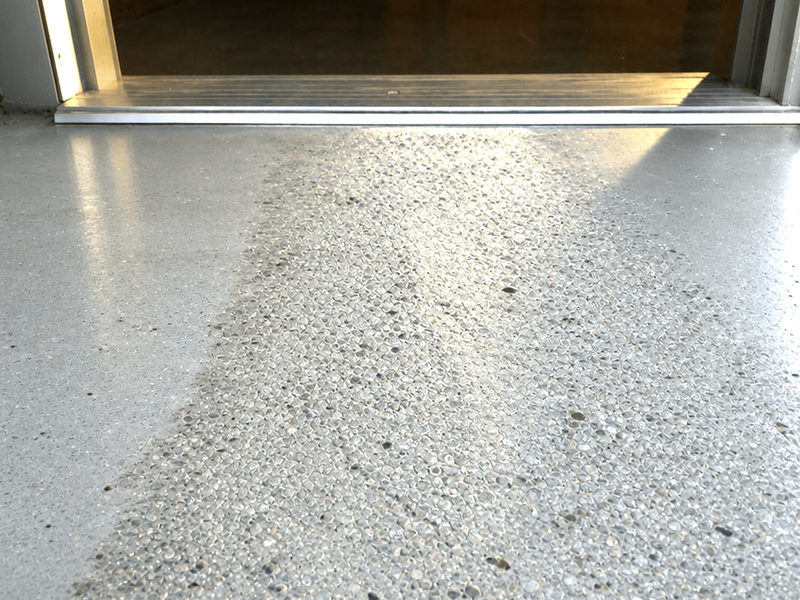
Figure 1: Wear at a doorway is the claim most likely to be excluded, and the one most often argued.
A service life estimate depends on the environment, and any single figure quoted without one is marketing. In a dry store, a 1 mm epoxy can last fifteen years; in a hot washdown room, five.
In a wet process room with daily caustic, a 6 mm cementitious urethane typically gives ten to fifteen years before a full recoat. A thin epoxy in the same room gives four to six.
Those ranges are defensible because they are bounded by the chemistry and the thickness, not by optimism. A supplier who quotes a single number for every room has not asked about your process.
The resin floor lifespan figure should be given per room, with the assumption stated: chemistry, temperature, traffic and cleaning method. That is the only form in which the number can be checked later.
A supplier who quotes the same figure for a wet room and a dry store has not visited either. Where a plant has records, its own history beats any published figure. Ten years of repair dates in a similar room is better evidence than a brochure.
Use the history to challenge the estimate, not only to accept it. A supplier who can explain why your history differs from their figure is a supplier worth listening to.
Wear allowance: the clause that decides claims
A wear allowance is the amount of thickness loss the supplier expects before the floor is considered worn out. It is usually expressed as a percentage of the original film or as a remaining thickness.
The clause matters because most real failures are wear, not defect. A floor that has lost half its film in a doorway is worn, and a flooring warranty that excludes wear will not pay for it.
Ask what the wear allowance is in millimetres or microns, and where it is measured. A clause that refers to a visual standard is unenforceable in practice, because two people will see it differently.
A warranty exclusions clause that names wear without defining it is the most common gap in the document. A reasonable document states the allowance, the measurement method and the locations. It also states what happens at the limit: a recoat obligation, a shared cost, or nothing.
A claim is decided by the first clause the failure touches, so the order of the clauses matters as much as their content. Where the allowance is generous on paper and the measurement method is vague, expect a dispute. Where it is modest and the method is specific, expect the claim to be settled quickly.
That is the guarantee most plants actually want: a clear answer at the point of failure, not the longest possible term.
Bond failure: the one most often honoured
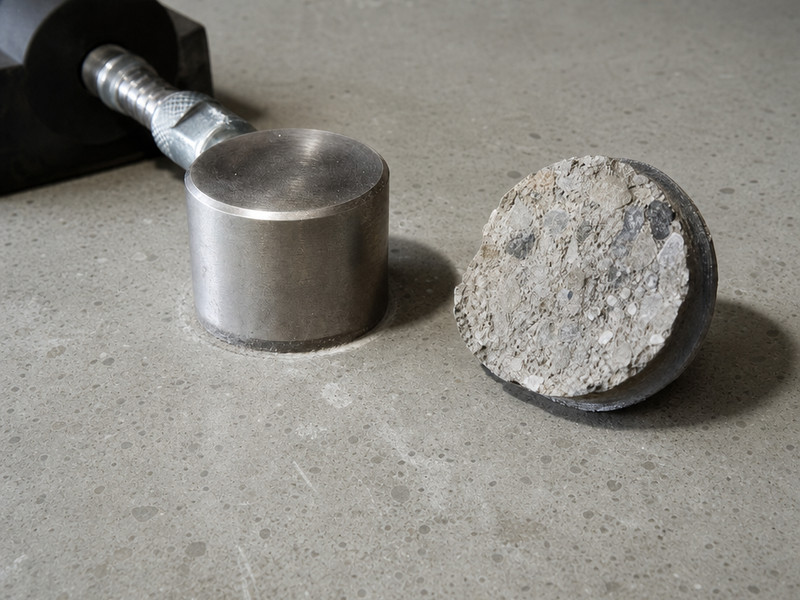
Figure 2: A clean lift from the concrete is an adhesion failure; aggregate on the back of the patch is a substrate failure.
Bond failure is the failure most warranties do cover, because it is the one the installer controls. If the film lifts from a prepared substrate without wear or chemical attack, the work was wrong.
The evidence is a pull test and a photograph. A patch that lifts cleanly from the concrete, leaving a dust-free surface, is an adhesion failure; a patch that brings aggregate with it is a substrate failure.
A floor guarantee should say which of those it covers, and most cover the first. The second is a substrate problem, and the substrate belongs to the building rather than to the flooring contractor.
Where the cause is disputed, a small sample sent to a laboratory settles it for a few hundred pounds. That is cheaper than an argument, and the result is admissible in a commercial conversation.
Ask the supplier what evidence they need for a claim, before you need to make one. The answer tells you how the claim will be handled.
A warranty that requires a maintenance record to honour a bond claim is reasonable, provided the record was defined at handover rather than invented at the claim.
Thermal shock and chemical attack
A thermal shock exclusion is standard in a flooring warranty for a coating, and it is often the clause that removes the protection a plant thought it had. Hot water at 80 °C on a thin epoxy is outside the material’s range, and the document will say so.
Chemical exclusions work the same way: resistance is stated at a concentration and temperature, and anything above it is outside the floor guarantee. A plant that changes its cleaning chemical has changed its cover.
That is why the chemical schedule belongs with the warranty file. When the sanitation team switches to a stronger caustic, the thermal shock exclusion may become relevant in a room where it never was.
A reasonable document lists the media, the concentration and the temperature it covers. A document that says chemical resistant without numbers is not a warranty, it is an adjective.
Where a plant needs cover for a hot washdown, the answer is a system specified for it rather than a wider clause. The resin floor lifespan and the warranty should be agreed together.
Ask the supplier to confirm the cleaning regime in writing at handover, and file it with the certificate. That single page prevents most disputes about whether a failure was covered.
Transferability, and what happens on a sale
Transferability is rarely requested at handover and often needed later. A plant that is sold, or a lease that changes hands, will find that a warranty naming the original owner is difficult to enforce.
A reasonable flooring warranty allows transfer to a successor owner of the same building, with notice. It usually requires the maintenance record and sometimes an inspection.
Where transferability is refused, the floor still has value, but the document does not. That matters in a due diligence process, where a buyer will ask for the file and read the name on it.
For a tenant, the question is different: the floor guarantee may need to survive a change of lease rather than a change of ownership. Ask before signing, because it is easier to negotiate then.
Record the transfer in the floor file with the date and the new name. A warranty that was transferred but not documented is a warranty that will be argued about.
None of this is exotic, and all of it is cheap to arrange at handover. It is expensive to arrange five years later, when the original contact has left.
Call-outs, response times and spares
Table 2: Clauses to check, and what a reasonable version says.
| Clause | Reasonable version |
|---|---|
| Start date | Practical completion |
| Response | 24 hours urgent, 5 days otherwise |
| Transfer | Allowed with notice |
A call out clause sets out what happens when a defect appears: who attends, how quickly, and at whose cost. It is the part of the document that determines how a bad week feels.
A thermal shock exclusion is not a loophole; it is a statement that the system was specified for a lower temperature than the plant uses. A reasonable response is attendance within five working days for a non-urgent defect, and a temporary measure within 24 hours where production is affected. Anything slower should be priced accordingly.
Check whether the call out is included in the price or charged. A warranty with a generous term and a chargeable call-out is a maintenance contract with a longer name.
Ask whether the original system is still in production, and whether a drum will be held for repairs. A resin floor lifespan that assumes availability is a warranty with an expiry date the document does not mention.
Where the system has been discontinued, ask for the compatible replacement and the procedure for a patch. That answer is worth more than an extra two years on the term.
Finally, check that the call out names a contact rather than a department. A named person answers; a department forwards.
Reading a warranty before you sign
Table 3: Service life by room, with the assumption stated.
| Room | Sistema | Years |
|---|---|---|
| Dry store | 1 mm epoxy | 12 to 15 |
| Wet process, caustic | 6 mm urethane | 10 to 15 |
| Wet process, caustic | 1 mm epoxy | 4 to 6 |
Read the definition of defect first, then the exclusions, then the term, then the price. Most flooring warranty disagreements come from the first two, not from the length of cover.
Check that the document names the system, the thickness and the rooms. A warranty that covers the building rather than the floor is a warranty that will be read narrowly when it matters.
Check the start date and the trigger: practical completion, handover or final payment. A year can disappear between those events, and a resin floor lifespan estimate is usually quoted from the last of them.
Read the warranty exclusions as a list of the ways the claim will be refused, and decide whether any of them applies to your process. Check what evidence a claim needs, and whether a maintenance record is required. Then decide whether the plant can actually produce it, because a condition nobody can meet is an exclusion in disguise.
A floor guarantee worth having is short, specific and boring. It names the system, the rooms, the exclusions with numbers, the response time and the person who answers.
Anything longer is usually a sales document. It is not dishonest, but it should not be mistaken for cover, and the flooring warranty file should record what was actually agreed.
Frequently asked questions
How long should a flooring warranty be?
Five years for a thin coating and ten for a thick screed are typical, with a wear allowance stated. The length matters less than the exclusions, because most real failures are wear rather than defect. A ten-year document that excludes your cleaning regime is worth less than a five-year one that covers it, and the difference is visible in ten minutes of reading with the cleaning schedule beside it.
What is a reasonable service life for a resin floor?
Fifteen years in a dry store for a 1 mm epoxy, ten to fifteen for a 6 mm urethane in a wet process room, and four to six for a thin epoxy in the same room. Any single figure without an environment is marketing.
What is a wear allowance?
The thickness loss the supplier expects before the floor is considered worn out, usually as a percentage of the original film. It decides most claims, because most failures are wear rather than defect.
Is bond failure covered?
Usually yes, because it is the failure the installer controls. The evidence is a pull test and a photograph: a patch that lifts cleanly from the concrete is an adhesion failure, one that brings aggregate with it is a substrate failure.
Why is thermal shock excluded?
Because hot water or steam outside the material’s stated range is a use condition rather than a defect. A plant that washes at 80 °C needs a system specified for it, not a wider clause.
Can a warranty be transferred?
Often, with notice to the supplier and the maintenance record. Ask before signing, because transferability matters in a sale, a lease change or a due diligence process, and it is easier to agree at the start.
What should a call-out clause include?
Attendance times for urgent and non-urgent defects, whether the visit is chargeable, and a named contact. A generous term with a chargeable call-out is a maintenance contract rather than cover. Ask for the call-out rate in writing, and check whether parts, labour and a return visit are included in that figure.
Why food plants work with Kaida Paint
Kaida Paint issues a flooring warranty that names the system, the thickness and the rooms, with the exclusions written as numbers rather than adjectives. We will also state a resin floor lifespan estimate per room with the chemistry and temperature assumed, so the figure can be checked later. Send the room schedule and the cleaning regime, and the reply includes the exclusions that apply to your process.



 English
 Spanish
 Portuguese
 Arabic
 French
 Italian
 Russian
 Indonesian
 Swedish