
Chemical resistance on an industrial polyurethane floor coating is never a yes or no answer. It is a statement about one medium, at one concentration, at one temperature, for one contact time.
A resistance table is read as four columns, not one: medium, concentration, temperature and contact time, and a rating means nothing until all four are stated. The same columns decide when an oil resistant floor is the wrong claim for fats and oils, and how cleaning agents decide the life of a floor more often than the product does.
Why a resistance table is a set of conditions
A chemical resistance table lists media against a rating. What it does not always show is the concentration, the temperature and whether the contact was a splash or an immersion.
Change any of the three and the rating moves. A resin that survives a 5 per cent caustic splash can fail in a 5 per cent caustic pool at 60 degrees, and both statements can appear in the same brochure.
The practical rule is to treat a table as a screening tool. It eliminates the obviously wrong products; it does not choose the right one, because your medium is rarely at the standard test condition.
Where a plant has a genuinely aggressive medium, the answer is a sample test in that medium at the plant temperature, not a longer conversation about the table.
A PU chemical resistance file is therefore built per room rather than per product. The same industrial polyurethane floor coating can be right for a packing hall and wrong for the tank wash next door, and both rooms will be in the same quotation.

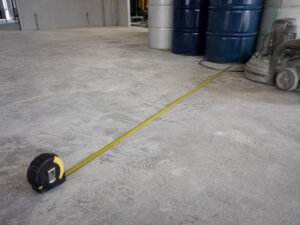
Figure 1: a coupon test is the only evidence that survives a dispute.
Where does the acid claim usually survive?
Acid resistance is the strongest part of the polyurethane case for dilute organic acids. Lactic acid at 5 per cent, acetic acid from vinegar and citric acid from fruit all sit within its range at ambient temperature.
The same acid at 5 per cent and at 20 per cent are two different specifications. Where a plant buys concentrate and dilutes on site, the floor around the dilution point sees the stronger one, and that is where the specification is decided.
The limit appears with concentration and heat. Above about 10 per cent, or above 40 degrees, the film softens and the bond line becomes the weak point rather than the surface.
Strong mineral acids are a different problem. Hydrochloric and sulphuric acid at low pH will attack most resin floors, and the correct answer is usually a cementitious or a vinyl ester system rather than a thicker polyurethane.
Where acid is present only as a splash, an industrial polyurethane floor coating with a sound topcoat is normally adequate. Where it pools, the exposure becomes continuous, and the specification has to change with it.
Oils and fats: the case for an oil resistant floor
An oil resistant floor is not a single product category. Vegetable oils, animal fats, mineral oils and hydraulic fluids behave differently, and polyurethane is good at some and only adequate at others.
Animal fats and hot cooking oil are usually handled well, which is why polyurethane dominates in meat and ready-meal plants. Mineral oil and diesel are absorbed more slowly but steadily, and a film can swell over months.
Swelling is the failure to watch for. The surface softens, loses gloss in patches, and then delaminates at the edges of the affected area rather than in the middle.
Where oil is present continuously rather than as a splash, the immersion condition applies, and a thicker build with a chemical-resistant topcoat is the honest specification.
An oil resistant floor claim should also name the oil. A floor sold as resistant to fats will usually cope with butter and fail with used cooking oil at 70 degrees, which is a different exposure in the same room.
Temperature is the variable that catches these rooms out. Oil at 70 degrees attacks a film far faster than the same oil at 20, and a floor specified from a cold-sample test will soften within a season. Ask for the oil temperature at the point it hits the floor, not at the fryer. The two are rarely the same, and the difference is what the specification has to survive.
Why do concentration and temperature do most of the damage?
Concentration and temperature are the two variables that change an answer fastest. Doubling the concentration roughly doubles the attack rate; raising the temperature by ten degrees can double it again.
Table 1: How ratings move for one medium on a standard polyurethane.
| Medio | Condición | Clasificación | Nota |
|---|---|---|---|
| Lactic acid 5 per cent | 20 C, splash | Bien | Standard dairy condition |
| Lactic acid 5 per cent | 60 C, pooling | Feria | Softening after months |
| Caustic 2 per cent | 60 C, washdown | Bien | Rinse required |
| Caustic 10 per cent | 80 C, pooling | Pobre | Use cementitious urethane |
| Diesel | 20 C, splash | Bien | Wipe within a shift |
That is why a specification should quote the medium with its concentration and temperature rather than the medium alone. Two plants using the same acid at different dilutions need different floors.
It also explains why a floor that performed for years suddenly fails after a cleaning upgrade. The medium did not change; the concentration and temperature did, and the chemistry followed.
Film thickness changes the answer by weeks rather than by degrees. A thicker build holds more of the same aggressive medium at the same dose, so the attack continues after the surface looks dry. That is why a coupon tested at 3 mm cannot be read across to a 6 mm floor without adjusting the exposure time.
Immersion, spillage and the difference in cost
A spill is a short event with a large volume. A standing pool is a small volume present for a long time. Resins handle the first far better than the second, and buyers often assume the reverse.
A splash dries, the concentration falls and the film recovers. A pool sits at full concentration, often warm, and keeps working on the same square metre for weeks.
The practical consequence is that drainage matters as much as chemistry. A floor that falls to a gully turns an immersion into a spillage, and that single detail can double the life of an industrial polyurethane floor coating.
Falls are also the cheapest part of a PU chemical resistance decision. Re-forming a fall costs a fraction of a replacement floor, and it converts a problem that needs chemistry into one that needs drainage.
Where a bund is genuinely required, it should be designed as a bund: a different system, a defined volume, and an inspection regime rather than a general floor with a raised edge.
When should a solvent claim be refused?
Solvent attack is the weakest part of the polyurethane story, and the honest answer is usually no. Aromatic solvents, ketones and esters will soften most polyurethane floors within hours. If the room holds vapour rather than liquid, test for the vapour. A solvent that evaporates under a cover or a closed door attacks the film from above, and a splash test on an open bench will not show it.
That is not a defect; it is the nature of the binder. Where solvents are handled routinely, a vinyl ester or an epoxy novolac is the correct specification, and a thicker polyurethane only delays the failure.
We have seen solvent attack blamed on a bad batch when the real cause was a drum stored on the floor for a month. The resin was correct; the exposure was not, and the repair cost the same either way. Photographing drums and pallets while they sit on the floor is the cheapest way to prevent that argument.
Container material matters as much as the floor. A drum standing on a resin floor for a month concentrates whatever seeps from its base into one patch, and a drip tray costs less than the repair. Asking where containers are stored belongs in a resistance survey for an industrial polyurethane floor coating, not in an afterthought.
Occasional contact is a different question. A wipe of white spirit during maintenance is usually harmless if it is removed promptly, while a drum left leaking overnight is not.
Where solvent attack is a genuine risk, the specification should say so explicitly. A solvent store, a paint mixing area and a parts washer all need a different system, and a general-purpose floor will fail in each of them.
We ask for the solvent list before quoting, because an industrial polyurethane floor coating offered for a paint store is usually a mistake that shows up as a soft patch within a month.
Cleaning agents: the medium nobody writes down
Cleaning agents cause more premature failures in food plants than the product being made. A detergent that is fine at 1 per cent is aggressive at 5, and a foam agent applied warm is a different test again.
The most common problem is caustic. It is cheap, effective and used at concentrations that soften polyurethane over a few years, particularly where it is not rinsed before the floor dries.
Rinsing is the cheapest mitigation available. A floor that is rinsed after every caustic wash sees a fraction of the exposure of one that is left to dry with the detergent still on it.
Rinse water temperature matters as much as the detergent. Cleaning agents that are rinsed with cold water leave the film under a warm residue as the water evaporates, and that residue is at a higher concentration than the wash itself. Where an industrial polyurethane floor coating cannot be rinsed warm, the specification has to assume the stronger exposure rather than the nominal one.
The pattern is worth recording. Where a floor softens first around drains and dosing points, the cause is almost always a cleaning agent rather than the product, and a PU chemical resistance investigation should start there.
Chlorine is the second. Sodium hypochlorite at use strength is tolerable; a spill of the neat stock solution around a dosing point will bleach and embrittle the surface in one event.
Peracetic acid belongs in the same conversation. It is increasingly common in food plants and it attacks resin floors more aggressively than its concentration suggests, especially at elevated temperature.
Where a plant cannot rinse, the specification has to assume continuous contact with the detergent at use strength. That is a higher resistance demand than the product datasheet usually describes, and the wash regime in a food plant is where it is usually discovered.
An oil resistant floor specification written for a plant that later switches to peracetic acid may need revisiting. The switch is usually made for microbiological reasons, and nobody thinks to tell the flooring supplier.
How to test before you buy
The reliable method is a coupon test in the actual medium, at the actual temperature, for a period that represents the exposure. 24 hours tells you about a spillage and nothing about a pool.
Table 2: Test duration matched to the exposure the floor will see.
| Exposure | Coupon test | What to watch |
|---|---|---|
| Occasional splash | 24 horas | Gloss loss, staining |
| Daily washdown | 7 days, cycling | Softening, blistering |
| Weekly pooling | 28 days | Swelling, weight gain |
| Continuous contact | 90 days | Adhesion loss at the edge |
Record the weight change and the hardness change, not only the appearance. A film that looks intact after 28 days can have absorbed enough to lose half its adhesion.
Where a client cannot supply a sample of the medium, the specification cannot be defended later. That is worth saying at the quotation stage rather than after the first failure.
An acid resistance claim, or any other, is only as good as the coupon behind it. Where a plant has three media in one building, three coupons are cheaper than one replacement.
Joints and sealants are where solvent attack and spillage damage start. A flexible sealant resists a different list of media from the resin beside it, so the joint is the weakest point in an otherwise suitable floor, and the one nobody tests.
Failure patterns that identify the medium
Chemically attacked floors usually show one of four signs, and the sign narrows the cause before any laboratory is involved.
Table 3: Reading a chemical failure back to its medium.
| Sign | Likely medium | Confirmation |
|---|---|---|
| Soft, tacky patch around a drain | Hot caustic or detergent | Check dosing records |
| Bleached ring at a dosing point | Neat chlorine | Weight loss on a coupon |
| Swelling under a machine | Mineral oil or hydraulic fluid | Weight gain, soft edge |
| Blistering in a compact area | Solvent spill | Smell, and a recent delivery |
Record the repair, not only the failure. A photograph, the date and the medium named on the same sheet is what turns a repeat failure into a pattern, and it is the file a supplier will ask for first. If you have taken over a plant another supplier specified, test a coupon before accepting the file: the medium, and the acid resistance claim, may have changed.
An industrial polyurethane floor coating that fails chemically almost never fails evenly. The pattern is local, and the location tells you what happened there, which is why photographs taken before the repair are worth keeping.
Where the sign is a soft patch rather than a blister, the medium was probably a liquid at the time, and the failure patterns we open are read the same way: by location first, then by appearance. Where it is a blister, gas was generated under the film, which points to a reaction rather than a solvent.
How do you specify resistance so it can be checked?
The specification should list five things per room: medium, concentration, temperature, contact pattern and cleaning agent. Anything less leaves the supplier to guess, and the guess will favour the cheaper system.
Where a plant has several media, the room with the harshest combination decides the system for that room, not for the building. Zoning is cheaper than over-specifying everywhere and more honest than under-specifying anywhere.
Where several media share one room, the specification has to name the combination rather than the worst single medium, because an acid resistance figure for one medium says nothing about the pair. A dilute acid and a hot caustic used in sequence attack a film differently from either one alone, and a table built for single exposures will not describe the result.
That also gives the client a way to phase the work. The harsh room can be done first, and the PU chemical resistance result from it informs the specification for the rest of the building.
Where a plant changes supplier rather than chemistry, that file should be re-tested rather than carried across to the new drum. An industrial polyurethane floor coating from a second supplier is a different film, whatever the datasheet says, and the coupon is the only document that survives the change.
Finally, write the remedy. If a coupon test fails at month three, who pays for the change, and at what point does the client accept a different chemistry. An industrial polyurethane floor coating contract without that clause is a description.

Figure 2: the location of the damage usually names the medium.
Frequently asked questions
What chemicals will a polyurethane floor resist?
Dilute organic acids, most animal fats, hot water and common detergents. It is not suitable for strong solvents, concentrated mineral acids or neat chlorine.
Is polyurethane better than epoxy for chemicals?
It is better for hot water, alkalis and thermal cycling. Epoxy usually wins on acids and solvents, so the medium decides rather than the chemistry in general.
How long does a chemical spill take to damage a floor at working strength?
A wipe is usually harmless. A pool at full concentration, especially warm, can soften a film within hours, and the damage continues under the surface after the visible spill is gone.
Does temperature matter as much as concentration?
Yes. A ten degree rise can double the attack rate, which is why a floor that works at 20 degrees can fail at 60 in the same medium.
Can a damaged floor be recoated, or does the attacked layer have to come out?
Only if the contamination is removed and the underlying film is sound. A softened layer has to come out, or the new coat will fail on top of it.
Why did our floor fail after we changed detergent?
Because the cleaning agent is a chemical load like any other. A stronger concentration, or a warmer application, changes the exposure even when the product name stays the same.
How do I test a floor for a specific medium?
A coupon of the cured system in the actual medium, at the actual temperature, for a duration matched to the exposure. Record weight and hardness change, not only appearance.
Why plant chemists work with Kaida Paint
Kaida Paint keeps a resistance file by medium, and we will run a coupon test in your chemistry before recommending a build, because the resin choice itself is settled by the medium and not by a general comparison. Where the medium is outside the range, we say so and propose a different binder, because an acid resistance claim that fails in year two costs more than the contract.


 English
 Spanish
 Portuguese
 Arabic
 French
 Italian
 Russian
 Indonesian
 Swedish