
PU flooring is the floor as a finished surface; a polyurethane floor coating is one layer inside it. The two terms describe different scopes of work, and confusing them is how projects buy 0.4 mm of material for a job that needed six.
Market usage is a third variable. UK tenders say resin flooring where US tenders say urethane coating, and a German specification may call the same build a reaction resin screed. Translate the term before comparing the price, or you will compare a floor topping with a sealer.
This article sets out the practical dividing line, how thickness decides it, why seamless flooring is a property rather than a product, and what to write in a specification so nobody has to guess.
Two words, two scopes of work
A polyurethane flooring is the whole assembly: prepared substrate, primer, build-up, broadcast, seal and detailing. A polyurethane floor coating is one of those layers, usually the one that carries the colour and the wear.
That is why a quotation for PU flooring and one for a coating are rarely comparable. The first includes preparation and details; the second may include neither.
The confusion is not academic. A buyer who asks for a coating and receives a floor pays more than expected; a buyer who asks for a floor and receives a coating gets a wear layer that disappears under traffic.
The consequence is a specification that cannot be priced consistently. Three contractors reading the same document will quote three different polyurethane flooring because each assumes a different build.
The fix is not more words, but a different order. Put the thickness first, the traffic second, and the product last. Buyers who read it in that order rarely confuse the two scopes.
It also helps to attach a one-line drawing. A section through the build-up ends more arguments than a page of text, because it shows the primer, the body coat and the wear layer as separate items.
What does flooring imply that a coating does not?
The word flooring implies a system with a stated coating thickness per layer, an aggregate, and detailing at edges, drains and coves. A coating implies a film, and films are measured in tenths of a millimetre.
A coating is normally applied in two passes to reach a coating thickness of half a millimetre. That protects concrete from dust and mild chemicals, and nowhere near enough from a wheel.
It also implies acceptance criteria. A floor is tested for adhesion, thickness and slip; a coating is often accepted on appearance alone, which is why disputes surface a year later. Warranty follows the scope, not the resin. A coating is usually warranted against wear; a topping is warranted against detachment, because detachment is what fails first and what the buyer cannot inspect.
Volume is the record a topping leaves behind. Appearance hides a film a third thinner than specified. A topping can be checked by dividing the material consumed in each room by its area, and that single figure settles most disputes about whether the buyer received the thickness that was quoted.
Where a floor topping is specified, acceptance usually includes a thickness check. Where a coating is specified, it often does not, and that asymmetry tells you which document the buyer expected.
If a tender uses the word floor topping, it is asking for a layer thick enough to carry load, and that is a different budget line from a sealer.
When a coating really is enough
A polyurethane floor coating is the correct answer in dry storage, light assembly and back-of-house corridors. The surface is protected, the colour is uniform and the cost stays low.
It stops being enough when water sits on it, when wheels turn on it, or when the slab moves under it. Those three conditions break a thin film faster than traffic volume does.
We have seen a resin flooring coating fail in a dry store within 18 months because a pallet truck turned on the same spot every shift. The traffic was light; the pressure was not.
The test we use is simple: if the answer to any of those three is yes, the specification needs a polyurethane flooring rather than a coating, and the cost difference should be presented that way from the start.
When is a topping the only option?
A floor topping carries load by spreading it, so it needs depth. Below about 5 mm there is not enough material to distribute a solid-tyre contact pressure before the substrate feels it.
Topping thickness is therefore the number to argue about in a tender, not the brand. A 6 mm topping and a 6 mm topping from two suppliers differ in binder content, but not in the mechanism that keeps the slab alive.
Toppings also allow falls to be re-formed. Where drainage has to be corrected, a screed can build a new slope; a coating simply follows the slope that is there.
Where a topping is chosen to correct falls, the drainage design has to be finished before the topping thickness is priced. A screed that gains 15 mm at one end to reach a gully adds material across the whole fall, and that quantity appears in the quotation as volume, not area. Ask for the fall plan with the levels marked, and the thickness stops being a guess.
The cost of a floor topping is therefore partly a drainage cost. Where the falls are already correct, the case for a topping rests on load alone.
Depth also buys tolerance of substrate defects. A 6 mm topping spans small hollows that a 2 mm system would telegraph through within a season, which matters on older slabs.
The same depth is why toppings are specified over failed paint and weak screeds that cannot be removed. Where removal is not an option, the only honest route is to build above the problem.
That is why drainage corrections and topping thickness often appear in one conversation. Re-forming a fall means adding depth at one end and feathering at the other, which a thin film cannot do.
Is thickness the real dividing line?
Coating thickness separates the categories more reliably than any trade name. Under a millimetre it is a coating, two to four is a self-smoothing floor, and above five it is a topping.
The same chemical binder can appear at all three thicknesses, which is exactly why the name on the drum tells you nothing about the floor, and why how the resin cures matters less than the build it is poured into.
When a buyer asks what the coating thickness should be, the honest answer starts with a question about wheels. Without that, any number is a guess dressed as a specification.
Table 1: The same chemistry at four thicknesses, and what changes.
| Build | Espesor | Carries | Fails by |
|---|---|---|---|
| Sealer coat | 0.3 to 0.4 mm | Dust, colour, foot traffic | Wearing through |
| High-build coating | 0.5 to 1.0 mm | Light trolleys, dry areas | Wearing through at turns |
| Self-smoothing | 2 to 4 mm | Pallet trucks, washdown | Impact star cracking |
| Mortar topping | 5 to 9 mm | Forklifts, racking, thermal shock | Bond line, if the slab was weak |
Read the last column before the price. A failure mode that begins at the bond line is not fixed by buying more of the same product.
Table 2: How to tell which document you have been sent.
| What the document says | What it usually means | What to ask |
|---|---|---|
| Coating, 2 coats | Under 0.5 mm total | Dry area only? |
| Self-smoothing floor | 2 to 4 mm | Which traffic class? |
| Heavy duty screed | 6 mm and above | Slab condition tested? |
Is seamless a property or a product?
Seamless flooring means no joints except the ones the building forces on you. It is a result of how the material is installed, not a specification on its own.
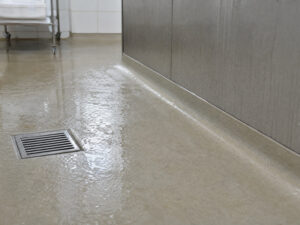
A tiled floor can be hygienic and a seamless floor can be badly detailed. What decides hygiene is the cove, the drain connection and whether the surface can be cleaned without traps.
Seamless finishes also have a failure mode of their own. Where the substrate cracks and the system cannot bridge it, the crack reappears in the surface, and a joint would have been the more honest detail.
Where movement is expected, a designed joint with a flexible filler is cheaper than a crack that appears at random. The floor stays seamless around it, which is what most clients actually want.
That is why we ask what the client means before quoting seamless flooring. If the answer is no joints for cleaning, the detailing matters more than the resin.
Seamless is also a maintenance property, not only a hygiene one. A floor with no joints in the traffic path has fewer edges to spall, so the repair budget over 10 years is lower even when the installation price is higher. That comparison belongs in the tender, and it is the one line a square metre rate cannot show.
Where does PU screed flooring sit against that range?
PU screed flooring is the heavy end of the family: a trowelled mortar, usually 6 to 9 mm, applied in one or two passes with a gauge rake and smoothed by hand.
It exists because some buildings cannot be emptied for a week and cannot tolerate a joint. A PU screed flooring delivers a monolithic surface in a long weekend, at a price that only makes sense against the cost of stopping production.
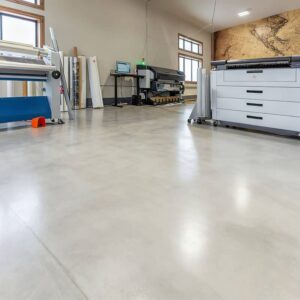
The trade-off is finish. A trowelled surface is flatter than a screed but less glassy than a self-smoother, and clients who expect a mirror are usually asking for the wrong system.
Where a reflective finish is genuinely required, a self-smoothing layer over the mortar delivers it, at the cost of an extra day and an interface that must be prepared properly.
The interface between the two layers is where those jobs fail. A self-smoother applied onto a trowelled surface that has been sealed too soon will delaminate in sheets, and the repair is a full removal.
Cost and programme, side by side
A resin flooring quotation is driven by preparation and thickness, in that order. Resin is rarely more than a third of the installed cost, so arguing about the drum is arguing about the small number; what the work costs per square metre is decided by preparation and thickness.
The same holds for a resin flooring budget. Moving from a coating to a topping changes the number by a factor of three, while changing resin supplier changes it by perhaps fifteen per cent.
Programme follows the same logic. Thin coatings cure faster and open sooner, but they need the same preparation, which is where the days actually go.
Where downtime dominates the cost, topping thickness buys programme rather than durability. A thicker section cures more slowly, and the return-to-service time moves with it.
Cold weather changes the trade-off again. A thick section in an unheated building in January may need 3 days rather than one, which is why winter projects often prefer a coating and accept the wear.
The programme argument cuts both ways. A coating returns a room to service in a day, but if it has to be redone in 3 years, the total downtime is higher than the topping it replaced. That comparison, not the square metre rate, is the one a plant manager should be shown. Price per square metre hides it completely, because the cheap option always looks cheaper in year one.
Table 3: Typical installed range for the three categories, 2026, material plus labour.
| Categoría | Cost index | Duration per 500 m2 | Return to service |
|---|---|---|---|
| Sealer or thin coating | 100 | 1 to 2 days | 24 horas |
| Self-smoothing floor | 180 to 240 | 3 to 4 days | 48 hours |
| Mortar topping | 280 to 380 | 5 to 7 days | 72 hours |
The index is relative, not a price list. It is there to show that the gap between categories is a factor of three, while the difference in resin cost is closer to a factor of one and a half.

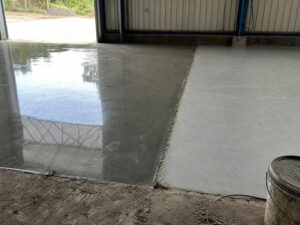
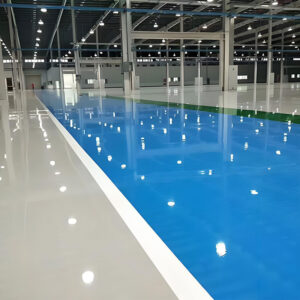
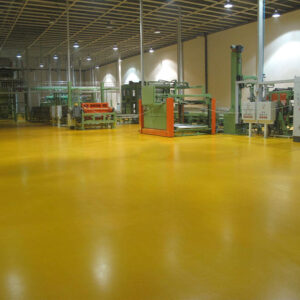
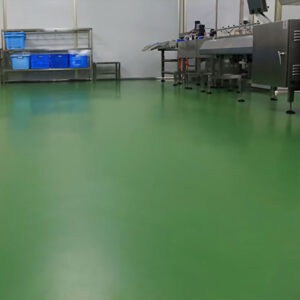
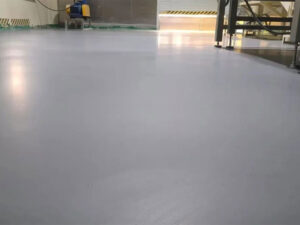
Figure 1: the same binder, two very different floors.
Specifying so the words cannot be misread
Write the build-up as layers, each with a minimum thickness and a product type. Then write what is excluded. A polyurethane flooring specification without exclusions is where the argument starts.

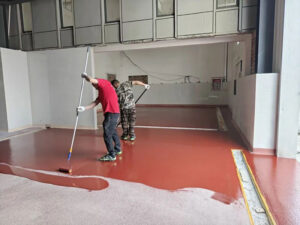
Figure 2: the gauge rake is what turns a mix into a stated thickness.
Name the detailing separately: coves, drains, plinths and joints. Those four items decide whether the floor performs, and none of them appears in a product datasheet.
Finally, state the test and the remedy. Two lines at the end of a specification prevent most of the disputes we are asked to arbitrate.
Where the two scopes are quoted as one number, the excluded items are the place to look. Coving, drain flanges, plinth returns and thresholds are priced by the linear metre, and a wet room can carry enough of them to change the ranking of two bids that looked far apart.
One line is worth adding to any polyurethane flooring specification: the contractor states the expected service life and the traffic it assumes. That sentence alone changes how the price is built.
Ask which document the price is based on. A rate built from a coating schedule and applied to a topping scope produces a number that looks competitive and cannot be delivered, and the gap surfaces as a variation rather than as an error.
It also gives the buyer a basis for comparison that has nothing to do with brand loyalty. Two contractors claiming different service lives for the same build have to explain the difference, and that conversation is usually useful.
What we would choose, and why
For dry storage we specify a two-coat PU system and spend the saving on preparation. For wet processing we specify a mortar, because a polyurethane flooring that fails at year three costs more than the difference in material.
Between those two positions there is a wide band where a self-smoothing resin flooring is the right answer, and that is where most projects actually sit.
The most common error is specifying a coating for a whole building to save money, then discovering that two rooms needed a topping. Forklift traffic in a distribution centre is usually where that discovery is made, and the wear pattern names the room before the invoice does. Retrofitting those rooms later costs more than specifying once.
If you are unsure which side of the line your building falls on, the three questions are simple: does water stand, do wheels turn, does the slab move.
Answer them room by room rather than for the building as a whole. Most sites need more than one answer, and a polyurethane flooring that admits this is easier to price and easier to defend later.
Where a price arrives per square metre with no build-up beside it, the number cannot be compared and should not be accepted as a rate. A polyurethane flooring quotation without a build-up is a headline, not an offer. If this is the first time you have held two quotes side by side, compare the thickness line first, because it also decides whether the levelling screed is yours or the contractor’s.
Frequently asked questions
Is PU flooring the same as a polyurethane coating?
No. The coating is a layer; the flooring is the finished system including preparation, primer, build-up and detailing. One is a material, the other a scope of work.
How thick does a polyurethane floor need to be before it counts as a topping?
Between 0.3 mm for a sealer and 9 mm for a trowelled mortar. The thickness follows the traffic, and it should be stated per layer rather than as a range.
Can a coating be upgraded to a topping later?
Only if the existing layer is sound and can be profiled. Where the failure is at the bond line, the old material comes out first, and that is a different budget.
Why is seamless flooring quoted separately?
Because it is a result rather than a product. The detailing at coves and drains is what makes the surface cleanable, and that work is priced by the metre.
Does a thicker floor always last longer, or does the traffic decide the answer?
No. Above the thickness the load needs, extra material adds cost and shrinkage stress. The useful target is the thinnest build that carries the load with a margin, zone by zone.
What does PU screed flooring cost compared with a coating?
Roughly three times the installed cost per square metre for the same area, most of it in material volume and the extra day on site.
Which one should a food plant specify?
A mortar topping in wet rooms and a self-smoothing floor elsewhere, with the same detailing throughout. Uniform systems are easier to clean than mixed ones.
Why contractors buy PU flooring from Kaida Paint
Kaida Paint supplies both ends of this range: thin polyurethane floor coating for dry areas and trowelled mortars for wet processing. We quote them as separate scopes with separate thicknesses, so a polyurethane flooring tender cannot be read as a coating price. Send the room list and the cleaning method, and the reply separates the two, room by room, with the excluded detailing written down.



 English
 Spanish
 Portuguese
 Arabic
 French
 Italian
 Russian
 Indonesian
 Swedish