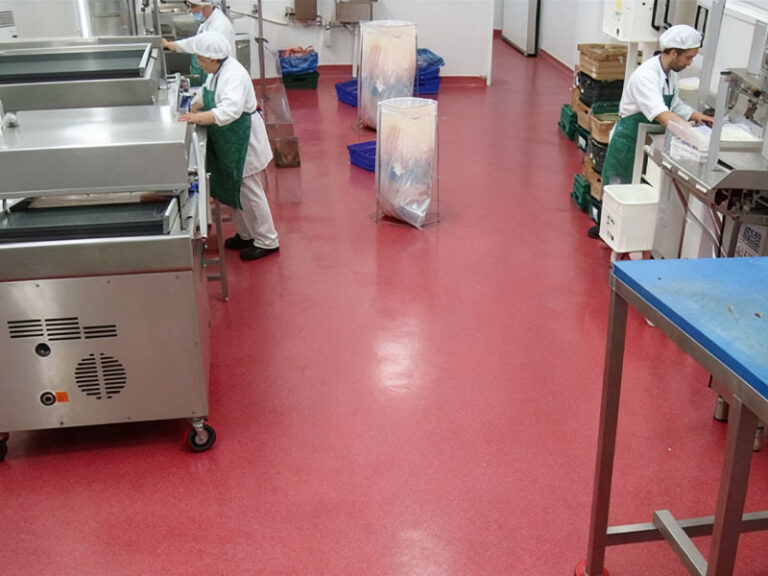
El diseño de un suelo de PU de alto rendimiento para la industria láctea requiere un enfoque sistemático que dé prioridad a la seguridad alimentaria, la seguridad de los empleados y la durabilidad a largo plazo en condiciones extremas. Un diseño eficaz integra una evaluación exhaustiva de las necesidades operativas con la selección de un revestimiento especializado para suelos de uso alimentario, como los suelos de cemento de poliuretano, para crear una superficie sin juntas, resistente a los productos químicos y fácil de limpiar que cumpla las estrictas normas USDA y HACCP.
Esta guía le guiará a través de los pasos críticos, desde la evaluación inicial hasta la especificación del material, garantizando que su solución de suelo pueda soportar choques térmicos, productos químicos agresivos y tráfico constante, manteniendo al mismo tiempo un entorno higiénico.
1. Consideraciones críticas sobre el diseño de suelos para centrales lecheras
La base del éxito de un proyecto de suelos de PU para la industria láctea radica en un conocimiento detallado de los retos específicos de la instalación. Cada zona tiene unas exigencias únicas que influyen directamente en la especificación del suelo.
- Exposición química: Las instalaciones lecheras utilizan agentes de limpieza e higienización agresivos como desinfectantes a base de cloro, soluciones CIP (Clean-in-Place) ácidas y ácidos grasos procedentes de los productos lácteos. El suelo debe ser resistente a los productos químicos para evitar la degradación, las manchas y la proliferación de bacterias.
- Choque térmico y mecánico: Los suelos se someten a frecuentes limpiezas con agua caliente y vapor seguidas de aclarados en frío, lo que provoca choques térmicos. También soportan impactos de herramientas caídas, tráfico rodado pesado y tránsito peatonal, lo que exige una gran resistencia mecánica.
- Higiene y seguridad alimentaria: El suelo debe ser antibacteriano para plantas alimentarias, por ser sin juntas, no poroso y fácil de higienizar. Esto impide que penetre la humedad y la materia orgánica, que pueden provocar la proliferación de microbios como Listeria y E. coli.
- Seguridad bajo los pies: Las zonas de procesamiento húmedas son peligrosas por resbalones. Un suelo antideslizante con un acabado texturizado, incluso cuando está mojado, no es negociable para la seguridad del personal.
2. Proceso de diseño de suelos paso a paso
Un proceso de diseño metódico garantiza que no se pase por alto ningún factor crítico, lo que da lugar a un producto robusto y conforme a las normas. revestimiento de poliuretano industrial para suelos.
Paso 1: Realizar una evaluación global de la zona
Empiece por crear un mapa de sus instalaciones y clasificar cada zona en función de sus factores de estrés específicos.
- Zonas de alto estrés: Salas de procesamiento, zonas de lavado, muelles de carga. Éstas requieren los sistemas más robustos, como los suelos de cemento de poliuretano.
- Zonas de estrés medio: Zonas de envasado, almacenes frigoríficos.
- Zonas de baja tensión: Oficinas, almacén seco.
Paso 2: Definir los requisitos de rendimiento
Para cada área, documente las necesidades específicas de rendimiento. Esto se convierte en su especificación técnica.
- Lista de resistencias químicas: Documentar todos los productos químicos, sus concentraciones y temperaturas.
- Requisitos de carga: Especifique el tráfico de carretillas elevadoras, las cargas puntuales y las expectativas de impacto.
- Resistencia al deslizamiento: Especifique la resistencia al deslizamiento en mojado requerida (por ejemplo, R10, R11 según DIN 51130).
- Temperatura: Defina el rango operativo, incluidas las temperaturas de limpieza in situ (CIP).
Paso 3: Seleccionar el sistema de suelo de PU adecuado
No todos los suelos pu son iguales. En función de su evaluación, elija el sistema adecuado.
Comparación de la idoneidad de los sistemas de suelos para entornos lecheros
| Tipo de sistema | Lo mejor para | Principales ventajas | Limitaciones |
|---|---|---|---|
| Suelos de poliuretano-cemento | Procesamiento, Lavado, Congeladores | Excelente resistencia al choque térmico, muy alta resistencia química, sin juntas, suelo aprobado por la USDA | Mayor coste, requiere instalación profesional |
| Mortero de poliuretano de alta resistencia | Zonas de tráfico intenso, muelles de carga | Durabilidad extrema, gran capacidad de carga, antideslizante | Puede ser una superficie más rugosa |
| Suelo autonivelante de poliuretano | Embalaje, zonas secundarias | Crea un suelo perfectamente liso, fácil de limpiar y sin juntas. | Menos resistente al choque térmico extremo que el cemento PU |
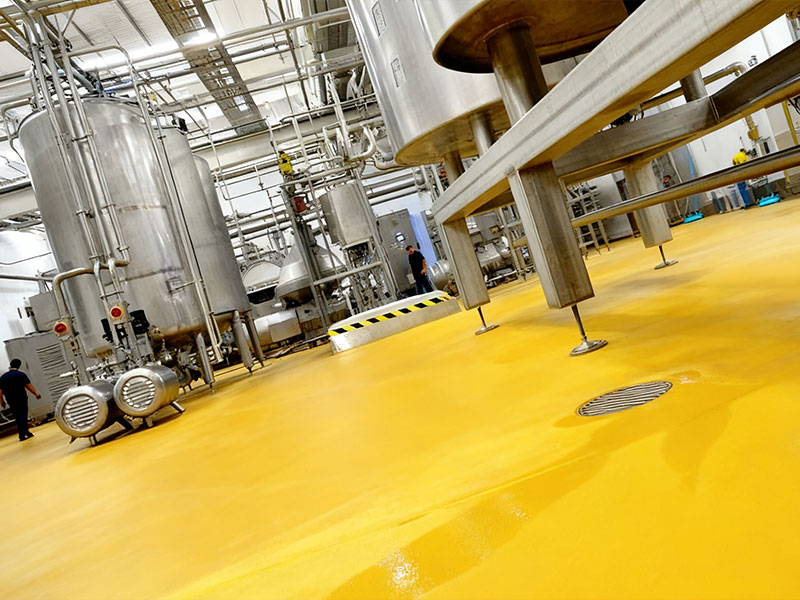
3. Epoxi frente a poliuretano para suelos de centrales lecheras
Una pregunta habitual en la especificación es epoxi frente a poliuretano. Aunque el epoxi es un revestimiento resistente, los sistemas de poliuretano suelen ofrecer mejores resultados en el sector lácteo.
- Resistencia al choque térmico: El epoxi puede volverse quebradizo y agrietarse bajo ciclos repetidos de calor/frío. Los suelos de PU conservan su flexibilidad, por lo que son ideales para resistir los choques térmicos.
- Resistencia química: El poliuretano ofrece una resistencia superior a una gama más amplia de ácidos y agentes de limpieza que se encuentran en las lecherías.
- Estabilidad UV: Algunos productos de poliuretano para el acabado de suelos son estables a los rayos UV y no amarillean, lo que resulta beneficioso en zonas con luz natural.
4. Garantizar el cumplimiento de las normas de seguridad alimentaria
El suelo es un punto de control crítico para su plan de seguridad alimentaria. El diseño debe facilitar un suelo que cumpla el APPCC.
- Suelos aprobados por la USDA: Para las instalaciones inspeccionadas por la USDA, el suelo debe ser no absorbente, sin juntas y fácil de limpiar. La mayoría de los sistemas de suelos de resina de poliuretano, si se instalan correctamente, pueden cumplir estos requisitos.
- Creación de bases de cala: Integrar una base acanalada (una transición curva y sin juntas de la pared al suelo) es una buena práctica. Elimina el ángulo de 90 grados, difícil de limpiar, en el que pueden proliferar las bacterias, lo que hace que su suelo industrial sin juntas sea realmente completo.
5. Instalación y mantenimiento a largo plazo
Un diseño perfecto puede fallar con una mala ejecución. La instalación y el mantenimiento adecuados son primordiales.
- Preparación de la superficie: El sustrato de hormigón debe estar sano, limpio y perfilado. Este es el paso más crítico para la adherencia.
- Aplicación profesional: Las soleras de poliuretano y los sistemas de suelos de poliuretano autonivelantes requieren instaladores formados para garantizar una mezcla, aplicación y curado correctos.
- Protocolo de mantenimiento: Utilice limpiadores con pH neutro recomendados para poliuretano para suelos de hormigón. Evite los estropajos abrasivos y los disolventes fuertes que no figuren en la guía de resistencia química del sistema.
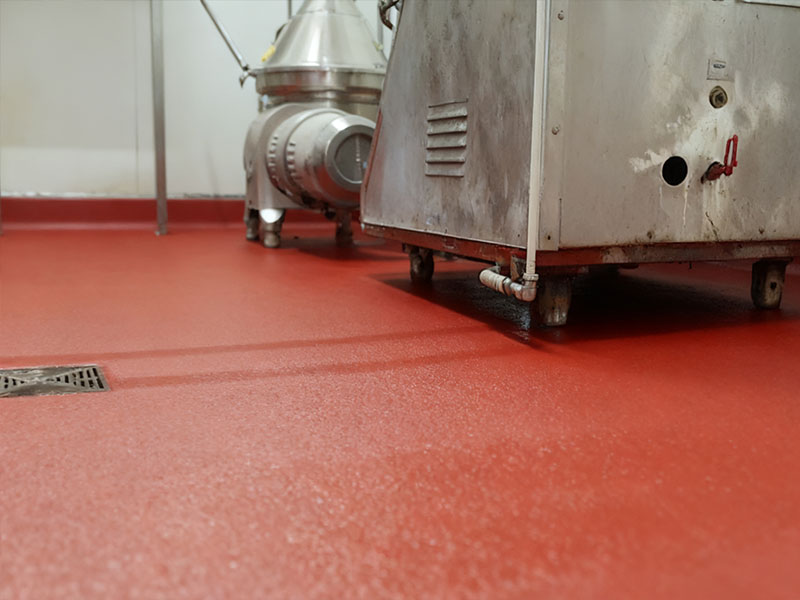
Acerca de KAIDA PAINT y nuestras soluciones para la industria láctea
En PINTURA KAIDA, Estamos especializados en el desarrollo de sistemas de revestimiento de suelos alimentarios de alto rendimiento diseñados para los entornos más exigentes, incluida la industria láctea. Nuestro producto estrella, el revestimiento de cemento de poliuretano, está formulado específicamente para hacer frente a los principales retos del choque térmico, la corrosión química y los fuertes impactos.
Nuestras ventajas únicas:
- Rendimiento probado: Nuestros sistemas han sido probados para soportar los productos químicos y los regímenes de limpieza específicos de la producción láctea, lo que garantiza su durabilidad a largo plazo como suelo resistente a productos químicos para la industria láctea.
- Experiencia normativa: Proporcionamos sistemas diseñados para cumplir las directrices sobre suelos aprobadas por la USDA y conformes al sistema HACCP, lo que le dará confianza durante las auditorías.
- Asociación técnica: Ofrecemos algo más que un producto: proporcionamos asistencia técnica completa, desde el diseño y las especificaciones hasta la orientación para la instalación.
¿Está listo para diseñar una solución de suelos que garantice la seguridad, la conformidad y la longevidad?
Póngase en contacto hoy mismo con los expertos de KAIDA PAINT para una consulta gratuita y asistencia sobre especificaciones.



 English
 Spanish
 Portuguese
 Arabic
 French
 Italian
 Russian
 Indonesian
 Swedish