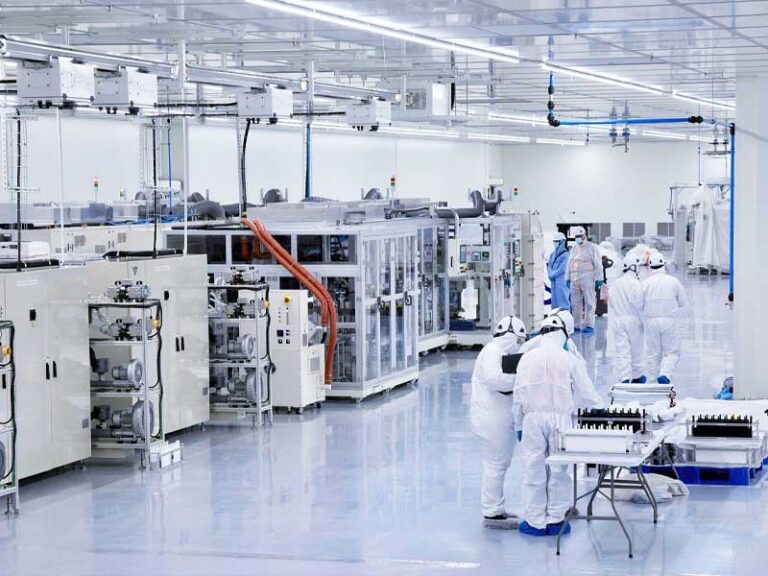
The best chemical resistant coating is selected based on chemical exposure, temperature, and substrate conditions. Novolac epoxy is generally preferred for lithium battery manufacturing floors because it combines electrolyte resistance, NMP resistance, ESD protection, and durability. Phenolic and fluoropolymer coatings are preferred for extreme acid exposure and high-temperature chemical service.
Chemical Resistant Coating Selection Quick Guide
| Aplicación | Best Coating | Por qué |
|---|---|---|
| EV battery factory floors | Novolac epoxy ESD flooring | NMP resistance + static control |
| Lithium electrolyte handling areas | Novolac epoxy / fluoropolymer | Solvent resistance |
| Sulfuric acid storage tanks | Phenolic coating | High acid resistance |
| Chemical bund / secondary containment | Vinyl ester / novolac epoxy | Immersion protection |
| Cleanroom / dry room floors | Low VOC ESD epoxy | Low contamination, non-particulating |
1. What Are Chemical Resistant Coatings?
Chemical resistant coatings are specialized protective barriers applied to steel, concrete, and equipment surfaces to prevent degradation from aggressive chemicals, solvents, acids, alkalis, and process fluids. These coatings function through dense polymer cross-linking that creates an impermeable film, preventing chemical permeation to the underlying substrate.
Unlike standard paints or general-purpose industrial coatings, chemical resistant systems are formulated with specific resin chemistries—epoxy, novolac epoxy, phenolic, polyurethane, or fluoropolymer—each selected to withstand defined chemical exposure profiles. They are engineered for:
- Continuous immersion in chemical baths or process streams
- Splash and spill protection in manufacturing and handling areas
- Fume and vapor resistance in enclosed processing environments
- Thermal cycling from washdowns and process temperature variations
- Mechanical abuse including foot traffic, forklifts, and dropped loads
Properly selected and applied chemical resistant coating systems can significantly extend service life, often achieving several times longer protection compared with unprotected substrates, depending on exposure conditions and maintenance practices.
2. Chemical Resistant Coating vs Corrosion Resistant Coating
A common point of confusion in industrial specification is the distinction between chemical resistant coatings and corrosion resistant coatings. Understanding the difference is critical for proper system selection.
| Comparison Factor | Chemical Resistant Coating | Corrosion Resistant Coating |
|---|---|---|
| Main purpose | Resist chemical attack from acids, solvents, alkalis | Prevent electrochemical corrosion from moisture, salts, humidity |
| Protection mechanism | Polymer resistance to chemical permeation and degradation | Barrier protection or sacrificial protection (zinc-rich) |
| Primary threat | Chemical molecules penetrating and attacking polymer matrix | Electrolytic reaction between anode and cathode |
| Typical exposures | Sulfuric acid, NMP, acetone, HCl, caustic solutions | Salt spray, humidity, marine atmospheres |
| Example systems | Novolac epoxy, phenolic, fluoropolymer | Zinc-rich epoxy, polyurethane topcoats, thermal spray |
| Testing standard | ASTM D543 (chemical immersion) | ASTM B117 (salt spray) |
| Service environment | Chemical processing, battery manufacturing, tank linings | Outdoor equipment, structural steel, marine applications |
Key takeaway: Many high-performance systems offer both chemical and corrosion resistance. Novolac epoxy, for example, resists chemical attack while also providing a barrier against moisture and oxygen. However, for highly corrosive chemical exposures, chemical resistance is the primary selection driver, with corrosion resistance as a secondary benefit. For outdoor equipment in marine environments without chemical exposure, corrosion resistant coatings are the appropriate choice.
3. Chemical Resistant Coating vs Epoxy Flooring: What’s the Difference?
A frequently asked question from facility managers and procurement professionals is how chemical resistant coatings differ from standard epoxy flooring systems. Understanding this distinction is essential for proper specification.
| Factor | Chemical Resistant Coating | Standard Epoxy Flooring |
|---|---|---|
| Main purpose | Chemical protection from aggressive substances | Wear protection, aesthetics, light chemical resistance |
| Exposición química | Strong acids, solvents, NMP, caustics | Light chemical splash, oils, mild cleaners |
| Resin chemistry | Novolac epoxy, phenolic, fluoropolymer, vinyl ester | Bisphenol A / F epoxy |
| Cross-link density | High (novolac > standard epoxy) | Moderado |
| Typical thickness | 500 µm – 3,000+ µm | 300 µm – 2,000 µm |
| Temperature resistance | Up to 150–300°C depending on system | Typically ≤ 80°C for standard epoxies |
| ESD capability | Available in advanced formulations | Limitado |
| Cleanroom compatibility | Low ionic contamination options available | May not meet strict cleanroom standards |
| Typical applications | Battery plants, chemical factories, tank linings | Warehouses, showrooms, light industrial workshops |
| Cost per square foot | $15–100+ | $5–25 |
When to choose each:
Choose Chemical Resistant Coating when:
- Facility handles concentrated acids, organic solvents, or NMP
- Continuous immersion or frequent chemical spills occur
- ESD protection is required (battery manufacturing)
- Cleanroom ionic contamination control is specified
- Elevated temperature chemical exposure is present
Choose Standard Epoxy Flooring when:
- Chemical exposure is limited to mild spills or occasional contact
- Primary requirements are durability, aesthetics, and easy cleaning
- Budget is a primary constraint
- No extreme chemical exposure is present
4. Best Chemical Resistant Coating Types: Comparison Guide
4.1 Chemical Resistant Coating Types Overview
| Tipo de revestimiento | Resistencia química | Tolerancia térmica | Coste relativo | Typical Applications |
|---|---|---|---|---|
| Epoxi estándar | Bien | 120°C (248°F) | Low-Medium | General chemical splash areas, maintenance |
| Novolac Epoxy | Excelente | 150°C (302°F) | Medio-Alto | Battery floors, acid exposure, NMP resistance |
| Poliuretano | Medio-Alto | 100°C (212°F) | Low-Medium | Outdoor chemical areas, UV-resistant topcoats |
| Phenolic | Excelente | 177°C (350°F) | Medio-Alto | Acid tanks, immersion service, high-temperature chemical |
| Fluoropolymer | Superior | 300°C (572°F) | Alta | Extreme chemical service, high-purity processing |
4.2 Epoxy Coatings
Epoxy resins, cured with amine or polyamide hardeners, form dense, cross-linked films with excellent adhesion to steel and concrete.
Performance Highlights:
- Broad resistance to acids, alkalis, and many solvents
- Operating range: -40°C to 120°C (-40°F to 248°F)
- High compressive and impact strength
- Excellent wetting and penetration of concrete substrates
Limitations:
- Limited resistance to strong organic solvents and aggressive acids at elevated temperatures
- Susceptible to UV degradation (requires topcoat for outdoor exposure)
- Shorter pot life in hot climates
4.3 Novolac Epoxy Coatings
Novolac epoxies, synthesized from phenolic novolac resins and epichlorohydrin, achieve higher cross-link density than standard epoxies, delivering superior chemical resistance.
Performance Highlights:
- Resistance to concentrated acids (sulfuric, hydrochloric, phosphoric)
- Resistance to organic solvents including NMP and ketones
- Operating temperature up to 150°C (302°F)
- Excellent immersion resistance
- Higher glass transition temperature (Tg >120°C)
Las mejores aplicaciones:
- Battery electrolyte handling areas
- NMP exposure zones
- EV battery manufacturing plant flooring systems
- Chemical plant secondary containment
- Acid storage bund areas
4.4 Polyurethane Coatings
Polyurethane coatings offer a balance of chemical resistance, flexibility, and weatherability.
Performance Highlights:
- Resistance to caustic fluids, oils, and fuels
- Excellent abrasion and impact resistance
- UV stability (aliphatic grades)
- Flexibility accommodates substrate movement
Limitations:
- Lower chemical resistance compared to epoxies and novolacs
- Susceptible to strong acids and solvents
- Generally used as topcoats over epoxy primers
4.5 Phenolic Coatings
Phenolic resins, typically baked or force-cured, deliver exceptional resistance to low-pH chemicals and high temperatures.
Performance Highlights:
- Withstand concentrated sulfuric acid (98%), hydrochloric acid (37%), and phosphoric acid
- Temperature resistance up to 177°C (350°F) in vapor exposure
- Superior permeation resistance
- Excellent for tank linings and immersion service
Limitations:
- Limited resistance to strong alkalis and oxidizing agents
- Typically require heat curing (bake schedules 150–200°C)
- Dark color limits aesthetic applications
4.6 Fluoropolymer Coatings (PTFE, PFA, ETFE)
Fluoropolymers provide the broadest chemical resistance available in coating technology.
Performance Highlights:
- Resistance to virtually all chemicals except molten alkali metals and some fluorinating agents
- Continuous service up to 300°C (572°F)
- Non-stick surface simplifies cleaning and reduces fouling
- Extremely low permeation rates
- Excellent for high-purity and vacuum applications
Limitations:
- Higher material and application cost
- Requires specialized application equipment
- Limited adhesion to substrates without primers
5. How to Select the Right Chemical Resistant Coating
Selection requires systematic evaluation of exposure conditions, substrate, and operational parameters.
5.1 Chemical Exposure Assessment
| Assessment Factor | Key Questions | Selection Impact |
|---|---|---|
| Chemical type | Acids (mineral/organic), alkalis, solvents, oxidizers? | Defines resin compatibility |
| Concentración | Dilute (<10%), moderate (10–50%), concentrated (>50%)? | Higher concentration requires novolac, phenolic, or fluoropolymer |
| Temperatura | Ambient (20°C), elevated (50–100°C), high (>100°C)? | Thermal stability dictates resin system |
| Exposure mode | Continuous immersion, splash, spill, or vapor? | Immersion demands phenolic or fluoropolymer |
| pH range | Acidic (<7), neutral (7), alkaline (>7)? | Guides novolac vs. phenolic selection |
5.2 Decision Tree: How To Choose Chemical Resistant Coatings?
Step 1: Identify primary chemical exposure
What chemical family?
│
├── Mineral acids (sulfuric, HCl, nitric, phosphoric)
│ │
│ ├── High concentration (>50%) + high temp → Phenolic or Fluoropolymer
│ └── Moderate concentration + ambient → Novolac Epoxy
│
├── Organic solvents (NMP, acetone, toluene, MEK, carbonates)
│ │
│ ├── Continuous immersion → Fluoropolymer or Specialized Novolac
│ └── Splash/spill exposure → Novolac Epoxy or Polyurethane
│
├── Alkalis/caustics (NaOH, KOH)
│ │
│ └── Epoxy (standard or novolac) or Polyurethane
│
└── Oxidizers (H₂O₂, sodium hypochlorite)
 │
 └── Fluoropolymer or Ceramic-filled system
Step 2: Determine substrate type
| Sustrato | Preparation Required | Primer System |
|---|---|---|
| Carbon steel | SSPC-SP10 near-white blast | Zinc-rich epoxy or primer specified by coating manufacturer |
| Stainless steel | SSPC-SP10 with non-metallic abrasive | Passivation + specialized primer |
| Hormigón | ICRI CSP 3–5 profile, <3 lb moisture vapor | Moisture-tolerant epoxy primer |
| Existing coating | Full removal or compatibility testing | Primer per manufacturer specification |
Step 3: Evaluate operational requirements
- Thermal cycling – Select coating with Tg > maximum operating temperature
- Mechanical loading – Choose high-build systems (≥500 µm) for heavy traffic areas
- Cleanroom standards – Specify low-VOC, non-particulating systems with ionic contamination testing
- Fire protection – Consider intumescent coatings for structural steel
- Cumplimiento de la normativa – Verify VOC content meets local limits
6. Why Battery Manufacturing Plants Need Chemical Resistant Flooring
Battery production facilities, particularly those manufacturing lithium-ion cells for electric vehicles and energy storage systems, present uniquely aggressive environments that rapidly degrade conventional flooring and equipment coatings.
6.1 Aggressive Chemical Exposure Profile
Lithium-ion battery manufacturing involves multiple corrosive and solvent-based chemicals:
- Electrolyte solvents: Ethylene carbonate, dimethyl carbonate, diethyl carbonate—all aggressive organic solvents that swell and dissolve standard epoxy and polyurethane coatings
- Lithium hexafluorophosphate (LiPF₆): Highly reactive with moisture, producing hydrofluoric acid (HF) that attacks concrete and steel
- N-Methyl-2-pyrrolidone (NMP) : Widely used in electrode coating processes; causes severe swelling in standard resin systems
- Hydrochloric acid (30%): Used in some cleaning and etching processes
- Caustic cleaning agents: Used for equipment and floor sanitation
6.2 Specialized Facility Requirements
Beyond chemical resistance, battery manufacturing floors must satisfy:
Electrostatic Dissipative (ESD) Properties
Static discharge in solvent-rich environments presents explosion hazards. ESD flooring maintains surface resistance between 1×10⁶ and 1×10⁹ ohms, safely dissipating static charges.
Low Ionic Contamination
Trace chloride and other ionic contaminants on production floors can migrate into cells during assembly, causing internal short circuits and reduced battery life. Many battery cleanroom coating specifications require extremely low ionic contamination levels, often below 5 ppm chloride depending on cell manufacturer requirements.
Moisture Vapor Tolerance
Dry rooms maintain dew points below -40°C. Flooring systems must withstand or block moisture vapor transmission without blistering or delamination.
Estabilidad térmica
Process deviations can expose floors to temperatures up to 150°C (302°F). Coatings must maintain integrity through thermal cycling without cracking or softening.
Cleanroom Compatibility
Surfaces must be seamless, non-particulating, and easy to sanitize to maintain ISO 14644 cleanroom classifications.
6.3 Critical Performance Specifications for Battery Factory Flooring
| Requisito | Especificación | Método de ensayo |
|---|---|---|
| Chemical resistance (NMP) | Validated by laboratory immersion testing (14+ days depending on formulation) | ASTM D543 |
| ESD resistance | 1×10⁶ – 1×10⁹ ohms | ASTM F150 |
| Ionic contamination | <5 ppm chloride (per cell manufacturer specification) | Ion chromatography |
| Abrasion resistance | <50 mg weight loss per 1000 cycles (CS-17 wheel, 1000g) | ASTM D4060 |
| Resistencia a los golpes | No cracking at 40 in-lb (4.5 J) | ASTM D2794 |
| Compression strength | >10,000 PSI (69 MPa) | ASTM D695 |
| Temperature resistance | No delamination after 150°C (302°F) exposure | Thermal cycling test |
| Transmisión del vapor de humedad | <3 lb/1000 ft²/24hr (calcium chloride test) | ASTM E1907 |
6.4 Installation in Dry Rooms and Cleanrooms
Moisture Management
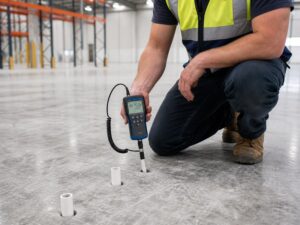
Concrete slabs in battery dry rooms must achieve <3 lb moisture vapor emission rate (MVER) before coating application. Epoxy moisture barriers or vapor-retarding primers are applied to prevent osmotic blistering.
Perfil de la superficie
ICRI CSP 3–5 profile (equivalent to 40–120 grit sandpaper texture) ensures mechanical adhesion. Achieved by shot blasting, scabbling, or diamond grinding.
Protocolo de aplicación
- Ambient temperature: 15–30°C (59–86°F)
- Relative humidity: <80%
- Dew point: Surface temperature ≥5°C (9°F) above dew point
- Ventilation: 10–15 air changes per hour during application and cure
6.5 Fire Resistant Coatings for Battery Manufacturing Plants
Lithium-ion battery fires present unique challenges requiring specialized fire protection. Intumescent epoxy coatings provide passive fire protection for structural steel:
- Expand to 40–50 times original thickness when heated, forming insulating char
- Slow heat transfer to steel substrate, maintaining structural integrity
- Provide 60–120 minutes fire resistance depending on DFT (dry film thickness)
- Applied off-site (shop-applied) or on-site, accelerating construction schedules
- Compatible with decorative topcoats
Search keywords related to this section include: battery plant fire protection coating, lithium battery fire resistant coating, intumescent coating for battery facilities.
7. Chemical Plant Applications
Chemical processing facilities handle aggressive chemicals across multiple process areas, each demanding specific coating solutions.
7.1 Common Chemical Plant Exposures by Area
| Process Area | Typical Chemical Exposures | Recommended Coating Systems |
|---|---|---|
| Acid storage tanks | Sulfuric acid (98%), HCl (37%), nitric acid | Baked phenolic, fluoropolymer |
| Caustic storage | Sodium hydroxide, potassium hydroxide | Epoxy, polyurethane |
| Solvent handling | Acetone, toluene, xylene, MEK | Novolac epoxy, fluoropolymer |
| Secondary containment | Mixed chemicals, spills, leachate | Epoxy novolac, vinyl ester |
| Process equipment | Process acids, alkalis, solvents at temperature | Phenolic, fluoropolymer |
| Outdoor pipe racks | Atmospheric corrosion, chemical fume exposure | Polyurethane topcoat over epoxy primer |
| Wastewater treatment | Mixed acids, alkalis, salts | Epoxy novolac |
7.2 Secondary Containment and Bund Linings
Secondary containment areas require coatings that withstand:
- 72-hour chemical containment per EPA SPCC requirements
- Continuous immersion of spilled chemicals until recovery
- Choque térmico from emergency washdowns and process upsets
- Mechanical impact from vehicle traffic and dropped tools
Recommended Systems:
- Reinforced composite linings (vinyl ester or polyester with glass flake) for severe immersion
- Epoxy novolac/polysulfide hybrids for combined chemical and elastomeric requirements
- Thickness: 40–80 mils (1,000–2,000 µm) for heavy-duty containment
7.3 Tank Linings and Process Equipment
Internal tank linings require:
- Immersion resistance to stored chemical at maximum service temperature
- Pinhole-free application (100% holiday testing)
- Edge retention and corrosion protection at welds and flanges
- Compatibility with cleaning and inspection procedures
Phenolic tank linings (baked systems) provide proven performance for:
- Sulfuric acid storage tanks
- Hydrochloric acid receivers
- Phosphoric acid evaporators
- Nitric acid handling equipment
8. Surface Preparation for Chemical Resistant Coatings
Surface preparation is the single most critical factor determining coating service life. Properly prepared surfaces ensure mechanical adhesion, chemical bonding, and defect-free film formation.
8.1 Steel Surface Preparation Standards
| Preparation Method | Estándar | Surface Finish | Profile Depth | Aplicación |
|---|---|---|---|---|
| Solvent cleaning | SSPC-SP1 | Oil/grease-free surface | N/A | Pre-cleaning, all applications |
| Hand tool cleaning | SSPC-SP2 | Loose rust/scale removed | 25–50 µm | Small touch-up, light service |
| Power tool cleaning | SSPC-SP3 | Tight rust/scale remaining | 25–50 µm | Repairs, limited exposure |
| Commercial blast | SSPC-SP6 | 2/3 surface clean, minimal staining | 50–75 µm | General chemical service |
| Near-white blast | SSPC-SP10 | 95% surface clean | 75–100 µm | High-performance chemical service |
| White metal blast | SSPC-SP5 | 100% clean, no staining | 75–100 µm | Maximum adhesion, immersion service |
Abrasive Selection:
- Garnet: Low embedment, low dust, suitable for stainless steel
- Chilled iron grit: High profile depth, recyclable, for thick coatings
- Aluminum oxide: Clean cutting, non-recyclable, for critical surfaces
- Copper slag: Cost-effective, for carbon steel in mild service
- Steel shot/ grit: Recyclable, for heavy industrial applications
8.2 Concrete Surface Preparation
| Paso | Method | Especificación |
|---|---|---|
| Surface cleaning | Shot blasting, scabbling, or diamond grinding | ICRI CSP 3–5 profile |
| Moisture testing | Calcium chloride test | <3 lb/1000 ft²/24hr |
| pH testing | Surface pH meter | pH 7–9 for epoxy compatibility |
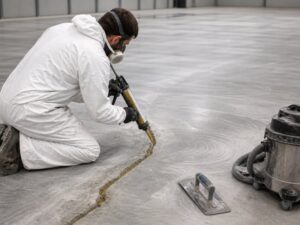
| Crack repair | Epoxy injection or routing and sealing | Structural integrity restored |
| Cebado | Chemical-resistant primer | Applied within 24hr of surface preparation |
Concrete Compatibility Requirements:
- Concrete age: ≥28 days (minimum)
- Compressive strength: ≥3,000 PSI (20.7 MPa)
- Surface tensile strength: ≥150 PSI (1.0 MPa) per ASTM D4541
- Properly cured: No curing compounds or sealers remaining on surface
8.3 Environmental Conditions During Preparation
| Parámetro | Requisito | Monitoring Frequency |
|---|---|---|
| Surface temperature | ≥5°C (41°F) above dew point | Every 2 hours |
| Air temperature | 10–35°C (50–95°F) | Every 2 hours |
| Relative humidity | ≤85% | Every 2 hours |
| Steel surface temperature | ≥10°C (50°F) for blast/thermal spray | Every 2 hours |
| Wind speed (outdoor) | ≤15 mph (6.7 m/s) | Before and during work |
9. Installation and Application Guide
9.1 Application Methods
| Method | Lo mejor para | Espesor típico | Ventajas | Limitaciones |
|---|---|---|---|---|
| Pulverizador sin aire | Large flat surfaces, floors, walls | 100–500 µm per pass | High production rate, uniform thickness | Overspray, requires containment |
| Pulverizador convencional | Complex geometry, equipment | 50–200 µm per pass | Precise control, low overspray | Lower productivity |
| Plural-component spray | Fast-curing materials (polyurea, epoxies) | 200–1,000 µm per pass | Rapid cure, thick films | Equipment cost, maintenance |
| Roller | Concrete floors, large areas | 100–300 µm per pass | Simple, low equipment cost | Limited build per coat |
| Brush / Trowel | Edges, touch-up, high-build mortar systems | 500–2,000 µm | High-build, excellent adhesion | Labor intensive, slower |
9.2 Cure Schedule Management
Chemical-resistant coatings require specific environmental conditions during cure:
Epoxy and Novolac Systems:
- Minimum temperature: 10°C (50°F) for standard epoxies, 15°C (59°F) for novolacs
- Optimal cure: 20–25°C (68–77°F) for 7–14 days
- Humidity: <85% RH
- Heat curing: 40–60°C (104–140°F) accelerates cross-linking and develops properties faster
- Low-temperature curing (5–10°C): Requires winter-grade formulations
Phenolic Systems:
- Air-dry phenolics: 7–14 days at 20°C (68°F)
- Baked phenolics: 150–200°C (302–392°F) for 1–2 hours
- Proper ventilation required: VOC and formaldehyde emissions during cure
Fluoropolymer Systems:
- PTFE/PFA/ETFE: Sintering at 300–380°C (572–716°F) required
- Application: Electrostatic powder spray or liquid dispersion
- Specialized application equipment required
9.3 Quality Control During Application
| Test | Method | Acceptance Criteria | Frequency |
|---|---|---|---|
| Wet film thickness | WFT gauge | Within specified range | Every 100 ft² |
| Dry film thickness | Magnetic gauge | Within ±10% of specified DFT | Every 100 ft² |
| Holiday detection | DC spark tester (high-voltage) | Zero discontinuities | 100% of critical areas |
| Adhesion pull-off | ASTM D4541 (portable tester) | >1,000 PSI for steel; >300 PSI for concrete | Random locations, minimum 3 per day |
| Visual inspection | Naked eye + 10x magnifier | No runs, sags, pinholes, orange peel, or contamination | Continuous |
| Cure schedule logging | Temperature/humidity recorder | Compliant with specified cure schedule | Continuous |
10. Chemical Resistant Coating Testing Standards
10.1 Standard Test Methods for Coating Performance
| Test Type | Método de ensayo | What It Measures | Typical Acceptance Criteria |
|---|---|---|---|
| Chemical immersion | ASTM D543 | Resistance to chemicals; weight change, hardness, blistering | ≤5% weight change, no softening, no blistering |
| Salt spray resistance | ASTM B117 | Corrosion protection performance | 1,000+ hours, ≤2 mm creep from scribe |
| Adhesion (pull-off) | ASTM D4541 | Bond strength to substrate | >1,000 PSI for steel, >300 PSI for concrete |
| Abrasion resistance | ASTM D4060 | Wear resistance | <50 mg weight loss per 1,000 cycles |
| Resistencia a los golpes | ASTM D2794 | Mechanical durability and flexibility | No cracking at 40 in-lb (4.5 J) |
| Dureza | ASTM D2240 (Shore D) | Surface hardness | ≥75 Shore D for heavy-duty floors |
| Resistencia a los arañazos | ASTM D7027 | Surface mar resistance | ≥2,000 g load for floor coatings |
| Thermal cycling | Internal method | Resistance to temperature changes | 50 cycles, -40°C to +150°C, no cracking or delamination |
| ESD resistance | ASTM F150 | Electrical resistance | 1×10⁶ – 1×10⁹ ohms |
| Ionic contamination | Ion chromatography | Extractable ions | <5 ppm chloride (per specification) |
| VOC content | EPA Method 24 / ISO 11890 | Volatile organic compound content | Meets regional regulatory limits |
10.2 Long-Term Performance Validation
While accelerated testing provides initial data, long-term field performance is the ultimate validation. Coating manufacturers maintain extensive chemical resistance guides based on:
Continuous immersion testing at varying temperatures and concentrations, documented over periods from 30 days to 12+ months.
Actual service history in identical or similar chemical exposures, validated through inspection and testing at regular intervals (1, 3, 5, 10 years).
Site inspections and monitoring of in-service coatings provide the highest confidence level for critical applications.
11. Chemical Resistant Coating Cost: Price Per Square Foot
Cost is a critical decision factor for facility projects. Coating costs vary widely based on system complexity, surface condition, and project scale.
11.1 Typical Installed Cost Ranges
| Tipo de sistema | Coste del material | Total Installed Cost | Typical Applications |
|---|---|---|---|
| Light-duty epoxy splash coating | $5–10/ft² | $8–15/ft² | Light chemical splash, maintenance areas |
| Heavy-duty epoxy/novolac floor coating | $10–20/ft² | $20–40/ft² | Battery production floors, chemical handling |
| High-performance novolac with ESD | $15–25/ft² | $30–50/ft² | Battery dry rooms, cleanrooms with ESD |
| Phenolic tank lining (baked) | $15–30/ft² | $40–70/ft² | Acid storage tanks, process equipment |
| Fluoropolymer coating system | $25–50/ft² | $50–100+/ft² | Extreme chemical service, high-purity |
11.2 Chemical Resistant Coating Cost Factors
Several factors influence the final installed cost:
| Factor de coste | Impact on Price | Typical Range |
|---|---|---|
| Chemical exposure level | Higher chemical resistance requires more expensive resin systems | +20–100% |
| Espesor del revestimiento | Greater DFT requires more material and labor | +10–30% per additional 500 µm |
| Surface preparation | Existing condition determines preparation cost | $3–20/ft² |
| ESD requirements | Conductive additives increase material cost | +10–30% |
| Cleanroom requirements | Lower contamination materials cost more | +10–20% |
| Installation environment | Complex access, height, or restricted areas increase labor | +15–50% |
| Volumen del proyecto | Larger projects benefit from economy of scale | -10–30% for >10,000 ft² |
| Ubicación geográfica | Labor rates vary significantly | +10–40% in high-cost regions |
11.3 Value Proposition and ROI
Quantifiable benefits:
- Extended service life: 3–5× longer than uncoated or conventional painted surfaces
- Reduced maintenance costs: Elimination of annual touch-up and re-coating cycles
- Prevented production downtime: Coated assets require fewer shutdowns, reducing lost production value
- Safety compliance: Secondary containment integrity maintains regulatory compliance
- Asset value preservation: Protected equipment maintains resale value
- Reduced safety incidents: Fewer trips, slips, and chemical exposure events
Example ROI calculation:
- Uncoated concrete floor in battery plant: 2–3 years before chemical degradation requires replacement
- Novolac epoxy system installed cost: approximately $35/ft²
- Expected service life: 15+ years with proper maintenance
- Replacement cost savings: 5–7× over 15-year period
12. Common Failure Modes and Prevention
12.1 Chemical Degradation Mechanisms
Swelling
Solvent molecules penetrate the polymer matrix, causing dimensional change and loss of adhesion. Common with improper polymer selection for specific chemicals.
- Prevention: Select coating with proven resistance to the specific solvent at operating temperature and concentration.
Blistering
Osmotic pressure drives moisture or chemicals through the coating to the substrate interface, forming fluid-filled blisters.
- Prevention: Proper surface preparation, moisture vapor barrier primers, adequate DFT, and proper cure schedule.
Cracking
Thermal cycling or mechanical stress exceeds coating flexibility. Occurs when coating Tg is near or below operating temperature range.
- Prevention: Select coating with Tg > maximum operating temperature; specify flexible grades for substrates subject to movement.
Delamination
Loss of adhesion between coating layers or substrate. Often initiated by surface contamination, improper intercoat timing, or moisture.
- Prevention: Thorough surface preparation to SSPC-SP10; proper primer selection; follow manufacturer’s overcoat window.
Permeation
Chemicals pass through the coating film without visible degradation, reaching the substrate and causing corrosion beneath intact-appearing surfaces.
- Prevention: Apply adequate DFT; use flake-reinforced or barrier-type coatings; perform permeation testing.
12.2 Failure Prevention Checklist
| Prevention Measure | Implementation |
|---|---|
| Accurate chemical exposure characterization | Identify all chemicals, concentrations, temperatures, exposure modes |
| Proper coating selection | Match resin system to chemical exposure profile |
| Adequate surface preparation | Achieve required cleanliness and profile |
| Correct application conditions | Monitor and log temperature, humidity, dew point |
| Proper DFT | Verify with wet/dry film thickness gauges |
| Complete cure | Allow sufficient time and conditions per manufacturer |
| Post-application inspection | Holiday testing, adhesion testing, visual inspection |
| Maintenance program | Regular inspection, prompt repair of damaged areas |
13. Real-World Application Case Studies
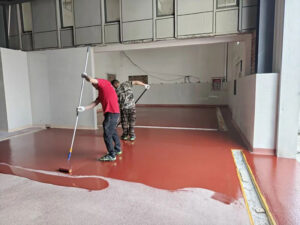
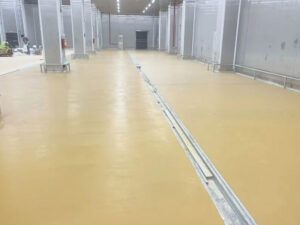
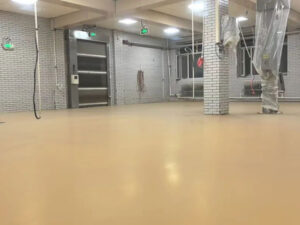
13.1 EV Battery Manufacturing Facility Flooring
Project: Large-scale EV battery production plant
Ubicación: Asia
Scope: 8,500 m² production floor, including dry rooms, electrode coating areas, and cell assembly lines
Desafío: Flooring had to withstand daily NMP exposure, electrolyte spills, heavy automated equipment traffic, and maintain cleanroom-compatible ESD properties.
Solución: A 3 mm novolac epoxy ESD flooring system supplied and technically supported by KAIDA PAINT, incorporating:
- Moisture vapor barrier primer
- 2 mm conductive novolac epoxy base layer
- 1 mm ESD epoxy topcoat with anti-static properties
- Total system thickness: 3,000 µm
- Color-coded traffic lanes and work zones
Installation: Completed in 12 weeks, with phased installation to maintain production schedule.
Resultado: No coating failures were reported during the 24-month monitoring period under the tested operating conditions. ESD properties remained stable (1×10⁶ – 1×10⁹ ohms). Ionic contamination testing confirmed <5 ppm chloride. Production schedule maintained with zero unplanned coating-related downtime.
13.2 Chemical Plant Sulfuric Acid Storage Tank
Project: Sulfuric acid storage and transfer facility
Ubicación: Gulf Coast, USA
Scope: 50,000-gallon mild steel storage tank, 20 ft diameter × 30 ft height
Desafío: 98% sulfuric acid at 70°F (21°C) with occasional temperature spikes to 100°F (38°C). Tank required 20+ year service life with zero leaks.
Solución: Baked phenolic coating system:
- Abrasive blast to SSPC-SP5 white metal
- 2 coats baked phenolic (total DFT 300 µm)
- Baked at 150°C (302°F) for 2 hours
- 100% holiday testing
- Inspection ports for periodic adhesion testing
Resultado: 12+ years of continuous service with no coating failures, no tank wall corrosion, and no secondary containment incidents. Adhesion pull-off tests at 5-year intervals consistently >1,500 PSI.
13.3 Battery Cell Process Equipment
Project: Electrolyte filling equipment for high-volume battery production
Ubicación: Europa
Desafío: Equipment handling organic electrolytes, including LiPF₆ in carbonate solvents, required coating protection with zero metallic ion contamination risk.
Solución: Fluoropolymer coating (ETFE/PFA) applied at 200–400 µm thickness, with fillers tested for semiconductor industry purity requirements. Technical support provided by KAIDA PAINT’s European application team.
Resultado: Metallic ion contamination maintained below 5 ppm. Zero equipment corrosion after 5 years of continuous operation. On-site repair capability validated with field-repairable fluoropolymer system.
14. Frequently Asked Questions (FAQ)
What is the best coating for lithium battery manufacturing floors?
The best coating for lithium battery floors is a novolac epoxy system with electrostatic dissipative (ESD) properties and proven resistance to electrolyte solvents (ethylene carbonate, dimethyl carbonate, diethyl carbonate) and NMP. The system must also demonstrate low ionic contamination (<5 ppm chloride per cell manufacturer specification) and moisture vapor tolerance. For most production environments, a 2–3 mm novolac epoxy floor with a conductive or dissipative topcoat provides optimal performance.
Can epoxy coatings resist lithium battery electrolyte?
Standard epoxy coatings have limited resistance to organic carbonate electrolytes, which cause swelling and softening. Novolac epoxy systems offer significantly enhanced resistance due to higher cross-link density and are preferred for battery electrolyte exposure. For continuous immersion, fluoropolymer coatings provide the highest level of protection.
What flooring is used in EV battery factories?
EV battery factories typically use heavy-duty resinous flooring systems including:
- Novolac epoxy with ESD properties for production areas
- Polyurethane cement or methyl methacrylate (MMA) for rapid installation in high-traffic zones
- Vinyl ester or epoxy flake systems for chemical containment areas
- Low-VOC, non-particulating epoxy for cleanroom areas
What coating resists sulfuric acid?
- Dilute sulfuric acid (<50%) at ambient temperature: Novolac epoxy
- Concentrated sulfuric acid (50–98%) at ambient temperature: Phenolic or fluoropolymer
- Concentrated sulfuric acid at elevated temperature: Fluoropolymer (PTFE, PFA)
- Sulfuric acid fume exposure: Epoxy or polyurethane topcoat
How much does chemical resistant coating cost?
Typical installed costs range from approximately $15–65 per square foot depending on coating chemistry, thickness, surface preparation, and project complexity. Extreme high-performance systems may reach $50–100+ per square foot. Project size, geographic location, and local labor rates significantly affect final pricing.
How thick should chemical resistant coating be?
Required coating thickness depends on exposure severity:
| Exposure Severity | DFT recomendado | Application Area |
|---|---|---|
| Light chemical splash | 150–300 µm (6–12 mils) | Maintenance, light service |
| Moderate exposure | 300–600 µm (12–24 mils) | Chemical handling, battery floors |
| Heavy chemical exposure | 600–1,500 µm (24–60 mils) | Secondary containment |
| Extreme immersion | 1,500–3,000+ µm (60–120+ mils) | Tank linings, severe service |
Is polyurethane better than epoxy for chemical resistance?
No, for most chemical exposures, epoxy provides superior resistance. Polyurethane is generally selected for:
- Outdoor applications (superior UV resistance)
- Substrates requiring flexibility (movement accommodation)
- Abrasion resistance where chemical exposure is minimal
- High-gloss aesthetic applications
For chemical resistance, novolac epoxy exceeds polyurethane in almost all acid, alkali, and solvent resistance tests.
What coating is used for chemical containment areas?
Chemical containment areas typically use:
- Epoxy novolac for general chemical resistance at moderate cost
- Vinyl ester for extended immersion resistance and crack-bridging
- Glass flake reinforced systems for enhanced permeation resistance
- Polymer concrete overlays for heavy mechanical loading combined with chemical resistance
- Fluoropolymer for extreme chemical service where all other systems fail
How long do chemical resistant coatings last?
Service life ranges from 5–20+ years, depending on:
- Chemical exposure severity and frequency
- Temperature and thermal cycling
- Coating system selection and thickness
- Surface preparation quality
- Application conditions
- Maintenance program
Continuous immersion in highly aggressive chemicals at elevated temperatures shortens service life, while splash exposure in well-maintained facilities extends it. Individual assessment based on specific operating conditions is essential.
Can chemical resistant coatings be repaired?
Yes, most chemical resistant coatings are repairable:
- Epoxies, novolacs, polyurethanes: Field-repairable with compatible patch compounds
- Phenolics: Can be repaired with air-dry phenolic patch compounds (though baked systems are more difficult)
- Fluoropolymers: Field-repairable systems exist
- Large-area damage: Typically requires removal and re-application of the full coating system
What is the most chemical resistant coating available?
Fluoropolymer coatings (PTFE, PFA, ETFE) provide the broadest chemical resistance available, resisting virtually all chemicals except molten alkali metals. For practical industrial applications where cost and performance are balanced, novolac epoxy offers the best combination of chemical resistance, durability, and affordability for most battery manufacturing and chemical plant exposures.
Can epoxy flooring be used in battery factories?
Yes, but not all epoxies are suitable. Standard epoxy floors fail rapidly in battery electrolyte and NMP exposures. Novolac epoxy systems with ESD properties, chemical resistance, and ionic contamination control are specifically engineered for battery manufacturing environments and are the industry-preferred solution.
What coating resists NMP solvent?
Novolac epoxy and fluoropolymer coatings provide the best resistance to N-Methyl-2-pyrrolidone (NMP). Standard epoxies soften and swell upon NMP exposure. Novolac epoxies have demonstrated resistance to NMP immersion validated by laboratory testing (14+ days depending on formulation), making them suitable for electrode coating areas in battery production.
What is the best acid resistant floor coating?
For acid resistance:
- Moderate acid exposures: Novolac epoxy
- Concentrated acids (sulfuric, hydrochloric): Phenolic or fluoropolymer
- Mixed acid exposures: Novolac epoxy with glass flake reinforcement
- High-temperature acid exposure: Fluoropolymer
How long does industrial chemical resistant coating last?
With proper selection, application, and maintenance, industrial chemical resistant coatings typically provide 10–20 years of service in moderate exposures and 5–15 years in severe continuous immersion service. Regular inspection and prompt repair of damaged areas are essential to maximize service life.
What is the best epoxy coating for chemical plants?
Novolac epoxy is generally considered the best epoxy-based coating for chemical plants because it provides higher cross-link density and better resistance against acids, solvents, and aggressive chemicals than standard epoxy systems. For extreme acid exposure, phenolic or fluoropolymer systems may be required.
Is novolac epoxy better than regular epoxy?
Yes. Novolac epoxy contains additional phenolic structures that increase cross-link density, improving chemical resistance, temperature resistance, and immersion performance. Novolac epoxies typically have a glass transition temperature (Tg) above 120°C compared to 60–80°C for standard bisphenol epoxies, providing superior performance in aggressive chemical environments.
What coating protects concrete from acid attack?
Acid-resistant protection for concrete typically uses novolac epoxy, vinyl ester, or fluoropolymer systems depending on acid concentration and temperature. Novolac epoxy is the most common choice for moderate acid exposures, while vinyl ester and fluoropolymer systems are specified for concentrated acids or high-temperature service.
Acerca de KAIDA PAINT
KAIDA PAINT develops and manufactures industrial coating systems including:
- Chemical resistant epoxy coatings
- Novolac epoxy flooring systems
- ESD flooring solutions
- Industrial protective coatings
- Acid resistant coatings
- Phenolic tank lining systems
Our Technical Support Services
Our technical team supports:
- Coating specification development
- Resin system selection based on chemical exposure
- Application guidance and quality control
- Project technical documentation
- On-site installation support
- Performance monitoring and maintenance planning
¿Por qué elegir KAIDA PAINT?
- Industry expertise: Deep understanding of chemical resistance requirements in battery and chemical plant environments
- Proven performance: Field-validated systems with documented service life in demanding applications
- Asistencia técnica: Dedicated team for specification, application guidance, and troubleshooting
- Custom solutions: Ability to formulate coatings for unique chemical exposures
- Quality systems: Manufacturing processes compliant with international standards
How to Get a Coating Solution for Your Project
For consultation on chemical resistant coating selection and system specification for your battery manufacturing facility or chemical plant, contact KAIDA PAINT’s technical team to discuss your specific exposure conditions, substrate requirements, and performance objectives. Our engineers provide customized recommendations, project cost estimates, and application support for industrial facilities worldwide.
KAIDA PAINT Technical Team specializes in industrial protective coatings, epoxy flooring systems, chemical resistant coatings, and high-performance flooring solutions for battery manufacturing, chemical processing, and industrial facilities. Our technical team supports coating specification, system selection, application guidance, and performance evaluation for international industrial projects.
Our team has extensive experience in coating formulation, application engineering, and field performance validation, providing authoritative guidance on chemical resistant coating selection and installation.
Expertise Areas:
- Chemical resistant coating formulation and testing
- Battery manufacturing facility coating requirements
- ESD flooring systems and cleanroom coatings
- Acid and solvent resistant tank linings
- Surface preparation and application quality control


 English
 Spanish
 Portuguese
 Arabic
 French
 Italian
 Russian
 Indonesian
 Swedish