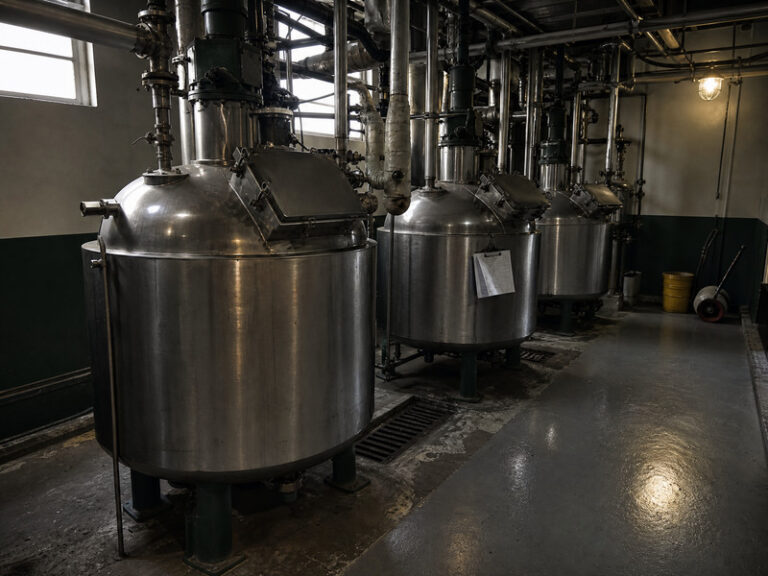
The reactor floor is where the record starts to matter.
Quality in a polyurethane floor coating manufacturer is not a certificate on the wall. It is a set of records written at five points between the raw material store and the loading bay, and each one answers a question a customer will eventually ask.
The five are a lot release sheet at goods in, a weighing sheet at the reactor, a release test in the laboratory, a filling record at packing and a loading record at dispatch.
This article walks the route we follow on a plant tour: intake, reactor, laboratory, packing line and dispatch, with the controls that matter at each step and the ones that are merely decorative.
What a walk through the plant can tell you
A plant tour is a poor way to judge chemistry and an excellent way to judge discipline, which is why the supplier checklist for a first order puts the record before the reactor. You cannot see adhesion, but you can see whether the floor is clean, whether lots are labelled and whether anyone stops you from walking into the reactor area.
The most informative single question is not about equipment. It is what happens when a batch fails, asked of the person who would have to scrap it.
A factory that answers with a procedure and a signature is controlling its process. One that answers with a story about a difficult customer is controlling its narrative.
Table 1: The five records that make quality auditable.
| Record | Written at | Answers |
|---|---|---|
| Lot release sheet | Goods in | Was this material approved |
| Weighing sheet | Reactor | Was the batch made as specified |
| Release test result | Laboratory | Does it meet the declared values |
| Filling record | Packing | What went into which drum |
| Loading record | Dispatch | What left the building |
The second is what the plant smells like. A factory handling solvents has an extraction system that is either working or visibly not, and a resin line that smells of nothing is either well controlled or making nothing.
Each of the five records at a polyurethane floor coating manufacturer needs five fields to be auditable: the lot or batch number, the quantity, the operator, the date with a start and finish time, and a release signature.
The chain starts at raw material intake, where the first of the five is written, and ends at the packing line, where the label ties the drum to the record. When a buyer is shown a specimen, the fastest test is to look for the signature first, because the other four are copied forward and the signature is the only one that has to be earned.
Everything below is written from the inside, because a factory that describes its own controls honestly is easier to audit than one that describes the industry in general.
Raw material intake: where quality is decided
Raw material intake is the step buyers never ask about and the one that explains most variation between batches. The same isocyanate from two suppliers can differ in reactivity, and the difference shows as a cure time that moves.
Every lot is received against a specification. Where the supplier provides a certificate of analysis, it is checked rather than filed; where none is provided, an internal check is run before release.
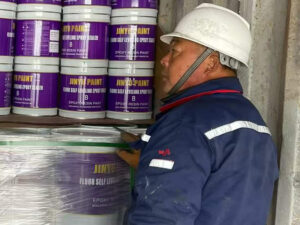
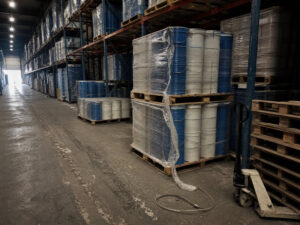
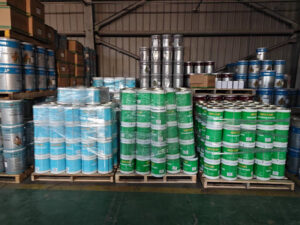
Material that is received but not released should be physically separated, not merely flagged in a spreadsheet, because a spreadsheet does not stop a mixer.
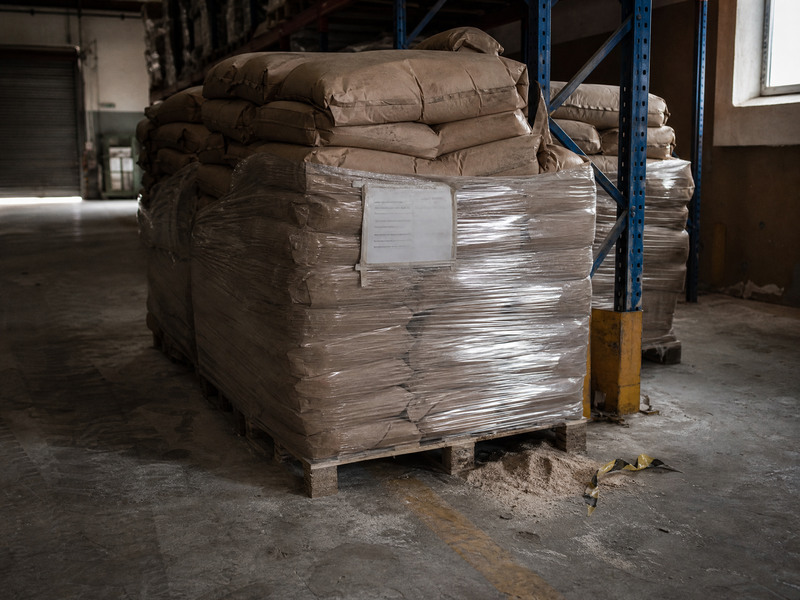
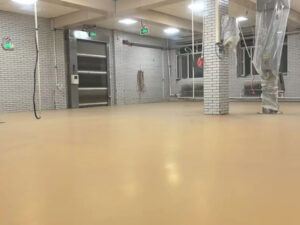
Figure 1: separation is a painted line and a signature, not a spreadsheet column.
Storage conditions belong in the same check. Isocyanate and polyol both degrade with heat and moisture, and a raw material intake area without temperature control is a slow change in reactivity that nobody attributes to the store.
Substitution is the quiet risk in any resin production operation: same function, different supplier, different performance. The control that prevents it is a rule that no lot enters production without a release signature.
Resin production: the part visitors find least interesting
Production runs in steps that write to the same record: weighing, dispersion, addition, sampling and filling. The order of addition and the dispersion time decide whether the cured film is uniform.
Temperature is the variable that most affects a polyurethane batch. A reactor that runs ten degrees warm will produce a faster batch, which is fine until the same product is expected to behave identically in a cold plant.
The visible controls are simple: a batch plate on the reactor, a weighing sheet that is signed at each addition, and a sample taken before filling rather than after.
Sampling is where a small plant saves money and loses information. A sample drawn from the reactor rather than from a filled drum can miss the effect of the filler settling during filling, which is exactly what a customer will see.
It is the difference between a polyurethane floor coating manufacturer that can repeat a result and one that can only describe one.
A resin production line running the same three products for years will look disciplined and may still struggle with a new formulation. The first batch of anything new is a test of the process rather than the resin.
The record for one mix, and why it settles arguments
A batch record is the biography of one mix. It carries the batch number, the lots consumed, the weights, the temperatures, the operator and the release decision.
It is useful in two directions. Forward, it tells a customer what is in the drum they received. Backward, it tells the factory which lots are implicated when a complaint arrives.
The gaps are more informative than the entries. A missing signature shows where the process relies on memory, and memory is what fails when a shift is short-staffed.
Ask to see one record end to end during the visit. It takes ten minutes and tells you more about a polyurethane floor coating manufacturer than an hour in the showroom.
The same record should show what was changed. A batch where an addition time was extended to compensate for cold weather is not a deviation to hide; it is the reason the material performed as expected in a cold plant.
A failed batch has three legitimate destinations and one illegitimate one. Rework inside the envelope is legitimate when the deviation is recorded and the retest passes. Downgrade to a lower specification is legitimate when the customer agrees in writing. Scrap is legitimate when neither applies. Quietly shipping it is the fourth option, and it is the reason a buyer should ask who signs the disposition rather than whether one exists.
QC testing: routine numbers and type tests
QC testing in a coatings plant answers one question per batch: is this the same as the last one and does it meet the declared values. It is not research and it is not product development.
The routine four are viscosity, gel time, hardness development and adhesion on a standard substrate. Each takes minutes and each is recorded against the batch number.
Chemical resistance, slip and abrasion are not batch tests. They are type tests run once on a formulation and repeated when it changes, which is why a polyurethane floor coating manufacturer should quote them with a date.
Table 2: What is tested per batch, and what is tested per formulation.
| Test | Frequency | Why it is done |
|---|---|---|
| Viskositet | Every batch | Application behaviour |
| Gel time | Every batch | Pot life commitment |
| Hardness development | Every batch | Cure profile |
| Adhesion on a standard substrate | Every batch | Bond consistency |
| Kemisk beständighet | Per formulation | Declaration value |
| Slip classification | Per formulation and aggregate | Safety claim |
A release depends on limits, not on tests. Set a viscosity window against the approved sample, a gel time window against the declared pot life, a hardness reading at a stated hour, and an adhesion value on a named substrate. Each limit needs a stated action when it is missed: hold and retest, adjust within the envelope, or scrap. Every limit depends on instrument calibration, because a window measured by an unverified viscometer is not a window.
A resin production run is judged by these limits rather than by the appearance of the drum, and a polyurethane floor coating manufacturer that tests without limits produces numbers that cannot stop a batch.
The limits below are what turn QC testing into a release decision rather than a ritual.
Table 3: Four routine tests, indicative limits and the action when a limit is missed.
| Test | Indicative limit | If it fails |
|---|---|---|
| Viskositet | Within 10 per cent of the approved sample at 25 C by the declared method | Hold, recheck at temperature, adjust within the envelope |
| Gel time | Inside the declared pot life window | Hold and retest the following shift |
| Hårdhet | Reading at a stated hour matches the profile | Extend cure observation before release |
| Adhesion | Above the declared value on the named substrate | Quarantine the batch and review surface preparation |
A laboratory that only runs the easy tests produces a record that looks like assurance and answers nothing.
The records also decide how quickly a complaint is answered. A factory with the five documents in one file can respond inside a day; one that has to reconstruct a batch from three systems responds in a week, and the customer reads the delay as concealment.
Where a factory runs QC testing on a sample from every batch, ask how many are retained. A laboratory that discards its samples after release cannot help when a floor fails eighteen months later.
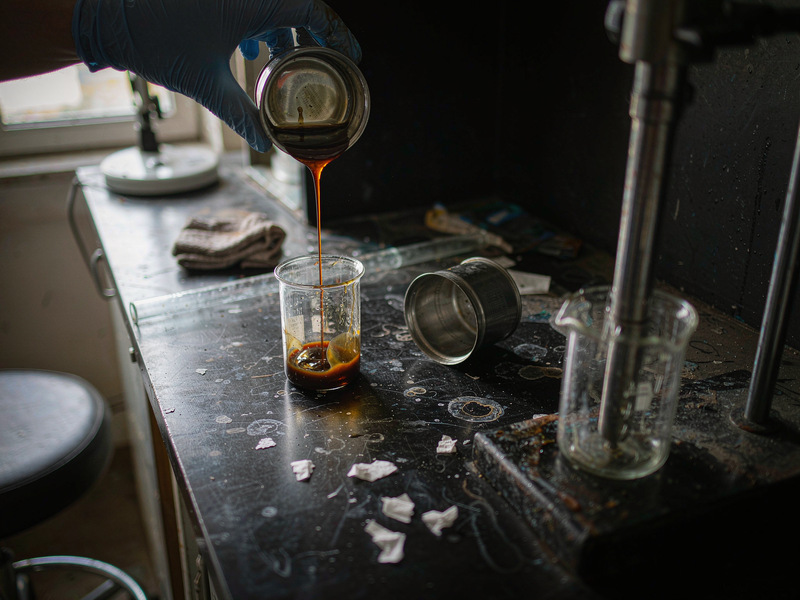
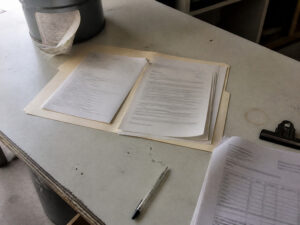
Figure 2: the routine test is the one that decides release.
Filling and the packing line
Packing line is where documentation errors are caught, because the label is the last place where a batch number, a pack size and a hazard classification meet.
Labels carry the batch, the pack, the date and the pictograms, and those four fields are what writing the coating into a tender specification depends on at handover. Where a second language is required by the destination, it is printed at filling rather than added later at the port.
Packs are checked for weight and closure before palletising. A drum that leaks in a container is a total loss, because a carrier will reject a load that has stained the deck.
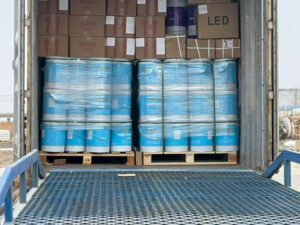
The count on the pallet is recorded against the loading plan. A discrepancy found at the dock is a conversation; one found at the destination is a claim.
Batch traceability in both directions
Batch traceability is often described as a system. In practice it is a chain of three documents: the batch record, the label and the delivery note, and it fails when any one of them is written by hand.
The forward direction answers a recall question: which customers received drums from this lot, and that is the chain that export documentation for a China shipment has to keep readable at the border. The backward direction answers a complaint question: which lots are in this drum.
A batch traceability test is simple and worth repeating annually. Pick a drum at random, ask for the lots behind it, and time how long the answer takes. Under an hour is healthy; a day means the chain is held together by one person.
The same exercise should be run whenever a system is discontinued. An obsolete product still in a plant is the one whose records are least likely to be findable, and it is often the product a customer asks about.
Retained samples follow the same rule. Two years of drums on a shelf, labelled by batch, is a small cost, and it is the only way to answer a question about a floor that was laid before the current staff arrived.
The alternative is a conversation about what people remember, and that conversation is usually settled by whoever speaks with most confidence rather than whoever has the evidence. That conversation is avoidable: the records exist or they do not.
A batch traceability exercise is worth doing with a product line the factory has not been asked about. The answer shows whether the chain is built into the system or whether it works because someone remembers.
Instrument calibration: the number behind the number
Instrument calibration is the least photogenic part of quality and the one that decides whether a reading means anything. A viscometer that has not been checked against a standard produces numbers rather than evidence.
Calibration records should be available for every instrument that produces a release value. Where a factory cannot produce them, the laboratory is measuring with confidence rather than accuracy.
The practical check during a plant tour is to ask when the viscometer was last verified and against what. A date and a reference fluid is the answer; a shrug is also an answer.
Where instrument calibration is outsourced, the same question applies to the external laboratory, with the addition of an accreditation scope. A calibration certificate for an instrument that is not in the scope is a document, not a control.
A simple schedule on the laboratory wall, with dates and initials, is enough for most plants. The point is not the format but whether a date would be missing if the routine slipped.
What a good plant tour looks like, in order
A tour that starts in the showroom is a presentation; QC testing that starts at the goods-in door is an inspection, and the order of the six stops is the method.
The order we would use: intake and quarantine, reactor floor, laboratory, filling area, finished goods, and dispatch. Each stage should have a person who can explain the control at that point.
Table 4: Six stops, and the one question to ask at each.
| Stop | Question | Good sign |
|---|---|---|
| Intake | How is a lot released | Physical quarantine area |
| Reactor | What is recorded per batch | A signed weighing sheet |
| Laboratory | Which test stops a release | A named limit |
| Filling | When is the label printed | At filling, not after |
| Finished goods | How is stock rotated | Dated rows, oldest first |
| Dispatch | Who checks the load | A second signature |
A tour that cannot answer one of those six is not necessarily a bad factory. It is a factory that has not yet had to answer the question, which is a different kind of risk.
Where a plant cannot answer one of the six, ask what it would take to be able to. The answer describes the management system better than any certificate, because it shows whether the gap is known.
One further question is worth asking of any plant that intends to supply a project rather than a catalogue order: who signs the release. A name on the release line is the difference between a process and a hope, and it is the first thing a serious buyer looks for.
What we show, and what we do not claim
A polyurethane floor coating manufacturer that claims a perfect record is not describing a factory. Every plant has batches that fail and customers who complain.
What can be shown is the response: how a failure is recorded, who authorises a scrap, how a customer is told, and what changes afterwards. A polyurethane floor coating manufacturer that shows the response is easier to trust than one that shows a certificate.
We will walk a customer through the six stops and open a batch record on request. We will not claim that a certificate replaces that walk, or that a laboratory result predicts a building.
Frequently asked questions
What should I look for on a factory tour?
Start at the goods-in door, not the showroom. Look for a physical quarantine area, signed weighing sheets, a laboratory that can name the test that stops a release, and labels printed at filling.
What is a batch record?
The document for one mix: batch number, lots consumed, weights, temperatures, operator and release decision. It should be readable end to end in ten minutes.
Which tests are done on every batch?
Viscosity, gel time, hardness development and adhesion on a standard substrate. Chemical resistance and slip are type tests per formulation, not batch tests.
Why does traceability matter to a buyer?
It answers two questions: which customers received a lot, and which lots are in a drum. Without it, a complaint becomes a negotiation rather than a measurement, and a polyurethane floor coating manufacturer with no chain cannot answer either question.
Does calibration really matter?
It decides whether a release value means anything. The two things to ask for are the calibration date and the reference fluid used.
Can I see the record for my order?
You should ask, and a factory that cannot produce the record for your drum has not released that batch. Ask before ordering, not after.
How long does a factory visit take?
Two hours for the six stops if the answers are available, and half a day if you want to follow one order through from intake to dispatch.
Why a Kaida Paint plant tour answers what datasheets cannot
A datasheet from a polyurethane floor coating manufacturer describes a product in its best condition. The walk shows what happens on a Tuesday when a lot arrives late, a reactor runs ten degrees warm and a supervisor has to decide whether to hold a batch. We let customers follow the six stops in the order we use ourselves, open a batch record on request, and show the calibration date on the instruments that produce a release value. Where a control is missing, we say which one rather than describing the system in general.



 English
 Spanish
 Portuguese
 Arabic
 French
 Italian
 Russian
 Indonesian
 Swedish