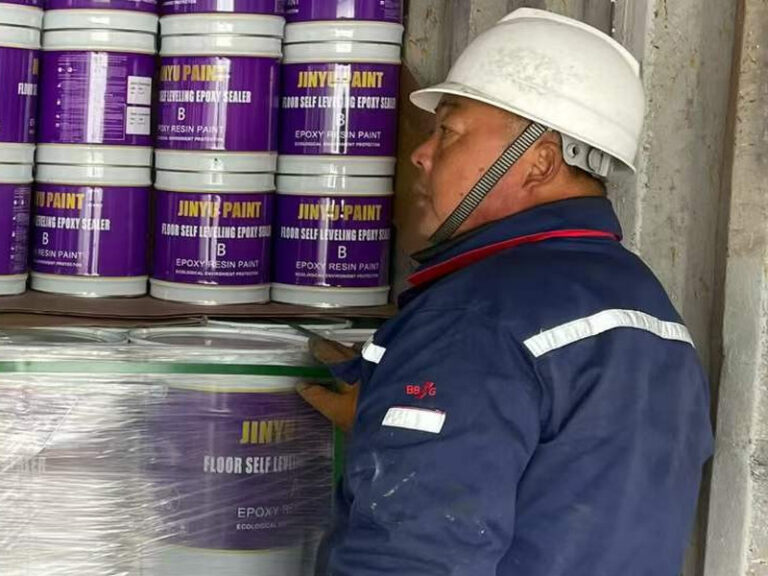
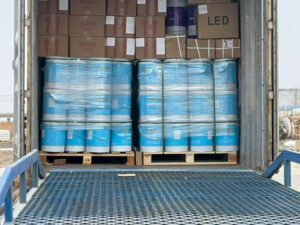
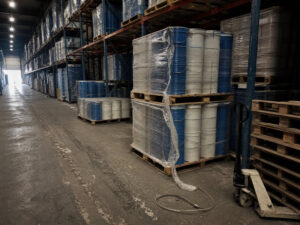
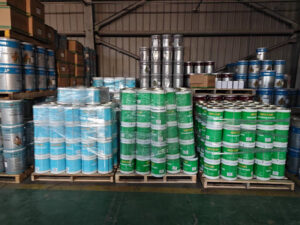
Palletised stock is what lets a stockist ship in the same week.
A PU OEM arrangement lets you sell a polyurethane floor coating under your own name without owning a reactor. What you actually buy is a formulation you may or may not control, a minimum order set by batch size, and a label that carries your liability.
The decision turns on one clause: if the factory owns the formulation, you are buying a label rather than a brand. The rest of this article is about pricing that clause correctly.
This article explains the difference between private label flooring and white label, how a custom formulation is agreed and limited, what a label design really costs, and the clauses that decide who owns what when the relationship ends.
OEM, private label and white label are not the same
A PU OEM usually means the product is made to your specification, or at least to a specification you have approved, and carries your brand. The factory’s name may not appear at all.
Private label flooring is often the same thing commercially, but the term usually implies the formulation stays with the manufacturer and only the label changes.
White label is the simplest version: an existing product, an existing carton, your sticker on the drum. It is cheap to start and hard to differentiate.
Table 1: The three arrangements, and what each one gives you.
| Arrangement | Formulation | Label | Order floor (see Table 3) |
|---|---|---|---|
| White label | Manufacturer’s | Sticker or printed | 1 pallet |
| Private label | Manufacturer’s, tweaked | Fully printed | 2 to 5 tonnes |
| OEM | Yours or licensed | Fully printed | 5 tonnes and up |
Who owns the formulation, and why it decides the relationship
Formulation ownership is the single most important clause in an OEM agreement and the one most often left vague. If the factory owns the recipe, you own a brand without an asset.
A polyurethane floor coating sold under a licence is still a product you can build on, provided the licence is long enough to amortise the marketing. Three years is the practical minimum for a flooring brand.
There are three common positions: the factory owns it and licenses it to you, you own it and license it to the factory, or it is jointly held with defined exit terms.
The first is normal for a first order and acceptable if the licence is exclusive in your territory and survives a change of ownership at the factory.
The second is what you want if you are building a brand. It costs more, because the development work is charged rather than amortised, and it is the only version that lets you move production later.
Where a brand intends to sell in several countries, the licence should be exclusive by territory rather than by region. A polyurethane floor coating licence covering Europe is worth little to a distributor who sells only in Iberia.
How a minimum order is actually calculated
The order floor is not a negotiating position; it comes from the batch size of the reactor. A two-tonne batch cannot be split into eight 250 kilogram orders without cost.
Three things set the floor: the batch size, the pack size you choose, and the print run for labels and cartons.
Table 2: What sets the order floor, in order of influence.
| Driver | Effekt | Can you change it |
|---|---|---|
| Reactor batch size | Sets the absolute floor | Nej |
| Pack size | Raises cost per kg as packs shrink | Ja |
| Label print run | Can exceed the resin quantity | Yes, with plain pails |
Three bands are worth costing separately. A white label start is one pallet, roughly 600 to 900 kilograms depending on pack, and the constraint is the label print run rather than the reactor. A private label flooring run is two to five tonnes, where the batch size sets the floor and the pack size sets the cost per kilogram. A true OEM run starts at five tonnes, and at that volume the fee is usually credited against the first production order rather than quoted as a separate loss.
Table 3: Three order bands, what raises each one and what can still be negotiated.
| Band | Typical quantity | What raises it | What is negotiable |
|---|---|---|---|
| White label | One pallet, 600 to 900 kg | Label print run | Pack size and label stock |
| Private label | Two to five tonnes | Batch size and printed pails | Release schedule across a quarter |
| OEM | Five tonnes and up | Development work and tooling | Crediting the fee against the first run |
Batch size is fixed by the plant. Pack size is your decision, and a smaller pack raises the price per kilogram because filling and labelling cost more per litre.
Print runs are the variable that surprises people. A printed pail needs a minimum order of several hundred units, which can exceed the resin quantity for a small brand.
Custom formulation: what can change, and what cannot
A modified formulation adjusts cure speed, viscosity, colour and filler load within a defined envelope, and each of the four has a boundary that can be written down. It cannot turn a polyurethane into an epoxy, or make a solvent-based product solvent-free.
The envelope exists because the chemistry is a balance. Speeding up the cure shortens the pot life; adding filler lowers the cost and the elongation together.
Ask what the factory can change without a new development charge, and what triggers one. A clear answer saves an argument later, when a client asks for a warmer colour or a slower cure for a hot climate.
Where the change is significant, expect a development fee and a sample round, and treat approving a sample through a trial area as part of that cost rather than a separate favour. That fee is usually credited against the first production order, and it should be stated that way in writing.
The development fee also sets the own brand economics. A brand that pays for development owns something; one that avoids the fee is renting a product and will be repriced at renewal.
Write the custom formulation envelope as four bounded items rather than a paragraph. The four are cure speed within the declared working time, viscosity within the datasheet tolerance, colour against a retained panel rather than a code, and filler load within a stated percentage. Each item should name the boundary and the price of crossing it, so a request for a slower cure in summer is answered from the document rather than from memory. Nothing in the envelope changes who owns the formulation, and formulation ownership belongs in a separate clause signed before the first sample.
Labels, cartons and the text that carries liability
Label design is a compliance document before it is a design: hazard class, batch number, date and net weight. The label carries the hazard classification, the batch number, the date, the net weight and, in most markets, the language of the destination.
A polyurethane floor coating sold under your brand transfers the product liability to you in most jurisdictions, even though you did not make it. The label is the document that proves you described it correctly.
Ask the factory for the label template they use and the regulatory text behind it. A supplier who provides artwork but cannot explain the hazard statements is handing you a risk.
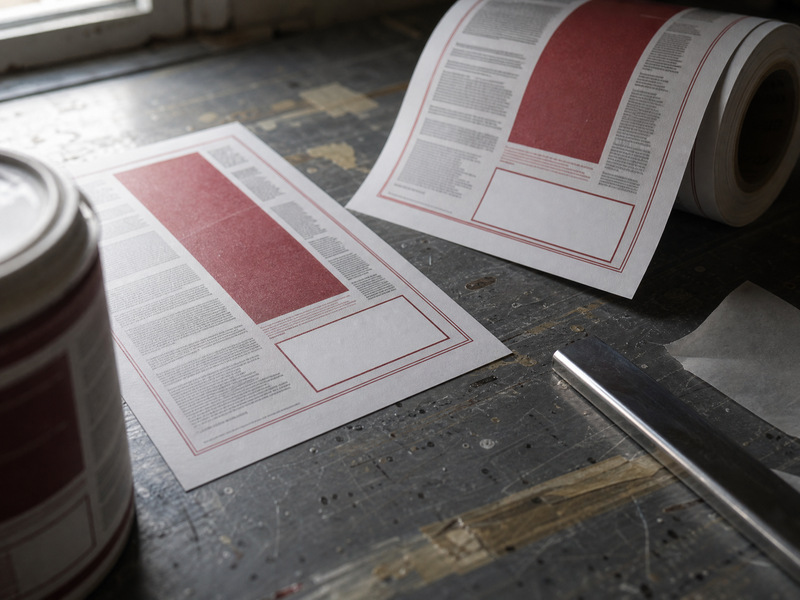
Figure 1: a proof without a batch field is not ready for production.
Cartons and pails are usually printed in one pass with the label, which is why the tooling cost is front-loaded. Where the print minimum is too high, use a plain container and a printed label.
That combination is how most new brands start, and there is no shame in it. A clean label on a standard pail reads as professional, while a custom pail with a smudged print reads as a compromise.
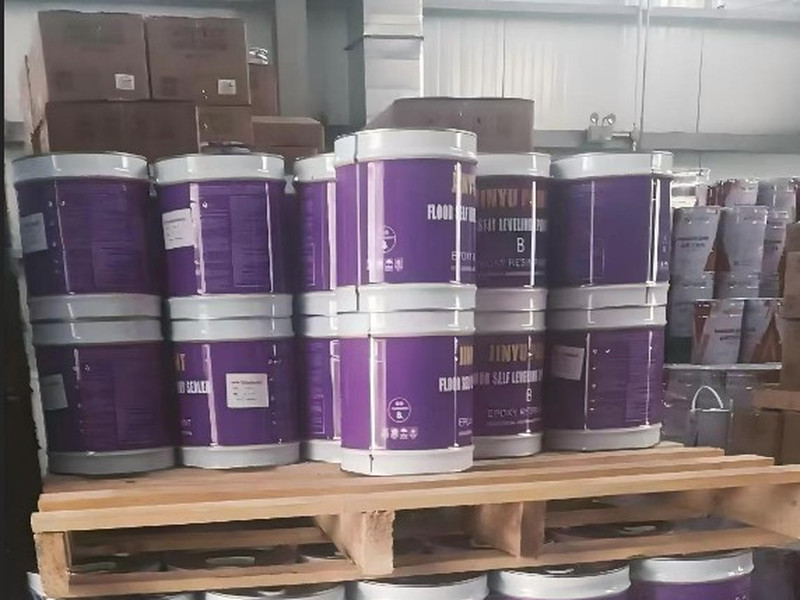
Figure 2: the label is the only part of the product the buyer sees first.
Building an own brand without a factory
An own brand needs three things that a factory cannot supply: a reason to be chosen, technical support behind the product, and a story about where it comes from that survives scrutiny.
The first is normally a segment. A brand that offers the same four systems as everyone else competes on price; one that offers a system for cold stores or for breweries competes on fit.
The second is the part most private label brands underestimate. A polyurethane floor coating is sold with advice, and a brand that cannot answer a substrate question will lose the account to one that can.
The practical answer is to keep an engineering contact on the packaging. An own brand that names a technical line is trusted more than one that only offers a sales email, and the cost is a line of type.
Text is the cheapest part of label design and the part that causes the most delay. Two languages double the typesetting and not the print run, so the marginal cost of a second market is small once the artwork exists.
The third is honesty about origin. Buyers increasingly ask where a product is made, and a brand that answers directly and explains the quality system is stronger than one that implies a European factory. Sourcing the resin from a Chinese plant is a normal answer once the export documentation and factory checks are explained rather than hidden.
Tooling, print and the one-off costs
Tooling for a flooring brand usually means print plates, a pail mould if you want a custom container, and any laboratory work for a custom formulation.
Print plates are modest and reusable. A custom mould is not, and it only makes sense at volumes where the container cost difference pays it back within a year.
The laboratory work is the largest variable. Adjusting a colour is cheap; developing a new system for a specific chemical or a cold climate is a project, and it should be priced as one.
Where a brand is buying development, the polyurethane floor coating specification should be written before the fee is agreed. Otherwise the envelope expands quietly and the second invoice arrives with no reference point.
A written envelope also protects the factory. Where a brand keeps asking for small changes without a scope, the polyurethane floor coating relationship turns into unpaid development and the sample rounds stretch.
That is why a written brief is worth the hour it takes. A one-page document listing the system, the pack sizes, the markets and the label languages prevents most of the drift that a series of emails creates.
Keep the brief alive as a living document. Each approved change should be dated and added, so that the tenth order can still be traced back to the specification everyone agreed at the start.
Print plates, a pail mould and laboratory work should each appear as a separate line in the first quotation, with a note on which are one-off and which recur. A private label flooring quotation that folds them into the unit price hides the real entry cost.
A first private label run also carries a working capital cost that nobody quotes: the stock sits in your warehouse rather than in the factory’s, and that cash is gone until the pallets sell.
A first order that sells out is the best evidence a brand can bring to a second negotiation. Volume is the only argument that reliably moves a price, and it is also the argument that gets a polyurethane floor coating onto a dedicated production slot.
Until then, plan the releases rather than the orders. A brand that takes one pallet a month on a fixed schedule is easier to schedule than one that orders a container whenever stock runs low, and most factories price accordingly.
The same is true of the label stock. Ordering printed pails once a year ties up cash and storage; ordering twice a year costs a little more per unit and considerably less in working capital.
The process from enquiry to first shipment
A PU OEM project usually runs through six stages, and the timeline is driven by the sample rounds rather than by production, which is why sample terms and order quantities are settled before artwork starts.
Table 4: A typical OEM timeline, from first enquiry to a landed pallet.
| Stage | Varaktighet | What you approve |
|---|---|---|
| Brief and envelope | 1 week | What can be changed, and at what cost |
| Sample round | 3 to 4 weeks | Cured panel and datasheet values |
| Label artwork | 1 to 2 weeks | Text, hazard statements, languages |
| Print and packing | 2 to 3 weeks | Pail or carton proofs |
| Production | 2 to 4 weeks | Batch record and release test |
| Freight | 3 to 6 weeks | Loading photographs |
Every stage of a PU OEM project has one owner and one artefact. The brief belongs to the brand, the envelope to the factory chemist, and the sample approval to the brand’s technical contact. The artwork proof belongs to the brand’s marketing lead, the release test to the factory, and the loading photographs to the forwarder. When a project slips, the artefact that is missing names the owner, which is faster than a meeting about the schedule.
Three failures explain most slippage. A rejected sample restarts the sample round, a rejected proof holds the print slot, and a print error found after packing is a reprint.
The stage that slips is artwork, because hazard text follows the final formulation, and a formulation change after the proof is a reprint rather than an edit. Approving a label before the sample is signed off is the most common cause of a reprint.
Hazard text is the second cause. A polyurethane floor coating classified as non-hazardous in one market can require a pictogram in another, and the artwork has to be rebuilt rather than edited.
That is why label design should start from the market rather than the product. Decide which countries the brand will sell into, collect the label requirements for each, and only then commission a design that fits all of them.
What to put in the agreement
A private label flooring contract needs five clauses beyond price and quantity: formulation ownership, exclusivity by territory, label approval, quality release criteria and exit.
Exclusivity is worth paying for only where you can commit to a volume. A brand that asks for exclusivity and then orders once a year will find the arrangement quietly unavailable at renewal.
The exit clause is the one that matters when the relationship ends. Who keeps the formulation, who keeps the artwork, and how much notice is needed to move production elsewhere.
A good exit clause is dull: notice periods, a final order window, and a defined handover of artwork and retained samples. A polyurethane floor coating agreement without one is a relationship that ends badly by default.
Retained samples belong in the exit clause as well. Two years of batch samples are what allow a brand to move to another factory without redeveloping the product from a datasheet.
Where these are agreed in writing, an OEM relationship is stable and boring. Where they are left to goodwill, the first disagreement becomes a renegotiation of the entire arrangement.
That is also why the first order should be documented like the tenth. An own brand built on a purchase order and an email will renegotiate its terms every time a shipment is late.
Frequently asked questions
What is the difference between OEM and private label for flooring?
OEM usually means the formulation is yours or licensed to you, with your brand on the drum. Private label usually means the manufacturer’s formulation with your label. White label is an existing product with a sticker.
What is a realistic minimum order?
One pallet for white label, two to five tonnes for private label, and five tonnes and up for a true OEM. The figure is set by reactor batch size and by label print runs.
Who owns the formulation in an OEM deal?
Whoever the contract says. If it is not stated, the manufacturer owns it, and you own only the brand. Ask for exclusivity in your territory and a defined exit.
How much does custom formulation cost?
A colour or cure-speed adjustment is usually modest and credited against the first order. A change of chemistry or climate is a development project with its own fee.
Can I use my own pail or carton design?
Yes, but a custom mould only pays back at volume. Most first brands use a standard container with a printed label, then move to a custom pail once the volume is proven.
Who is liable if a floor fails under my brand?
In most markets, the brand owner. That is why label text, hazard statements and datasheet accuracy matter more in private label than in selling someone else’s product.
How long does a first OEM order take?
Twelve to eighteen weeks from brief to landed pallet, with the sample rounds and label artwork taking about half of that.
Why brands private-label their PU systems with Kaida Paint
Brands bring us a formulation envelope rather than a wish list. The first meeting ends with the position written down: which changes sit inside the envelope, which need a development fee, and what the brand keeps if the relationship ends. Formulation ownership is decided in that meeting rather than in a contract negotiation. Tooling is quoted as separate lines, and the minimum order is quoted from the real batch size. A polyurethane floor coating label is reviewed against the markets the brand intends to sell into rather than the one it sells into now.

 English
 Spanish
 Portuguese
 Arabic
 French
 Italian
 Russian
 Indonesian
 Swedish