Description
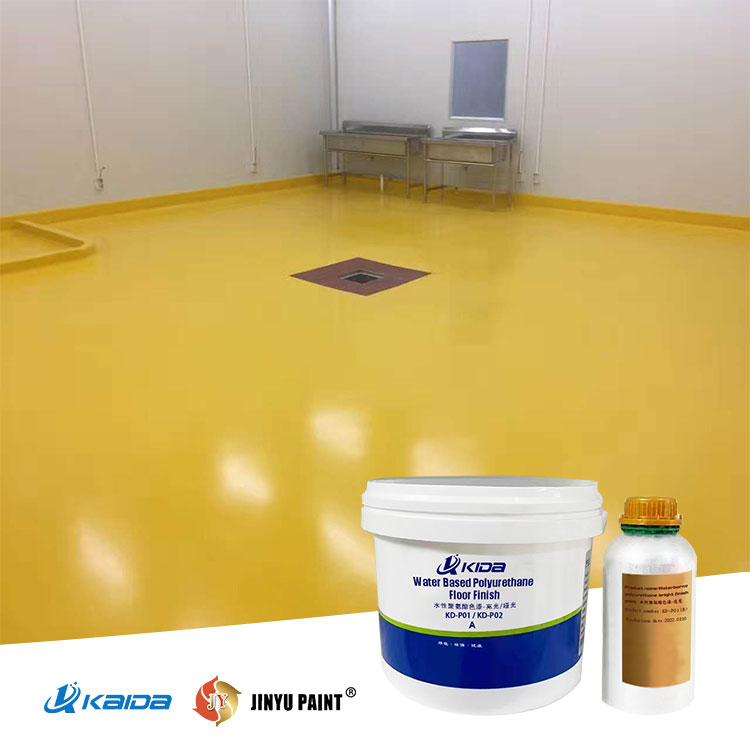
KD-P01 is a two-component, water-based polyurethane gloss finish for concrete and epoxy floors. Applied as the clear finish layer at 0.05-0.06 kg/m2, it cures to a smooth high-gloss film in 14 hours and reaches a dry-film friction coefficient of 0.60, so the floor reads as glossy while staying slip-resistant.
What Is KD-P01 Water-Based Polyurethane Floor Finish?
KD-P01 is the clear gloss finish coat of a water-based polyurethane floor system. It is a two-component product, mixed on site and applied by roller or spray over a cured water-based topcoat. The same material is listed as KD-P01 in the KAIDA floor catalogue and as WPU100 in the site product code, so both codes refer to one product.
The floor catalogue describes this product family as a waterborne polyurethane floor finish. KD-P01 and KD-P02 are the two grades of that material: gloss and matt.
The finish layer covers 0.05-0.06 kg/m2. The system it belongs to is built up from a water-based epoxy base coat, a mortar layer, a putty layer and a water-based topcoat, giving a total system thickness of 1-3 mm.
All figures in this page were measured after 7 days of curing at 25 degrees C.

Why Choose a Gloss Polyurethane Finish That Is Also Slip-Resistant?
The film numbers that decide how the floor looks after a year of traffic. Wear and abrasion loss is 0.02 g or less on a 750 g / 500 r cycle, pencil hardness is 2H or above, and bond strength is 2 MPa or more.
Slip resistance that survives a gloss finish. The dry-film friction coefficient is 0.60, measured on a cured film. Gloss finishes are usually ruled out wherever slip risk matters; KD-P01 is specified where both are needed at the same time.
Air permeability. The cured film lets moisture vapour through, which allows application on damp substrates. On ground-floor slabs and in humid climates this removes the drying delay a sealed coating would need.
Flexibility, not only hardness. Flexural, impact and tensile strength are all specified, so the film moves with the slab rather than cracking with it. Impact resistance is verified with a 500 g steel ball.
Low odour and low VOC. The product is water-dilutable and has a small odour, so it can be used in buildings that stay in service, such as hospitals.
Seven-day chemical resistance. The cured film resists 3% salt water and 120# gasoline for 7 days, and 21% sodium hydroxide with water for 7 days, with no blistering, peeling or discolouration.
Which Floors Are Specified With KD-P01?
Hospitals and pharmaceutical plants specify KD-P01 for two reasons: low odour while the floor is being applied, and a chemically resistant film once it is cured.
High-end exhibition halls and amusement centres specify it for a uniform gloss floor that stays comfortable underfoot during long visitor hours.
Industrial and mining workshops specify it where corrosion, wear and heavy load resistance are all needed on the same floor.
Food factories specify it for resistance across both warm production areas and cold rooms.
Logistics warehouses specify it for a fast return to service: foot traffic after 24 hours, heavy load after 72 hours.
Outdoor sports grounds specify it for colour and gloss retention under weather exposure.
KD-P01 Technical Data
| Property | Unit | Value |
|---|---|---|
| Surface drying time | h | ≤1 |
| Actual drying time | h | ≤14 |
| Pencil hardness | — | ≥2H |
| Wear resistance (750 g / 500 r) | g | ≤0.02 |
| Bond strength | MPa | ≥2 |
| Adhesion, cross-cut method | level | ≤0 |
| Impact resistance (500 g steel ball) | g·cm | Adopt |
| Slip resistance, dry friction coefficient | — | ≥0.60 |
| Resistance to 3% salt water and 120# gasoline, 7 days | — | No blistering, peeling or discolouration |
| Resistance to 21% sodium hydroxide and water, 7 days | — | No blistering, peeling or discolouration |
How Is the Water-Based Polyurethane Floor System Built Up?
| Layer | Method | Material | Aggregate | Reference dosage |
|---|---|---|---|---|
| Slab | Ground-floor slabs receive a waterproofing treatment first | — | — | — |
| Base | Grind, repair and remove dust to suit the substrate | — | — | — |
| Base coat | Roller-applied water-based epoxy base oil | DS-606 | — | About 0.15 kg/m2 |
| Mortar layer | Applied after the primer dries | DS-608 | Quartz powder | 0.25–0.7 kg/m2 |
| Putty layer | Polished and cleaned, then applied | DS-608 | Quartz powder | 0.15 kg/m2, once |
| Topcoat | Roller or spray | DS-612 | — | 0.65–0.8 kg/m2 |
| Finish layer | KD-P01, uniform roller application | Water-based polyamine varnish, two components | — | 0.05–0.06 kg/m2 |
What Site Conditions Does KD-P01 Need?
Substrate requirements. Concrete compressive strength of 20 MPa or more, tensile strength of 1.5 MPa or more, and flatness within 4 mm over a 2 m straight edge. The surface stays clean, dry and free of oil, curing compounds and old coatings.
Moisture. Substrate moisture content below 8% for full-system work. As a finish coat the film is air permeable, which allows application on damp substrates.
Temperature and humidity. Substrate and ambient temperature both 10-35 degrees C; relative humidity below 80%. Below 10 degrees C, stop work and wait for the temperature to recover.
Working time. Mix in full units and use the mixed material within 60 minutes. Discard material that has visibly thickened.
Return to service. At 25 degrees C, foot traffic after 24 hours and heavy load after 72 hours. Lower temperatures extend both times.
Coating thickness. 1-3 mm for the system. Above 2 mm, sand engraving is required.
KD-P01 Frequently Asked Questions
Q: Is a glossy polyurethane floor finish slippery?
A: No, in this case. KD-P01 reaches a dry friction coefficient of 0.60 on the cured film, which is above the 0.50 that interior floors are commonly specified to.
Q: Can KD-P01 be applied to a damp substrate?
A: Yes. The cured film is air permeable, so it can be applied to a damp substrate. For a full system build-up, keep substrate moisture content below 8%.
Q: How much KD-P01 is needed per square metre?
A: 0.05-0.06 kg/m2 as the finish layer. The mortar, putty and topcoat layers of the system have their own dosages, listed in the system table above.
Q: How soon can the floor be used?
A: At 25 degrees C, foot traffic after 24 hours and heavy load after 72 hours. Lower temperatures extend both times.
Q: What chemicals does the cured film resist?
A: 3% salt water and 120# gasoline for 7 days, and 21% sodium hydroxide with water for 7 days, in each case with no blistering, peeling or discolouration.
Q: What is the difference between KD-P01 and KD-P02?
A: They are the two grades of the same water-based polyurethane finish system. KD-P01 is the gloss grade; KD-P02 is the matt grade. The system build-up is the same.
Send us the floor area, the substrate and the loading the floor will carry. We will come back with the system, the quantity and the price.
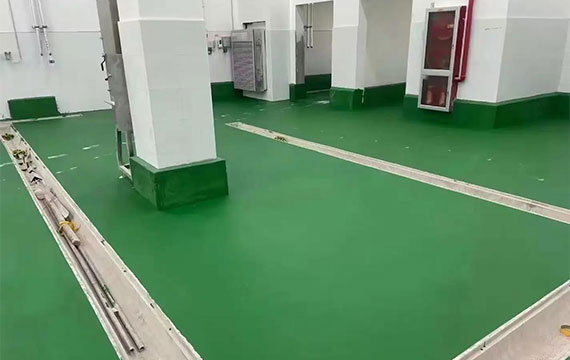
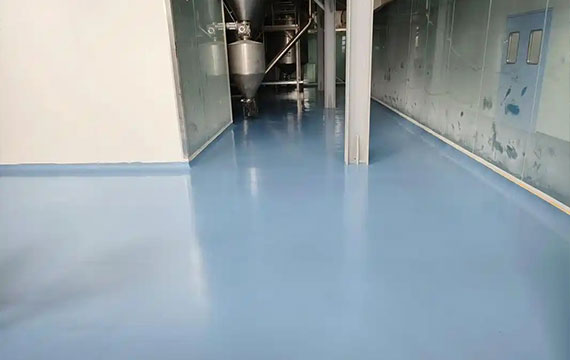
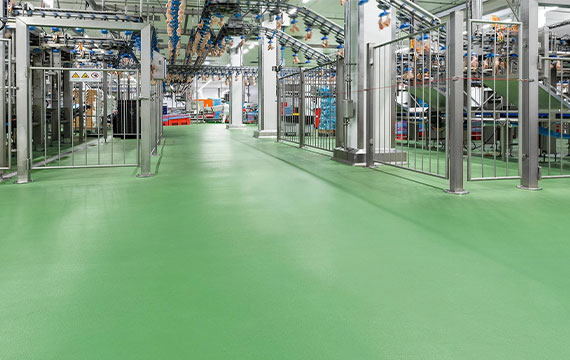
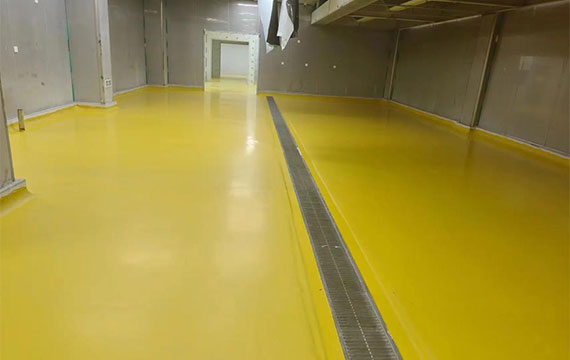
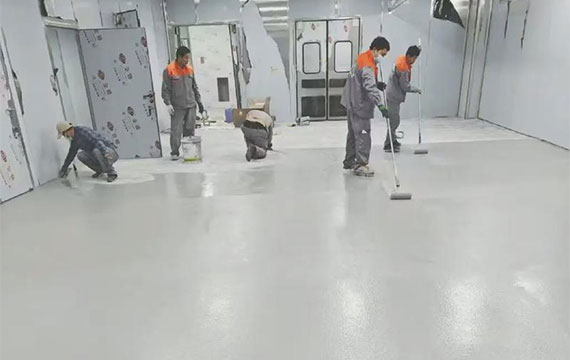
KAIDA PAINT Water-based Polyurethane Floor Project




 English
 Spanish
 Portuguese
 Arabic
 French
 Italian
 Russian
 Indonesian
 Swedish