Urethane cement slip resistance is reported in three different systems, and a specification that names one of them is usually specifying a number that cannot be checked with the equipment on site.
The three are the pendulum test, which reports a value on a 0 to 100 scale, the dynamic coefficient of friction, which reports a ratio, and the R rating, which comes from a ramp test.
Each measures something slightly different, and each is used in a different market.
This article explains what each number means, how aggregate and cleaning change it, and how to write a requirement a contractor can meet and a client can verify.
The short answer
Any urethane cement slip resistance requirement should therefore name the instrument and the condition, because the three systems are not interchangeable and a supplier can meet the letter of one while missing the intent.
For most industrial and food floors, the pendulum test is the practical choice, because the equipment is portable and the test is done on the completed floor.
A wet reading of 36 or above is the common target on level floors, and 45 or above on ramps and in wet process areas.
A DCOF reading of 0.42 or above is the usual threshold in the American market for level wet areas, and it is measured with a different instrument.
An R rating of R10 to R12 covers most industrial needs, and it is derived from a ramp test that few contractors can perform on site.
Naming the condition is the first thing to settle in a specification meeting about urethane cement slip resistance. The number only means something if the condition is named.
All three describe the same surface, and none of them describes a dry floor, which is the condition that almost never causes a fall.
Why the wet condition is the only one that matters
A wet test is the only reading worth commissioning, and a contractor who offers a dry test is offering an easier pass rather than a safer floor.
A dry resin floor is not slippery. Even a polished one will grip a boot on a dry day.
Falls happen on a wet floor, or on a floor with a film of oil, fat or cleaning residue.
A ramp requirement written for an oily ramp is a stricter specification again, because oil reduces friction more than water does on the same surface.
A wet test is the only test that reflects the cleaning regime, because the floor is wet after every wash and that is when people walk on it.
It is the same floor under two conditions, and only one of them is the condition in which somebody falls.
That is why every credible standard is written for the wet condition, and why a dry reading is a number with no operational meaning.
A supplier who quotes a dry figure is either answering a different question or avoiding the real one.
The specification should say wet, and the test should be done with water on the surface.
The pendulum test and what the value means
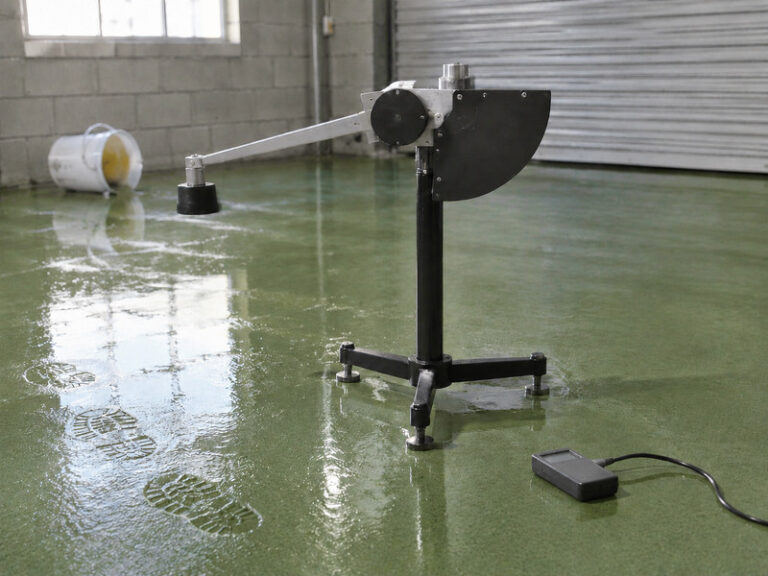
A pendulum tester swings a spring-loaded foot across the floor and measures how much energy is lost to friction.
The result is a pendulum test value, usually abbreviated to PTV, on a scale where higher is grippier.
The test is quick, portable and repeatable enough for site use, which is why the pendulum scale is the common reference in the UK and in food plants worldwide.
It is also sensitive to the rubber slider condition and to the amount of water, so the operator matters.
Below 36, most people change how they walk, and a floor that changes how people walk is a floor that generates complaints even when nobody falls.
A pendulum reading of 45 on a ramp is roughly the point at which a person can walk down a wet incline without changing their gait. Below that, most people shorten their stride and eventually slip.
The nine-point gap between the two figures is not arbitrary. On a slope, gravity already pulls the foot along the surface, so friction has to carry a larger share of body weight before the gait stays normal.
DCOF and the American approach
The dynamic coefficient of friction is measured with a portable tribometer that drags a sensor across the floor at a constant speed.
The result is a ratio, usually reported to two decimal places, and 0.42 is the threshold most often quoted for level wet areas.
The advantage is that the instrument is digital and the reading is immediate, which suits a commissioning report. The disadvantage is that the reading varies with the sensor, the speed and the surface condition, and two instruments can disagree by more than the margin between pass and fail.
That is also why a DCOF reading should never be converted into a pendulum value on a tender document. There is no valid conversion, and a table that offers one is an approximation with no test behind it.
A DCOF reading is therefore best used as a pass or fail against a stated threshold, not as a precise measurement to be compared between projects.
Where a project uses DCOF, specify the instrument and the method as well as the number.
R ratings and the ramp test
An R rating comes from a laboratory ramp test, where a person walks up and down an oiled or wetted incline until they slip.
A ramp requirement written as an R class is common in European specifications, and it works well where the floor is on a slope and the product has a type test.
The result is a class from R9 to R13, and it describes performance on a slope rather than on a level floor.
A ramp requirement should also state whether the test is done wet or oily, because the two conditions give different ratings for the same product.
That makes it useful for a specification that involves ramps, and less useful for a level production room.
An R rating cannot be measured on site, so a project that requires one is relying on the product’s type test rather than on the installed floor.
That is a legitimate approach for a product standard and a weak one for a handover test. Where a ramp requirement applies to a short threshold rather than a long incline, the pendulum value is easier to use, because the ramp is too short for a ramp test.
Aggregate broadcast and how texture is made
Texture on a urethane cement floor comes from graded aggregate scattered into the seal while it is still open.
An aggregate broadcast at 400 grams per square meter gives a different floor from the same aggregate at 800 grams per square meter, and the difference is visible and measurable.
The size, the grading and the rate of scatter decide the finished texture, and all three are specified in grams per square meter rather than in adjectives.
A fine aggregate at a low rate gives a smooth floor with a modest reading. A coarser aggregate at a higher rate gives grip and traps more soil.
Broadcast too early and the aggregate sinks and disappears. Too late and it sits on top and brushes off, leaving a floor that looks textured and reads smooth.
A surface texture that reads 40 in one bay and 50 in the next usually means the aggregate broadcast rate varied, not that the product changed, and at handover the broadcast is the first variable to check.
The window is narrow and temperature dependent, which is why the texture is one of the harder things to guarantee.
Table 1: The three systems compared.
| Sistema | Reports | Typical threshold | Site testable |
|---|---|---|---|
| Pendulum | PTV, 0-100 | 36 level, 45 ramp | Sí |
| DCOF | Ratio | 0.42 level wet | Yes, instrument specific |
| R rating | Class R9-R13 | R10-R12 industrial | No, laboratory |
Surface texture against cleanability
Grip and cleanliness pull in opposite directions on any floor, and the argument is older than resin.
Surface texture is therefore a specification choice with a hygiene consequence, and in a food plant the hygiene argument usually wins in the production areas.
A rougher surface holds water away from the boot and gives a higher reading, and it also holds soil, fat and cleaning residue.
A surface texture that fails an audit costs more to fix than a slip reading that is two points low, which is why zoning exists.
In a food plant the second effect is a hygiene risk, and a kitchen floor has the same audit finding.
The usual resolution is zoning: a heavier texture in walkways and wet areas, and a smoother finish in production zones where cleaning matters most.
Where the whole room needs both, a medium texture with a good cleaning regime beats a heavy texture with a poor one.
That trade-off should be written into the specification rather than agreed in a meeting, because it is the decision a client will revisit after the first wash, and an auditor will ask why the floor is rough.
Cleaning residue and the false reading
Some detergents leave a film that halves the friction reading, and the film is invisible.
That is why a floor tested at handover can read 45 and a floor tested after the first deep clean can read 28.
The test should therefore be done after a cleaning cycle, or at least after the floor has been washed and dried once.
Where a plant changes detergent, the reading should be taken again, because the change is a change to the floor’s performance.
Any urethane cement slip resistance report should therefore record the detergent used, because the next test may use a different one.
A wet test on a floor that has just been mopped is the closest thing to a real incident, and it is the reading we would argue from. Take that reading at handover, and record the detergent used with it. A dry reading may be logged for reference only, and must never be used as an acceptance value.
A cleaning residue is the most common cause of a slip incident on a floor that passed its commissioning test.
Zoning by area
A kitchen, a shower room and a ramp need more grip than a dry store, and a single number across a building is a compromise that serves nobody.
Wet process areas and ramps usually warrant 45 or above on the pendulum scale, and level dry areas 36.
The same urethane cement slip resistance data applies to a barefoot area, with one caveat below.
A barefoot area also has different cleaning, because the floor is washed with skin contact in mind and the residue limit is tighter.
A barefoot area, such as a changing room or a shower, needs a higher reading than a booted area, because bare skin grips differently and a fall is more likely to injure.
Where a floor is polished for appearance, the reading should be taken after polishing, not before.
The zoning drawing that assigns a build to each room can carry the slip number in the same table.
Table 2: urethane cement slip resistance targets by area.
| Zona | Target PTV, wet |
|---|---|
| Dry store, office | 36 minimum |
| Production, level | 36-45 |
| Wet process, kitchen | 45 |
| Ramp, threshold | 45 |
| Barefoot, shower | 45 or above |
The figures are targets rather than pass marks; a reading on the line is a reading to retest.
Testing at handover and afterwards
A handover test should be done wet, on the cleaned floor, at marked locations, with the instrument and the operator recorded.
Take at least one reading per room and one in every area that looks different, and record the locations on a plan.
Repeat the test after the first deep clean, and again after any change of detergent.
Where a reading fails, the answer is usually a cleaning issue rather than a texture issue, and the fix is a wash rather than a recoat.
Any urethane cement slip resistance dispute we have been asked to resolve came down to the condition of the surface at the time of the test, and the record is the only way to settle it.
That sequence saves a lot of argument, and it costs an hour.
Specifying a slip requirement
State the system, the threshold, the condition and the location. Four items, and each is checkable.
Say wet, because a dry requirement is unenforceable and meaningless.
Say which instrument, because pendulum and DCOF are not interchangeable.
Say where the readings are taken, because a single figure for a whole building describes nothing.
Then say what happens if a reading fails, because a requirement without a consequence is a preference.
Table 3: What to put in the clause.
| Artículo | Example |
|---|---|
| Sistema | Pendulum, slider 96 |
| Threshold | 45 wet minimum |
| Condición | Cleaned and wet |
| Locations | Marked on plan, 1 per room |
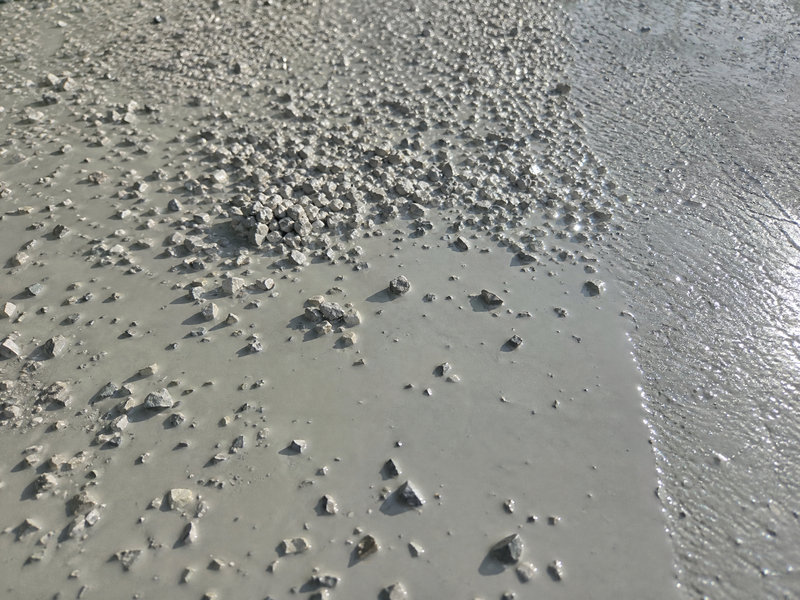
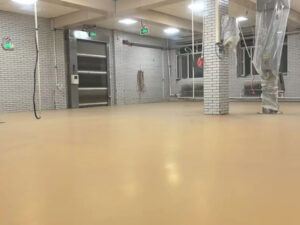
Figure 1: graded aggregate scattered across the wet surface before it closes.
Frequently asked questions
What slip resistance should a urethane cement floor have?
A wet pendulum value of 36 or above on level floors, and 45 or above on ramps and in wet process areas.
Is DCOF the same as a pendulum value?
No. They are different instruments on different scales, and a number from one cannot be converted to the other.
Can an R rating be tested on site?
No. It comes from a laboratory ramp test and describes the product rather than the installed floor.
Why test wet?
Because that is the condition in which people fall. A dry reading describes a floor that is rarely the cause of an incident.
How is the texture created?
By broadcasting graded aggregate into the seal while it is open, at a stated rate and grade.
Why did my floor read lower after cleaning?
A detergent residue can halve the reading. Retest after a clean rinse and check the dilution.
Does a rougher floor clean worse?
Yes. The trade-off is real, and the usual answer is zoning rather than one texture everywhere.
Kaida Paint supplies urethane cement slip resistance data by system and states the aggregate grade and broadcast rate for each texture level. Send the room list, the wet areas and the cleaning chemicals, and we will return a slip requirement and the texture that meets it.


 English
 Spanish
 Portuguese
 Arabic
 French
 Italian
 Russian
 Indonesian
 Swedish