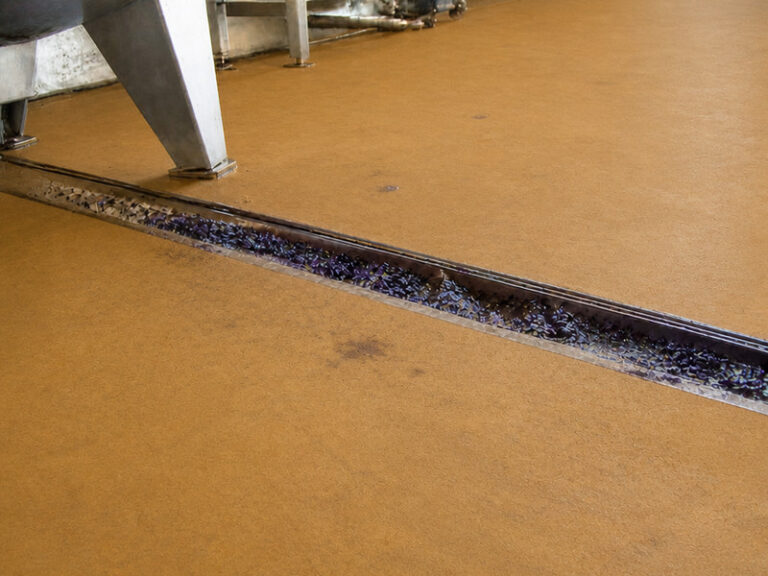
Winery flooring fails for reasons that have little to do with wine and a lot to do with sugar, acid and cold. Grape must is sticky and fermentable, tartaric acid is aggressive once it concentrates, and sulphur dioxide attacks the wrong binder quickly.
The building usually contains four different environments in one footprint: a crush pad outdoors, a fermentation hall, a cellar and a bottling line. Each one loads the floor differently, and a single system across all four is either over-specified or under-specified.
This article covers what each of those four areas does to a floor, which systems survive, where the details fail, and how to write a specification a winery can actually maintain.
What wine does to a floor
Grape must is the first problem, and it is a sugar problem before it is an acid one. It dries to a film that holds water against the surface, feeds mould in the joints and turns a smooth floor into a slip hazard within a shift.
The second is acid, and for winery flooring the tartaric acid floor resistance is not a marketing property but a measurable one. It matters most where spills concentrate as they dry, which is under tanks and along the wall junction.
The third is alcohol. Spilled wine is a mild solvent, and it also removes the waxes and finishes that a domestic product relies on, so a floor that is fine in a kitchen will dull and chalk in a cellar.
The fourth is SO2, used in every winery and pleasant for nobody. A sulphur dioxide atmosphere is corrosive to the wrong primer and to uncoated steel, and it is present in the cellar more often than the ventilation design assumes.
Crush pad: the hardest floor on the site
The outdoor pad takes must, skins, stems, water and caustic in one day, plus the abrasion of a bin being dragged across it. It is outdoors or half-outdoors, so it also takes ultraviolet light and thermal movement.
Most crush pads are built in concrete with a fall to a channel, and the floor coating is an afterthought. That is the wrong order: the drainage fall on a crush pad is steeper than indoors, and the coating has to follow it without ponding at the channel lip.
Where the pad handles grape must and washdown in the same shift, the sequence matters as much as the chemistry. Where it is washed with cold water from a hose, a heavy polyurethane at 4 to 6 mm is usually enough. Where it is washed with hot water or caustic, the floor needs the same build-up as a brewery, and the cost is justified by the harvest window alone.
A wine stain resistant floor on the outdoor slab also has to hide the stains that must leaves. A mid-grey or a warm ochre does that better than a light colour, and the choice is practical rather than cosmetic.
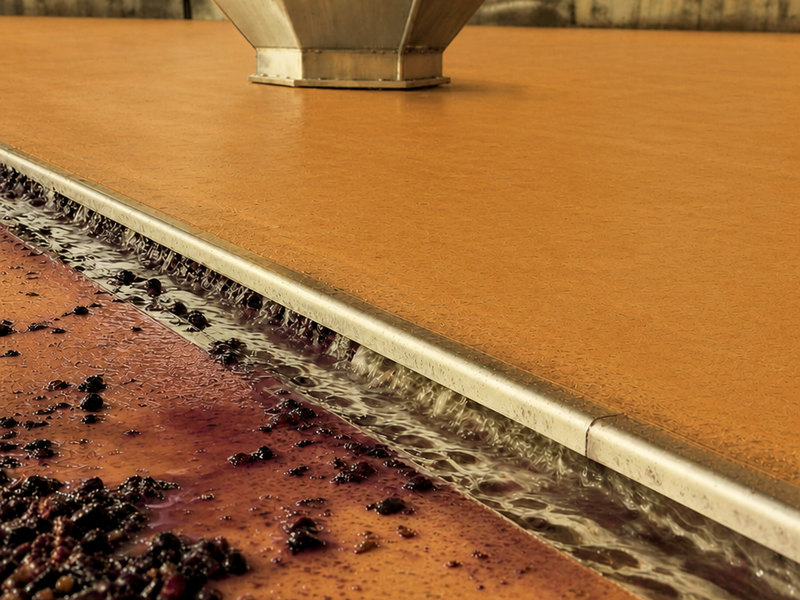
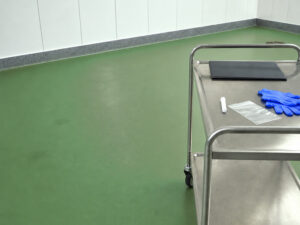
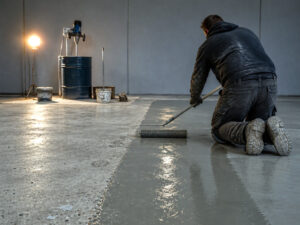
Figure 1: The channel lip is where a crush pad floor either works or ponds, and it is decided before the resin is poured.
Fermentation hall: wet, warm and acidic
In winery flooring, the fermentation hall is wet for weeks and then dry for months, which is a harder duty than constant wetting. A ponding problem here is usually a fall problem, and it shows as a ring of must that never dries.
Tank bases and cooling jackets create local cold spots, so the floor sees a temperature gradient it was not designed for. That is where a thermal shock resistance problem appears, and it is usually discovered after the first ferment rather than before.
A cementitious urethane at 6 mm handles this room well, and a heavy polyurethane at 4 mm handles it adequately if the washdown is cold. Standard epoxy at 300 microns does not, and it will chalk within two vintages.
The drainage fall matters more here than the product. A fall of 1:80 to 1:100 across the hall, with a local steeper section at each drain, keeps must moving to the channel instead of setting around the tank feet.
Barrel room: cold, damp and sulphured
For winery flooring, a wine cellar is a cold room with a chemical atmosphere, and the two together change the specification. The floor has to cure at the temperature the room runs at, and it has to resist the sulphur dioxide that hangs in the air.
Concrete is the traditional floor here, and it works because it is neutral and durable. Coated floors fail when the vapour barrier is missing, because moisture from below has nowhere to go and lifts the film from underneath.
In a wine cellar, where a coating is used, a wine stain resistant floor is usually an epoxy or a polyurethane at 2 to 3 mm, with a matt finish that does not show every drip. Gloss is a mistake in a cellar for the same reason it is a mistake in a dairy: it is impossible to keep looking clean.
A wine cellar also suffers where the racks stand, because the load is concentrated on four small feet. Barrel handling in a cellar damages floors at the same two points every time: the door threshold and the aisle where the racks sit. Both are worth reinforcing before the barrels arrive, not after the first season.
Bottling and storage: dry, but not clean
For winery flooring, the bottling hall is dry most of the time, which tempts a light-duty specification. The mistake is that bottling also brings glass, lubricants and a caustic wash on the filler, and a thin film will not survive a caustic spill twice.
A 2 to 3 mm polyurethane or a 1 mm epoxy with a broadcast aggregate is a reasonable compromise here, and the aggregate rate should be set for a floor that is mostly dry but occasionally wet with detergent.
Storage is the easiest room on the site and the one most often over-specified. A sealed concrete or a thin epoxy is enough, provided the joints are filled and the floor is flat enough for a pallet truck.
The exception is a chilled storage area, where the floor has to tolerate cold and condensation. That is a small area with a specific requirement, and it should be priced separately rather than folded into the bottling line.
Where winery floors actually fail
In winery flooring, the first failure is at the wall junction, where a square detail traps must and acid against the cove. A 75 mm radius and a continuous cove solve it, and a bead of sealant does not.
The second is at the drain, where the channel meets the resin. A butt joint at the channel lip is a crack waiting for a bin truck; a formed collar with a stainless edge is not.
The third is under the tanks, where a cold jacket meets a warm floor. Thermal shock resistance cracking in a ring pattern around a tank foot is a detail failure, and recoating the field will not fix it.
The fourth is the door threshold between a warm hall and a cold room, which is where ponding appears first. The threshold is also where the two systems meet, so it is the one detail that must be drawn rather than described.
Table 1: Exposure by area, and the system that suits it.
| Area | Main load | System | Thickness |
|---|---|---|---|
| Outdoor pad | Must, abrasion, UV | Heavy polyurethane | 4 to 6 mm |
| Fermentation | Must, acid, thermal | Cementitious urethane | 6 mm |
| cellar | Cold, SO2, damp | Epoxy or PU, matt | 2 to 3 mm |
| Bottling | Caustic, glass | PU with aggregate | 2 to 3 mm |
Slope, drainage and the harvest window
For winery flooring, a drainage fall of 1:80 to 1:100 across the working floor is the norm, with a local fall of about 2 percent within a metre of each outlet. Anything flatter ponds, and anything steeper is a slip risk under foot.
Channels beat gullies in every area that handles solids. Stems, skins and lees block a 100 mm gully in an afternoon during harvest, and a channel with a removable grating can be cleared with a squeegee.
The harvest window is the constraint on every repair. A winery can lose the vintage, not just a week, so the programme is planned around the crush rather than around the contractor’s availability.
That argues for doing the work in the off-season even at a premium, and for keeping a small stock of the same system for repairs. A patch in February is cheap; a patch in September is a decision about the harvest.
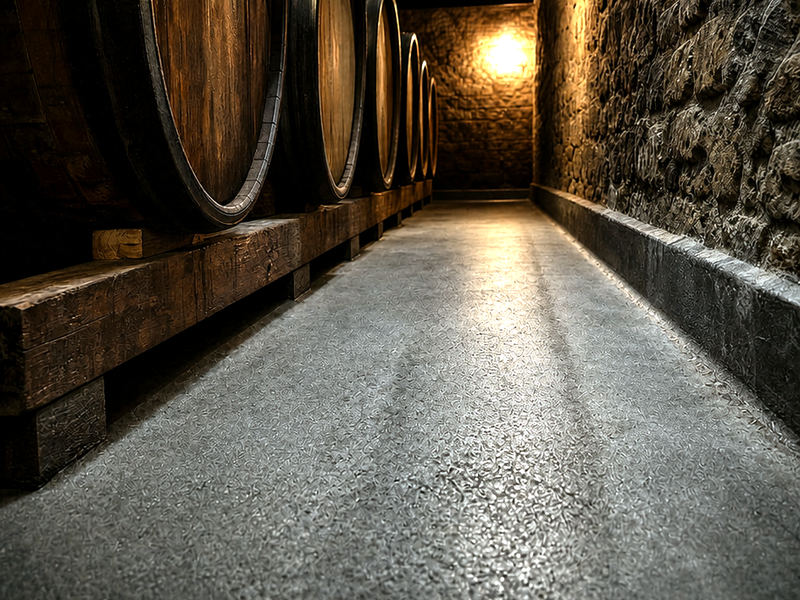
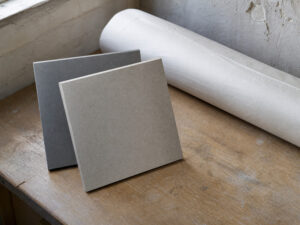
Figure 2: A matt finish and a 75 mm cove are the two details that make a cellar maintainable.
Specifying a winery floor
Write the winery flooring specification by area, not by building. Four areas with four exposures will produce four build-ups, and a single figure for the whole site is a guarantee that one of them is wrong.
Name the chemicals with their concentration and temperature: caustic at 1 to 2 percent and 60 °C, citric and tartaric at 1 to 3 percent, SO2 as a gas, and ethanol as a spill. A tartaric acid floor claim without those numbers is not checkable.
Require the wine stain resistant floor to be shown on a sample, not on a colour card. Wine stains appear in the first vintage on a floor that was specified from a chip, and they are permanent once the film has absorbed them.
Finally, require the fall and the channel detail on the same drawing. A channel that is drawn with its lip, its fall and its collar is a detail a contractor can build; one that is described in a note is a detail that will be improvised.
Table 2: Chemical exposure with the numbers worth writing down.
| Medium | Typical strength | Temperature |
|---|---|---|
| Caustic wash | 1 to 2 percent | 60 °C |
| Tartaric and citric | 1 to 3 percent | Ambient to 40 °C |
| SO2 gas | Gas, 20 to 50 ppm | Cellar temperature |
| Ethanol spill | 10 to 15 percent | Ambient |
Table 3: Drainage detail by area.
| Area | Drainage | Fall |
|---|---|---|
| Outdoor pad | Open channel with basket | 2 percent local |
| Fermentation | Channel, removable grating | 1:80 to 1:100 |
| cellar | Gully at low corner | 1:100 |
| Bottling | Slot drain at filler | 1:100 |
Frequently asked questions
Does a winery floor need a chemical-resistant system?
Yes, but the chemicals are specific: caustic at 1 to 2 percent and 60 °C, citric and tartaric acid at 1 to 3 percent, SO2 as a gas, and ethanol as a spill. A generic chemical-resistant claim without those numbers cannot be checked, and the numbers are what make a tartaric acid floor specification comparable between suppliers.
Why do winery floors stain?
Because the film absorbs pigment before it fully cures, or because the surface is too porous to release it. A wine stain resistant floor is usually a matt polyurethane or a pigmented urethane at 2 to 3 mm, and the requirement should be proven on a sample, not a colour card.
A sample left in the sun for a week with must on it will tell you more than any stain-resistance table, and it costs a phone call to arrange. Ask for two samples if the floor will be seen in daylight, because the same colour reads differently under cellar lighting. Keep one of them on site as the reference for repairs.
What slope does the outdoor pad need?
About 2 percent locally, with a channel rather than a gully, and a lip detail that stops water running back under the resin. The outdoor pad is usually steeper than an indoor floor because it handles solids as well as liquid. A crush pad built to an indoor slope will pond at the channel lip within a season, and the ponding is what lifts the coating at the edge.
Can a cellar keep its concrete floor?
Often yes. A wine cellar floor of concrete is neutral, durable and traditional, and it works where the room is dry and the barrels are handled carefully. A coating is worth it where dust, staining or cleaning become a problem, and it needs a vapour barrier underneath. In a wine cellar, the air is humid and the temperature is low, which is the opposite of a fermentation hall and calls for a different primer. A cellar also has no washdown to speak of, so the floor is judged on dust and stains rather than on chemical attack.
How do you stop tartaric acid damaging the floor?
By removing the spill rather than by choosing a heroic binder. Tartaric acid is aggressive when it concentrates as it dries, so the floor needs a fall to a drain, a cove at the wall and a cleaning routine that reaches under the tanks.
What thickness for a fermentation hall?
Six millimetres of cementitious urethane for a hall washed hot, or four millimetres of heavy polyurethane where the washdown is cold. A thin epoxy will chalk within two vintages, whatever the data sheet says. A thermal shock resistance failure usually starts at a tank foot, where the jacket keeps the slab cold while the room stays warm.
When should winery floor work be done?
In the off-season, even at a premium. The harvest window is the constraint, and a repair in September is a decision about the vintage rather than about the floor. Keep a drum of the specified system on site for small patches, and a repair becomes a morning rather than a purchase order. The same drum also proves the colour and the texture if a contractor needs to match a patch two years later, which is the question that always comes up in the third vintage.
Why food plants work with Kaida Paint
Kaida Paint supplies resin systems for wine cellars, crush pads and bottling halls, and we will tell you which of the four areas needs the heavy build-up and which one does not. Send a plan with the tank positions and the channel route, and we will return a system table by area with the falls marked. Where a winery flooring specification is being written for a new building, we will also flag the two details that fail first, which are the channel lip and the door threshold.
Author: Mark Zhao, Senior Industrial Flooring Engineer Updated: October 2026



 English
 Spanish
 Portuguese
 Arabic
 French
 Italian
 Russian
 Indonesian
 Swedish