7 expertsteg för att förhindra skador orsakade av termisk chock i golv för livsmedelsbearbetning
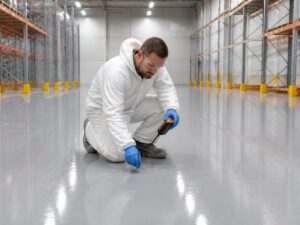
Värmechockskador på golv i livsmedelsindustrin förebyggs bäst genom att man specificerar och korrekt installerar ett tjockt, sömlöst cementbaserat uretansystem (uretanbetong) som matchar den underliggande betongplattans termiska rörelser. Den mest effektiva strategin innebär att man väljer ett högpresterande material som polyuretancement, förbereder underlaget noggrant och utför detaljarbeten på kritiska områden som dräneringar och fogar för att få en robust, monolitisk tätning. Denna heltäckande strategi är avgörande för att uppnå ett hållbart, hygieniskt golvsystem som tål kontinuerlig termisk cykling och de aggressiva förhållandena i dagliga tvättområden.
1. Varför är termisk chock den främsta orsaken till golvfel i livsmedelsanläggningar?
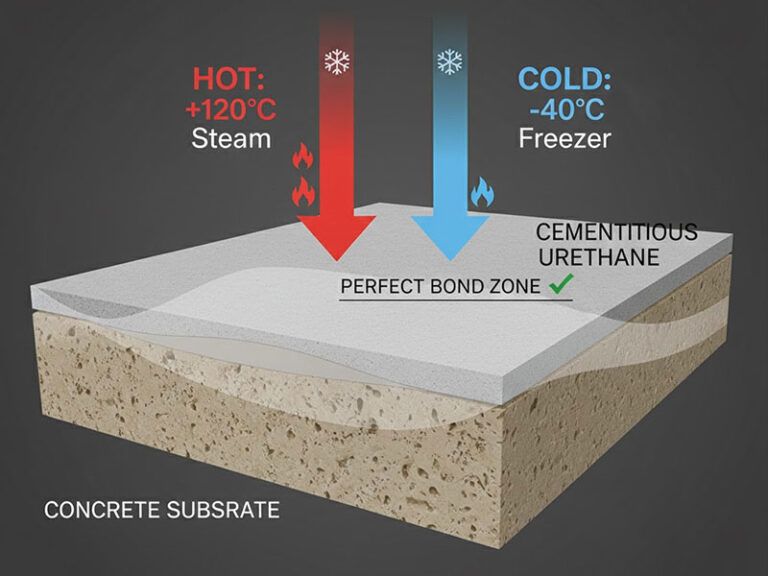
Termisk chock uppstår när snabba, extrema temperaturfluktuationer orsakar olika expansionshastigheter mellan golvbeläggningen och betongunderlaget. Standardbeläggningar, t.ex. tunnfilmsepoxier, har en annan värmeutvidgningskoefficient (a) än betong. När ett kallt golv (t.ex. 4°C’ i en frys) snabbt rengörs med 95°C’ ånga, expanderar den värmetåliga epoxin snabbt medan betongen reagerar långsamt. Denna skillnad skapar en intensiv drag- och skjuvspänning vid bindningslinjen, vilket leder till de två vanligaste formerna av fel: golvdelaminering (avskalning) och golvsprickor.
- Principen förklarad: Den spänning (σ) som genereras av temperaturförändringen (ΔT’) är proportionell mot skillnaden mellan materialets värmeutvidgningskoefficient och dess elasticitetsmodul (E). Styva material som standard epoxi kan inte absorbera denna påfrestning.
- Källhänvisning: Enligt USDA och olika standarder för bearbetning av livsmedel och drycker måste golven tåla dagliga rengöringsprocedurer, som ofta innefattar ånga eller hett vatten långt över 82°C’ (180°F’), vilket gör att hög värmebeständighet inte är förhandlingsbart.
2. Att välja rätt material: Varför urethanbetong är guldstandarden
Cementbaserad uretan (även känd som polyuretancement eller Ucrete) erbjuder det högsta motståndet mot termisk chock bland hartsbaserade golvalternativ eftersom dess termiska expansionskoefficient nära matchar betongens. Denna likhet gör att beläggningen och plattan kan expandera och kontrahera tillsammans på ett harmoniskt sätt, vilket dramatiskt minskar spänningen vid bindningslinjen och praktiskt taget eliminerar risken för delaminering av golvet.
Jämförelse mellan uretanbetong och epoxi för hög temperatur
Även om vissa epoxisystem för höga temperaturer ger bättre prestanda än traditionella epoxisystem, kan de i allmänhet inte mäta sig med hållbarheten hos polyuretancement i miljöer med långvarig och extrem termisk cykling.
| Funktion | Cementbaserad uretan | Standard Epoxi | Epoxi för hög temperatur |
| Motstånd mot termisk chock | Utmärkt (utformad för exponering vid 40°C till 120°C) | Dålig (benägen att gå sönder över 65°C) | Fair to Good (Förbättrad formulering, men ofta styvare än PU Cement) |
| Tjocklek | Hög (vanligtvis 6 mm till 9 mm) | Låg (typiskt 2 mm till 4 mm) | Medium (vanligtvis 4 mm till 6 mm) |
| Expansionständsticka till betong | Mycket hög (nära matchande) | Låg | Måttlig |
| Rekommenderad användning | Tvättutrymmen, frysar, ugnar, golv i livsmedelsanläggning Skadeförebyggande åtgärder | Torr produktion, lätt trafik | Områden med periodiskt varmvatten, men inte ånga |
3. Viktig substratpreparering för en tillförlitlig bindning
Ett hållbart, termiskt chockresistent golvsystem är omöjligt utan korrekt förberedelse av betongunderlaget, eftersom bristande vidhäftning är grundorsaken till de flesta golvfel. Målet är att uppnå en lämplig CSP-profil (Concrete Surface Profile) och minska potentiella fuktproblem.
- Problemet: Kvarvarande föroreningar, ytcement (ett svagt lager av cementpasta) eller hög ånggenomgångshastighet (MVT) förhindrar en stark kemisk bindning, vilket leder till för tidig delaminering av golv.
- Lösningen (steg för steg):
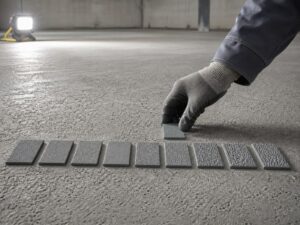
- Mekanisk nötning: Betongen måste förberedas mekaniskt, vanligtvis genom blästring eller tung diamantslipning, för att uppnå en CSP-3 till CSP-5-profil enligt ICRI:s (International Concrete Repair Institute) standarder.
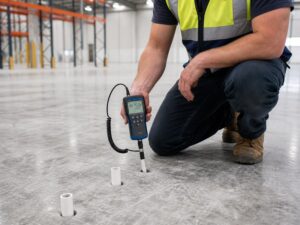
- Fuktprovning: Före applicering måste plattan testas. De flesta hartsmaterial kräver att den relativa fuktigheten (RH) i betongen är lägre än 80%. Om RF är hög måste en särskild ångspärr eller ett särskilt fuktreducerande system användas.
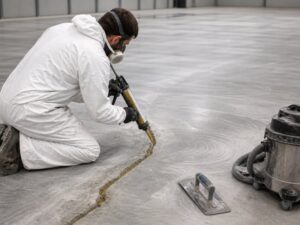
- Reparation: Alla befintliga golvsprickor och spjälkningar måste repareras med ett epoxi- eller polymerreparationsbruk innan huvudbeläggningen appliceras.
4. Hantering av kritiska områden med hög belastning: Fogar och dräneringar
Högtrafikerade och kritiska avslutningspunkter, särskilt expansionsfogar och golvbrunnar, är de vanligaste platserna för golvfel och måste vara ordentligt detaljerade för att förankra det sömlösa golvet.
Varför Keying förhindrar delaminering av golv vid avlopp
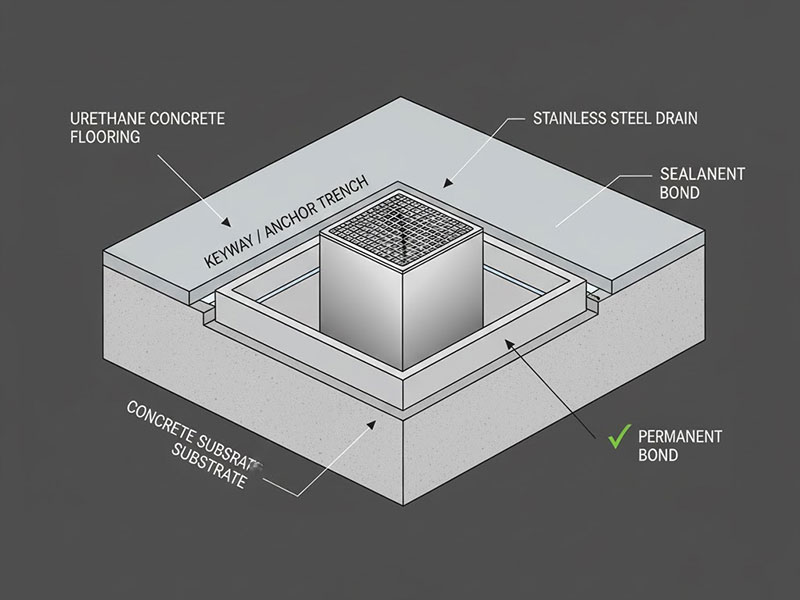
För att förhindra att kanten på hartsgolvet lyfts eller underskärs av aggressiv rengöring krävs ett mekaniskt ankare runt avlopp och diken.
- Genomförande: Entreprenören måste skära ett litet dike eller spår (kilspår eller ankarspår) runt hela avloppets omkrets. Den uretan betonggolv Materialet hälls sedan in i kilspåret, vilket effektivt låser fast beläggningen och förhindrar rörelser i sidled orsakade av termisk stress.
- Standard: Djupet på kilspåret ska vara minst 6 mm (0,25 tum), vilket motsvarar golvsystemets tjocklek.
[Diagram över en detalj i ett förankringsdike med kil runt en golvbrunn för att förhindra golvbrott].
5. Applikationens tjocklek: Den kritiska faktorn för hållbarhet
Den applicerade tjockleken på cementbaserat uretansystem korrelerar direkt med dess förmåga att motstå termisk stress och kraftiga stötar i industriella golvmiljöer. En tjockare applicering fungerar som en överlägsen isolator, vilket minskar hastigheten och intensiteten i värmeöverföringen till betongplattan under.
- Standardrekommendation: För områden med lätt till måttlig rengöring är en tjocklek på 6 mm (1/4 tum) vanligtvis godtagbar.
- Extrem termisk cykling: För områden med hög värme, t.ex. områden för direkt ångrengöring, vattenkokare och spisar, rekommenderas en tjocklek på 9 mm (3/8 tum) eller till och med 12 mm för att ge maximal isolering och motståndskraft mot värmeväxlingar.
6. Bästa praxis för underhåll och drift
Materialvalet är avgörande, men genom att minimera temperaturförändringarna under den dagliga driften skyddas det sömlösa golvsystemet ytterligare mot långvarig termisk stress.
- Gradvisa temperaturförändringar: Om möjligt ska du införa en kylperiod innan du börjar tvätta med höga temperaturer. Låt t.ex. ett hett produktionsområde svalna naturligt i 10-15 minuter innan tvättvattnet leds in.
- Kontroll av rengöringstemperatur: Kalibrera rengöringsutrustningen för att undvika att applicera ånga eller vatten över tillverkarens angivna gränsvärde för polyuretancementsystemet (vanligtvis 100°C -120°C).
- Undvik lokala hotspots: Utbilda personalen i att undvika att rikta ånga med högt tryck och hög temperatur direkt mot en enda punkt på golvet under längre perioder, eftersom detta kan orsaka lokal termisk stress och förtida golvbrott.
7. Säkerställa efterlevnad av regelverk: FDA och hygieniska golv
Valet av ett system som är motståndskraftigt mot termisk chock är också en förutsättning för att upprätthålla ett golv som verkligen uppfyller FDA:s krav och uppfyller viktiga standarder för livsmedelssäkerhet.
- Hygieniska krav: Eftersom uretanbetonggolv appliceras sömlöst och tål den aggressiva rengöring som krävs för att eliminera patogener, förhindrar det sprickor, sprickor och delaminering där bakterier (såsom Listeria och Salmonella) kan härbärgera. Delaminering av golvet skapar oåtkomliga fickor, vilket gör att anläggningen inte uppfyller kraven.
- Myndighetens referens: FDA:s och GFSI:s (Global Food Safety Initiative) standarder kräver underförstått icke-porösa, hållbara och lättrengjorda ytor, vilket direkt kräver en beläggning med hög kemisk och termisk beständighet, t.ex. polyuretancement.
Auktoritativ referens och expertutlåtande
Den här artikeln har skrivits av en innehållsspecialist med expertis inom industrigolv, specialiserad på miljöer där livsmedel och drycker bearbetas. Rekommendationerna baseras på ICRI:s (International Concrete Repair Institute) standarder och materialvetenskapliga data som är specifika för termisk belastning på polymerbeläggningar.
Författare: [Jason Zhang, Senior Industrial Flooring Consultant].
Datum för senaste uppdatering: December 2025
KAIDA PAINT Förklaring om varumärkets fördelar
KAIDA PAINT är en ledande tillverkare av högpresterande industriella golvlösningar som är speciellt framtagna för att uppfylla de extrema kraven inom livsmedels- och dryckesindustrin. Våra flaggskeppssystem Urethane Concrete Flooring, som är formulerade med avancerad polyuretancementteknik, är utformade för att klara aggressiva tvättar vid höga temperaturer och kraftiga termiska cykler - de främsta orsakerna till delaminering av golv. Som en pålitlig tillverkare erbjuder vi beprövade system som säkerställer att din anläggning får ett verkligt sömlöst golv och en FDA-kompatibel golvyta, vilket minimerar risken för golvfel och maximerar drifttiden. Kontakta en KAIDA PAINT-entreprenör idag för en konsultation om ditt golvprojekt för livsmedelsindustrin.


 English
 Spanish
 Portuguese
 Arabic
 French
 Italian
 Russian
 Indonesian
 Swedish