
A polyurethane floor coating thickness is usually the number that decides how long a floor lasts, and Taber abrasion is the test most often used to argue about it.
The test is useful and it is routinely misread. It measures how much material a small wheel removes under laboratory conditions, not how fast a forklift will wear a floor in a cold store.
This article explains how ASTM D4060 is run, what the numbers mean, where abrasive wear in service departs from the laboratory, and how to write an abrasion requirement that a supplier cannot sidestep.
The short answer: what the test is for
An abrasion test ranks materials. It does not predict service life, and a supplier who presents a weight loss figure as a lifespan is overstating what the method can do.
For a polyurethane floor coating thickness the test is also a specification tool rather than a design tool. It belongs in the tender, where it separates products, and not in a life-cycle estimate, where it has no standing.
What it does well is separate a soft, filled coating from a hard, well-bound one. That distinction is real, and it matters when two products are being compared for the same duty.
What it does badly is account for load, speed, temperature, chemical exposure and the shape of the abrasive. Those are the variables that decide real wear.
The honest use of the data is comparative, within one test method, at one set of conditions. Anything further is inference.
How a Taber abrasion test is run
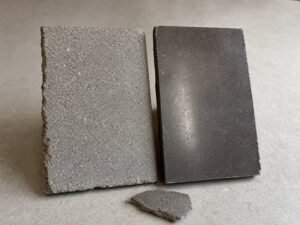
A cured disc of the coating is mounted on a turntable. Two abrasive wheels run on the surface under a set load, and the sample rotates so that the wear path is a circle rather than a groove.
The test wheel grade decides what kind of abrasion is being simulated. A Calibrase wheel with a rubber bond is the usual choice for floor coatings; a harsher wheel is used for harder materials.
The load is typically 500 or 1000 grams per wheel. The result is quoted after a defined number of revolutions, usually 1000, and expressed as mass loss in milligrams, sometimes with a volume figure.
A wear cycle count is also a choice rather than a constant. Results are often quoted at 1000 revolutions because that figure separates soft and hard products, not because 1000 is a service interval. A test wheel run to 5000 revolutions describes a different mechanism: the soft surface is gone and the measurement is of the filler.
Every one of those variables changes the number. A result quoted without the wheel grade, the load and the cycle count cannot be compared with anything, including another result from the same supplier.
Table 1: The conditions that must be stated with any result.
| Parameter | Typical value | Effect if changed |
|---|---|---|
| Wheel grade | CS-17, rubber bond | Large |
| Load per wheel | 500 g or 1000 g | Large |
| Revolutions | 1000 | Moderate |
| Sample conditioning | 7 days at 23 °C | Moderate |
| Result unit | mg loss | Definition |
Ask for all five. A datasheet that says high abrasion resistance without them has told you nothing that can be tested.
Reading an ASTM D4060 result
D4060 is the standard method behind most abrasion figures quoted for floor coatings. It defines the specimen, the conditioning, the wheel, the load and the reporting, which is why results from different laboratories can at least be compared.
For polyurethane floor systems, a mass loss of 20 to 60 milligrams at the standard 1000 gram load and 1000 revolutions is typical of a good product. Values above 100 milligrams suggest a soft binder or a heavy filler load.
For comparison, an epoxy floor commonly lands between 40 and 90 milligrams, and a bare concrete surface is far higher. The ranking is consistent even when the absolute numbers move.
Note also that an abrasive wear result on a laboratory plaque describes a film made under laboratory conditions. A screed placed on site has a different filler distribution and sometimes a different surface finish, so the site material is what should be tested.
Beware a result quoted at 500 grams. It looks better than the same product at 1000 grams, and the two are not interchangeable.
Table 2: Typical ranges at 1000 g and 1000 revolutions, CS-17 wheel.
| System | Weight loss, mg |
|---|---|
| PU screed, high performance | 20-45 |
| PU coating, standard | 40-70 |
| Epoxy coating | 40-90 |
| Thin sealer | 60-120 |
Those ranges are guides rather than specifications. A product at 55 milligrams is not worse than one at 45 in any way a client would notice, and the difference is inside the laboratory variation.
Why mass loss is not wear rate in service
The laboratory applies a controlled load at a controlled speed on a clean, dry sample at 23 °C. A warehouse applies varying loads, at varying speeds, on a floor that may be wet, cold or covered in grit.
Grit is the single biggest difference. A wheel rolling over a clean floor polishes it; the same wheel rolling over a floor with sand on it cuts it. No Taber abrasion result captures that.
Temperature is the second. A polyurethane at 5 °C is harder and more brittle than the same product at 25, and the wear mechanism changes from abrasion towards chipping.
Chemical exposure is the third. A floor that sees hot caustic daily softens at the surface, and softened binder wears several times faster than the laboratory figure suggests.

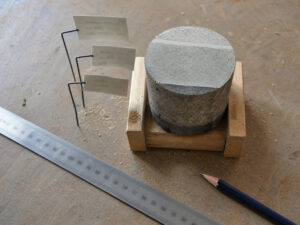
Figure 1: the weights are stacked on the arm and the vacuum nozzle sits at the edge of the disc.
Thickness decides the life, not the milligrams
Abrasion removes material from the top. How long a floor survives that removal depends on how much material there is, which makes polyurethane floor coating thickness a more useful design variable than any abrasion figure.
Lose one millimetre a year from a 6 millimetre screed and the floor has under five years of life. Lose the same millimetre from a 0.5 millimetre coating and the floor is gone in the first year.
That is why a product with a mediocre abrasion result at 6 millimetres outperforms an excellent one at 0.3 millimetres on a busy ramp. The binder grade selection matters far less here than the build does. The arithmetic is unforgiving and it is rarely presented to clients.
It is also why the specification should state a minimum polyurethane floor coating thickness measured on a core sample, rather than a nominal figure in a brochure, and why we ask for the core before accepting a completed slab.
Table 3: Wear allowance and service life at 1 mm lost per year.
| Build | Allowance | Years to substrate |
|---|---|---|
| 0.4 mm coating | 0.3 mm | Under 1 |
| 1.5 mm coating | 1.2 mm | About 1 |
| 3 mm mortar | 2.4 mm | 2-3 |
| 6 mm screed | 4.8 mm | 4-5 |
| 9 mm screed | 7.2 mm | 7 |
The allowance column is not the full build, because a floor is normally resurfaced before it reaches the substrate. Even so, the ratio between the rows is what decides the budget.
Traffic classes and what they mean for wear
A traffic class is a shorthand for the combination of load, frequency and abrasiveness that a floor will see. It is more useful than a milligrams figure because it describes the duty rather than the material.
Light class means foot traffic and occasional pallet trucks. Medium means regular forklift traffic without grit. Heavy means steel wheels, grit, or continuous movement in one lane.
Very heavy means abrasive cargo, hot tyres or tracked equipment. That class is where a thin coating fails regardless of its laboratory result, and where a 6 to 9 millimetre system in a heavy-duty build becomes the only sensible answer.
On a polyurethane floor coating thickness the class also dictates where the money goes. A heavy class floor does not need a harder binder across the whole hall; it needs a thicker build in the two lanes that see the steel wheels.
Ask a client which lane the traffic uses. Wear is never uniform across a hall, and the design should follow the lane rather than the average.
The field trial that answers the real question
A field trial is a patch of floor laid in the actual service condition, in the actual traffic lane, and left for a defined period. It is the only test that includes grit, temperature and load together.
The wear cycle a real floor sees includes grit, load and temperature at once, and it shows which lane wears and how the edge of the patch behaves under a turning wheel.
Lay two products side by side if a choice is being made. Two square metres each in the busiest lane, marked and photographed, then inspected at three and twelve months.
Measure the depth of wear with a straight edge and a feeler gauge, or with an ultrasonic gauge if the coating is thick enough to read. Photographs alone are not measurement, though they are useful evidence.
A field trial costs a few hundred dollars and it replaces an argument that otherwise runs for the life of the floor. On any project above a few thousand square metres it is the cheapest test available.

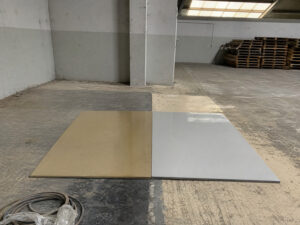
Figure 2: the outline is chalked on the concrete, and the lane markings run past it on both sides.
Other abrasion methods and when they matter
The Böhme test uses a rotating disc and a standard abrasive, and it is common in European specifications. EN 13813 abrasion class runs from AR1 to AR4 and is derived from a defined test.
The falling sand method measures resistance to a stream of abrasive, which is closer to grit damage than a wheel is. It is used more in North America and less in Europe.
Where a client asks which method is best, the answer is the one the tender names. An abrasive wear ranking from a Böhme test cannot be converted into a Taber figure, and an attempt to do so produces a number that satisfies nobody.
Each method ranks materials differently, so a product that wins on one can lose on another. That is not fraud; it is what happens when different mechanisms are measured.
For a European tender, quote the AR class and the standard. For a US tender, quote ASTM D4060 with the conditions. Quoting both invites confusion rather than clarity.
How to specify abrasion so it means something
A useful clause names the method, the conditions, the acceptance value and the build it applies to. Three of those four are usually missing from a tender.
It should also state that the value applies to a sample taken from the delivered material, not to a laboratory plaque made by the manufacturer a year earlier. That sample has to be at full chemical cure before it is tested, or the number describes a softer film.
Where a traffic class is the real requirement, specify the class and the build rather than the milligrams. A client who needs heavy duty needs 6 millimetres, not a lower number.
Finally, state what happens on failure. A retest, a replacement or a credit, decided in advance, is worth more than a tighter specification with no consequence.
Five misreadings we see in tenders
Five misreadings appear in tenders often enough to be predictable, and the first makes every later comparison impossible.
The first is a mass loss quoted without load or revolutions, which cannot be compared with anything. The second is a result measured on a thin film being applied to a thick screed requirement.
The third is assuming the number scales. A product that loses 40 milligrams in the laboratory does not lose 40 milligrams per wear cycle in service, and the gap widens on any floor where grit is present.
The fourth is ignoring the test wheel grade. A result from a harsh wheel and one from a rubber-bond wheel describe different mechanisms.
The fifth is treating abrasive wear as a single property. Impact, sliding and rolling wear are three different things, and a floor can be good at one and poor at another.
What we put on a datasheet
We quote the method, the wheel, the load, the revolutions and the result, in that order, and we state the polyurethane floor coating thickness the figure refers to.
Where a client needs an EN 13813 abrasion class for a European tender, we give the class and the test that produced it, separately from the Taber figure, because the two are not interchangeable.
Where a client needs a service-life estimate, we give a range based on thickness and traffic class, and we say what the range assumes. That is more useful than a single number and more honest than a promise.
One caution on datasheet values: a Taber abrasion figure from a laboratory plaque is not a statement about a delivered polyurethane floor coating thickness. The two can differ by a third on the same formulation, which is why we test a sample from the batch when a project asks for evidence.
If the duty is genuinely abrasive, the answer is usually more millimetres rather than a different product, and we will say so even when a thinner system would be easier to sell.
Frequently asked questions
What is a good Taber abrasion result for a PU floor?
Between 20 and 60 milligrams at 1000 grams and 1000 revolutions with a CS-17 wheel. Above 100 milligrams indicates a soft or heavily filled product.
Does a better abrasion result mean a longer lasting floor?
Not on its own. Thickness and traffic decide service life, and a mediocre product at 6 millimetres outlasts an excellent one at 0.4 millimetres.
What does ASTM D4060 measure?
Mass loss from a coated disc abraded by two rotating wheels under a defined load, after a defined number of revolutions.
Why do two suppliers quote very different abrasion numbers?
Usually because the conditions differ. Load, wheel grade and revolution count all change the result, and without them the numbers cannot be compared.
Is EN 13813 abrasion class the same as Taber?
No. They are different methods and the rankings do not map directly. Quote the one the tender asks for.
How do I test abrasion in a real building?
Lay two square metres in the busiest lane and measure wear depth at three and twelve months. Include grit and temperature, which no laboratory test does.
Can I improve abrasion resistance without a thicker floor?
Some products offer a harder topcoat or a reinforced seal, and the gain is modest. Thickness remains the dominant variable.
Why food plants work with Kaida Paint
Kaida Paint quotes the abrasion method, the wheel, the load and the revolutions with every result, and states the polyurethane floor coating thickness the figure applies to. Send the traffic class, the loads and the lane layout, and we will recommend a build with a wear allowance rather than a milligrams figure, and say when a thicker system is the only honest answer.


 English
 Spanish
 Portuguese
 Arabic
 French
 Italian
 Russian
 Indonesian
 Swedish