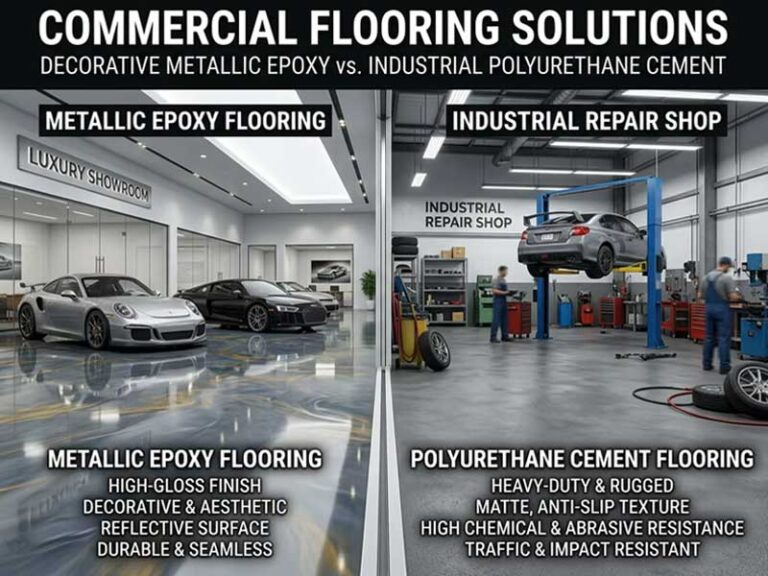
The best flooring system for automotive repair shops is polyurethane cement (PU cement) for repair bays and wash areas, while epoxy flooring is the best choice for showrooms and light-duty service areas. PU cement provides superior impact resistance, chemical resistance, and thermal shock performance. Epoxy offers better aesthetics and lower installation costs. For EV repair facilities, ESD epoxy is the recommended solution to protect sensitive electronics.
| Facility Zone | Recommended Flooring System |
|---|---|
| Car Showroom / Display Area | Decorative Epoxy, Metallic Epoxy, or Porcelain Tile |
| General Service & Repair Bays | Polyurethane Cement (PU Cement) |
| Wash Bays / Detail Bays | Polyurethane Cement with Anti-Slip Aggregate (preferred solution) |
| EV Battery / Electronics Repair | ESD (Static Control) Epoxy |
| Tire & Alignment Bays | Heavy-Duty Epoxy or Polyurethane Cement |
| Customer Lounge / Reception | Decorative Epoxy Flake System |
1. What Are Heavy-Duty Automotive Showroom and Maintenance Shop Flooring Systems?
Automotive shop flooring systems, also called auto repair shop flooring, mechanic shop flooring, automotive dealership flooring, or garage floor coating systems, are high-performance surfaces designed to protect concrete floors in vehicle service facilities, repair garages, dealerships, and maintenance workshops. These systems, primarily composed of polyurethane cement, epoxy, or ceramic tile, are engineered to withstand constant mechanical loads from heavy vehicles, chemical attacks from oils and solvents, and the thermal shock of hot water pressure washing. Their role is twofold: to provide a safe, durable, and easy-to-clean surface in the workshop, and to create a visually appealing, high-end aesthetic in the showroom that enhances the vehicle presentation.
2. Automotive Flooring Requirements Checklist
Automotive facilities require flooring systems that can withstand a unique combination of physical, chemical, and thermal stresses. The following checklist outlines the critical performance requirements for any automotive flooring system:
| Requirement | Recommended Flooring Feature |
|---|---|
| Vehicle weight (passenger cars to heavy trucks) | High compressive strength (minimum 4,000 psi) |
| Hydraulic lifts and heavy equipment | Impact resistance and point load capacity |
| Oil, fuel, and brake fluid spills | Chemical-resistant resin system |
| Hot water pressure washing (up to 180°F/82°C) | Thermal shock resistance |
| Continuous tire traffic | High abrasion resistance |
| Wet working conditions | Anti-slip surface (R9–R13 rating) |
| EV battery and electronics repair | ESD protection (1E6–1E9 ohms) |
This checklist serves as a foundation for selecting the appropriate flooring system for each zone within an automotive facility.
3. Why Standard Concrete Floors Fail in Automotive Facilities
Unprotected concrete is inherently porous and vulnerable to the harsh conditions found in automotive shops. Field experience from commercial automotive facilities shows that untreated concrete floors can begin developing dusting, cracking, and surface deterioration within the first few years under heavy vehicle traffic and chemical exposure, depending on traffic intensity, chemical exposure, substrate quality, and maintenance practices.
The primary failure mechanisms include:
- Chemical Attack: Petroleum-based fluids (oil, gasoline, brake fluid) penetrate the concrete’s pores, breaking down the binder and causing surface scaling.
- Abrasion: Constant tire traffic, dragged jacks, and heavy equipment create fine dust particles, compromising air quality and creating a poor working environment.
- Thermal Shock: Hot water from pressure washers (often exceeding 180°F/82°C) can cause micro-cracking when it contacts cold concrete, accelerating its deterioration.
- Impact Damage: Dropped tools and heavy components can cause localized fractures that expand over time.
Properly designed resinous flooring systems can significantly extend the service life of a concrete slab, often adding more than a decade of protection compared to untreated surfaces, making them a critical investment for any commercial automotive facility.
4. The Five Main Flooring System Types for Automotive Facilities
4.1 Polyurethane Cement (PU Cement / PU Mortar / Urethane Cement / Polyurethane Concrete) Flooring
Polyurethane cement flooring (also known as PU mortar flooring, urethane cement flooring, or polyurethane concrete flooring) is widely considered the premium solution for the most demanding automotive environments. This hybrid material combines the flexibility of polyurethane resin with the strength of cementitious aggregates, creating a flooring system with unique properties.
Key Performance Characteristics:
- Mechanical Strength: Excellent compressive and tensile strength capable of supporting heavy vehicle loads, including those from two-post lifts.
- Thermal Shock Resistance: Performs reliably in environments ranging from -40°F to +248°F (-40°C to +120°C), making it ideal for wash bays.
- Chemical Resistance: Exceptional resistance to the full spectrum of automotive fluids, including oils, fuels, acids, and alkaline cleaners.
- Slip Resistance: Can be customized with aggregates to achieve R9 to R13 slip resistance ratings, ensuring worker safety in wet areas.
- Low VOC: Formulations are typically compliant with strict environmental regulations like SCAQMD (under 100 g/L).
PU cement systems are particularly suited for wash bays, heavy truck service bays, and oil change areas where hot water, heavy point loads, and aggressive chemicals are a constant presence.
4.2 Epoxy Flooring Systems
Epoxy flooring, including epoxy floor coating systems for auto shops and garage epoxy flooring, is one of the most widely specified systems for automotive facilities due to its exceptional versatility, cost-effectiveness, and extensive aesthetic range. Epoxy resins form a dense, impermeable surface that bonds tenaciously to properly prepared concrete.
For smaller automotive garages and mechanic workshops, garage epoxy flooring is one of the most popular solutions because it balances durability, appearance, and installation cost.
Performance Benchmarks:
- Tensile Strength: Typically ranges from 2,500 to 4,000 psi.
- Abrasion Resistance: Provides a tough, durable surface that resists wear from tire traffic and light equipment.
- Aesthetic Range: Offers unlimited color options, metallic finishes, and decorative flake (chip) systems that create high-end, showroom-quality floors.
- Surface Hardness: Achieves a Shore D hardness of 80-85, creating a rigid, durable surface.
Epoxy systems are ideal for showrooms, customer lounges, and light-to-medium service areas. They offer superior aesthetics at a lower cost than PU cement. However, it is important to note that epoxy has lower thermal shock tolerance and is not recommended for areas exposed to hot water or steam cleaning.
4.3 Ceramic Tile Flooring
Ceramic and porcelain stoneware tiles provide a premium, durable, and low-maintenance flooring option for automotive facilities. Their inherent density makes them impervious to moisture and stains.
Key Advantages:
- Ultra-Low Porosity: Water absorption rates are typically below 0.1%, making them stain-resistant.
- High Abrasion Resistance: Achieves the highest rating (Class 5) for abrasion, ideal for high-traffic areas.
- Excellent Chemical Resistance: Resistant to all common automotive fluids.
- Aesthetic Versatility: Available in a wide range of colors, patterns, and finishes to match any design vision.
- Ease of Replacement: Individual damaged tiles can be replaced without disturbing the surrounding floor.
Tile systems are a popular choice for premium showrooms and customer-facing zones. The primary considerations are the need for properly maintained grout joints and the potential for limited slip resistance unless specialized textured tiles are selected.
4.4 Static Control (ESD) Flooring Systems
For automotive facilities with EV battery storage, electronics repair, or sensor calibration areas, static-dissipative flooring is an essential safety and performance feature. These systems protect sensitive components from electrostatic discharge (ESD) damage.
Technical Specifications:
- Resistance Range: Systems are designed to achieve a resistance range of 1 million to 1 billion ohms (1E6–1E9), complying with standards like ANSI/ESD S20.20.
- Available Systems: Offered in both epoxy and urethane cement formulations, allowing for a choice between cost and thermal resistance based on the zone’s needs.
- Safety Integration: These floors incorporate conductive materials to safely channel static charges to ground, protecting both personnel and sensitive electronic equipment.
4.5 Decorative and Metallic Flooring Systems
For automotive showrooms, the flooring is as much a design statement as it is a functional surface. Decorative systems offer high-end aesthetics without compromising durability.
Features of Decorative Systems:
- Metallic Epoxy: Creates a unique, 3D, liquid-like effect that is highly reflective and visually striking.
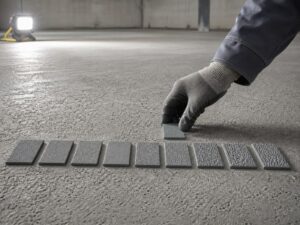
- Broadcast Systems: Colored quartz, flakes (chips), or recycled glass are broadcast into the base coat to create a textured, colorful, and slip-resistant surface.
- High-Gloss Topcoats: Typically finished with a high-gloss urethane clear coat for UV stability and extreme abrasion resistance.
A critical consideration is that while decorative systems offer exceptional aesthetics, their long-term performance depends on the topcoat selection. For high-traffic areas, a polyurethane topcoat is often specified for its superior scratch and chemical resistance compared to standard epoxy finishes.
5. What Is the Best Flooring for a Mechanic Shop?
The best flooring for a mechanic shop is typically polyurethane cement or heavy-duty epoxy, because mechanic shops experience constant exposure to vehicle oils, brake fluids, impact from tools, and heavy equipment loads. The choice between these two depends on the specific activities within the workshop.
| Shop Type | Recommended Floor | Primary Reason |
|---|---|---|
| Small Independent Garage | Epoxy Coating | Cost-effective, durable, and cleanable. |
| Commercial Repair Shop | Heavy-Duty Epoxy (with urethane topcoat) | Withstands heavy traffic and frequent chemical spills. |
| Truck & Heavy Equipment Maintenance | Polyurethane Cement | Superior impact and thermal shock resistance. |
| Vehicle Wash Center | Polyurethane Cement | Essential for hot water and steam cleaning. |
| EV Repair Facility | ESD Epoxy | Protects sensitive electronics from static damage. |
6. Epoxy vs. Polyurethane Cement (PU Cement) Flooring: A Detailed Comparison
This is one of the most common decisions for facility owners and managers. Both are excellent choices, but each serves a distinct purpose. This comparison will help you determine which is right for your specific needs.
| Feature | Epoxy Flooring | Polyurethane Cement (PU Cement) Flooring |
|---|---|---|
| Cost (Installed) | Lower ($4–$8 per sq. ft.) | Higher ($8–$15 per sq. ft.) |
| Aesthetics | Excellent; vast color, flake, and metallic options | Good; limited to solid colors and textures |
| Thermal Shock Resistance | Moderate; can crack under rapid temperature changes | Excellent; withstands hot water and steam |
| Chemical Resistance | Excellent against oils, greases, and solvents | Superior; resists all acids, solvents, and fuels |
| Impact Resistance | Good | Excellent; more flexible, absorbs impact |
| Repairability | Easy spot repairs | Professional repair recommended |
| Maintenance Requirement | Routine cleaning required; simple maintenance | Routine cleaning required; similar upkeep |
| Installation Thickness | 1/16–1/4 inch (1.5–6 mm) | 3/16–1/2 inch (5–12 mm) |
| Service Life | 8–12 years | 15–20+ years |
| Best Application | Showrooms, Customer Lounges, Light Service Bays | Service Bays, Wash Bays, Heavy Equipment Areas |
Bottom Line: For a showroom or a clean, light-service area, epoxy is the clear winner due to its cost and aesthetic flexibility. For a wash bay or a high-traffic service area exposed to heat and heavy impacts, the higher initial investment in PU cement will pay off over the long run.
7. Best Flooring by Automotive Facility Area: A Zone-Based Selection Guide
Different zones within an automotive facility have unique operational demands. Using a one-size-fits-all approach can be a costly mistake. Here is a zone-based guide to help you specify the correct system for each area.
- Vehicle Showroom / Display Area:
- Recommended System: Decorative Epoxy, Metallic Epoxy, or High-Gloss Porcelain Tile.
- Key Requirements: Exceptional aesthetics (UV stability), high gloss, easy to clean, and seamless appearance.
- Service & Repair Bays:
- Recommended System: Polyurethane Cement or Heavy-Duty Epoxy (with urethane topcoat).
- Key Requirements: Impact resistance, chemical resistance, and a seamless surface to prevent fluid ingress.
- Wash Bays / Detail Bays:
- Recommended System: Polyurethane Cement (preferred solution).
- Key Requirements: Thermal shock resistance and high slip resistance (R13 rating).
- Battery Storage / EV Charging Areas:
- Recommended System: Acid-Resistant ESD Epoxy or ESD PU Cement.
- Key Requirements: Static control (ESD protection) and acid/chemical resistance.
- Electronic Assembly / Sensor Calibration Areas:
- Recommended System: ESD Epoxy.
- Key Requirements: Static dissipative properties to protect sensitive electronics.
- Customer Reception / Lounge:
- Recommended System: Epoxy Flake (Chip) System or Seamless Terrazzo.
- Key Requirements: Aesthetics, comfort, and low-maintenance cleaning.
8. Automotive Flooring Cost Guide
How much does automotive shop flooring cost? The average cost to install automotive shop flooring ranges from approximately $3 to $15 per square foot, depending on the coating system, thickness, preparation requirements, and performance requirements.
How much does it cost to epoxy a mechanic shop floor? The cost to epoxy a mechanic shop floor typically ranges from $3 to $10 per square foot depending on preparation, coating thickness, and finish requirements.
8.1. Cost by Facility Size
| Facility Size | Epoxy Flooring (Installed) | PU Cement Flooring (Installed) |
|---|---|---|
| 1,000 sq. ft. Garage | $3,000 – $10,000 | $8,000 – $15,000 |
| 5,000 sq. ft. Workshop | $15,000 – $50,000 | $40,000 – $75,000 |
| 10,000 sq. ft. Service Center | $30,000 – $100,000 | $80,000 – $150,000 |
8.2. Automotive Flooring Cost Formula
Total flooring cost = (Floor area × Installed cost per square foot) + Substrate repair + Moisture mitigation + Optional decorative upgrades
8.3. Installed Cost per Square Foot
| System Type | Typical Cost Range (Installed USD/sq ft) | Service Life (Years) |
|---|---|---|
| Standard Epoxy (1/8 inch) | $3 – $7 | 8–12 |
| Heavy-Duty Epoxy (1/4 inch) | $5 – $10 | 10–15 |
| Polyurethane Cement (PU Cement) | $8 – $15 | 15–20+ |
| Porcelain Tile | $10 – $20+ | 20–30+ |
8.4. Factors Influencing the Final Cost
- Surface Preparation: The most significant cost variable. Floors requiring extensive crack repair, moisture mitigation (vapor barriers), or heavy grinding will cost more.
- System Thickness: Thicker systems provide greater durability but require more material, increasing the cost.
- Slip Resistance/Texture: Adding anti-slip aggregates increases material and labor time.
- Aesthetics: Metallic or decorative flake systems require more skilled labor and premium materials.
Cost Example: For a typical 10,000 sq. ft. service bay area, a PU cement system may cost $30,000-$50,000 more upfront than a standard epoxy system. However, its extended lifespan (15-20 years vs. 8-12) and lower maintenance requirements often result in a lower total cost of ownership.
9. The Installation Process: A Step-by-Step Guide
Proper installation is more important than the material itself. A poorly installed premium system will fail before a well-installed budget system.
Phase 1: Surface Preparation (The Most Critical Step)
- Contaminant Removal: The existing concrete must be completely cleaned of all oil, grease, and chemical residues.
- Surface Profiling: The floor is diamond ground or shot-blasted to achieve the required Concrete Surface Profile (CSP 3-5) for optimal mechanical bonding.
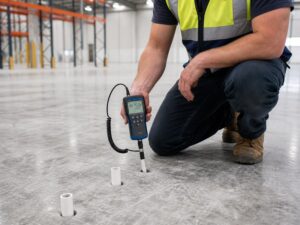
- Moisture Testing: Calcium chloride tests must read below 5% moisture content before any material is applied. Excessive concrete moisture is one of the leading causes of epoxy and resin flooring failure.
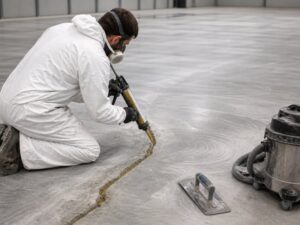
- Crack Repair: All cracks wider than 1/8 inch are routed out and repaired with an appropriate epoxy or polymer mortar.
Phase 2: Installation
- Primer: A penetrating primer is applied to seal the substrate and promote adhesion.
- Base Coat: The primary resinous layer (epoxy or PU cement) is troweled or rolled onto the floor.
- Aggregate Broadcast: If specified, decorative flakes, quartz, or anti-slip aggregates are broadcast into the wet base coat.
- Topcoat: A clear or pigmented protective topcoat is applied to seal the system, provide chemical resistance, and enhance aesthetics.
Phase 3: Curing
- Foot Traffic: Typically allowed after 16-24 hours.
- Vehicular Traffic: Usually safe after 72 hours.
- Full Chemical Resistance: Achieved after a 7-day full cure period.
10. Common Installation Mistakes to Avoid
Based on years of field experience and project site visits, we have identified the following mistakes as the most common reasons for premature floor failure:
- Skipping Moisture Testing: Applying flooring over concrete with high moisture content will cause it to delaminate and bubble.
- Inadequate Surface Profile: A smooth floor will not allow the coating to mechanically bond, leading to peeling.
- Ignoring Environmental Conditions: Applying coatings when temperatures are outside the 50–90°F (10–32°C) range can prevent proper curing.
- Improper Aggregate Specification: Using beach sand instead of engineered silica or aluminum oxide for slip resistance can create a messy, ineffective surface.
11. Maintenance Protocols for Longevity
Maintaining your new floor is straightforward and will significantly extend its life.
11.1 Routine Maintenance Schedule
- Daily: Dry sweeping or dust mopping to remove abrasive dirt and grit.
- Weekly: Damp mopping with a neutral pH (7-8.5) floor cleaner.
- Monthly: Deep cleaning with a diluted degreaser to remove oil and tire marks. A 5-10 minute dwell time is recommended for maximum effectiveness.
- Every 5-8 Years: Consider re-applying a urethane topcoat to refresh the gloss and chemical resistance of high-traffic zones.
11.2 Common Mistakes to Avoid
- Do not use acidic or highly caustic cleaners on epoxy floors, as they can dull the finish.
- Avoid steel scrubbing pads, which can leave metal marks that rust and stain the surface.
- Never use pressure washers above 3,000 psi on the floor surface, as this can damage the coating.
- Clean brake fluid spills immediately, as it is one of the few fluids that can soften some standard epoxy formulations.
12. Example Automotive Flooring Specification
The following example demonstrates how flooring systems are specified for different zones within a large-scale automotive facility.
| Project Area | Recommended System | Primary Justification |
|---|---|---|
| 5,000 m² Repair Workshop | Polyurethane Cement (PU Cement) | High traffic volume and continuous chemical exposure |
| Luxury Vehicle Showroom | Metallic Epoxy | Premium appearance and high-gloss finish |
| EV Service Center | ESD Epoxy | Static protection for sensitive electronic systems |
13. Frequently Asked Questions (FAQ) About Automotive Flooring Systems
This section answers the most common questions facility owners and contractors have when selecting a flooring system.
1. What is the best flooring for an auto repair shop?
For most commercial auto repair shops, polyurethane cement is often the preferred solution because of its superior thermal shock, impact resistance, and chemical durability. However, epoxy flooring may be more suitable for lighter-duty garages where aesthetics and budget are priorities.
2. How much does automotive flooring cost?
Professional, heavy-duty garage flooring systems typically cost between $3 and $15 per square foot, depending on the material (epoxy vs. PU cement), thickness, and surface preparation requirements.
3. Is epoxy flooring good for automotive shops?
Yes, epoxy is an excellent choice for automotive shops, particularly for showrooms and light-service areas. It is durable, cost-effective, and aesthetically customizable. However, it is not recommended for wash bays due to its limited thermal shock resistance.
4. Is polyurethane cement better than epoxy?
It depends on the application. Polyurethane cement is superior in demanding environments like wash bays and heavy-duty shops due to its thermal and impact resistance. Epoxy is better for showrooms where appearance and budget are the primary concerns.
5. How thick should automotive shop flooring be?
For epoxy, a thickness of 1/8 to 1/4 inch is common for service bays. For polyurethane cement, a thickness of 3/8 to 1/2 inch is recommended to provide adequate impact resistance and structural support.
6. How long does automotive epoxy flooring last?
A professionally installed and maintained epoxy floor in a light-duty automotive application can last between 8 and 12 years before requiring a topcoat or replacement.
7. What flooring can withstand car oil and chemicals?
Both epoxy and polyurethane cement have excellent resistance to petroleum-based fluids, making them suitable. However, PU cement offers a higher level of chemical resistance against aggressive acids and solvents.
8. What is the best flooring for EV repair shops?
ESD Epoxy is recommended for EV repair and battery assembly areas to provide static control and protect sensitive electronics from electrostatic discharge damage.
9. Can epoxy flooring handle vehicle lifts?
Yes. Both heavy-duty epoxy and polyurethane cement systems are capable of supporting the extreme point loads and dynamic forces generated by two-post and four-post vehicle lifts when the concrete substrate is structurally sound.
10. How do you maintain automotive resin flooring?
Maintenance involves daily sweeping to remove grit, weekly damp mopping with a neutral cleaner, and monthly degreasing. Avoid using acidic or highly caustic cleaning agents.
11. What is the best floor coating for a car dealership?
Decorative epoxy, metallic epoxy, and porcelain tile are commonly used in car dealerships because they provide a clean, high-end appearance while remaining easy to maintain.
12. Can automotive flooring withstand hydraulic lifts?
Yes. Properly installed epoxy and polyurethane cement floors can support vehicle lifts when the concrete substrate has adequate compressive strength and correct preparation.
14. Example Manufacturer Solution: KAIDA PAINT Automotive Flooring Systems
KAIDA PAINT develops industrial resin flooring systems for automotive facilities, including decorative epoxy floors, heavy-duty epoxy coatings, PU cement flooring, and ESD flooring systems. With more than 20 years of experience in the industrial flooring sector, the company’s product portfolio includes systems manufactured under ISO-certified quality management systems, engineered for chemical resistance, mechanical durability, and aesthetic flexibility.
KAIDA PAINT systems are applied in the following automotive facility zones:
| Application Zone | Recommended KAIDA System | Key System Attribute |
|---|---|---|
| Showroom / Display Area | Decorative Epoxy (Metallic or Flake) | High gloss, UV stability, seamless finish |
| General Service Bay | Heavy-Duty Epoxy with Urethane Topcoat | Impact and chemical resistance |
| Wash Bay | Polyurethane Cement (PU Cement) | Thermal shock and slip resistance (R13) |
| EV / Battery Area | ESD Epoxy | Static control compliant with ANSI/ESD S20.20 |
Support: KAIDA PAINT provides technical support, system specification assistance, and project consultation for automotive flooring applications. Warranty terms are provided according to project conditions and system specifications. The company’s systems are formulated to meet SCAQMD VOC limits and are available with Greenguard Gold certification for indoor air quality.
For facility owners seeking a customized flooring solution—whether for showroom aesthetics, service bay durability, or wash bay chemical resistance—KAIDA PAINT’s technical team provides specification assistance, sample testing, and on-site evaluation.


 English
 Spanish
 Portuguese
 Arabic
 French
 Italian
 Russian
 Indonesian
 Swedish