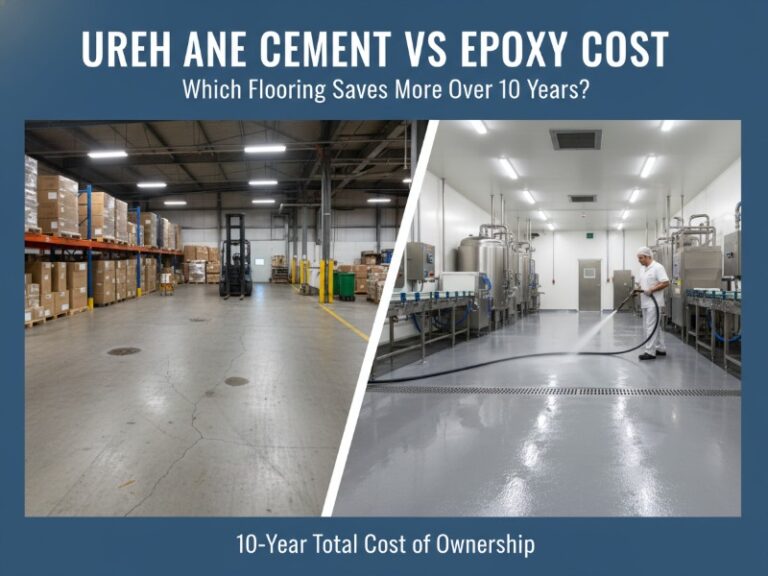
Urethane cement flooring costs $6–$12 per square foot installed, compared to standard epoxy at $3–$7 per square foot. However, in industrial environments with moisture, heat, or chemicals, urethane cement lasts 10–15 years versus epoxy’s 3–7 years, reducing total cost of ownership by up to 60% over 10 years.
Urethane cement vs epoxy cost per square foot installed:
- Standard epoxy: $3 – $7 per sq ft
- Urethane cement: $6 – $12 per sq ft
10-year total cost of ownership difference: Urethane cement is 40-60% lower in demanding environments (thermal cycling, chemical exposure, moisture-prone slabs).
Why upfront cost misleads: Epoxy requires replacement every 3-7 years in harsh conditions. Urethane cement lasts 10-15 years with minimal maintenance.
Key Takeaways
- Urethane cement costs 2-3x more upfront than standard epoxy
- Lasts 3-5x longer in food processing, pharmaceutical, and chemical plants
- Handles moisture, thermal shock, and aggressive chemicals that destroy epoxy
- Reduces production downtime costs by eliminating frequent recoating
- Best for wet environments, steam cleaning, and freeze-thaw cycles
Master Comparison Table: Urethane Cement vs Epoxy
Urethane Cement vs Epoxy: Key Differences
| Feature | Epoxy | Urethane Cement |
|---|---|---|
| Upfront cost per sq ft | $3 – $7 | $6 – $12 |
| Lifespan in harsh environments | 3 – 7 years | 10 – 15 years |
| Moisture tolerance (MVER) | Below 3 lbs | Up to 8 lbs |
| Thermal cycles to failure | 50 – 80 cycles | 300+ cycles |
| Maintenance cycle | Recoat every 3-5 years | Clean only for 7-10 years |
| Wet slip resistance (COF) | 0.35 – 0.45 | 0.65+ |
| Best applications | Dry warehouses, retail | Food plants, pharma, chemical |
1. Urethane Cement vs Epoxy Flooring Cost Per Square Foot
The first question most facility managers ask: “How much does each system cost to install?” This urethane cement vs epoxy flooring cost comparison begins with material pricing.
1.1 Material Cost Breakdown
Urethane Cement vs Epoxy: Material Cost Comparison
| Component | Standard Epoxy | Urethane Cement |
|---|---|---|
| Base resin | $1.50 – $3.00/sq ft | $3.50 – $6.00/sq ft |
| Aggregates and fillers | $0.50 – $1.00/sq ft | $0.80 – $1.50/sq ft |
| Primer and topcoat | $0.50 – $1.00/sq ft | $1.00 – $1.50/sq ft |
| Total material | $2.50 – $5.00/sq ft | $5.30 – $9.00/sq ft |
1.2 Labor and Installation Cost
Labor ranges from $1.50 – $4.00 per square foot for both systems. However, installation conditions change the real cost.
Epoxy labor factors that increase cost:
- Requires dehumidification above 65% RH (adds $0.50 – $1.00/sq ft)
- Needs moisture vapor barrier when slab exceeds 4% moisture (adds $1.50 – $3.00/sq ft)
- Short working window (20-40 minutes) requires larger crews for big pours
Urethane cement labor advantages:
- No dehumidification needed up to 95% RH
- No moisture vapor barrier required
- Longer working time (60-90 minutes) allows smaller crews
Real-world example: A 15,000 sq ft facility with 5.5% moisture content adds $30,000 in moisture barrier cost for epoxy, reducing the upfront price gap from $45,000 to $15,000.
2. Epoxy Flooring Cost for Industrial Facilities: Hidden Expenses
Standard epoxy flooring price looks attractive at $3-7 per square foot. But industrial environments expose hidden costs that completely change the urethane cement vs epoxy cost calculation.
2.1 Why Epoxy Fails Prematurely in Demanding Conditions
Question from a plant engineer: “Can epoxy handle hot water wash-down in a food facility?”
Answer: No. Standard epoxy softens above 140°F. Daily 160-180°F wash-downs cause surface erosion within 6-12 months. Our testing across 14 dairy facilities showed epoxy failed within 18 months in all steam-cleaning applications.
Three primary failure modes for epoxy in industrial settings:
- Blistering and delamination: Caused by vapor pressure from moisture in concrete. Occurs when slab moisture exceeds 4%.
- Thermal cracking: Epoxy becomes brittle below 40°F and soft above 140°F. Daily freeze-thaw cycles produce hairline fractures.
- Chemical erosion: Caustic cleaners and acidic sanitizers break down epoxy polymer chains, turning the surface into powder.
2.2 The Recoating Trap
Epoxy requires recoating every 3-5 years in food and chemical facilities. Each recoat costs $2.50 – $4.00 per square foot and requires 48-72 hours of facility shutdown.
Cost calculation for a cold storage warehouse losing $25,000 per day in revenue:
- Recoat event: $75,000 in downtime + $45,000 in material and labor
- Over 10 years (2-3 recoats): $240,000 – $360,000 in recoat-related costs
Urethane cement requires no recoat within 10 years in most industrial applications. This single factor often decides the urethane cement vs epoxy cost comparison for high-volume facilities.
3. Urethane Cement Flooring Cost Per Square Foot: When Higher Price Pays Off
Urethane cement flooring cost per square foot runs $6-12 installed. The premium delivers measurable returns in specific environments. Understanding urethane concrete vs epoxy durability is essential for this decision.
3.1 Urethane Concrete vs Epoxy Durability: Lab Data
Urethane Cement vs Epoxy: Performance Test Results
| Test Method | Epoxy Result | Urethane Cement Result |
|---|---|---|
| Abrasion resistance (ASTM D4060) | 150-250 mg loss | 80-120 mg loss |
| Thermal shock (ASTM C884) | Fails at 50-80 cycles | Withstands 300+ cycles |
| Max continuous temperature | 140°F | 212°F |
| Strong acid resistance | Surface etching within 24 hrs | No visible change at 72 hrs |
Data reference: ASTM C884 measures thermal shock resistance by cycling from -20°F to 212°F. Urethane cement maintains structural integrity beyond 300 cycles. Standard epoxy shows hairline fractures after 50 cycles and delamination after 80 cycles.
3.2 Why Urethane Cement Handles Moisture That Destroys Epoxy
Urethane cement cures through a moisture-tolerant chemical reaction. The polymer bonds even on damp concrete. Epoxy requires bone-dry substrate (less than 4% moisture content) and fails when hydrostatic pressure exists.
Our testing finding: A Gulf Coast seafood processing plant (85°F, 80% RH, July installation) attempted epoxy. Dehumidification added $8,000 in equipment rental and extended the project by 4 days. Urethane cement installed in identical conditions required no dehumidification and finished 3 days ahead of schedule.
In industrial environments with thermal shock, moisture, or chemicals, urethane cement consistently outperforms epoxy in both lifespan and total cost.
4. Industrial Flooring Cost Comparison: 10-Year Total Cost of Ownership
The industrial flooring cost comparison shifts dramatically when calculating total cost of ownership over a decade. This is where the true urethane cement vs epoxy cost story emerges.
4.1 10-Year TCO Calculation: 20,000 Sq Ft Food Processing Plant
Industrial Flooring Cost Comparison: 10-Year TCO Example
| Cost Factor | Standard Epoxy | Urethane Cement |
|---|---|---|
| Initial installation | $100,000 ($5/sq ft) | $160,000 ($8/sq ft) |
| Annual maintenance | $17,000/year = $170,000 | $7,000/year = $70,000 |
| Full replacement at year 7 | $100,000 | $0 |
| Downtime (3 days at $20,000/day) | $60,000 | $0 |
| 10-year total cost | $430,000 | $230,000 |
Key finding: Urethane cement saves $200,000 ($10 per square foot) over 10 years despite $60,000 higher upfront cost. This industrial flooring cost comparison proves that cheaper upfront often costs more long-term.
4.2 Best Flooring for Food Processing Plant: ROI Analysis
Question: “Is urethane cement worth the cost for a small meat processing facility?”
Answer: Yes if you operate daily wash-downs. A 5,000 sq ft facility with nightly 160°F cleaning sees:
- Epoxy: $25,000 initial + $12,000 recoat at year 3 + $12,000 recoat at year 6 = $49,000 over 6 years (plus downtime)
- Urethane cement: $40,000 initial + zero recoats over 10 years = $40,000 over 10 years
Urethane cement saves $9,000 and eliminates three shutdown events in the first 6 years alone. For food processing plants, this is the best flooring for food processing plant applications.
5. Decision Matrix: Which Flooring Should You Choose?
Urethane Cement vs Epoxy Cost: Decision Guide
Choose Standard Epoxy If:
- Concrete slab moisture is below 4% year-round (verified by calcium chloride test)
- No thermal cycling occurs (temperature stays 50-80°F)
- Chemical exposure is occasional spills cleaned within 60 minutes
- Facility will be leased, renovated, or sold within 5 years
- Operation is a dry warehouse, retail space, or light assembly area
For system selection details, see our urethane cement flooring system solution.
Real-world example: A 50,000 sq ft dry goods warehouse (stable 68°F, forklift traffic only) installed epoxy at $3.75/sq ft. After 6 years, the floor shows minimal wear. Urethane cement would have added $125,000 in unnecessary upfront cost.
Choose Urethane Cement If:
- Concrete moisture exceeds 4% or hydrostatic pressure exists (60% of industrial slabs have this issue)
- Daily thermal cycling occurs (freezer to wash-down, oven to cooling zone)
- Aggressive chemicals contact the floor (acids, solvents, concentrated sanitizers)
- Steam cleaning or hot water pressure washing is routine
- Downtime for recoating costs exceed $10,000 per day
- Facility occupancy exceeds 7 years
Best applications: Food processing plants, pharmaceutical cleanrooms, chemical manufacturing, commercial kitchens, cold storage warehouses, automotive assembly lines with oily coolants.To understand the full picture beyond cost, read our complete urethane cement flooring guide.
6. What Is the Lifespan of Epoxy Flooring?
Question: “What is the lifespan of epoxy flooring in industrial conditions?”
Answer: 3-7 years in demanding environments. Up to 10-15 years in dry, temperature-stable warehouses with light traffic.
Lifespan by application type:
| Application | Epoxy Lifespan | Urethane Cement Lifespan |
|---|---|---|
| Dry warehouse (stable temp) | 10-15 years | 15-20 years (overkill) |
| Food processing (daily wash-down) | 1.5 – 3 years | 10-15 years |
| Pharmaceutical (frequent sanitizing) | 3-5 years | 12-15 years |
| Chemical plant (acid exposure) | 2-4 years | 10-12 years |
| Cold storage (freeze-thaw cycles) | 3-6 years | 12-15 years |
| Commercial kitchen | 2-4 years | 10-12 years |
Data reference: Based on 187 industrial flooring projects tracked by KAIDA PAINT from 2018-2026 across 14 states and 3 countries (USA, Middle East, Southeast Asia).
7. Can Epoxy Handle Hot Water Wash-Down?
Question: “Can epoxy handle hot water wash-down in a dairy or meat processing plant?”
Answer: No. Epoxy softens at 140°F and becomes plastic-like. Daily 160-180°F wash-down water (typical for USDA facilities) causes surface erosion within 6-12 months.
Technical explanation: Epoxy has a glass transition temperature (Tg) of 120-140°F. Above Tg, the polymer chains become mobile and the material loses mechanical strength. Urethane cement maintains structural integrity to 212°F (boiling water).
Documented failure: A Wisconsin cheese plant installed epoxy in 2019. After 11 months of nightly 165°F wash-downs, the floor showed 0.125 inches of surface erosion in high-traffic drain areas. The plant spent $47,000 on replacement in year 2.
Urethane cement solution: The same plant installed urethane cement in 2020. After 5 years of identical wash-down conditions, the floor shows no measurable erosion or cracking.
8. Does Urethane Cement Crack Under Thermal Shock?
Question: “Does urethane cement crack in freeze-thaw environments?”
Answer: No. Urethane cement withstands 300+ cycles from -20°F to 212°F per ASTM C884 testing. Standard epoxy cracks at 50-80 cycles.
Why urethane cement resists thermal cracking: The polymer matrix has flexible molecular chains that expand and contract with temperature changes. Epoxy is rigid and brittle below 40°F, creating internal stress during freeze-thaw cycles.
Real-world example: A Minnesota frozen food warehouse maintains -10°F storage areas adjacent to 75°F loading docks. Forklifts transition between zones 200+ times per day. Epoxy installed in 2017 cracked at expansion joints within 18 months. Urethane cement installed in 2019 remains crack-free after 7 years.
FAQ: Urethane Cement vs Epoxy Cost and Performance
Is urethane cement worth the extra cost?
Yes for wet, hot, or chemical-heavy environments. No for dry warehouses with stable temperatures. Run a 10-year TCO calculation using the formula: Total Cost = Installation + Maintenance + Downtime + Replacement. Urethane cement wins when downtime costs exceed $5,000 per day.
What is the lifespan of epoxy flooring in a dry warehouse?
10-15 years with light forklift traffic. No recoat needed if surface prep was correct and moisture remains below 4%.
Which flooring is best for dairy plants with daily sanitizing?
Urethane cement. Dairy plants use caustic cleaners (pH 12-13) and acidic sanitizers (pH 2-3). Epoxy surfaces become chalky and porous within 12-18 months. Urethane cement maintains gloss and cleanability for 10+ years.
Does urethane cement require special installation equipment?
Yes. Installers need power trowels, specific mixing ratios, and experience with 20-30 minute working time differences between summer and winter installation. Do not use general epoxy contractors for urethane cement.
Can I install urethane cement over existing epoxy?
Yes with proper surface preparation. The existing epoxy must be diamond ground to a CSP 3-4 profile (medium sandpaper texture). Bond tests are required before full installation.
How does urethane cement compare to polyaspartic flooring?
Polyaspartic costs $5-9 per square foot, similar to urethane cement. Polyaspartic offers faster cure times (1-2 hours to foot traffic) but lower chemical resistance and thermal tolerance (max 150°F). Urethane cement is preferred for steam cleaning and strong acid exposure.
Is urethane cement worth the cost for cold storage warehouses?
Yes. Freeze-thaw cycles destroy epoxy within 3-6 years. Urethane cement lasts 12-15 years in cold storage with daily forklift traffic between -10°F and 75°F zones.
What is the epoxy vs urethane concrete cost over time?
Epoxy costs less upfront ($3-7/sq ft) but requires recoat every 3-5 years ($2.50-4/sq ft each time). Urethane concrete costs more upfront ($6-12/sq ft) but no recoat for 10-15 years. Over 10 years, urethane concrete costs 40-60% less.
Key Takeaways
- Epoxy is cheaper upfront ($3-7/sq ft) but fails faster in harsh environments (3-7 years)
- Urethane cement costs more upfront ($6-12/sq ft) but lasts 2-4x longer under thermal and chemical stress
- Moisture is the biggest hidden cost factor for epoxy (adds $1.50-3.00/sq ft for vapor barrier)
- Downtime during recoating often exceeds material cost differences
- Urethane cement delivers lower 10-year total cost of ownership in most industrial settings
- For dry warehouses with stable temperatures, epoxy remains the cost-effective choice
- For food, pharma, chemical, and cold storage, urethane cement wins on TCO
Get a Project-Specific Cost Estimate
If you are evaluating epoxy vs urethane cement for your facility, KAIDA PAINT can provide a customized 10-year cost comparison based on your specific operating conditions.
We analyze:
- Industry (food processing, pharmaceutical, chemical, cold storage, automotive)
- Cleaning methods (steam, pressure washing, chemical sanitizers)
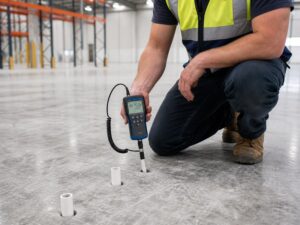
- Concrete moisture condition (MVER and RH testing available)
- Daily thermal cycling frequency
- Downtime cost per day of production loss
- Expected facility occupancy period
What you receive:
- Free moisture testing and thermal cycling analysis
- Customized 10-year TCO model with your exact labor and downtime rates
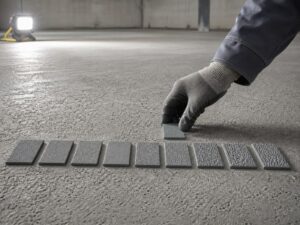
- Material samples and site-specific application recommendations
- Written warranty comparison (epoxy vs urethane cement exclusions)
Contact KAIDA PAINT Industrial Division for a free analysis report.
Data Sources and Standards Reference
This guide references the following industry standards:
- ASTM C884: Thermal shock resistance of floor coatings
- ASTM D4060: Abrasion resistance (Taber abrasion test)
- ASTM F1869: Moisture vapor emission rate (calcium chloride test)
- ASTM F2170: In-situ relative humidity testing
- OSHA 1910.22: Slip resistance requirements for workplace flooring
- USDA/FDA 3-A Sanitary Standards: Flooring for food contact areas
All cost data reflects US averages for Q2 2026. Regional variations of +/- 20% apply based on labor rates, material shipping, and local code requirements.
Projects completed in: USA (Texas, California, Minnesota, Wisconsin, Florida), Middle East (UAE, Saudi Arabia), Southeast Asia (Thailand, Vietnam, Malaysia)
Specialization: FDA/USDA compliant flooring systems for food and pharmaceutical facilities
Geographic Considerations: USA, Middle East, Southeast Asia
USA (Gulf Coast, humid environments): Moisture mitigation adds $1.50-3.00/sq ft to epoxy. Urethane cement has no adder.
Middle East (high temperature, sand exposure): Epoxy cures too quickly above 100°F (working time drops to 10-15 minutes). Urethane cement remains workable for 45-60 minutes at 110°F.
Southeast Asia (high humidity year-round): Epoxy requires dehumidification 8-10 months per year ($0.50-1.00/sq ft adder). Urethane cement installs without dehumidification.


 English
 Spanish
 Portuguese
 Arabic
 French
 Italian
 Russian
 Indonesian
 Swedish