
A polyurethane floor coating is a reactive resin floor in which the binder is a polyurethane, formed when an isocyanate reacts with a polyol and cures into a flexible, abrasion-resistant film.
That single reaction produces everything from a 0.3 mm sealer to a 9 mm trowelled mortar. The polyurethane definition that survives a tender is narrower than the marketing: a binder, a hardener, and a film that cures by chemical reaction rather than by drying, and cure time is tied to a temperature.
The definition, in one paragraph you can quote
A polyurethane floor coating is a floor coating whose binder is polyurethane rather than epoxy, acrylic or cement. It is supplied as two or three components, mixed on site, and cures by chemical reaction rather than by drying.
That last point matters more than it looks. A polyurethane definition that cures by reaction will keep curing in a sealed room, and will stop curing if the ratio is wrong, which is not true of a paint.
If a tender asks what is PU floor coating and expects one sentence, the honest answer runs to three parts: the binder family, the build-up, and the cure conditions on site.
The phrase also covers products that are not purely polyurethane. Hybrids with epoxy or cement fillers are common, and the datasheet should say which chemistry dominates, because that is what decides the difference between a coating and a floor system in the quotation.
In practice, what is PU floor coating is answered by two documents rather than a name. The datasheet gives the chemistry and the values; the build-up drawing gives the thickness that turns a resin into a floor.
Aromatic and aliphatic: the split that decides colour
An aromatic polyurethane uses toluene diisocyanate or a similar aromatic core. It cures fast, bonds well and costs less, and it will yellow when ultraviolet light reaches it.
An aliphatic grade is not automatically a better floor. It is more colour stable and somewhat more flexible, and it costs enough that specifying it everywhere is hard to justify on evidence.
An aromatic polyurethane is the default in warehouses and back-of-house areas, because nobody sees the floor and the saving is real. The same grade in a filling hall with roof lights will be visibly brown within two summers.
An aliphatic polyurethane uses hexamethylene diisocyanate and keeps its colour outdoors and under skylights. It costs roughly half again as much and cures more slowly at low temperature.
Table 1: Choosing between the two chemistry families.
| Fastighet | Aromatic | Aliphatic |
|---|---|---|
| Colour stability | Yellows in UV | Stable |
| Relative cost | Index 100 | Index 140 to 180 |
| Cure at 10 degrees | Workable | Slow, often 48 hours |
| Typical use | Covered industrial floors | Topcoat near glazing, showrooms |
The practical rule: specify aliphatic where the floor is visible to daylight, and aromatic everywhere else. Paying for UV stability in a windowless plant is a common and quiet waste.
Colour drift under skylights is the usual complaint with an aromatic binder. The drift is cosmetic and does not soften the film, so a plant that cares about appearance but not colour can still use it.
How is moisture-cured urethane different?
A moisture cured urethane cures by reacting with water vapour in the air and in the slab. That makes it tolerant of damp concrete, which is why it appears on ground floors and in older buildings.
Most ambering complaints we are asked about come from an aromatic topcoat that should have been aliphatic, or from a clear sealer over a dark substrate. Both are specification errors, not product faults.
The same property is the risk. A moisture cured urethane applied too thickly traps its own carbon dioxide and foams, so film build is limited to roughly 0.2 mm per coat, and several coats are needed.
It is also a poor choice for a coloured finish. Most grades amber with age, and no amount of pigment prevents it.
Where a moisture cured urethane is used as a primer under a coloured topcoat, the ambering is hidden and the moisture tolerance is kept. That combination is common on older ground-floor slabs with no damp-proof membrane.
An aliphatic polyurethane topcoat over that primer keeps the colour, at a cost that is easier to justify on a floor the client will look at than on one under racking.
What happens during cure, minute by minute
Curing chemistry is an exothermic addition reaction. Mixing starts it, temperature drives it, and there is no reversible step: once the gel point passes, the material cannot be reworked.
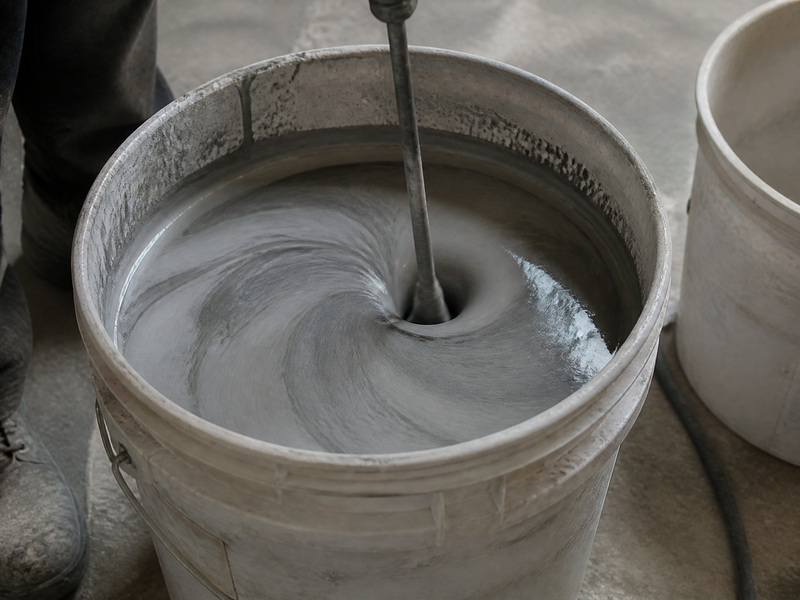
Figure 1: mixing starts the reaction, and nothing stops it afterwards.
The cure time quoted on a datasheet is usually a time to walk-on or to recoat, not a time to full strength. Full mechanical properties often take 7 days at 20 degrees.
A polyurethane floor coating datasheet that gives a single figure is giving you a point, not a curve. A curve plotted at 10, 20 and 30 degrees tells a contractor whether a Friday pour opens on Monday, and one number at 20 degrees does not. The same sheet should state the minimum application temperature and the lowest substrate temperature it will tolerate, because a warm room over a cold slab is the classic winter failure: the air passes, the slab does not.
Cold slows the reaction roughly by half for every ten degrees lost. A product that reaches walk-on in 6 hours at 20 degrees needs twelve at 10, which is where winter programmes fail.
The curing chemistry also decides behaviour in a cold store. A standard grade will not reach full strength below about 5 degrees, so a freezer repair needs a low-temperature formulation rather than a heater and hope.
Table 2: Typical handling times at 20 degrees, and how they move when it is colder.
| Stage | At 20 C | At 10 C | At 30 C |
|---|---|---|---|
| Working time | 20 to 30 min | 35 to 50 min | 12 to 18 min |
| Walk-on | 6 to 8 h | 12 to 16 h | 4 to 5 h |
| Omläggning | 12 to 18 h | 24 to 30 h | 8 to 10 h |
| Full strength | 7 dagar | 10 to 14 days | 5 dagar |
Pot life is a clock, not a suggestion
Pot life is the working time after mixing. It shortens as the mixed material warms, which is why a bucket left in the sun behaves differently from the same bucket in the shade.
Measure the slab, not the air. A cold slab pulls heat out of a thin mix within minutes, and the same product that stayed workable in the yard may gel in the bucket indoors.
Ventilation matters as much as heat. A sealed room with curing resin collects solvent and moisture, and the surface can stay tacky for days while the bulk underneath is hard.
A long open time sounds generous and is often a warning. Products with very long open time usually need heat or a catalyst to reach strength, and are sensitive to a cold slab.
The crew habit that prevents most problems is simple: mix small, mix often, and never add solvent to stretch a batch that has started to gel.
Drum life is the other hidden number. A product with a six-month shelf life that is ordered once a year leaves the crew with one chance to get the ratio right, and a part-used kit is the usual source of a soft patch. Where a job is small, ask whether the polyurethane floor coating is comes in a size that can be mixed in one go rather than a kit that will be half used. Pot life is measured from the moment the two parts meet.
Why are four products sold under one name?
Three families sit under the same name in any answer to what is PU floor coating, and the datasheet says which one you have. Solvent-borne grades flash off and suit thin coats; solvent-free grades build thickness in one pass; waterborne grades suit occupied buildings where solvent smell cannot be tolerated.
A polyurethane floor coating is sold at four builds, and the trade name rarely says which. Sealer, self-smoothing, mortar and flexible membrane differ by filler load rather than by binder.
Binder content is the hidden variable. Two products at 3 mm can differ by a third in resin, and the one with more filler wears faster under wheel traffic.
Film build changes the failure mode, not only the service life. A thin film fails by wearing through, while a thick one fails at the bond line, and the two need different repairs.
That is why a system comparison should quote the number of coats as well as the total thickness. Two coats of 1 mm behave differently from one coat of 2 mm, even at the same total.
Film build also decides how a floor is repaired. A thin film that wears through is repaired by cleaning and recoating the worn area. A thick film that lifts at the bond line is repaired by removal, and that repair costs more than the difference between the two initial prices.
For any polyurethane definition comparison, thickness and binder content belong on the same line. A thick floor with low binder is a filler floor with a resin skin.
What polyurethane is not
Epoxy is not a polyurethane, and neither is polyaspartic, although both are sold beside it. Epoxy is harder and more brittle, while polyaspartic is usually an aliphatic polyurethane variant that cures in hours; epoxy and polyurethane compared on one slab is the shortest way to see the gap.
Polyaspartic is often described as a polyurethane, and chemically it is close enough that the label is fair. What differs is the cure speed, which is fast enough to need a mechanical spreader rather than a roller.
The practical difference shows up on site. A polyaspartic can be walked on in 2 hours, which is useful in a cold store and unforgiving if the crew is not ready for it.
Acrylic and cementitious systems are a different family again. A polyurethane floor coating will not bridge a live crack the way a cementitious urethane does, and it will not tolerate a damp slab the way a moisture cured urethane does.
That is why the question of which is best has no answer without the substrate and the traffic. The useful question is which chemistry fits this slab, this cleaning regime and this temperature range.
How do you read a polyurethane datasheet in 5 minutes?
Five values carry most of the information: volume solids, cure time at a stated temperature, working time, tensile adhesion and elongation at break.
Volume solids decide the real thickness obtained from a litre. A 65 per cent product at half a millimetre consumes noticeably more material than the headline figure suggests.
Adhesion and elongation read together describe whether a polyurethane floor coating will cope with a moving slab. High adhesion with 3 per cent elongation cracks where lower adhesion with 40 per cent would flex.
Both values come from the curing chemistry, so they should be read as a pair. A supplier who quotes one without the other is quoting half a property.
Table 3: Three chemistries side by side, at the same thickness.
| Fastighet | Aromatic PU | Aliphatic PU | Epoxi |
|---|---|---|---|
| Elongation | 20 to 60 per cent | 30 to 80 per cent | 2 to 6 per cent |
| Colour after 2 years | Amber | Stable | Ambers slightly |
| Relative material cost | Index 100 | Index 150 | Index 75 |
| Termisk chock | Bra | Bra | Poor |
Where does the extra cost come back?
Polyurethane earns its price in three places: thermal cycling, abrasion under rubber tyres, and adhesion to a damp or slightly weak substrate.
In each case the mechanism is flexibility. Curing chemistry leaves the film able to move with the slab instead of fighting it, which is why a polyurethane floor coating survives a washdown cycle that cracks a rigid epoxy.
The same flexibility explains why polyurethane is easier to repair. A patch bonds to a flexible film with less stress at the edge than it does to a hard one, and the repair holds longer.
The same property makes it a poor choice for a chemical bund or a solvent store, where a harder and more inert system usually wins on resistance.
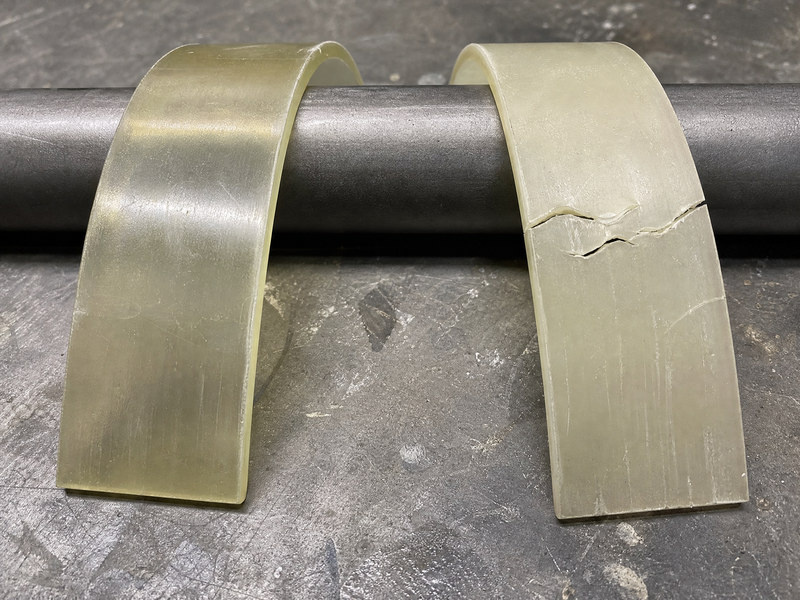
Figure 2: flexibility is the difference that survives a moving slab.
The commercial version of the argument is simple. Polyurethane typically costs a third more per square metre at the same thickness, and returns it only where movement, heat or damp would have shortened the life of a cheaper system.
An aliphatic polyurethane costs more again, and only pays where daylight or appearance matters. Everything else is a polyurethane definition decision about thickness, not about chemistry.
The limits worth knowing before you buy
A polyurethane floor coating is not UV stable unless it is aliphatic, it is not a vapour barrier, and it does not stop moisture rising through a slab without a specific primer.
Nor is it a wear layer on its own. A 0.3 mm sealer on a slab in a busy aisle will be gone in 2 years, and the failure will be blamed on the resin rather than on the specification.
Most standard grades are also limited to about 60 degrees in dry service, and far less under hot water or steam, where a cementitious urethane is the usual answer.
Knowing that before purchase is cheaper than discovering it in year two. It is also the whole argument for reading the chemistry rather than the marketing.
An aromatic resin under roof lights, or a standard grade in a steam-cleaned room, will fail for reasons that were visible on page one of the datasheet. That is the cheapest failure to avoid.
The last point is about expectation, and it is the one buyers resist. A resin floor is a wearing surface with a service life measured in years, not decades, and the chemistry decides how it ends rather than whether it does. Why a floor blisters or lifts is the other half of that story, and it is usually a substrate answer.
If you are replacing a floor rather than choosing one, the question changes: the old film decides what the new one can sit on. A solvent-borne coat softens some existing resins on contact, so a patch test comes before any specification. On a slab without a damp-proof membrane, the moisture-cured grade is doing work a membrane should be doing, so the two decisions belong together. A floor specified for the wrong chemistry does not fail slowly; it fails at the first event that exceeds the film.
Where an aromatic polyurethane has already yellowed, the film is usually still sound. Repainting with an aliphatic topcoat is a maintenance decision, not a repair, and it is far cheaper than replacement.
Where the colour is structural, such as a line-marked traffic route, the topcoat should be aliphatic from the start. Re-marking over ambered lines rarely matches, and the mismatch is permanent.
Two details decide whether a coloured system keeps its colour. The first is the topcoat: an aliphatic grade over an aromatic polyurethane body coat protects the colour without paying aliphatic prices through the whole build. The second is the sealer over a dark base: a clear sealer shows ambering sooner there than over a light one, and no pigment in the base can hide it.
Frequently asked questions
What is PU floor coating made of, and which of the two components decides the cure?
Two components: an isocyanate and a polyol, plus fillers and pigments. Mixed on site, they react to form a flexible film that cures by chemistry rather than by evaporation.
How long before a polyurethane floor can take traffic?
Walk-on is usually 6 to 8 hours at 20 degrees, and recoat 12 to 18. Full mechanical strength takes about 7 days, longer in the cold.
Why does a PU floor turn yellow?
Because an aromatic binder reacts to ultraviolet light. Where daylight reaches the floor, an aliphatic grade or a UV-stable topcoat is the only durable answer.
Can a polyurethane floor be applied to damp concrete, and what has to be measured first?
A moisture-cured urethane can, within limits. Other grades need a moisture-tolerant primer and a measured reading, not a plastic sheet taped down overnight.
What is the difference between working time and full cure?
Pot life is the working window after mixing; cure time is how long the applied film needs to reach a given strength. Confusing the two is how batches get ruined.
Is polyurethane better than epoxy?
It is more flexible and more UV tolerant. Epoxy is harder cheaper and more chemically resistant in some media, so the answer follows the load, not the brand.
What is PU floor coating thickness?
From 0.3 mm for a sealer to 9 mm for a trowelled mortar. The load and the cleaning regime decide the number, and the number should be stated, not left as a range.
Why specifiers ask Kaida Paint for the data sheet
Kaida Paint makes both chemistry families and says which one is in the drum, including the moisture-cured and aliphatic grades this article separates. Our datasheets carry volume solids, cure time at a stated temperature and pot life, because those three decide whether a floor can be installed in your building, in your season. Ask for the cure curve rather than a single number, and the winter programme answers itself.



 English
 Spanish
 Portuguese
 Arabic
 French
 Italian
 Russian
 Indonesian
 Swedish