Polyurethane Flooring Systems

A waterborne polyurethane mortar system is a seamless floor built from a composite of mineral aggregate and polyurethane resin, laid in one reactive build at a controlled thickness. The range runs from a 2 mm self-levelling screed to a 12 mm mortar, and the thickness is the temperature specification: a 4 mm build holds 60 to 70 °C, a 9 mm build holds 120 °C, and a 12 mm build takes an occasional spill at 150 °C. That is the difference that matters against a conventional epoxy floor, which begins to soften at around 60 °C. Every system here is supplied as one package and specified by peak temperature, steam regime and impact load rather than by colour.
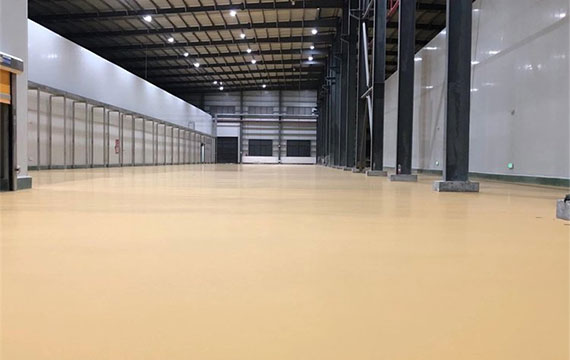
Lager Industriellt polyuretanmortellgolv Hög trafik
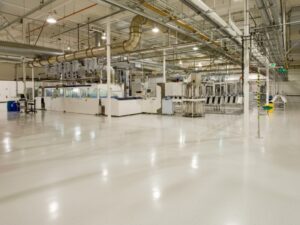
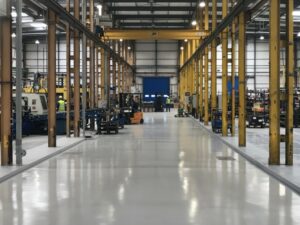
Högpresterande polyuretanmortelgolv i ett välbesökt lager eller distributionscenter.
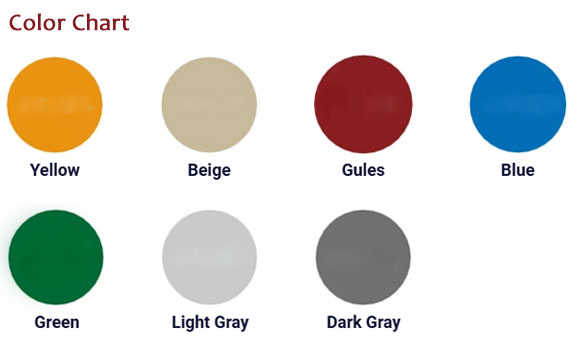
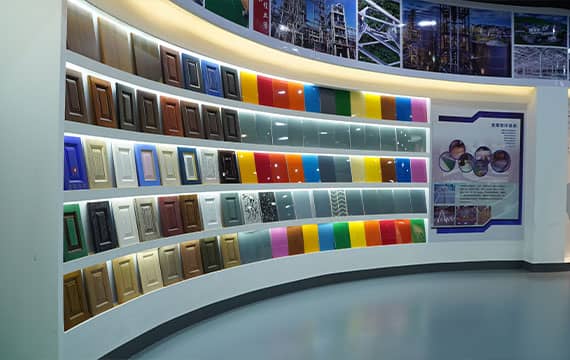
Färgkarta för polyuretan
Färgkarta för polyuretangolv

KAIDA PAINT® PRODUCTS

Visar 17–17 av 17 resultat

What Is a Waterborne Polyurethane Mortar System?

A waterborne polyurethane mortar system is a seamless floor in which a mineral aggregate and a polyurethane resin are combined into one cured film. The film is inorganic-organic rather than resin alone, which is why the material holds its properties at temperatures where a pure resin floor does not.

Source: manual p3 (softening temperature, thermal shock), p6 (20-year life), p7 (long-term limit).
FastighetWaterborne polyurethane mortarConventional epoxy floor
Cured filmMineral aggregate bound in polyurethane resinResin and hardener
Softening temperatureAbove 150 °CBegins to soften around 60 °C
Continuous service limit120 °CAround 60 °C
Short-term thermal shock140 °CNot specified
Service lifeOver 5× ordinary epoxy; over 20 years on the heavy buildsUtgångsläge

Four Thicknesses, Four Temperature Envelopes

Thickness on this material is a temperature specification, not a cost decision. Each build has its own envelope for peak temperature, low temperature and steam cleaning.

Source: manual p7, “Thickness specification”.
BuildPeak temperatureLow temperatureSteam cleaning
4 mm60–70 °C−15 to −18 °CNot specified
6 mm80 °C−25 °CLight steam
9 mm120 °C−40 °CHeavy steam
12 mm130 °C; occasional spill to 150 °C−40 °CHeavy steam

The Eight Series in the Range

The range is organised as eight series. Five are floor builds. Three are the texture, the finish and the detailing that go with them.

Source: manual p2, series list; references in brackets are the manual’s technical pages.
SeriesBuildTyp
SL2 mmSelf-levelling (p4)
MF4–6 mmSelf-levelling (p4)
MF-ES4 mmAnti-static, 1×10⁶ to 1×10⁹ Ω (p5)
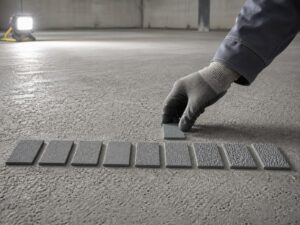
MT6 mmMortar, micro anti-slip texture (p5)
UD9–12 mmMortar, medium pitted anti-slip (p6)
TC300-Roller-applied anti-slip texture
TC200-Waterborne polyurethane clear finish
NZ-Arc-angle putty

Technical Index: Measured Against the National Standard

Every series is tested against the same national standard, and the measured result is reported next to the requirement. These are the seven items a specifier checks.

Source: manual p4 (SL, MF), p5 (MF-ES, MT), p6 (UD). Each value is that series’ measured result.
Test itemNational standardMeasured result
Operational timeAgree15–20 minutes, all series
Working time≤ 24 h20 h, all series
Bindningsstyrka≥ 2 MPa3 MPa (MT: 3.8 MPa)
Compressive strength, 7 d≥ 40 MPaSL 40–45 · MF 40–50 · MF-ES 45–55 · MT 45–60 · UD 45–55 MPa
Flexural strength, 7 d≥ 10 MPa15 MPa, all series
Slitstyrka≤ 0.15 g0.03 g (MT: 0.06 g)
Dry friction coefficient≥ 0.6SL 0.65 · MF 0.75 · MF-ES 0.65 · MT 0.60 · UD 0.65

How to Choose the Thickness

Three inputs decide the grade. Work through them in order and the thickness follows.

  1. Find the highest temperature the floor meets in normal operation, and choose the grade whose peak temperature sits above it: 60 to 70 °C for a dry food area, 80 °C for a washdown kitchen, 120 °C for a cooking line.
  2. Decide the steam regime. A 4 mm build is not specified for steam. Light steam cleaning starts at 6 mm; heavy steam cleaning needs 9 mm or more.
  3. Check the low temperature. A 6 mm build covers −25 °C. Freezers and cold stores need 9 mm or 12 mm for −40 °C.
  4. Add thickness for impact and long-term load. A 9 mm or 12 mm build carries steel-wheeled traffic and point loads that a 4 mm build will not.
  5. If the area is ESD-protected, use the 4 mm anti-static series and confirm the resistance target sits inside 1×10⁶ to 1×10⁹ Ω.

Anti-Slip: Smooth or Rough?

Anti-slip and cleanability pull against each other, and the answer is a cleaning plan rather than a surface texture. A rough floor stops a slip when something spills. A smooth floor lets the spill be cleared before anyone walks through it. Both are correct. The choice depends on how often spills happen and whether they are harmful.

Source: manual p7, “Pendulum test on 4S rubber wet floor”.
Pendulum test value (4S rubber, wet)Slip risk
Below 24Hög
25 to 35Måttlig
Above 35Låg

Texture runs from smooth, through a light and a moderate pitted finish, to a sand-broadcast heavy texture. A heavy texture raises daily cleaning effort, so it should be chosen against the cleaning frequency that area will actually get, not against the worst case. Where a very high slip resistance is needed, full coverage over the aggregate during the broadcast leaves only a small part of the grit exposed, which holds the slip resistance and cuts the cleaning load.

Where These Systems Are Specified

The same material covers seven groups of process environment. The grade changes with the temperature, not with the industry.

Source: manual p3, twelve application fields, grouped into seven.
GroupEnvironments
Food preparationCentral and commercial kitchens, pre-prepared meals, airline and railway catering, clean dish areas
Meat, poultry and seafoodSlaughter lines, heat treatment areas, fish and freshwater product processing
Beverage, dairy and soyBreweries and filling rooms, juice and mineral water lines, milk powder, tofu and soy milk
Pickles, sauces and condimentsPickled vegetables, compound sauces, condiment brewing
Baking and pastaBread, cake, biscuit and pasta lines, breakfast food production
Cold chainCold stores, blast freezers, seafood and meat freezers, supermarket cold rooms
Pharmaceutical and chemicalRaw material workshops, cleanrooms, chemical storage and transport areas, battery plants, ESD-protected zones

Vanliga frågor och svar

What is the highest temperature a polyurethane mortar floor can take?

It depends on the thickness. Continuous service runs to 120 °C on a 9 mm build and 130 °C on a 12 mm build, with an occasional spill to 150 °C on the 12 mm only. The material itself softens above 150 °C, and a short thermal shock of 140 °C is within its rating.

How thick does the floor need to be for a hot cooking area?

A cooking line that reaches 100 °C needs 9 mm. Where the area also takes an occasional spill above 120 °C, or runs a flash freezer, specify 12 mm. A dry food area or a visiting corridor is served by 4 mm.

Can the floor be steam cleaned?

At 6 mm it takes light steam cleaning. Heavy steam cleaning needs 9 mm or more. The 4 mm build is not specified for steam.

Does the colour change over time?

A waterborne polyurethane mortar is a functional floor, and a slight colour shift in service is normal. It does not affect performance.

How soon can the floor take traffic?

Twenty hours. The material stays workable for 15 to 20 minutes once mixed, and the finished build is left for 20 hours before it goes back into use.

Send the area, the peak temperature and the steam regime the floor will see, the chemicals it will meet and the load it has to carry. We will come back with the thickness grade, the surface texture and the pack quantities.

KAIDA PAINT Urethane Coating Projects

Aktivera JavaScript i din webbläsare för att fylla i detta formulär.

Få din perfekta ytbeläggning

Begär en kostnadsfri offert. Dela med dig av dina projektuppgifter nedan, så hjälper våra experter dig att hitta den perfekta beläggningslösningen.

How KAIDA PAINT® Coatings Are Made

KAIDA PAINT® and JINYU PAINT® are brands of the same manufacturing group.

KAIDA PAINT® COATINGS, YOUR BEST CHOICE