Chemical-resistant flooring cannot be chosen from one figure in a brochure. Resistance depends on the medium, its concentration and the temperature at which it reaches the floor, and the same resin can be suitable at 2 percent and unsuitable at 10 percent.
Three variables decide the answer: what the chemical is, how strong it is, and how hot it is when it lands. Add contact time and cleaning method and the choice becomes a table rather than a debate.
This guide works through the media that matter in food plants, from caustic washdown to lactic acid, and ends with a selection table you can put in a specification.
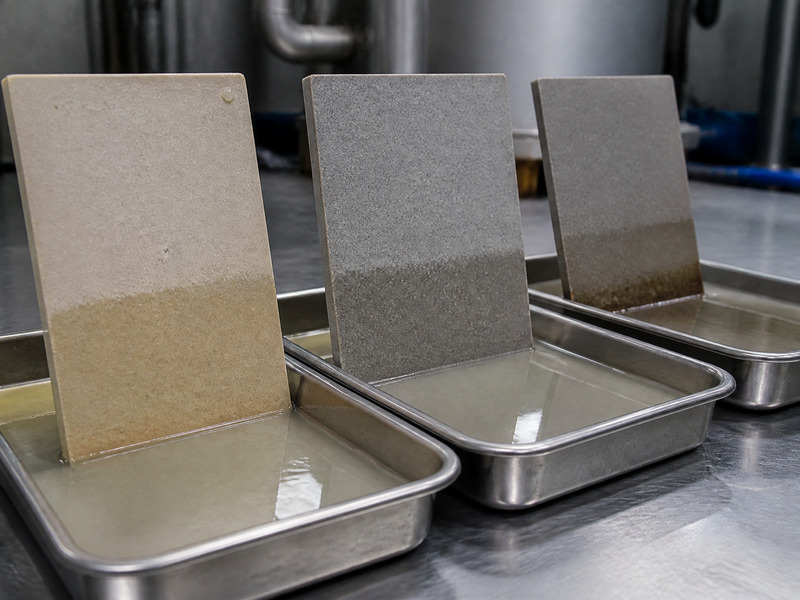
Figure 1: Immersion panels after testing. The differences appear at the edges and around the cut line, not on the face.
1. Why a chemical resistance chart alone misleads
A chemical resistance chart is a summary of immersion tests, usually at room temperature and often for a fixed period. It tells you whether a resin survived, not whether it will survive your process.
The gap matters most in food plants, where the same floor meets 1 to 2 percent caustic at 70 to 80 °C, then a rinse, then an acid detergent, then water. That cycle repeats daily, and no single line in a chart describes it.
Used properly, a chemical resistance chart is a shortlist tool. It narrows the field to two or three families; the final decision needs the concentration and temperature of the real exposure.
In practice, chemical resistant flooring is chosen in two steps. The chart removes families that cannot survive the medium, and the specification then fixes thickness, fall and finish for the room.
A useful test of any supplier statement is to ask for the strength and the heat at which the result was obtained. If the answer is a range that starts at room temperature, treat it as a screening result for chemical resistant flooring rather than a service claim.
2. The three variables: medium, concentration, temperature
Resistance falls as concentration rises, and falls faster as temperature rises. A resin rated for 50 percent caustic at 20 °C may be unremarkable at 2 percent and 80 °C, because the thermal load changes the polymer more than the chemistry does.
For washdown chemicals, the practical numbers in a food plant are modest, and they sit in the columns of Table 1. Expect sodium hydroxide at 1 to 3 percent and 70 to 80 °C, nitric or phosphoric acid at 0.5 to 2 percent and ambient to 60 °C, and peracetic acid at 0.1 to 0.5 percent at ambient.
Write the concentration and temperature into the specification alongside the product name. A supplier who cannot state a resistance at those two numbers has not tested for your process.
Washdown chemicals also arrive as a sequence, not as a single medium. Caustic, rinse, acid, rinse, sanitizer: each step has its own strength and heat, and the floor sees the sum of them every shift.
That sequence is why resin selection starts with the cleaning schedule. A plant that can name its five steps and their temperatures has already written half the specification.
3. Caustic washdown: what resin survives 1-3% at 70-80 °C
Caustic is the commonest washdown chemical in food plants and the one that breaks standard epoxy. Amine-cured epoxy softens and chalks under the washdown duty set out in §2, especially at drains where the solution stands between washes.
Caustic resistant flooring usually means a urethane binder, either cementbaserad uretan at 6 to 9 mm or a polyurethane screed. Both tolerate the pH and the temperature; the cementitious grade additionally tolerates the thermal shock of a cold rinse.
For resin selection, split the room: a hot caustic washdown zone needs the urethane system, while a corridor that sees only detergent and water does not. That single split often removes a third of the cost from a project.
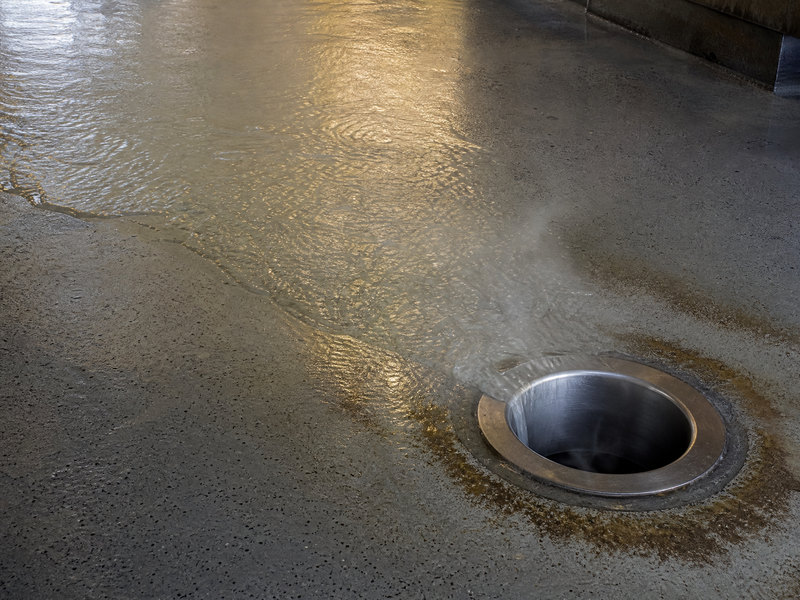
Figure 2: The drain surround sees the strongest caustic at the highest temperature. It is the first place a binder fails.
Caustic resistant flooring is therefore a zoning decision as much as a material one. The hot washdown bay, the drain surround and the area under the kettle need the urethane; the dry end of the same room does not.
Getting that split wrong is expensive in both directions: over-specifying the corridor wastes money, and under-specifying the bay means chemical resistant flooring is replaced within two years.
4. Acids: nitric, phosphoric, peracetic and lactic
Nitric acid appears in CIP circuits at 0.5 to 2 percent, often at 60 °C, and it attacks amine-cured epoxy at the surface within a few months of daily use. The same acid attacks stainless steel, which is why dairies and breweries alternate it with caustic rather than relying on it alone.
Peracetic acid is used at 0.1 to 0.5 percent as a sanitizer, usually at ambient temperature. At that concentration it is manageable for urethane and novolac epoxy; at higher concentrations and temperatures it is not.
Lactic acid is the acid that decides dairy floors. A lactic acid resistant floor needs a binder that does not hydrolyse, and in practice that means a urethane rather than an epoxy, particularly where whey and warm water are also present.
That logic is local, not building-wide. On a dairy plant flooring schedule the lactic acid resistant floor belongs around the cheese vat, the whey drain and the filler, because that is where the acid sits warm and undiluted; the dry store does not need it.
Acid exposure also arrives in sequence with caustic. A CIP circuit that runs caustic, rinse, nitric, rinse, sanitizer exposes the floor to both ends of the pH scale in ninety minutes, and the floor has to survive the transitions, not the steady state.
5. Sugars, fats and solvents
Sugar solutions are not aggressive to the resin but are aggressive to hygiene: they leave a film that feeds bacteria and holds water against the surface. The resin choice matters less than the fall and the cleaning routine.
Fats at 40 to 60 °C are a different problem. They penetrate surface porosity, soften some binders and make the floor slippery at the same time, which is why wet process areas handling fat usually specify both a urethane system and an R12 surface.
Sugar and fat rarely need a special binder on their own. They need a floor that drains, a surface that does not hold a film, and a cleaning routine that reaches the corners under equipment.
Solvents are the line most food plants do not cross, but workshops and laboratories attached to a plant sometimes do. Acetone, MEK and dichloromethane will remove most epoxies and polyurethanes; if those solvents are present, the floor belongs to a different specification.
Cleaning validation is the other half of the story. A floor can resist a chemical and still fail a swab test, because the surface holds soil in its profile. The two questions are separate, and the second one is answered by geometry and cleaning method rather than by resin chemistry.
Table 1: Media found in food plants, with the exposure that actually drives resin selection.
| Medium | Typical concentration | Typical temperature | Pressure on the binder |
|---|---|---|---|
| Sodium hydroxide | 1-3% | 70-80 °C | High: alkali plus heat |
| Nitric, CIP grade | 0.5-2% | ambient-60 °C | High: oxidising acid |
| Phosphoric acid | 1-2% | ambient-60 °C | Måttlig |
| Peracetic sanitizer | 0.1-0.5% | ambient | Moderate: oxidiser |
| Lactic acid | 1-5% | ambient-80 °C | High: organic acid plus heat |
| Sugar and wort | variable | ambient-80 °C | Low chemically, high hygienically |
| Animal fat | as process | 40-60 °C | Moderate: softening and slip |
6. The selection table, medium by medium
The table below maps the four resin families to the media above. It is a starting point for the choice, not a guarantee: the strength and temperature in your plant still decide, and a trial panel is the only way to be sure.
Table 2: Chemical resistant flooring by family and medium. S = select this family; L = select it only with a site trial and a short replacement cycle; N = do not select it here, move to the column that carries S.
| Medium | Epoxi | Novolac epoxy | Polyuretan | Cementitious urethane |
|---|---|---|---|---|
| Caustic 1-3% at 70-80 °C | N | L | S | S |
| Nitric acid 0.5-2% | N | L | L | S |
| Phosphoric acid 1-2% | L | S | S | S |
| Peracetic acid 0.1-0.5% | L | S | S | S |
| Lactic acid 1-5% warm | N | L | S | S |
| Sugar solutions | S | S | S | S |
| Animal fat 40-60 °C | L | L | L | S |
| Acetone, MEK | N | N | N | L |
Read the table by column, not by row. A plant that needs caustic resistant flooring in one room and acid resistance in another may end up with two systems, and two correct systems are usually cheaper than one compromise everywhere.
Every N in the table is a redirection rather than a refusal. For caustic at 70 to 80 °C, leave the epoxy column and price a polyurethane or a cementitious urethane. For nitric acid, leave epoxy and novolac and price the two urethane columns. For acetone or MEK, no family in the table is a service answer, so the room needs a different specification and a separate site trial.
For resin selection in a hot washdown zone, the right-hand column is the answer; a novolac epoxy is a compromise that buys time rather than service life. Where peracetic acid and nitric acid alternate weekly, the cementitious urethane is the only family that keeps both within range.
7. Testing and verifying resistance claims
Ask for the test conditions before the result. A resistance statement without concentration and temperature is a marketing sentence, and a chemical resistance chart without those columns cannot be used for selection. Applying that test is quick: match the row to your medium, then check whether the figure beside it is a strength you actually run.
The useful evidence is a report that names five things: the medium, the concentration, the temperature, the exposure time and the effect observed. Effect here means mass change, hardness change, blistering or colour shift, not a tick in a box. Immersion for seven days at 20 °C is a screening test, and it ranks families against each other rather than predicting service life in your room.
That distinction decides how a submission is read. Two suppliers can both send a chart that names the medium and stops there, and neither chart can be compared with the other, which was the whole point of asking. A chart with strength, heat and duration columns can be compared line by line, and that comparison is where a tender is won or lost.
Table 3: Two kinds of resistance evidence, and what each one proves.
| Evidence | What it proves | What it does not |
|---|---|---|
| Immersion test report | behaviour in a defined medium at a stated strength and heat | Service life under a washdown cycle |
| Site trial panel | Behaviour in your sequence, your temperatures and your cleaning method | Long-term performance beyond the trial period |
Sampling matters as much as the test. One panel from one batch proves the batch; three panels from three batches prove the product. If the specification is worth a trial, it is worth two batches of trial.
Where the exposure is unusual, a trial panel on site settles it faster than any document. Keep the report and the panel photographs with the handover pack; they are the documents you will need when a floor is blamed for a failure it did not cause. Pour a 1 m² panel in the room, expose it to the real washdown cycle for a month, and inspect the edges where the film is thinnest.
8. Specifying by exposure, not by product family
A specification that names a product family leaves the real variables open. A specification that names the medium, concentration, temperature, cleaning method and required surface finish leaves nothing to interpret.
Write it as a schedule: room, medium, concentration, temperature, contact time, required DIN 51130 R rating for washdown areas, and the resin family allowed. Then add the two physical requirements that decide service life: thickness and coving.
Applied to a live plant, that schedule usually produces three zones rather than one. Writing chemical resistant flooring at zone level, with the washdown chemicals named per zone, is what makes the quotes comparable.
Attach the schedule to the tender as an annex, one page per room, and require each bidder to respond line by line. A bidder who answers every line with “suitable” has told you nothing about the chemical resistant flooring you are buying.
That schedule is also the fairest basis for comparison. Two quotes against a defined exposure can be compared on price; two quotes against a product name cannot be compared at all.
Frequently asked questions
What is the best chemical resistant flooring for caustic washdown?
A cementitious urethane at 6 to 9 mm, or a polyurethane screed where thermal shock is moderate. Standard epoxy does not hold up to 1 to 3 percent caustic at 70 to 80 °C in daily washdown, and the failure shows first at the drain collar where the solution stands between washes.
Does peracetic acid damage resin floors?
At 0.1 to 0.5 percent and ambient temperature, urethane and novolac systems handle it, and a urethane keeps a lactic acid resistant floor intact at the same time. At higher concentration or temperature the oxidiser attacks the binder, and the surface chalks before it fails structurally.
Is a novolac epoxy enough for nitric attack?
For occasional splashes at low concentration, a novolac epoxy is a reasonable compromise. For daily CIP with 0.5 to 2 percent nitric acid at 60 °C, it is a maintenance item rather than a solution.
How do I read a resistance chart correctly?
Find the medium first, then the concentration and temperature columns. A result without both numbers describes a different exposure from yours, and the difference is usually the reason a floor fails early.
Can one floor cover both caustic and acid exposure?
Yes: a cementitious urethane covers caustic, nitric, phosphoric, peracetic and lactic acid within food plant ranges. It is also the most expensive option, which is why zoning the plant matters more than choosing one system.
What thickness does chemical resistant flooring need?
Chemical resistance is a property of the binder, not the thickness, but thickness buys time. A 6 mm cementitious urethane handles the same chemistry as a 9 mm one; the thicker system lasts longer at drains and under thermal cycling.
Do I need a separate resin selection for a cold room?
The chemistry often allows a thinner system, but the cure temperature decides. Standard epoxy will not cure below 10 °C, so a cold room flooring system usually means MMA or a low-temperature polyurethane, with the same chemical family logic applied.
Why food plants work with Kaida Paint
Kaida Paint manufactures epoxy, novolac epoxy, polyurethane, cementitious urethane and MMA systems for food and beverage plants, and supplies them as finished systems or as OEM and private-label production for distributors. Each batch ships with a certificate of analysis and a batch record, and TDS and SDS documents are issued in the buyer’s language. Our technical team will review a list of washdown chemicals with concentrations and temperatures and return a system recommendation by room.
Send the cleaning schedule and the room list, and the reply is a media-by-media table rather than a single product name.


 English
 Spanish
 Portuguese
 Arabic
 French
 Italian
 Russian
 Indonesian
 Swedish