
To verify coating manufacturer you need nine documents, not one. A certificate on its own proves that an audit happened somewhere; the dossier proves that the entity you are paying makes the material you are buying.
The nine are: business licence, ISO certificate with its scope, test reports naming the standard, an SDS in your language, batch records with a COA, references, export records, packaging specification and insurance.
This article explains what each document proves, where the check usually fails, and what a factory visit adds that paper cannot.
Why a certificate alone proves little
A certificate is a photograph of a management system on a particular day, for a particular site and a particular scope. None of those three is visible on the certificate number you were sent.
When you verify coating manufacturer, the first question is who the certificate belongs to. If the name on it is not the name on the invoice, you are dealing with a manufacturer vs distributor, and the audit evidence relates to someone else’s factory.
The second question is what the certificate covers. A scope that says “trade of chemical products” is a distribution scope; one that says “manufacture of epoxy and polyurethane flooring systems” is what you are looking for.
A dossier request also reveals how the sales side behaves. A supplier who answers document by document, with the certificate number and the scope highlighted, is usually a factory; one who sends a brochure and a price list is usually not. The response itself is evidence: judge it as well as the contents when you verify coating manufacturer for the first time.
The dossier exists to answer both questions before money moves. It takes a week to assemble and saves a year of arguing.
Table 1: The nine documents and what each one proves.
| Document | Proves |
|---|---|
| Business licence | Legal entity, scope of business, registered address |
| ISO 9001 certificate | A quality system at a named site |
| Test reports | Performance against a named standard |
| Safety data sheet | Hazard communication in your language |
| Batch record and COA | The specific batch you will receive |
| References | Repeat customers in a comparable market |
| Export records | Customs history, not a brochure claim |
| Packaging spec | What arrives at your door |
| Insurance | Cover for product liability and transit |
Document 1: business licence and scope
The business licence names the legal entity, the registered capital, the address and the permitted activities. Two habits make this quick. Ask for the licence and the certificate in the same email, and check the addresses match each other rather than matching the invoice. Where a verify ISO certificate supplier is done properly, those two documents agree.
A licence that lists “sales of chemical products” without “production” describes a trading company. That is not automatically a problem, but it changes the manufacturer vs distributor question and the certificate scope of any certificate you are shown.
A licence also shows the registered capital, which is a rough guide to the scale of the operation and to whether the entity can carry a product liability claim. It is not decisive, but a capital figure of a few thousand dollars against a claim of a hundred thousand is worth noticing.
Check the address against the factory address. A licence in a city office and a plant two provinces away is common and legitimate, but it should be explained rather than discovered.
Where the licence is recent, ask what the entity was before. A company incorporated last year can still be competent, but the audit history it presents belongs to somebody else.
Document 2: ISO 9001 certificate and its scope
The certificate is usually the first document you are sent when you first verify ISO certificate supplier, and it is the one most often misread. An ISO 9001 certificate carries a certificate number, an issuing body, a site address and a scope. All four have to line up with the supplier and with your order.
When you verify ISO certificate supplier on a second order, ask for the most recent surveillance audit report. A certificate is issued for three years; the surveillance reports are what show the system was still running in year two. The scope wording is where most of the argument happens. Ask the supplier to point to the words that cover your product, and to send the certificate as a PDF rather than a cropped image. A certificate from an unaccredited body is a document, not a certification, and your customer’s auditor may treat it as no evidence at all.
The certificate scope is the part buyers skip. The same certificate number can come back with different certificate scope wording after a reissue, so compare the version date as well. “Manufacture of coatings” is not the same as “manufacture of resin flooring systems”, and a certificate for decorative paint does not cover a 9 mm screed.
A factory audit checklist coatings should include this check, because it is the one that decides whether the audit history is relevant to the product you are buying.
Document 3: test reports with the standard named
The batch traceability question and the third party test report question meet here. A report is evidence about a batch only if the batch number appears on it, and most reports do not carry one.
A third party test report is only useful when it names the standard, the specimen, the test conditions and the date. A report that says “passed” without those four is a letter, not evidence.
For a flooring system the useful reports are adhesion, chemical resistance at stated concentration and temperature, slip classification, and abrasion. Each one should identify the build-up that was tested.
Table 2: What a test report must contain to be usable.
| Field | Why it matters |
|---|---|
| Standard number | Makes the result comparable |
| Specimen and build-up | Matches the report to your system |
| Conditions | Concentration, temperature, duration |
| Laboratory | Internal or accredited third party |
| Date | Shows currency |
Check who did the testing. A report from the manufacturer’s own laboratory is evidence of internal control; a report from an accredited third party is evidence you can show a customer.
Compare the report’s specimen with your specification, which is the verify coating manufacturer step that catches a mismatch. A 3 mm specimen does not describe a 6 mm system, and the difference is exactly where a claim becomes a dispute.
Document 4: SDS in the destination language
The SDS is a legal document in most markets, and it has to be in the language of the destination. An English sheet for a shipment into a market that requires a local language is a customs and a site-safety problem at the same time.
The language check belongs in the factory audit checklist coatings section as a scored item, because it is the first thing a safety officer will ask about and the last thing a sales team mentions.
Read sections 3, 8 and 13 before you read anything else: composition, exposure controls, and disposal. Those three tell you whether the product suits your site and your waste route.
A supplier who cannot issue a compliant sheet for your market is telling you something about the export side of the business, whatever the product quality.
Keep the safety data sheet with the batch record. When you verify coating manufacturer later, the pair of documents is what shows the material you received matches the material you approved.
Document 5: batch records and COA
Batch traceability is the difference between a product and a promise. Ask for the batch number on the drums and the certificate of analysis for that batch, and check they match.
A third party test report that names the batch closes the loop between what was tested and what was shipped. Where the report covers a development sample rather than a production batch, the paper is interesting but not evidence.
A COA should carry the batch number, the production date, the tested properties and the specification limits. A COA without a batch number cannot be tied to anything.
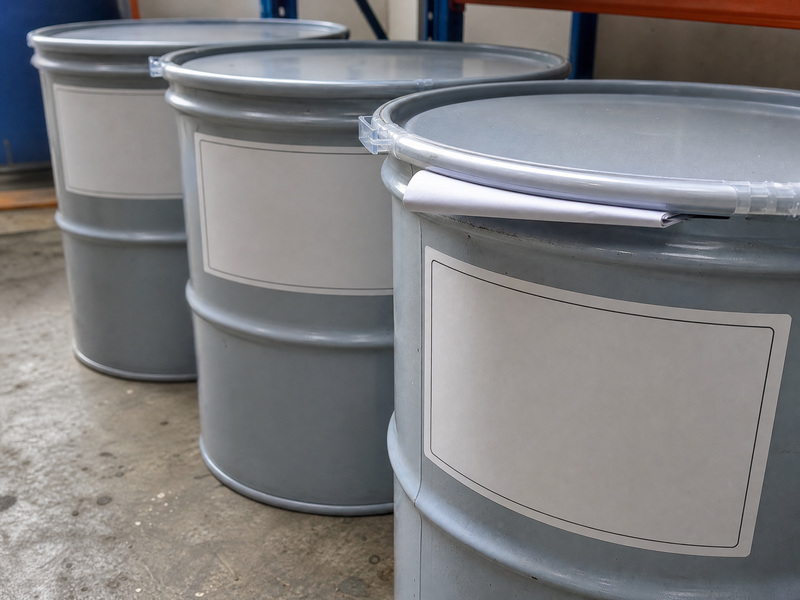
Figure 1: The drum and the certificate have to belong to the same batch. Untied, neither proves anything.
For a first order, ask for the batch record of a batch already shipped to another customer, with the customer name removed. It shows the record exists as a working document rather than as a template.
The batch traceability trail runs from the drum label to the batch record to the test result. Pick one drum at random on arrival and ask for its record: a supplier who produces it within a day has a system, and one who cannot has a filing cabinet.
Ask also how long records are kept. A manufacturer who retains batch data for five years can answer a failure question; one who keeps it for six months cannot.
This is also the point at which a manufacturer vs distributor becomes obvious. A trader can forward a COA from a factory, but cannot explain a deviation in it.
Documents 6 to 9: references, export records, packaging, insurance
A dossier is not a one-off exercise. Re-check the certificate scope and the insurance annually, because both expire quietly and a lapsed certificate is the same as none when a customer asks.
References should be repeat customers in a market comparable to yours. A reference who cannot name the product they were supplied is a reference for somebody else’s factory, and one call is enough to tell. One shipment to a distributor is a sample history; three years of supply to a plant is a reference.
Export records can be verified through the buyer’s own customs broker in many cases, and the destination mix tells you whether your market is familiar territory.
Export records and references overlap, and both are easier to verify than they sound. A short call to one listed customer, or a check of a bill of lading, is usually enough to separate a real supply history from a claim.
The packaging specification matters more than it looks. A 20 kg pail and a 200 kg drum behave differently in transit, and a manufacturer vs distributor who has never shipped a drum pallet may not know the difference.
Two practical notes on packaging. Ask for a pallet drawing with dimensions and gross weight, and check it against the container you intend to book. Ask also whether the drums are lined, because an unlined drum with an aggressive hardener is a corrosion and a contamination risk on a long sea leg.
Insurance closes the dossier. Product liability and transit cover are separate policies, and a supplier holding neither is passing that risk to the buyer, usually without saying so.
What a factory visit should confirm
A factory visit confirms four things that documents cannot. First, that the plant exists at the stated address, that it has the equipment the process needs, that the batch records are real, and that the people answering questions are the people who make the product.
A visit also confirms capacity. A plant with one mixer and a warehouse of bought-in finished goods is a blender; there is nothing wrong with that, but it changes what the verify coating manufacturer evidence means.
Walk the raw material store and the finished goods store. If the incoming drums are the brands the formulation claims, and the outgoing labels match your artwork, most of the doubt disappears.
Table 3: What to score on a factory visit.
| Check | Pass looks like |
|---|---|
| Raw materials | Named brands, in date, segregated |
| Batch records | Completed as the batch runs |
| Finished goods | Labels match your artwork |
| Testing | In-house lab with calibrated kit |
Ask to see a batch record being completed rather than a finished one. A record that is filled in as the batch runs looks different from one written up afterwards, and the difference is usually obvious.
Take the factory audit checklist coatings with you and score it on site, which is the only part of a verify coating manufacturer exercise that cannot be done at a desk. A checklist completed at a desk is a reading exercise; one completed in a plant is evidence.

Figure 2: The visit answers the four questions documents cannot. Bring the checklist and score it on the floor.
Frequently asked questions
How do I check if an ISO certificate is real?
Ask for the certificate number, the issuing body and the site address, then verify with the issuing body. Confirm the scope covers manufacturing of the product you are buying, not trading.
What is the difference between a manufacturer and a distributor?
A manufacturer formulates and produces at its own site and holds batch records. A distributor buys finished goods and resells them, so the audit evidence belongs to a third party.
What should a COA contain?
Batch number, production date, tested properties, specification limits and the result for each. Without a batch number it cannot be tied to the drums you received.
Do I need an SDS in my own language?
In most markets yes, and it is a legal requirement for the importer as well as a site-safety document. An English-only sheet is a compliance gap.
What should I look for in a test report?
The standard, the specimen and build-up, the test conditions, the result and the date, plus the testing laboratory’s accreditation if you intend to show it to a customer.
Is a factory visit worth the cost?
For a first order of any size, yes, and it is usually cheaper than the first quality dispute. Four hours on site answers questions that a month of email cannot, and it usually changes the negotiation.
What if the supplier refuses a visit?
Treat it as information. Some genuine factories have customer restrictions, but a refusal without an alternative, such as a live video walk with batch records shown, is a reason to look elsewhere.
Where this dossier stops
Whether the supplier formulates or blends is a separate question, answered by the plant tour rather than by the dossier, and the plant tour is judged on how it is organised.
Why food plants work with Kaida Paint
Kaida Paint manufactures epoxy, polyurethane, cementitious urethane and MMA systems for food and beverage plants, and supplies them as finished systems or as OEM and private-label production for distributors. The nine-document dossier is standard for us: business licence, ISO 9001 with scope, test reports, SDS in the buyer’s language, batch records and COA, references, export records, packaging specification and insurance. If you want to verify coating manufacturer, we will send the set before any commercial discussion.
Ask for the dossier, and we will also arrange a factory walk on video if a site visit is not practical yet. If a document is missing from the set, we will say which one rather than leave the gap for you to find.











 English
 Spanish
 Portuguese
 Arabic
 French
 Italian
 Russian
 Indonesian
 Swedish