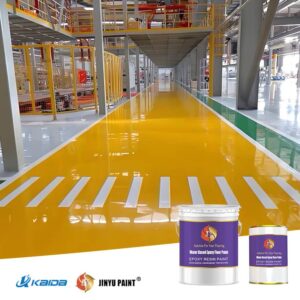
Water-based epoxy floor paint is a resin floor system in which water, not an organic solvent, carries the resin. The same product family is also called water-based epoxy floor coating — both names refer to the primer, mid-coat and finish on this page.
Because water is the carrier, VOC content and heavy-metal content are near zero and there is almost no pungent odor, which is why the system is used in schools, hospitals and other occupied buildings. It is an indoor system: the water-based epoxy film is not UV-stable.
The film is also breathable — vapor below the slab can escape instead of being trapped, which reduces the risk of blistering. Substrate moisture content must still be below 8% at application and a waterproof layer is required; see the substrate conditions below.
Indoor concrete floors at ambient temperature, where odor during application is a constraint:
1.Che cos'è la vernice epossidica per pavimenti a base d'acqua?
A1: Il pavimento epossidico a base d'acqua è una pavimentazione ad alta resistenza, resistente all'usura e bella da vedere, con i vantaggi di una struttura solida e senza giunture, buona resistenza chimica, resistenza alla corrosione, impermeabilità, antipolvere, facile manutenzione e basso costo di manutenzione.
2. Per quali aree sono adatti i pavimenti epossidici a base d'acqua?
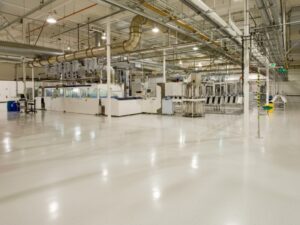
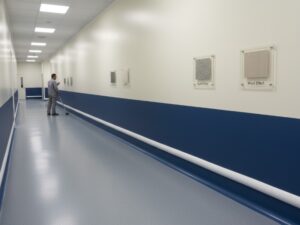
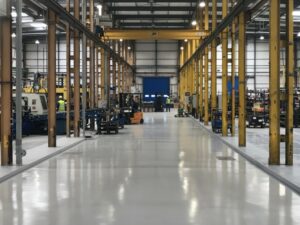
A2: Laboratori di produzione, officine antipolvere, magazzini, officine, magazzini e garage sotterranei con requisiti speciali come antistaticità e antideflagrazione, fabbriche e corridoi di industrie tessili, del tabacco, alimentari, scuole, ospedali e altre industrie, fabbriche di macchinari, parcheggi, in particolare passaggi pedonali dove sono necessari carrelli elevatori, automobili e carrelli pesanti.
3.Quanti tipi di vernice per pavimenti a base d'acqua esistono?
A3: a. Water-based epoxy floor paint; b. Water-based polyurethane floor paint; c. Water-based inorganic composite floor paint
4. Qual è lo spessore del pavimento epossidico a base d'acqua?
A4: Lo spessore generale è di circa 0,5-10 mm. Se è troppo sottile, è facile che si delamini e si crepi.
5. I pavimenti epossidici a base d'acqua sono resistenti all'olio?
A5: Ha un effetto anti-penetrazione sull'olio motore generale, sull'olio per ingranaggi, ecc.
6. I pavimenti epossidici a base d'acqua sono resistenti agli acidi e agli alcali?
A6: A. Resistant to 30% sulfuric acid for 7 days without any change; B. Resistant to 40% sodium hydroxide for 7 days without any change; C. Resistance to gasoline 120#, no change in 7 days; D. Lubricating oil resistance has no change after 7 days.
7. I pavimenti epossidici a base d'acqua possono essere utilizzati all'esterno?
A7: La vernice epossidica per pavimenti a base d'acqua viene generalmente utilizzata in ambienti interni perché non è resistente ai raggi UV, mentre la vernice poliuretanica per pavimenti può essere utilizzata all'esterno.
8. I pavimenti epossidici a base d'acqua sono ignifughi?
A8: Il normale pavimento epossidico è infiammabile, mentre la vernice epossidica a base d'acqua è ignifuga.
9. Qual è il prezzo del pavimento epossidico a base d'acqua?
A9: Il prezzo dei pavimenti epossidici all'acqua varia a seconda del tipo e dei materiali utilizzati. Il prezzo specifico dipende dalla tipologia scelta e dal mercato del momento.
10. I pavimenti epossidici a base d'acqua sono tossici?
A10: La vernice epossidica per pavimenti a base d'acqua utilizza materie prime ecologiche e il pavimento è generalmente innocuo per il corpo umano dopo il periodo di indurimento e manutenzione.
11. Quanti colori esistono per i pavimenti epossidici a base d'acqua?
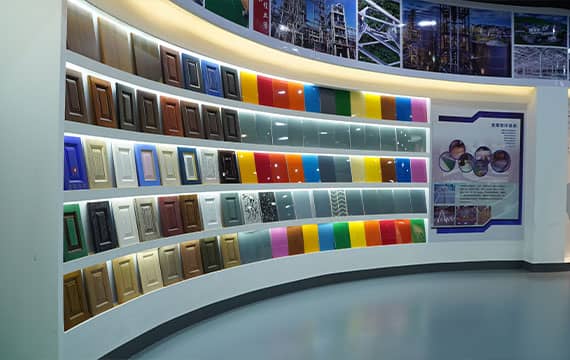
A11: La pavimentazione epossidica a base d'acqua ha una ricca varietà di colori; i colori comunemente utilizzati sono il rosso, il verde, il grigio, il giallo, ecc. Il colore specifico può essere selezionato in base ai blocchi di colore standard nazionali. Yingwanjia ha prodotto speciali cartelle colori per pavimenti.
12. Quanti anni può durare un pavimento epossidico all'acqua?
A12: La durata dei pavimenti epossidici a base d'acqua dipende dal tipo di pavimentazione scelta e dal grado di manutenzione che riceve. In genere, la durata normale è di 3-5 anni.
13. Quali sono i requisiti per lo strato di base di un pavimento epossidico a base d'acqua?
A13: La resistenza della base deve essere superiore a C20 e la planarità deve essere conforme agli standard nazionali. Deve essere realizzato uno strato impermeabile e il contenuto di umidità del pavimento deve essere inferiore a 8%. La base deve essere lucida, pulita e priva di polvere.
14. È possibile applicare l'epossidica su uno strato di base a base d'acqua senza uno strato impermeabile?
A14: In genere è sconsigliato.
15. È possibile realizzare un pavimento epossidico a base d'acqua sopra il terrazzo?
A15: Si può fare, ma deve essere perfezionato.
16. Quanto tempo impiega il pavimento epossidico a base d'acqua a polimerizzare?
A16: I materiali epossidici convenzionali durano generalmente 10-12 ore in estate e 12-24 ore in inverno.
17. I pavimenti epossidici a base d'acqua possono essere utilizzati nei campi da gioco?
A17: I campi all'aperto non sono consigliati.
18. I pavimenti epossidici a base d'acqua sono irritanti?
A18: I pavimenti epossidici a base d'acqua non sono infiammabili e sono resistenti al fuoco.
19. I pavimenti epossidici a base d'acqua possono essere prodotti in un impianto di lavorazione meccanica?
A19: Si può fare, ma la durata di vita sarà ridotta a causa dell'ambiente operativo difficile.
20. Come risolvere il problema del rumore quando si utilizza un pavimento epossidico a base d'acqua nei garage sotterranei?
A20: Il problema del rumore è più difficile da affrontare. L'unico modo è ridurre le frenate di emergenza e ridurre il più possibile la velocità.
21. È possibile riparare i graffi sulla superficie del pavimento epossidico a base d'acqua?
A21: È difficile da riparare. Se il danno è grave, si può applicare un nuovo strato di finitura o aggiungere una finitura al pavimento finito per proteggerlo.
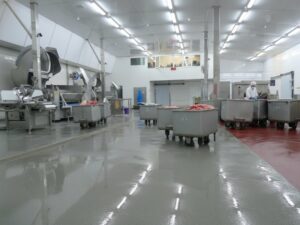
22. I pavimenti epossidici a base d'acqua possono essere utilizzati nell'industria alimentare?
A22: Sì, la vernice epossidica per pavimenti a base d'acqua è ecologica e atossica, e alcune possono raggiungere la qualità alimentare.
23. Esistono standard nazionali di accettazione per i pavimenti epossidici a base d'acqua?
A23: Lo standard viene ora implementato in via sperimentale.
24. Qual è la differenza tra un pavimento epossidico a base d'acqua e un pavimento poliuretanico?
A24: I materiali utilizzati sono diversi, quindi anche le prestazioni sono diverse. L'epossidico a base d'acqua ha una migliore tenacità e può essere utilizzato in ambienti interni a un prezzo conveniente, mentre il poliuretanico ha una migliore durezza ed è resistente ai raggi UV e può essere utilizzato in ambienti esterni.
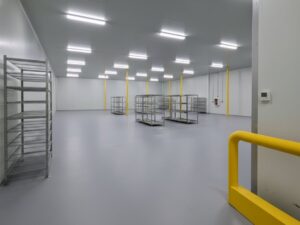
25. I pavimenti epossidici a base d'acqua possono essere utilizzati nelle celle frigorifere?
A25: In genere non è consigliato l'uso in celle frigorifere.
26. Qual è l'intervallo di adattabilità alle temperature dei pavimenti epossidici a base d'acqua?
A26: La temperatura applicabile varia a seconda dei materiali e dell'agente indurente utilizzato.
27. Quali sono i requisiti di temperatura di costruzione per i pavimenti epossidici a base d'acqua?
A27: La temperatura di costruzione è compresa tra 5 e 30 gradi.
28. Qual è la ragione dei fori di ritiro nei pavimenti epossidici a base d'acqua?
A28: Lo strato di base non è ben sigillato, il materiale non è mescolato in modo uniforme e il materiale si solidifica troppo rapidamente.
29. Qual è il motivo dei segni di coltello sui pavimenti autolivellanti epossidici a base d'acqua?
A29: Il materiale si solidifica troppo rapidamente, con conseguente scarso livellamento e insufficiente sgrassatura ausiliaria.
30. Quali sono le caratteristiche dei pavimenti epossidici a base d'acqua?
A30: Bellezza, buona integrità, resistenza alla corrosione, resistenza agli acidi e agli alcali, ecc.
31. I pavimenti epossidici a base d'acqua richiedono giunti di dilatazione?
A31: Si determina in base all'area del pavimento e alla disposizione dei giunti di dilatazione nello strato di base.
32. Dopo quanto tempo è possibile utilizzare il pavimento epossidico all'acqua?
A32: È necessario un periodo di indurimento di almeno 7-10 giorni.
33. Perché il pavimento epossidico all'acqua si stacca?
A33: Ci sono problemi con il materiale di base o il trattamento non è stato eseguito, la rimozione dello strato non è accurata, non c'è uno strato impermeabile o il carico supera seriamente il carico di progetto.
34. Quali sono le precauzioni da prendere quando si utilizza un pavimento epossidico a base d'acqua?
A34: ① Una volta completata la costruzione del pavimento, è necessaria una maturazione di 7-10 giorni prima di poterlo utilizzare. Durante il periodo di stagionatura, è necessario evitare che l'acqua o altre soluzioni si infiltrino nella superficie.
② Tutti i dipendenti che entrano in officina devono indossare scarpe con suola di gomma (non sono ammesse scarpe nere con suola di gommapiuma) (per evitare di portare in officina fango e sabbia dall'esterno e di graffiare il pavimento).
③ Tutta la ferramenta, come sedie in ferro, tavoli in ferro, scaffali in ferro, ecc. deve avere i piedi avvolti con plastica morbida, gomma o imbottiti con cartone per evitare di graffiare il terreno durante l'uso.
④ Il trattore deve sollevare completamente la tavola della macchina da terra. Quando si gira, prestare particolare attenzione agli angoli della tavola della macchina per evitare di graffiare il terreno. Per la pulizia del terreno, utilizzare uno straccio morbido e assorbente o un aspirapolvere a umido e a secco. È possibile utilizzare acqua pulita o detersivo per la pulizia, ma fare attenzione al fatto che il terreno è scivoloso.
⑤ Prima che l'apparecchiatura entri in fabbrica, posizionare scatole di cartone sul pavimento come cuscino per evitare graffi al suolo durante il trasporto. Utilizzare ruote in gomma dura o elastica per i carrelli e gli autocarri a pianale e utilizzarle separatamente all'interno e all'esterno dello stabilimento.
35. C'è polvere durante la costruzione di un pavimento epossidico a base d'acqua?
A35: Ci sarà un po' di polvere, ma la polvere può essere ridotta al minimo utilizzando le attrezzature di costruzione.
36. Quali sono i requisiti per l'umidità dell'aria nella costruzione di un pavimento epossidico a base d'acqua?
A36: Il requisito migliore è compreso tra 30% e 85%.
37. Quali sono i requisiti per il contenuto di umidità del terreno nella costruzione di pavimenti epossidici a base d'acqua?
A37: Non più di 8%.
VOC content in g/L, system build and substrate requirements for each water-based product. Tell us your floor area, substrate condition and service environment, and we will recommend the build.








 English
 Spanish
 Portuguese
 Arabic
 French
 Italian
 Russian
 Indonesian
 Swedish