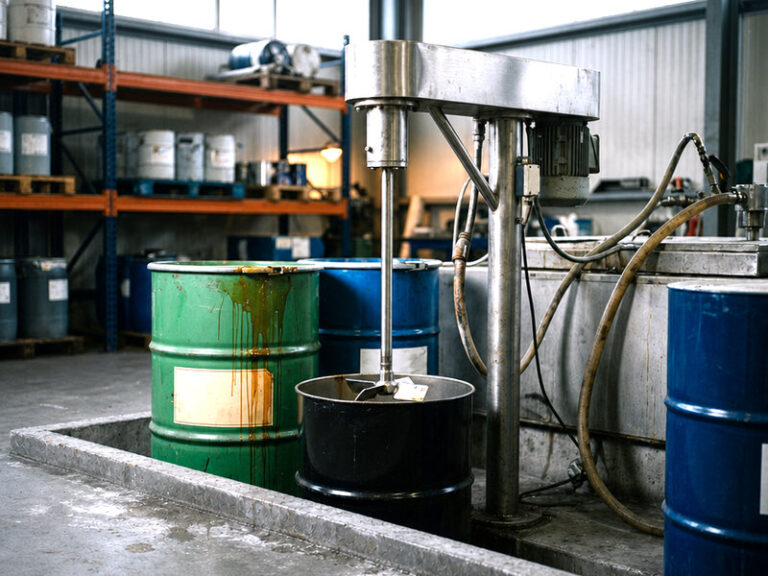
A flooring factory is easy to describe and hard to demonstrate, so this page follows the material from the raw material store to the pallet and names the control point at each stage.
It covers the production route, batch control, what the QC lab actually tests, packing line and labelling, and the records that make a delivery answerable a year later.
The purpose is practical: if you are preparing a coating factory audit or checking a supplier before an order, you can read this and then ask for the specific record behind any claim.
What a flooring factory makes
Resin flooring production at this plant covers three families: epoxy, polyurethane and cementitious urethane, together with the primers, screeds and seal coats that go with them. Each family has its own mixing line and its own packaging.
A flooring factory that makes all three has to keep them apart. Cross-contamination between an epoxy and a cementitious system is invisible until a floor fails to cure, and by then the material is on the slab.
The capacity of a plant is usually quoted in tonnes per month rather than in square metres, because one tonne covers a very different area at one millimetre than at six.
That conversion matters when a project asks for a delivery date. A six-millimetre screed uses roughly six times the material of a one-millimetre coating over the same area, so the same tonnage moves at a different speed.
The production route, step by step
On any resin flooring production line, production runs in four steps: intake and inspection, weighing and dispersion, filling and labelling, then quarantine until the release test is signed.
Resin flooring production is not a continuous process in most plants of this size. It is a series of batches, and each one is a small project with a start, a check and an end.
The line is only as good as its weighing. A two per cent error in a filler load is a two per cent error in the cured film, and it will not appear in the viscosity check at the end.
Every step writes to the same batch record, so a question about a delivery can be answered from one document rather than four. That is what traceability means in practice, and it is why the record is signed at each step rather than at the end.
Table 1: The four stages, the control at each one and the record it leaves.
| Stage | Control | Record |
|---|---|---|
| Intake | Specification and certificate of analysis | Goods-in sheet |
| Weighing | Dispersion time and temperature | Batch sheet |
| Filling | Label and pack weight check | Packing record |
| Release | Test result against declared value | Release signature |
Dispersion equipment decides how much of that control is repeatable. A high-shear mixer and a planetary mixer produce different particle sizes from the same formulation, so a plant that runs both has to state which line made the batch.
Mixing is the step visitors find least dramatic and buyers should find most interesting. Dispersion time, temperature and the order of addition decide whether the cured film is uniform, and none of it can be seen in the finished drum.
Raw material control: where an audit starts
A coating factory audit usually starts at the store rather than at the reactor, because that is where substitution happens: same function, different supplier, different performance.
Each raw material is received against a specification, with a certificate of analysis where the supplier provides one and an internal check where they do not. Both routes are acceptable; an undocumented one is not.
Quarantine matters more than the paperwork. Material that has arrived but not been released should be physically separated, not merely flagged in a spreadsheet, because a spreadsheet does not stop a forklift.
Retained samples are the quiet part of raw material control and the most useful. A sealed sample of each batch, kept for a stated period, is what allows a complaint to be tested rather than argued about.
When a formulation changes, the change is recorded against the product code and the affected batches are listed. A supplier who cannot show that is asking the buyer to trust memory.
Batch control: one mix, one number
Batch control is the mechanism that makes a complaint answerable. Each mix gets a number that follows the material from the weighing sheet to the drum label and into the delivery note.
The number should work in both directions: from a drum back to the raw material lots it contains, and from a component lot forward to every drum that used it.
In a flooring factory, the batch record also carries the conditions of the day: ambient temperature, humidity and mix time. Those are the variables that explain a defect six months later, when nobody remembers the weather.
Retention runs both ways. Keeping a sample of the finished material is standard; keeping the sample of the component lots is rarer and far more useful when the question is why two batches differ.
Batch control gets harder with small batches, not easier. A two-hundred-kilogram mix has less margin on weighing error than a two-tonne one, which is why small runs normally carry tighter tolerances and more checks.
What the QC lab tests, and what it does not
A QC lab in a coatings plant is not a research department. It exists to answer one question per batch: is this the same as the last one, and does it meet the declared values?
Viscosity, gel time, hardness development and adhesion on a standard substrate are the routine four. Chemical resistance and slip resistance are not batch tests; they are type tests, run once and repeated when the formulation changes.
Table 2: Routine tests, the method they follow and how often they run.
| Test | Method basis | Frequency |
|---|---|---|
| Viscosité | Rotational spindle at stated temperature | Every batch |
| Gel time | Fixed mass at fixed temperature | Every batch |
| Dureté | Shore D after 24 and 168 hours | Every batch |
| Adhésion | Pull-off on standard concrete | Weekly and after change |
| Résistance chimique | Immersion to a declared media list | Type test |
A QC lab that tests only what is easy is worse than none, because it produces a record that looks like assurance. The useful question in an audit is which result would actually stop a batch from being released.
Calibration is the part of the picture nobody photographs. A viscometer that has not been checked against a standard produces numbers rather than evidence, and the calibration record is what turns a reading into a result a buyer can rely on.
That question is worth asking about the release authority too. If the person who signs release also sets the production schedule, the check is nominal, and most buyers never ask who signs.
Packing line and labelling
The packing line is where most documentation errors are caught, because the label is the last place a batch number, a pack size and a hazard classification meet.
On the packing line, labels carry the batch, the pack size, the date, the hazard pictograms and the language the destination requires. A second language is printed at packing, not added on arrival.
Container loading is the last control most plants think about and the first one a customer sees. Drum orientation, dunnage and weight distribution are checked against a loading plan, not decided by whoever is on the dock.
Packs are checked for weight and closure before palletising. A drum that leaks inside a container is a total loss rather than a partial one, because the carrier can reject the whole load.
Pallet configuration is agreed with the forwarder in advance rather than decided at loading. That single habit prevents most of the damage claims we see, and it costs nothing but an email.
Traceability from drum to delivery
Traceability is often described as a system. In practice it is a chain of three documents, the batch record, the label and the delivery note, and it fails whenever one of them is written by hand.
For a flooring factory shipping to a project, the traceability chain has to survive a border. The certificate, the safety data sheet and the delivery note should all carry the same batch reference before the container is sealed.
The test is simple and worth running once a year. Pick a drum at random, ask for the component lots behind it, and time how long the answer takes. Under an hour is healthy.
Two habits keep the chain intact. The first is refusing handwritten amendments on a delivery note, because a correction without a signature breaks the link. The second is filing by batch rather than by customer, so a query about one drum does not require a search through a year of orders.
Where a project needs a coating factory audit dossier, those same records are the evidence. Nothing has to be created for the audit, which is the whole point of keeping them properly in the first place.
Capacity, lead time and the honest answer
Capacity is a number buyers ask for and rarely interpret correctly. Monthly tonnage shows the plant can make the material; it says nothing about how much can be packed and shipped in the week you need it.
Lead time is therefore the sum of three things: a production slot, a packing slot and freight. Only the first two are ours, which is why we ask for the port and the delivery term early.
Table 3: What each constraint actually limits.
| Constraint | What it limits | Who controls it |
|---|---|---|
| Production slot | Batch start date | Factory |
| Packing slot | Pack size and label language | Factory |
| Freight booking | Sailing date | Forwarder |
| Certificate issue | Release at destination | Conformity body |
Where a project has a fixed shutdown date, the honest answer is often to book the production slot before approval is complete and hold it. That is a commercial decision, and it should be taken openly.
Freight is the variable that surprises buyers most. A production slot held for a sailing that is later rolled is a slot that could have served another project, which is why we ask for the booking reference rather than a preferred week.
A supplier who quotes a delivery date without asking for the approval date, the port and the pack size is not quoting a plan. They are quoting a hope, and the difference appears at the worst possible moment.
What a customer audit of the plant looks like
A coating factory audit by a customer is usually a two-hour walk with three questions behind it: can you repeat what you made last time, can you prove it, and what happens when you cannot.
The walk covers the store, the mixing area, the QC lab and the finished goods. The questions are about records rather than equipment, because equipment can be bought and records have to be kept.
Ask to see one batch record end to end rather than a sample of pages. The gaps tell you more than the entries, because a missing signature shows exactly where the process relies on memory.
Bring your own list. A buyer who arrives with a short checklist gets a straighter conversation than one who accepts a tour, because the plant knows what will be asked and the answers are ready.
The most useful part of a flooring factory visit is not the tour. It is the hour afterwards, when the plant explains what it cannot do, and the buyer decides whether that matters for the project.
What we do not claim

Figure 1: The sheet, the drum and the note have to agree, and none of them has to be legible in the photograph.
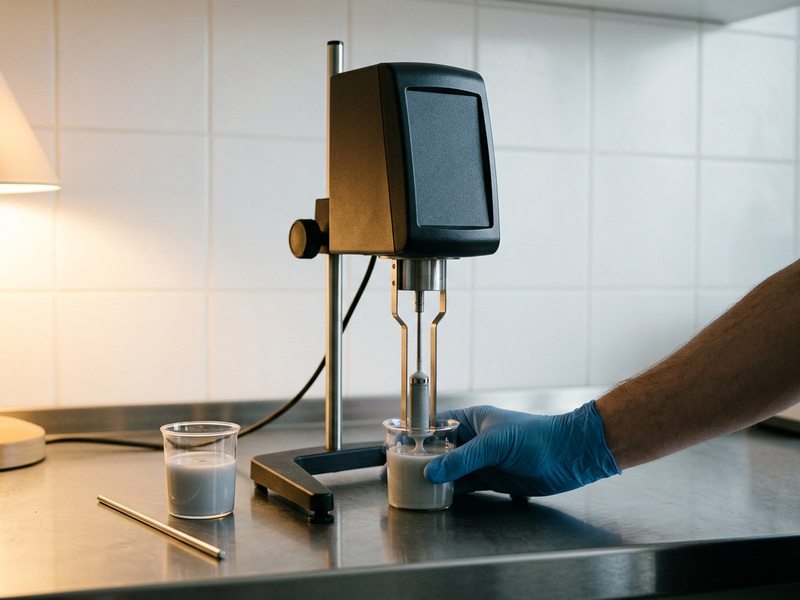
Figure 2: The release test is the last gate before a drum is sold.
A flooring factory page like this is often padded with certificates from the wider industry. We would rather state limits, because a buyer who checks will find them anyway.
We do not describe a product as food grade in a regulatory sense, because no such approval exists for resin flooring. We state what is tested and let you match it to the requirement in your own market.
We do not claim a certification we do not hold. Where a project requires one, we say so at quotation stage, before a specification is fixed around a document that will not arrive.
What we can do is produce the record behind any claim on this page: the batch, the test, the date and the person who signed it. Ask for the one that matters to your project.
Frequently asked questions
How is a batch number assigned and used?
One number is issued per mix and is written on the weighing sheet, the drum label and the delivery note. It links the material back to the lots behind it and forward to every customer who received it.
Can a buyer visit the plant before ordering?
Yes, and the visit is more useful with your own checklist. Two hours covers the store, the mixing area, the laboratory and finished goods, and the conversation afterwards is usually the valuable part.
Do you hold food safety certification for the flooring?
No certification body approves resin flooring as food safe, so no supplier holds one. What can be provided is test evidence on slip, chemical resistance and mechanical properties, plus the records behind it.
How long does production take after approval?
It depends on three slots rather than one: production, packing and freight. The first two are ours and are typically days, not weeks, at normal volumes; the third is set by the forwarder and the sailing.
Can the same batch be split across two shipments?
Yes, provided the split is recorded and each delivery note carries the original batch reference. Splitting is common when a project is staged, and it is only a problem when the second half loses the number.
What records come with a delivery?
A delivery note with the batch reference, the safety data sheet in the destination language, and the certificate requested for that consignment. Test reports are supplied with the order documents rather than the pallet.
Is a test report available for every batch?
Routine results such as viscosity, gel time and hardness are recorded for every batch and can be released on request. Type tests such as chemical resistance are run once and repeated when the formulation changes.
Why food plants work with Kaida Paint
Kaida Paint runs its own flooring factory and writes the batch record that goes with every drum. That means the same number on the weighing sheet, the label and the delivery note, and a test result behind it that we can find a year later. Where a project needs a coating factory audit dossier, we will send the records we hold and say plainly which ones we do not. Send the product family and the destination, and the reply is a document list rather than a brochure.









 English
 Spanish
 Portuguese
 Arabic
 French
 Italian
 Russian
 Indonesian
 Swedish