Descrição
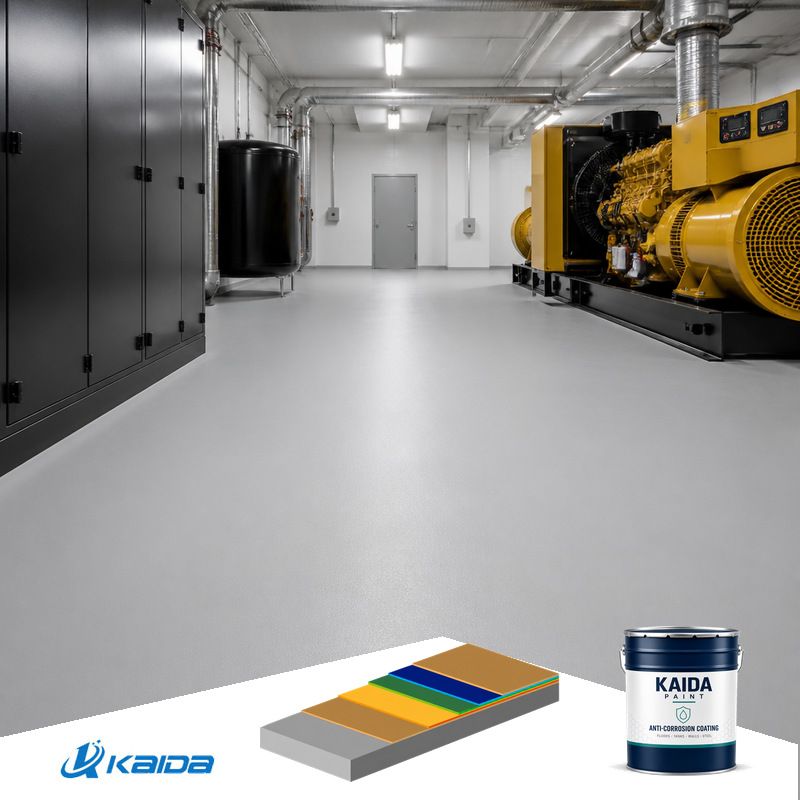
Polyester mortar flooring is a resin mortar floor finished with an unsaturated polyester topcoat, and in this range it is the light-to-medium duty option rather than the heavy chemical one. ACF-UP-MR is built from 1 mm to 5 mm and positioned for acid exposure up to about 10% concentration. Choose polyester where odor and cure speed decide the schedule; change resin when the chemical load is real. The ACF-UP-MR system uses a water-based penetrating primer, a water-based epoxy mid coat and a polyester topcoat over a mortar body, built at 1–5 mm. This page sets out what that combination is good for, where the boundary sits, how it is installed, and why a low-odor water-based base makes it usable in occupied buildings where a solvent-heavy system would not be.
| Item | Especificação |
|---|---|
| Sistema | Polyester resin mortar flooring |
| Model | ACF-UP-MR |
| Build | Water-based penetrating primer, water-based epoxy mid coat, polyester topcoat over mortar |
| Finished thickness | 1–5 mm (0.04–0.20 in) |
| Acabamento | Matte, uniform color; anti-slip grades available |
| Service life quoted | 5–8+ years in the duty it was specified for |
| Positioning | Light to medium chemical duty; dilute acid, splash and wash-down |
| Application method | Trowel and roller applied, ambient cure, no hot work |
What is polyester mortar flooring, and where does it fit?
Polyester mortar flooring is a floor built with unsaturated polyester resin — the same resin family used in glass-reinforced moldings — combined with aggregate and applied over a primed slab. It cures fast, takes pigment well, and costs less than epoxy or vinyl ester, which is why it is common in plant rooms, building floors and sports halls as well as in light chemical areas.
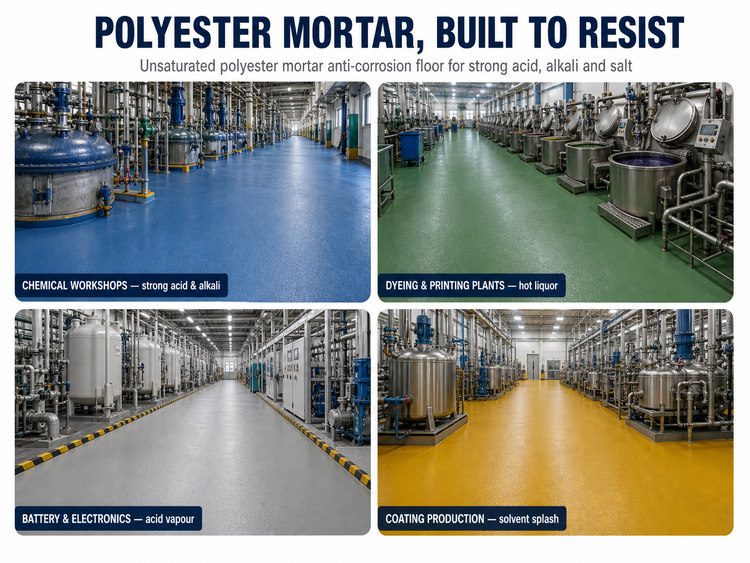
Its chemistry also sets its limit. Polyester has more ester linkages in its backbone than vinyl ester, so acid and water reach them sooner. That is why this system is positioned deliberately as light to medium duty: dilute acid, splash and spill, wash-down water, general chemical contact. Where the floor sits under concentrated acid or permanent immersion, the correct specification is an epoxy mortar or a vinyl ester system, and no amount of extra thickness changes that.
For higher chemical load on the same mortar principle, see epoxy mortar flooring.
What is the resistance profile of ACF-UP-MR?
The manufacturer positions this system for acid exposure up to roughly 10% concentration and light-duty chemical service. It is not a concentrated-acid floor, and presenting it as one would be a disservice to the buyer who then discovers it in service.
| Exposure | Suitability | Recommended system instead |
|---|---|---|
| Dilute acid up to about 10%, splash and spill | Suitable | — |
| Alkali wash-down, detergents, general chemical contact | Suitable | — |
| Condensation, humidity and mold-prone interiors | Suitable | — |
| Concentrated mineral acid, permanent spill pools | Not suitable | Epoxy mortar flooring or vinyl ester system |
| Permanent immersion, tanks and pools | Not suitable | Vinyl ester tank lining |
| Solvent contact or hot process liquor | Not suitable | Vinyl ester high-build mortar system |
The value of this system is not raw chemical resistance — it is the combination of a fast-curing, low-odor build with a matte, hard-wearing finish at a lower cost per square meter (sq ft) than epoxy. Used inside its envelope it performs well for five to eight years; used outside it, it fails quickly and predictably.
For the glass-reinforced polyester alternative, see FRP glass reinforced flooring.
Light duty is still part of the picture, and the wider view is in corrosion resistant flooring for light duty.
How is the build assembled?
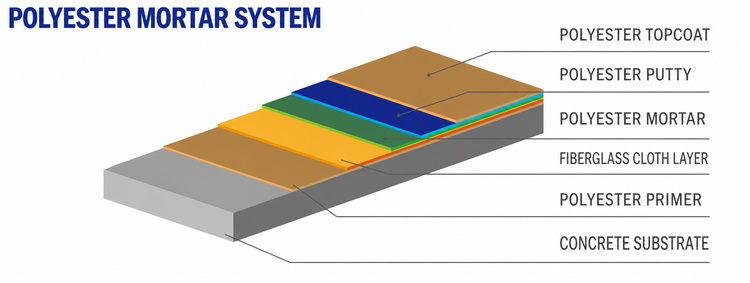
- Concrete substrate — ground, sound, dust-free; moisture checked before the water-based primer goes down.
- Water-based penetrating primer — low-odor, strong adhesion; the reason this system can be used in occupied buildings.
- Water-based epoxy mid coat — builds the body and bridges to the topcoat without a solvent load.
- Mortar body — aggregate-filled resin where thickness or load capacity is required, up to 5 mm total build.
- Polyester topcoat — fast-curing, hard, matte finish in the specified color.
Because polyester mortar flooring cures quickly, the topcoat can be opened to traffic sooner than epoxy, which is why it suits refurbishments with fixed access dates. The water-based primer and mid coat are the under-appreciated part of this system. On a refurbishment in a building that cannot be evacuated, they remove most of the solvent odor from the early stages, leaving only the topcoat as the odor event — and that can be scheduled for a weekend or a night shift.
Why a water-based epoxy mid coat sits under a polyester topcoat
The combination looks like a compromise and is three decisions in one build.
The primer is water-based because the slab is the largest surface in the room and the primer is the largest single coat; a water-based primer removes most of the solvent load from the stage where the building is least ventilated.
The mid coat is epoxy because the mortar body has to bond to a prepared slab and hold aggregate at thickness. Epoxy wets a prepared substrate more forgivingly than polyester and gives the body its adhesion.
The topcoat is polyester because the wearing surface needs a hard, fast-curing, matte finish, and polyester cures without the amine blush that can spoil an epoxy surface in cool, humid conditions.
The risk sits at the interface, and it is a scheduling risk rather than a chemistry risk. Polyester does not bond to an amine-blushed epoxy surface, so the mid coat has to be abraded and the overcoat window respected. A contractor who treats the interface as one more coat gets delamination in the first year, and it reads as a resin failure when it is a timing failure.
What are the mechanical properties?
The system is specified for compressive strength of 60 N/mm² (8,700 psi) and above, pencil hardness of 2H and above, abrasion loss of 0.02 g or less (750 g / 500 r) and impact resistance of 80 kg/cm² and above. In practical terms that covers foot traffic, trolleys, light plant, gym equipment and the abrasion of daily cleaning.
ACF-UP-MR does not cover forklift traffic, drum dropping or heavy point loads. Where those exist, the mortar body needs to be thicker and the resin needs to be epoxy or vinyl ester — the aggregate is only as good as the binder holding it.
Where is polyester mortar flooring specified?
- Generator rooms, plant rooms and switch rooms, where a sealed, dust-free floor is needed
- Building floors and corridors in light industrial and commercial premises
- Sports courts and multi-purpose halls, including school and community facilities
- Food-adjacent and storage areas needing a washable, mold-resistant surface
- Light chemical workshops and packaging halls
- Refurbishments in occupied buildings, where odor and shutdown time are constrained
How is it installed?
- Preparação — grinding, crack and void repair, dust removal, moisture check.
- Preparação — water-based penetrating primer, allowed to dry fully before the next coat.
- Mid coat — water-based epoxy, applied and cured.
- Argamassa — trowelled where the build requires thickness, then ground.
- Acabamento — polyester topcoat applied by roller, one or two passes as specified.
- Cure and handover — off-traffic cure window, then inspection and a maintenance briefing.
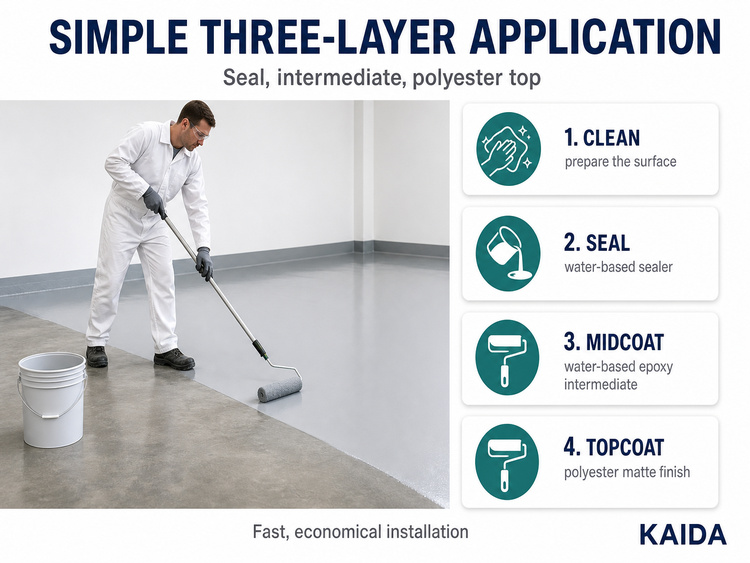
One sequencing rule matters more than any other with water-based primers: the primer has to be dry, not merely touch-dry, before the mid coat. Trapped water under a fast polyester topcoat produces blush and poor adhesion, and it looks like a resin fault when it is a schedule fault.
For concentrated acid and immersion duty, see vinyl ester flooring.
Build options and service life
Quoted service life is 5–8+ years, conditional on the exposure staying inside the light-to-medium envelope and on the substrate being dry and properly prepared.
| Build | Espessura | Typical duty |
|---|---|---|
| Primer + mid coat + topcoat | Approx. 0.5–1 mm | Plant rooms, storage, light traffic, sealing a dusty slab |
| Primer + mortar + topcoat | 2–3 mm | Workshops, corridors, trolley traffic, moderate abrasion |
| Primer + heavy mortar + topcoat | 4–5 mm | Light plant, sports courts, areas needing thickness and impact resistance |
What does polyester mortar flooring cost, and how is it quoted?
Polyester mortar flooring is priced from area, build thickness, substrate condition and access — the same four inputs as any resin floor. Per square meter it is generally the least expensive of the resin options, because both the resin and the water-based base coats cost less than epoxy or vinyl ester.
The honest comparison is not price per square meter but price per year inside the correct envelope. A polyester floor at 5–8 years in a plant room is excellent value; the same floor under a concentrated acid drip tray is a rework cost. If a supplier quotes polyester for a duty that reads like a chemical plant process area, ask what resin they would use if the concentration doubled.
Pricing is per square meter (sq ft), FOB or CIF named port. Because the build is low-odor it is often scheduled into occupied buildings, so lead time is given as a working-day range with the cure window stated, and minimum order is set by crew mobilisation.
Perguntas frequentes
Polyester or epoxy — which should I choose?
Epoxy where the chemical load is real and the floor must resist it; polyester mortar flooring where the priority is a hard, matte, fast-curing finish at lower cost, in light-duty service. As a rough rule: if the medium would take paint off a wall, choose epoxy or vinyl ester.
Is the odor a problem in an occupied building?
Less than a solvent-based system, because the primer and mid coat are water-based. The polyester topcoat still carries styrene during cure, so the last stage is scheduled for a night shift or weekend, with ventilation. Buildings with sensitive occupiers should plan the topcoat stage rather than the whole schedule around it.
Can it be used outdoors?
Not as a UV-exposed finish without a suitable topcoat grade. Polyester weathers better than epoxy but still chalks under direct sun. For outdoor yards and containment areas, specify a UV-stable topcoat or move to a vinyl ester system.
How soon can the floor be used?
Foot traffic once the topcoat has cured enough to resist marking; the full cure window is temperature-dependent and stated in the method statement. Fast-curing polyester shortens the window compared with epoxy, which is one reason it suits refurbishments with tight access dates.
Why projects specify Kaida Paint for polyester mortar flooring
The technical file records the build thickness, the topcoat color and the exposure the system was selected for, and it states plainly where the system should not be used — which is more useful to a facilities team than a longer list of acids. Batch records and a material declaration ship with the material.
Kaida Paint supplies the water-based primer, the water-based epoxy mid coat, the mortar resin and the polyester topcoat as one system, so the drying and cure windows between the water-based and solvent-based stages are defined rather than guessed. That interface is where most failures on this type of build originate.
Send the area, the substrate condition, the exposure and the access constraints. We will confirm whether polyester is the right resin for the duty, or recommend an epoxy or vinyl ester build if it is not.
—
Autor: Kaida Paint Technical Team — flooring systems engineering, resin flooring Last updated: 13 November 2026

 English
 Spanish
 Portuguese
 Arabic
 French
 Italian
 Russian
 Indonesian
 Swedish