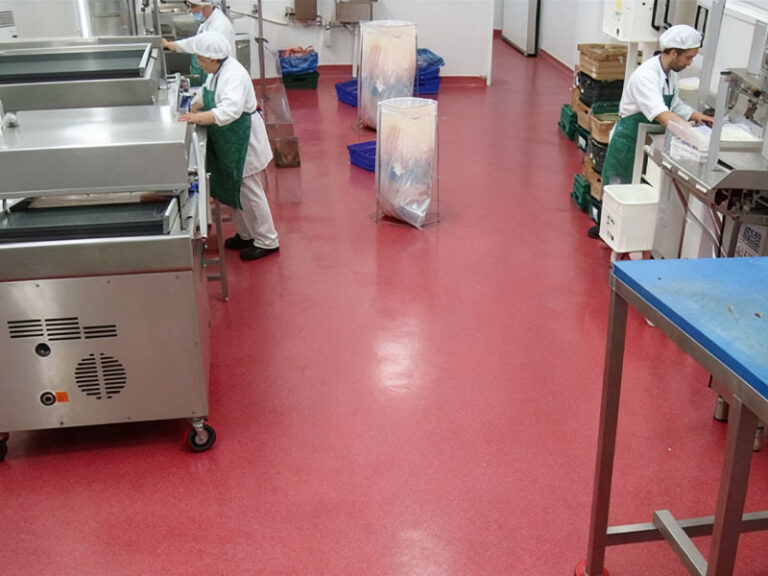
A conceção de um pavimento de PU de elevado desempenho para a indústria de lacticínios requer uma abordagem sistemática que dê prioridade à segurança alimentar, à segurança dos funcionários e à durabilidade a longo prazo em condições extremas. Uma conceção eficaz integra uma avaliação minuciosa das necessidades operacionais com a seleção de um revestimento de pavimento especializado de qualidade alimentar, como o pavimento de cimento de poliuretano, para criar uma superfície sem juntas, resistente a produtos químicos e fácil de limpar, que cumpra as rigorosas normas USDA e HACCP.
Este guia irá guiá-lo através dos passos críticos, desde a avaliação inicial até à especificação do material, assegurando que a sua solução de pavimento pode suportar choques térmicos, produtos químicos agressivos e tráfego constante, mantendo um ambiente higiénico.
1. Considerações Críticas de Conceção para Pavimentos de Lacticínios
A base de um projeto bem sucedido de pavimento em PU para a indústria de lacticínios reside numa compreensão detalhada dos desafios específicos da instalação. Cada área tem exigências únicas que influenciam diretamente a especificação do pavimento.
- Exposição a produtos químicos: As instalações de lacticínios utilizam agentes de limpeza e higienização agressivos, como desinfectantes à base de cloro, soluções CIP (Clean-in-Place) ácidas e ácidos gordos dos produtos lácteos. O pavimento tem de ser um pavimento resistente a produtos químicos para as fábricas de lacticínios para evitar a degradação, as manchas e a proliferação de bactérias.
- Choque térmico e mecânico: Os pavimentos são sujeitos a frequentes limpezas com água quente e vapor, seguidas de enxaguamentos a frio, causando choques térmicos. Suportam também o impacto de ferramentas caídas, tráfego pesado de rodas e tráfego pedonal, exigindo uma elevada resistência mecânica.
- Higiene e segurança alimentar: O pavimento deve ser antibacteriano para as fábricas de produtos alimentares, uma vez que não tem juntas, não é poroso e é fácil de higienizar. Isto evita a penetração da humidade e da matéria orgânica, que podem levar ao crescimento de micróbios como a Listeria e a E. coli.
- Segurança dos pés: As áreas de processamento húmidas são perigosas em termos de escorregamento. Um pavimento de leitaria antiderrapante com um acabamento texturado, mesmo quando molhado, não é negociável para a segurança do pessoal.
2. Processo de conceção do pavimento passo a passo
Um processo de conceção metódico garante que nenhum fator crítico é descurado, conduzindo a um produto robusto e conforme revestimento industrial de poliuretano para pavimentos.
Passo 1: Realizar uma avaliação global da área
Comece por criar um mapa das suas instalações e categorizar cada zona com base nos seus factores de stress únicos.
- Áreas de elevada tensão: Salas de processamento, zonas de lavagem, cais de carga. Estes requerem os sistemas mais robustos, como o pavimento de cimento poliuretano.
- Zonas de tensão média: Zonas de acondicionamento, frigoríficos de armazenagem.
- Áreas de baixo stress: Escritórios, armazém seco.
Passo 2: Definir requisitos de desempenho
Para cada área, documente as necessidades específicas de desempenho. Isto torna-se a sua especificação técnica.
- Lista de resistência química: Documentar todos os produtos químicos, as suas concentrações e temperaturas.
- Requisitos de carga: Especificar o tráfego de empilhadores, as cargas pontuais e as expectativas de impacto.
- Classificação de resistência ao deslizamento: Especificar a resistência ao deslizamento em húmido requerida (por exemplo, R10, R11 de acordo com a norma DIN 51130).
- Gama de temperaturas: Definir a gama operacional, incluindo as temperaturas de limpeza no local (CIP).
Passo 3: Selecionar o sistema de pavimento em PU adequado
Nem todos os pavimentos pu são iguais. Com base na sua avaliação, escolha o sistema correto.
Comparação da adequação do sistema de pavimento para ambientes de lacticínios
| Tipo de sistema | Melhor para | Principais vantagens | Limitações |
|---|---|---|---|
| Pavimentos de cimento poliuretano | Processamento, Lavagem, Congeladores | Excelente resistência ao choque térmico, resistência química muito elevada, sem costuras, pavimento aprovado pela USDA | Custo mais elevado, requer instalação profissional |
| Argamassa de poliuretano para trabalhos pesados | Zonas de tráfego intenso, cais de carga | Extrema durabilidade, elevada capacidade de carga, antiderrapante | Pode ser uma superfície mais rugosa |
| Pavimento de poliuretano autonivelante | Embalagem, áreas secundárias | Cria um pavimento de leitaria perfeitamente liso e fácil de limpar, sem costuras | Menos resistente a choques térmicos extremos do que o cimento PU |
3. Epóxi vs. Poliuretano para pavimentos de lacticínios
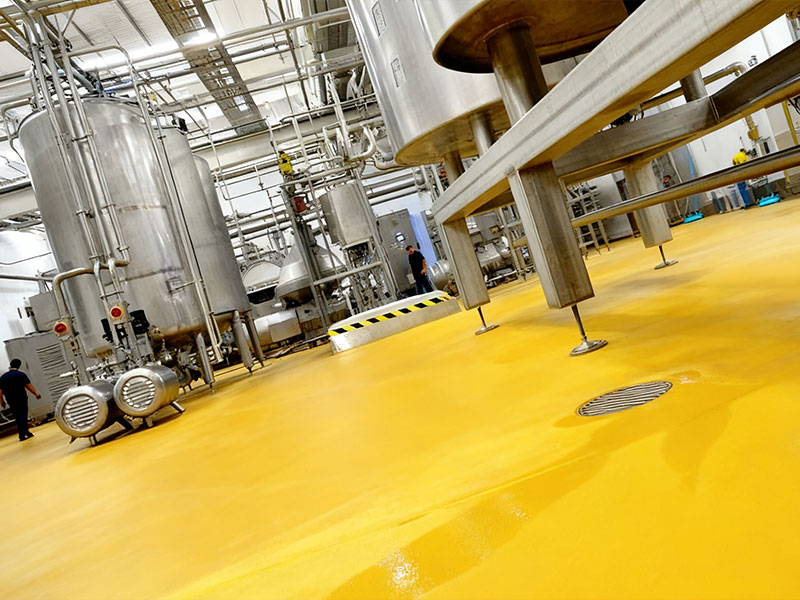
Uma questão comum na especificação é epóxi vs poliuretano. Embora o epóxi seja um revestimento forte, os sistemas de poliuretano geralmente têm um desempenho superior em ambientes de lacticínios.
- Resistência ao choque térmico: O epóxi pode tornar-se frágil e rachar sob ciclos repetidos de calor/frio. O pavimento em PU mantém a sua flexibilidade, o que o torna ideal para um pavimento resistente ao choque térmico.
- Resistência química: O poliuretano oferece uma resistência superior a uma gama mais vasta de ácidos e agentes de limpeza encontrados nas fábricas de lacticínios.
- Estabilidade UV: Alguns produtos de acabamento de pavimentos em poliuretano são estáveis aos raios UV e não amarelecem, o que é vantajoso em áreas com luz natural.
4. Garantir o cumprimento das normas de segurança alimentar
O seu pavimento é um ponto de controlo crítico para o seu plano de segurança alimentar. O projeto tem de facilitar um pavimento em conformidade com o HACCP.
- Pavimento aprovado pelo USDA: Para instalações inspeccionadas pelo USDA, o pavimento tem de ser não absorvente, sem juntas e de fácil limpeza. A maioria dos sistemas de pavimento de resina de poliuretano, quando instalados corretamente, podem cumprir estes requisitos.
- Criação de bases de cova: A integração de uma base com ranhuras (uma transição curva e sem descontinuidades da parede para o pavimento) é uma boa prática. Elimina o ângulo de 90 graus, difícil de limpar, onde as bactérias se podem desenvolver, tornando o seu pavimento industrial sem costuras verdadeiramente completo.
5. Instalação e manutenção a longo prazo
Um projeto perfeito pode falhar com uma má execução. A instalação e a manutenção corretas são fundamentais.
- Preparação da superfície: O substrato de betão deve ser sólido, limpo e perfilado. Este é o passo mais crítico para a aderência.
- Aplicação profissional: Os sistemas de betonilha de poliuretano e de pavimento autonivelante de poliuretano requerem instaladores com formação para garantir a mistura, aplicação e cura corretas.
- Protocolo de manutenção: Utilizar produtos de limpeza de pH neutro recomendados para poliuretano para pavimentos de betão. Evitar lavadores abrasivos e solventes agressivos não listados no guia de resistência química do sistema.
Sobre a KAIDA PAINT e as nossas soluções para a indústria de lacticínios
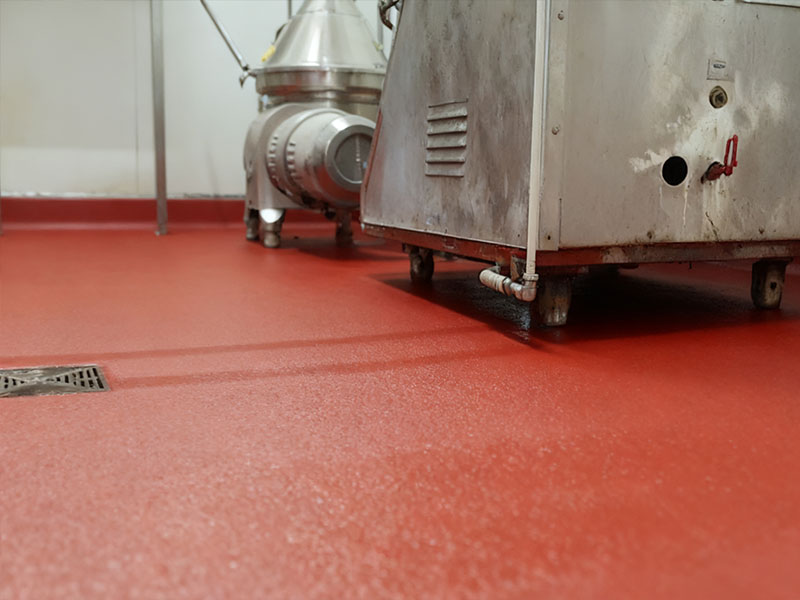
Em PINTURA KAIDANa nossa empresa, somos especializados no desenvolvimento de sistemas de revestimento de pavimentos de qualidade alimentar de elevado desempenho, concebidos para os ambientes mais exigentes, incluindo a indústria dos lacticínios. O nosso principal produto de poliuretano para pavimentos de cimento foi especificamente formulado para enfrentar os principais desafios de choque térmico, corrosão química e impacto pesado.
As nossas vantagens exclusivas:
- Desempenho comprovado: Os nossos sistemas são testados para suportar os produtos químicos específicos e os regimes de limpeza da produção de lacticínios, garantindo uma durabilidade a longo prazo como pavimento resistente a produtos químicos para lacticínios.
- Competências regulamentares: Fornecemos sistemas concebidos para cumprir as diretrizes de pavimentação aprovadas pela USDA e compatíveis com HACCP, dando-lhe confiança durante as auditorias.
- Parceria técnica: Oferecemos mais do que apenas produtos; fornecemos apoio técnico abrangente desde a conceção e especificação até à orientação da instalação.
Pronto para conceber uma solução de pavimento que garanta segurança, conformidade e longevidade?
Contacte os especialistas da KAIDA PAINT hoje mesmo para uma consulta gratuita e apoio na especificação.



 English
 Spanish
 Portuguese
 Arabic
 French
 Italian
 Russian
 Indonesian
 Swedish