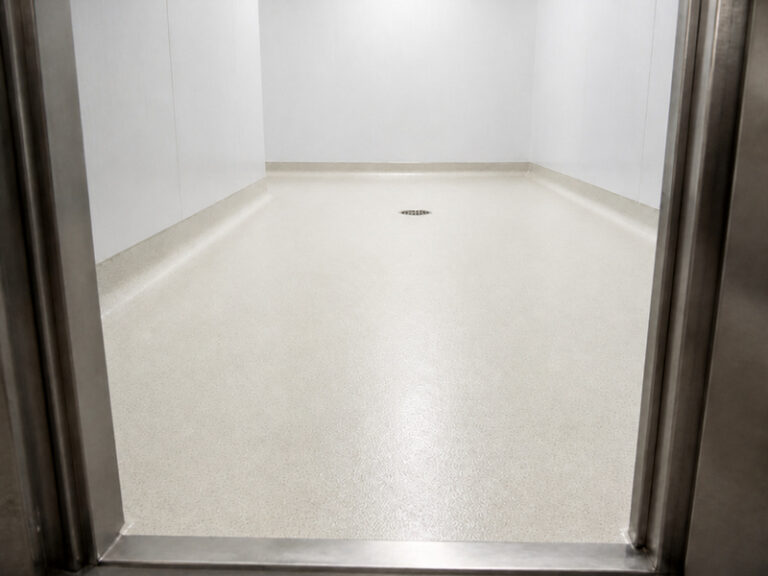
HACCP flooring is a phrase used in two different ways, and the difference matters as soon as money is involved. It can mean a floor installed inside a site’s HACCP plan, or a flooring material assessed under a HACCP-based scheme for food equipment and materials.
The first is a plant obligation and is audited on site, against a plan the plant wrote. The second is a product credential issued by a certification body, and it says nothing at all about the floor in your building.
This article separates the two, sets out what material certification does and does not cover, explains where migration testing fits, and shows how to build a floor file that closes a finding rather than decorating a folder.
Two meanings, one phrase
In a food safety plan, the floor is a prerequisite: a condition that has to be maintained so the hazard analysis stays valid. Nobody certifies it at that level, because the site audits it and an auditor samples the result on the day.
In a supplier’s catalogue, HACCP flooring usually means a material has been assessed under a scheme run by HACCP International, which certifies equipment and materials rather than buildings. That is a different claim with a much narrower scope.
Both meanings are legitimate, and neither replaces the other. A certified material installed badly will still fail a site audit, and an uncertified material installed well will usually pass one without the certificate ever being mentioned.
A plant that has been told its floor is HACCP flooring approved will usually discover the distinction at the worst moment, which is during an audit question about condition. A plant can hold a folder of product certificates and still fail a question about the floor, which is the moment the distinction becomes expensive. The confusion costs money in both directions. Plants buy documents they cannot use, and suppliers imply a plant-level approval that they do not hold and could not hold under any scheme. Both behaviours are understandable and neither helps the person who has to answer an auditor.
What HACCP International actually certifies
HACCP International certification is issued to a product rather than to a site. The assessment looks at the material, its intended use, its cleanability and its documentation, and the certificate names the product and the manufacturer.
That makes it useful in a specification, because it gives a buyer a way to compare two products on something other than price. It does not make the floor compliant, and it does not transfer to a different product made in the same factory.
The certificate also carries a scope and a date. Check that the product name matches the data sheet, that the certificate is current, and that the scope covers the way you intend to use the material in your plant.
Ask also whether the certificate covers the system or only the liquid, because a screed is a mixed product on site. Where a supplier shows a HACCP International certification for a coating while you are buying a screed, you have been shown a credential for something else. That misuse is common in tenders and easy to catch with one polite question.
Material certification, and its limits
Material certification is evidence about a sample under defined conditions. It tells you what the material is and how it behaved in a test, and it says nothing about thickness, substrate, detailing or workmanship.
That is why a food safe certification claim should be read as one input among several. The others are the build-up, the detail drawings and the maintenance method, and together they decide the outcome far more than the certificate does.
Some suppliers bundle several documents into one PDF and call the bundle a HACCP flooring certificate, which is misleading without being dishonest. A useful test is whether the package names the standard, the test house and the date. A document that says a product is food safe without any of those three is a brochure with a logo on it.
A test report without a date is a test report without a value, because formulations change quietly. A food safe certification statement is therefore a starting point rather than a conclusion. Keep the certificate with the data sheet and the batch record, so a later question about a specific delivery can be answered from one folder rather than three email threads and a phone call.
Migration testing and the food contact question
Migration testing exists to answer a food contact question: what a material gives up to the food it touches. A floor is not a food contact surface, so the question rarely applies in the way that suppliers imply.
Where product falls on the floor it is discarded, and the floor’s job is to be cleanable rather than to be inert in contact with food. That is why it is usually the wrong evidence for a floor, however impressive the report looks in a folder.
Suppliers raise the topic because buyers ask for it, and buyers ask because a competitor mentioned it. A useful question for a supplier is what the material is not recommended for, because the answer is usually more informative than the certificate. The exception is a plant that handles dry product in open conditions and treats the floor as part of the product zone. Even there, the requirement is about cleaning and condition rather than about migration, and an auditor will say so.
The practical answer is to ask what the floor must not do, which is usually to harbour soil or shed particles. Ask a supplier who offers it which surface the test was run on and what the intended contact scenario was. The answer usually shows that the test was performed for a different product in a different application entirely.
Where the floor sits in a zone assessment
A zone assessment divides the plant by risk, and the floor specification should change at each boundary. High-care rooms, low-care rooms and non-product areas need different details, different falls and different cleaning methods.
The floor is a prerequisite in every zone, but the evidence required is not the same. A high-care room needs validated cleaning and detail drawings, while a dry store needs a condition record and a repair history.
Doing a zone assessment before the floor is specified is the most useful single step in the process, because it turns one vague requirement into three or four specific ones that a contractor can price without guessing.
The map is also the document that makes a tender comparable, because three bidders working from the same map price the same scope. For HACCP flooring the map is what turns a general intention into a room-by-room schedule. It also prevents the most expensive mistake in this area, which is applying a high-care specification to a warehouse because the document was written once for the whole site and never revised afterwards.
Cleaning validation is the evidence that counts
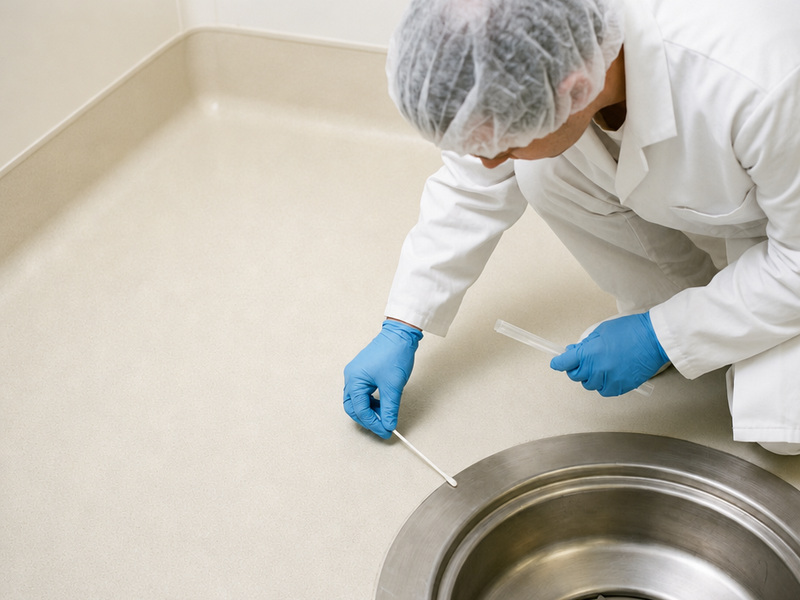
Figure 1: The drain collar is the first location worth swabbing, and usually the first to fail.
Cleaning validation shows that a defined method produces a clean surface, and it is what an auditor is really asking about when they look at a floor. Without it, condition is an opinion rather than a record.
A validation that is written once and never repeated tells you what happened in the first month of service. It needs a method, a chemistry, a contact time and a check. For a floor, the check is usually a visual inspection plus an ATP swab or a protein test at defined locations, recorded on the same form each time.
The cleaning validation record should name the locations: the cove, the drain collar, a traffic lane and a corner under equipment. Those four will find most of the problems a floor can develop in service.
The record should also note who cleaned and when, because a pattern is easier to see than a single result. Where a room fails, the floor is one variable among several, and a zone assessment tells you which zones are worth investigating first. Without that map, every failure in the plant looks like a coating problem.
Audit evidence: the five documents
Audit evidence for a floor is short and unglamorous: a drawing, a specification, a test record, a cleaning method and a repair log. Most plants have two of the five, and the missing three are the ones asked about.
The drawing matters because it shows intent. The specification matters because it shows the standard. The test record and the cleaning validation record show that the intent was delivered and then maintained through the years.
The order matters less than the existence of all five, and a folder with four of them is worth more than a perfect file that lives on somebody’s laptop. A repair log is the document that saves a plant in a bad year, because it shows that defects were known and managed. An auditor who sees a dated patch with a photograph is looking at a controlled process.
Keep the audit evidence in one folder per room, and review it before the audit rather than during it. A file assembled on the day reads exactly like a file assembled on the day, and auditors notice. The same folder is useful long after the audit, because it answers the questions that come with a change of ownership, a new customer or an insurance survey.
Plants that keep it tend to spend less on floors over a decade, not because they buy better materials but because they know what they have. That knowledge is worth more than a certificate in a drawer, and it costs an afternoon to create.
Table 1: Evidence by zone, and the question it answers.
| Zone | Evidence | Question answered |
|---|---|---|
| High care | Drawings, swabs | Can it be cleaned |
| Low care | Condition record | Is it maintained |
| Dry store | Repair log | Is it controlled |
| Non-product | Especificação | Was it built as intended |
Procurement: buying evidence you can use
Procurement is where the two meanings cause the most waste. A buyer asks for certification, receives a folder, and has no way to tell whether any of it applies to the floor being installed in the room.
The cheapest way to buy a floor is to ask for the same five documents from every bidder and compare them side by side. Write the requirement as evidence rather than as a badge. Ask for the data sheet, the material certification with the standard and the date, the detail drawings, and the cleaning method for each room in the scope.
A HACCP International certification can be requested where a product genuinely holds one, and it should be one line in the requirement rather than the whole of it. That keeps a HACCP flooring comparison honest and stops certificates becoming a substitute for detail.
That single comparison usually separates a supplier who understands floors from one who sells coatings. A bidder who has priced a drawing usually knows where the drains are and what happens at a door frame. Where a bidder cannot supply a drawing, the procurement decision should wait. A drawing costs nothing at tender and a great deal after award, and its absence tells you a good deal about how the job will be run.
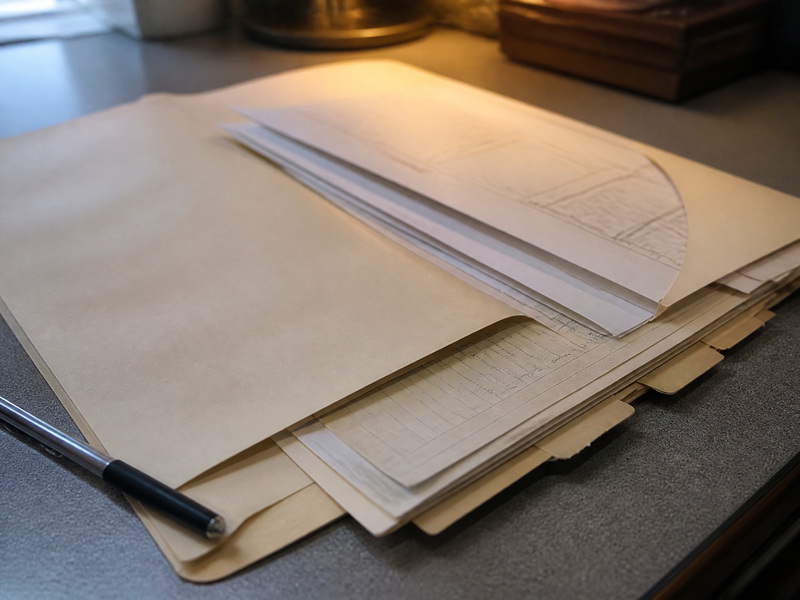
Figure 2: Five documents, one folder, per room. That is what a floor finding is usually closed with.
Table 2: What to ask for, and what it proves.
| Ask for | Proves |
|---|---|
| Data sheet | What the product is |
| Test report | How it behaved in a test |
| Detail drawings | How it will be built |
| Cleaning method | How it will be kept |
Table 3: Claims, and what each one is evidence of.
| Claim | Evidence of |
|---|---|
| HACCP International certified | A product assessment |
| Food safe | A test on a sample |
| HACCP compliant floor | Nothing specific on its own |
| Migration tested | A food contact scenario |
Frequently asked questions
Is HACCP flooring a certified product?
No. HACCP is a management system, and a floor is a prerequisite within it. HACCP International certifies food equipment and materials, which is a product-level credential rather than a plant approval, and the two are often confused in tenders.
Do I need HACCP International certification to pass an audit?
Not usually. An auditor examines the condition of the floor, the cleaning method and the records. A certificate is useful when comparing products at tender, but it does not replace any of those three on site.
Is migration testing required for a floor?
Rarely. A floor is not a food contact surface, so migration testing answers a question that does not usually apply. It becomes relevant only where a plant treats the floor as part of the product zone, and even there condition and cleaning matter more.
What is the difference between food safe certification and material certification?
Very little in practice, and both are evidence about a sample. Neither says anything about thickness, detailing or workmanship, which is where most floor failures begin and where an auditor spends most of their time.
How does zone assessment change the floor specification?
It splits one requirement into three or four. High-care rooms need validated cleaning and detailed drawings, low-care rooms need condition records, and non-product areas need a repair history rather than a certificate.
What records should a plant keep for a floor?
A drawing, a specification, test readings, a cleaning method and a repair log, kept per room. Those five answer almost every question an auditor can ask, and they take an afternoon to assemble if they exist at all.
Does a certificate help in procurement?
It helps compare products, provided the product name and scope match what you are buying. It stops helping once the floor is installed, because the questions then become about condition, cleaning and repair rather than about the material.
Why food plants work with Kaida Paint
Kaida Paint supplies materials with the documentation a HACCP flooring file actually needs: data sheets, test reports, batch records and detail drawings. We will also say plainly which certificates are relevant to a floor and which ones answer a different question, because a certificate for a coating is not evidence about the floor in your high-care room. Send the room schedule and we will return an evidence list by zone, with the drawings named.



 English
 Spanish
 Portuguese
 Arabic
 French
 Italian
 Russian
 Indonesian
 Swedish