What Is the Best Flooring System for Aircraft Hangars?
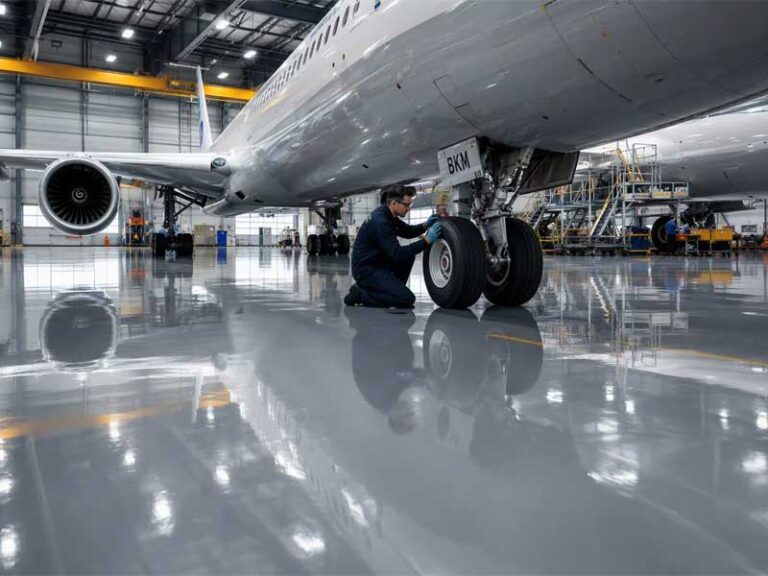
The best aviation hangar flooring system is a multi-layer resinous system, typically comprising an epoxy primer and basecoat with a high-performance polyurethane or polyaspartic topcoat.
This system usually includes:
- An epoxy primer for maximum adhesion to the concrete substrate.
- A high-build epoxy basecoat to provide the primary chemical and impact resistance.
- A polyurethane or polyaspartic topcoat for superior UV stability, gloss retention, and wear resistance.
- An anti-slip aggregate (e.g., polymer grit) to ensure personnel safety.
This combination provides:
- Superior resistance to Skydrol hydraulic fluid.
- High light reflectivity (LRV > 80%) for improved visibility.
- Enhanced Foreign Object Debris (FOD) identification.
- Long-term durability under heavy aircraft loads and maintenance traffic.
1. What Makes Aviation Hangar Flooring Different from Standard Industrial Floors?
Aircraft hangar floors operate under a unique set of demands that separate them from typical warehouse or manufacturing facility flooring. These surfaces must perform flawlessly under extreme conditions, which requires a specialized approach to material selection and system design. Aviation Maintenance, Repair, and Overhaul (MRO) facilities require flooring systems that can withstand continuous aircraft servicing, hydraulic fluid exposure, and heavy equipment movement.
1.1 The Three Core Performance Pillars
The design of a hangar floor revolves around three interconnected pillars:
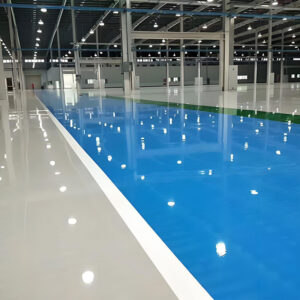
- Reflectivity: A high-gloss, light-colored surface maximizes the efficiency of overhead lighting, brightening shadows under aircraft wings and fuselages. This is critical for safety, allowing maintenance crews to easily spot FOD—such as dropped fasteners or tools—that could cause catastrophic damage. It also improves the quality of inspection work. Typical high-performance systems can achieve Light Reflectance Values (LRV) exceeding 80%.
- Skydrol Resistance: Skydrol is a phosphate ester-based hydraulic fluid whose chemistry is intentionally aggressive to resist combustion. This same property makes it a formidable enemy to concrete and many standard coatings. Unprotected concrete will stain, spall, and degrade upon contact. A specialized Skydrol-resistant coating forms a dense, crosslinked polymer barrier, preventing the fluid from penetrating and destroying the substrate.
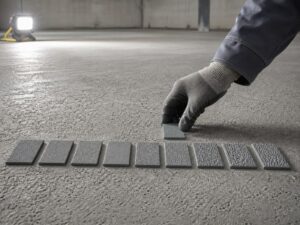
- Slip Resistance & Safety: A floor must be safe for personnel walking on it, even when wet from cleaning or fluid spills. While a perfectly smooth, high-gloss floor offers the best reflectivity, it can become slippery. The solution lies in applying a fine, uniform texture, often achieved by broadcasting polymer grit or silica sand into the final coat. This maintains a high-gloss finish while meeting stringent safety standards, such as a wet coefficient of friction of 0.6 or higher, as recommended by OSHA and ADA guidelines.
2. Aircraft Hangar Flooring Requirements Checklist
For facility managers and specifiers, a structured checklist ensures all critical performance criteria are considered before selecting a system.
| Requirement | Why It Matters |
|---|---|
| Skydrol Resistance | Protects the concrete substrate from the aggressive, degrading effects of aviation hydraulic fluid spills. |
| High LRV Surface | Enhances overall workspace visibility for safer aircraft inspection and maintenance operations. |
| Slip Resistance (Wet/Dry) | Reduces the risk of personnel accidents, a critical factor in busy, high-traffic hangar environments. |
| Impact & Point-Load Resistance | Prevents damage from heavy aircraft components, landing gear, jacks, and maintenance equipment. |
| Broad Chemical Resistance | Withstands exposure to jet fuel, oils, de-icing fluids, and cleaning agents used in daily operations. |
| Easy Maintenance & Cleanability | Supports efficient daily cleaning protocols and FOD control, reducing labor costs and downtime. |
3. How Reflectivity Impacts Hangar Operations and Safety
Improved lighting through floor reflectivity is not just an aesthetic choice; it is a direct contributor to operational efficiency and workplace safety. The principle is simple: a reflective floor acts as a giant light diffuser, reducing harsh shadows and dark spots.
3.1 Beyond Brightness: FOD Prevention and Inspection
In aviation maintenance, the cost of FOD can run into millions of dollars. A reflective floor makes it significantly easier to identify and remove potential hazards. Furthermore, the enhanced visibility aids technicians in performing detailed visual inspections of aircraft underbellies and landing gear, leading to more accurate maintenance and fewer oversights. Reflective aviation flooring can improve aircraft inspection efficiency by increasing visibility around landing gear, engine areas, and maintenance zones. The high-gloss surface also allows for easier cleaning, as dirt and debris are less likely to adhere to a smooth, dense finish.
Case Study: In a 4,000-square-meter hangar at Heathrow Airport, the installation of a high-gloss, light-grey resinous system dramatically transformed the working environment. The flooring’s high reflectivity reduced the need for auxiliary lighting, lowered energy consumption, and created a much safer, more productive workspace for the maintenance crews.
4. The Science of Skydrol Resistance
Skydrol is an essential fluid for modern aviation, but its chemistry creates a unique challenge for flooring systems. Understanding how this fluid attacks a surface is key to selecting the right protective coating.
4.1 What Is Skydrol and Why Is It So Damaging?
Skydrol is a group of phosphate ester-based hydraulic fluids. The molecular structure of these fluids is designed to be stable and resistant to oxidation and high temperatures—critical properties for flight safety. However, this very stability makes it a highly effective solvent. When spilled on a standard floor, it aggressively seeks out and breaks down weaker bonds in many materials. It can penetrate the pores of concrete, causing it to degrade from the inside out, and it can soften, blister, or completely delaminate non-specialized polymer coatings like standard epoxies or paints.
4.2 What Type of Floor Coating Resists Skydrol Hydraulic Fluid?
Polyurethane coatings, specialized epoxy systems, and certain chemical-resistant resin flooring systems are commonly selected for Skydrol exposure environments. Skydrol-resistant floors are formulated with advanced crosslinking polymer technology. The chemical structure of the resin, hardener, and additives is carefully selected for its inertness to phosphate esters. This creates a non-porous, impermeable film that the Skydrol cannot easily penetrate. When properly formulated and installed, these systems significantly reduce fluid penetration and allow aviation hydraulic spills to be cleaned before they cause substrate damage.
4.3 Resistance to Jet Fuel and Aviation Chemicals
Aircraft hangar floors may encounter a wide range of aggressive chemicals beyond just Skydrol. A comprehensive flooring solution should be evaluated against the complete chemical exposure profile of the facility.
Common fluids found in aviation maintenance areas include:
- Jet Fuel (e.g., Jet A, JP-8)
- Hydraulic Fluids (Skydrol, MIL-PRF-87257)
- Lubricating Oils and Greases
- Cleaning Solvents and Degreasers
- De-icing Fluids (e.g., Propylene Glycol)
When specifying an MRO flooring system, it is essential to confirm its resistance to this full spectrum of chemicals, not just one fluid. High-performance polyurethane and specialized epoxy systems are typically formulated to withstand these varied exposures, ensuring the floor’s integrity and longevity.
5. How to Choose the Best Aviation Hangar Flooring System
The right flooring system for your hangar depends on several factors, including the type of aircraft, the nature of maintenance work, the facility’s size, and budget constraints. The table below can serve as a high-level guide.
| Tipo de instalação | Recommended System | Key Requirements |
|---|---|---|
| Commercial Aircraft Hangar | Epoxy Primer + Polyurethane Topcoat | Excellent Skydrol resistance, high gloss, UV stability, and moderate cost. |
| Military/Heavy Maintenance Hangar | High-Build Chemical-Resistant Epoxy | Extreme durability for heavy point loads (landing gear), high-build for thick protection. |
| MRO & Component Maintenance Area | Polyurethane Cement or High-Performance PU | Exceptional chemical resistance and thermal shock resistance. |
| Private/General Aviation Hangar | Decorative High-Gloss Epoxy | Good protection, aesthetics, and ease of cleaning at a lower cost point. |
| Helicopter Hangar | Flexible Polyurethane Coating | Must withstand vibration and Skydrol exposure with a degree of flexibility. |
6. Epoxy vs. Polyurethane vs. Polyaspartic: A Detailed Comparison
Choosing the right topcoat is often the most critical decision for a hangar floor’s long-term performance. Each polymer type has distinct advantages.
| Imóveis | Epóxi | Poliuretano | Poliaspártico |
|---|---|---|---|
| Skydrol Resistance | High (with specific formulation) | Excelente | Good to High |
| Gloss / Reflectivity | Elevado | Muito elevado | Muito elevado |
| Estabilidade UV | Poor (will yellow and chalk in sunlight) | Excelente | Excelente |
| Flexibility & Impact Resistance | Moderado | Elevado | Moderado a elevado |
| Cure Speed (Return to Service) | Standard (5-7 days full cure) | Varies (1-3 days typical) | Very Fast (hours) |
| Cost per Sq. Ft. (Installed) | $3 – $8 | $5 – $12 | $7 – $18+ |
| Typical Application | Versatile, cost-effective base systems. | UV-stable topcoats for superior chemical and wear resistance. | Rapid-repair, fast-turnaround, and extreme performance applications. |
7. How Much Does Aircraft Hangar Flooring Cost Per Square Foot?
The cost of a hangar flooring installation is project-specific. It is determined by the existing floor condition, the area size, the chosen system’s complexity, and the required thickness.
- Basic Epoxy Coating: Typically ranges from $3 to $8 per square foot. This is suitable for smaller hangars with light to moderate traffic.
- Epoxy + Polyurethane Hybrid System: This is the industry standard for commercial MRO facilities, ranging from $5 to $12 per square foot. It provides the best balance of chemical resistance and UV protection.
- Heavy-Duty or Polyaspartic Systems: For maximum durability, fast cure times, and extreme chemical exposure, costs can range from $8 to $18+ per square foot.
7.1 Factors Affecting Aircraft Hangar Flooring Cost
| Fator | Impact on Cost |
|---|---|
| Concrete Repair | High (crack repair, patching, and leveling are labor-intensive). |
| Preparação da superfície | High (shot-blasting or grinding is mandatory for a long-lasting bond). |
| Espessura total do sistema | Medium (thicker systems require more material). |
| Chemical Resistance Requirement | Medium (higher-performance resins are more expensive). |
| Hangar Size | Can reduce unit cost (economies of scale for larger areas). |
| Facility Downtime Requirements | High (fast-curing systems like polyaspartic incur a premium for rapid return to service). |
Important Note: A critical factor often overlooked is the cost of surface preparation. If the concrete is heavily contaminated, cracked, or in poor condition, significant preparation work will be required. This can add substantially to the total project cost.
8. Recommended Aviation Hangar Flooring Thickness
The required thickness depends on the expected load and chemical exposure. The correct thickness ensures the floor can handle the mechanical stresses of aircraft movement and equipment without failing.
| Tipo de sistema | Espessura típica |
|---|---|
| Thin-Film Epoxy Coating | 10 – 20 mils (0.25 – 0.5 mm) |
| Heavy-Duty Epoxy | 40 – 100 mils (1 – 2.5 mm) |
| Self-Leveling Epoxy | 80 – 150 mils (2 – 4 mm) |
| Polyurethane Cement | 3 – 6 mm (1/8 – 1/4 inch) |
9. Best Practices for Installation and Maintenance
A high-performance floor’s longevity depends heavily on the quality of its installation and the consistency of its maintenance.
9.1 The Golden Rule of Installation: Surface Preparation
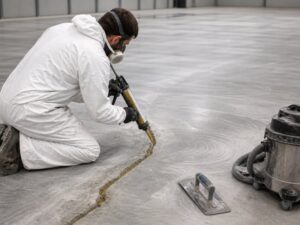
The single most critical step in any flooring project is surface preparation. The concrete substrate must be mechanically profiled, typically via shot-blasting or diamond grinding, to achieve a Concrete Surface Profile (CSP) of 3. This creates a surface that the primer and coating can mechanically key into. Failing to adequately prepare the surface is the primary cause of premature coating failure, leading to delamination and peeling.
9.2 A Practical Maintenance Schedule
- Diariamente: Sweep or auto-scrub the floor to remove FOD, dirt, and dust. The reflective nature of the floor makes this process quick and efficient.
- As Needed: Clean up all chemical spills immediately. Although the floor is chemical-resistant, long-term, prolonged exposure should be avoided to maximize the life of the topcoat.
- Annual Inspection: Conduct a thorough inspection for any signs of wear, damage around lift pads, or areas where the topcoat may be thinning.
- Reaplicação do revestimento: With proper care, a high-quality system can provide 10 to 15 years of reliable service. A light, sacrificial recoat of the polyurethane topcoat every 5-7 years can restore its gloss, refresh its chemical resistance, and extend the entire system’s lifespan significantly.
10. Common Causes of Hangar Floor Coating Failure
Understanding why coatings fail is just as important as knowing what makes them successful. Avoiding these common pitfalls will save time and money.
- Poor Surface Preparation (The #1 Cause): Installing any coating over a contaminated or inadequately profiled floor will inevitably lead to failure.
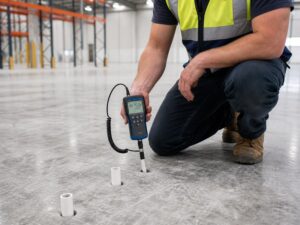
- Moisture Vapor Transmission: Concrete is porous. If moisture is migrating up from the ground, it can create vapor pressure that forces the coating off the slab. Proper testing (e.g., a Calcium Chloride test) is mandatory.
- Incorrect Product Selection: Using a standard industrial epoxy in a hangar that sees Skydrol spills will result in a degraded, sticky surface within months.
- Inadequate Curing Time: Rushing the recoat schedule or returning aircraft to the hangar before the coating has fully cured can lead to marking, uneven cure, and failure.
11. Frequently Asked Questions About Hangar Flooring
Q: What is the best floor coating for aircraft hangars?
A: The best floor coating for aircraft hangars is usually a chemically resistant epoxy and polyurethane system. Epoxy provides strong adhesion and structural protection, while polyurethane improves UV resistance, flexibility, gloss retention, and wear performance.
Q: What type of flooring is best for aircraft hangars?
A: The best flooring is a multi-layer system consisting of a penetrating primer, a high-build epoxy or polyurethane basecoat, and a UV-stable, Skydrol-resistant polyurethane or polyaspartic topcoat.
Q: Can epoxy flooring withstand Skydrol hydraulic fluid?
A: Standard epoxy cannot. Only specially formulated, chemically-resistant epoxy systems are designed to withstand Skydrol. For maximum protection, a polyurethane topcoat is often specified.
Q: Can aircraft hangar floors use epoxy coating?
A: Yes. Epoxy flooring is widely used in aircraft hangars when formulated for aviation chemical exposure. Many high-performance systems combine epoxy base layers with polyurethane topcoats for improved UV and Skydrol resistance.
Q: What is the best coating for aircraft maintenance facilities?
A: A hybrid epoxy and polyurethane flooring system is commonly preferred because it combines concrete adhesion, chemical resistance, impact resistance, and long-term durability.
Q: How long does aircraft hangar floor coating last?
A: With proper installation and regular maintenance, a high-performance resinous system can last 10 to 15 years before requiring a full recoat.
Q: How thick should an aviation hangar floor coating be?
A: Typical aviation hangar flooring systems range from approximately 20 mils (0.5 mm) for thin protective coatings to several millimeters for heavy-duty resin systems. The specific thickness depends on the expected load and chemical exposure.
Q: How much does aviation hangar flooring cost per square foot?
A: The cost is project-specific. Basic epoxy ranges from $3 to $8 per square foot. An epoxy + polyurethane hybrid system ranges from $5 to $12 per square foot. Heavy-duty or polyaspartic systems can cost from $8 to $18+ per square foot.
Q: What causes hangar floor coating failure?
A: The most common cause is poor surface preparation, followed by issues with moisture vapor transmission and incorrect product selection for the specific chemical environment.
Need a Skydrol Resistant Aircraft Hangar Flooring Solution?
Kaida Paint develops high-performance epoxy and polyurethane flooring systems for aviation maintenance facilities, industrial plants, and chemical-resistant applications.
Our technical team can help you select:
- The optimal resin system for your specific chemical and mechanical loads.
- The appropriate chemical resistance level for your operational fluids.
- The right anti-slip requirement for personnel safety.
- The correct floor thickness for your anticipated aircraft traffic.
- A practical, long-term maintenance and recoating plan.
Sobre a KAIDA PAINT
Kaida Paint specializes in the development and manufacturing of high-performance epoxy and polyurethane flooring systems. Our products are designed for demanding environments, including aircraft maintenance areas, manufacturing facilities, and chemical processing plants.
Our systems are formulated to support aviation facility requirements, including chemical resistance, slip resistance, durability, and maintenance safety expectations. We provide technical documentation and installation support to assist specifiers and contractors.


 English
 Spanish
 Portuguese
 Arabic
 French
 Italian
 Russian
 Indonesian
 Swedish