A food grade flooring manufacturer can be a formulator with its own reactors, a blender that buys bases and mixes them, or a trader that never sees the product. All three can quote, and only one of them can answer a technical question about a batch.
Buyers usually discover the difference after the first shipment, when a colour is slightly off or a certificate does not match the drums. The checks that separate the three take a week and cost almost nothing.
This article covers what Chinese suppliers actually provide, the three types of company you will meet, the documents worth verifying, and the commercial terms that decide whether a first container is a trial or a mistake.
What Chinese manufacturers actually supply
The country supplies the full range: commodity epoxy for warehousing, high-build polyurethane, cementitious urethane for food plants, and MMA for cold rooms. Quality ranges from excellent to unsuitable, and price tracks that range closely.
For a food plant, the relevant segment is small. A food grade flooring manufacturer that genuinely makes a 6 to 9 mm cementitious system with third-party test data is a different business from one that sells a 300 micron coating and calls it heavy duty.
Geography matters less than capability. The main coatings clusters are in Guangdong, Jiangsu, Zhejiang and Shandong, and a well-run plant in any of them will outperform a poorly run one elsewhere.
A food grade flooring manufacturer that also exports to Europe usually holds the test reports those markets demand, and that is a useful proxy when you are comparing suppliers for a food plant. The same company is often the better asia flooring supplier for a buyer who needs documentation more than price.
What varies most is documentation. Formulation capability is widespread; export-grade paperwork, in the buyer’s language, with batch traceability, is not.
Three supplier types: formulator, blender, trader
A formulator develops and produces its own systems, and can change a formulation for a requirement. A blender buys base resins and mixes finished product, and can often meet a specification but not modify it. A trader buys and resells.
All three are legitimate. The problem is when a trader presents itself as a manufacturer and the buyer relies on that in a factory audit. The certificate belongs to a factory you have never contacted.
A simple test: ask who signs the certificate of analysis. A formulator signs with its own laboratory; a blender often signs with the base supplier’s; a trader forwards a document from a third party.
Import buyers need a COA per batch, a packing list per container and a safety data sheet in their own language. A first import resin flooring order rarely arrives with that set, because a factory audit that only sells locally may never have produced it.
A second test: ask what happens if a batch is out of specification. A formulator can describe the deviation and the rework; a trader can only apologise.
Table 1: The three supplier types, and what each can do.
| Jenis | Can | Cannot |
|---|---|---|
| Formulator | Develop, modify, sign COA, trace batches | Always the cheapest |
| Blender | Mix to a given formulation, pack, ship | Modify chemistry or explain a deviation |
| Trader | Source, consolidate, handle paperwork | Answer technical questions about a batch |
Certification and testing you can verify
Three documents carry most of the weight: an ISO 9001 certificate with a scope, third-party test reports naming the standard, and a safety data sheet in the destination language.
A factory audit should include one unannounced element, even if it is only a video call at a time the supplier does not choose. Surprise is what separates a working system from a tidy folder. A food grade flooring manufacturer that cannot give you the issuer’s name and a certificate number is asking you to take it on trust, which is not what a factory audit is for.
Test reports should name the standard, the specimen and the build-up, the conditions and the date. A report for a 3 mm system does not describe a 6 mm floor, and the difference is where claims fail.
Table 2: Documents to compare between two suppliers.
| Document | What to compare |
|---|---|
| COA | Batch number, tested properties, limits |
| Test report | Standard, specimen, conditions, date |
| SDS | Language, sections 3, 8 and 13 |
| Label | Batch field, hazard marks, importer details |
Export documentation and testing are related, because the report is usually the document that customs or the customer asks for first. A supplier who can produce a report with a standard number and a date within a day is organised; one who sends a certificate of analysis for a different product is not.
Ask whether the testing was done in-house or by an accredited laboratory. Both are useful, but only one can be shown to a customer’s auditor without a caveat.
Language, SDS and label obligations
The SDS must be written in the language of the destination market, and it is the importer’s legal obligation as well as the supplier’s. An English-only sheet is a compliance gap that appears at customs or at the site induction.
Labels have to carry the product name, the batch number, the production date, the hazard symbols and, for a private label order, your company details. A missing batch field is a traceability failure, not a printing error.
The label also carries the batch number, and that number is what ties the drum to the COA. A supplier who prints labels in advance, before the batch exists, cannot fill that field honestly, and the traceability chain breaks at the factory gate.
Ask for a sample label with the fields filled in before the first production run. A food grade flooring manufacturer that has never printed a compliant label for your market will produce one that is nearly right, and nearly right is a rejected container.
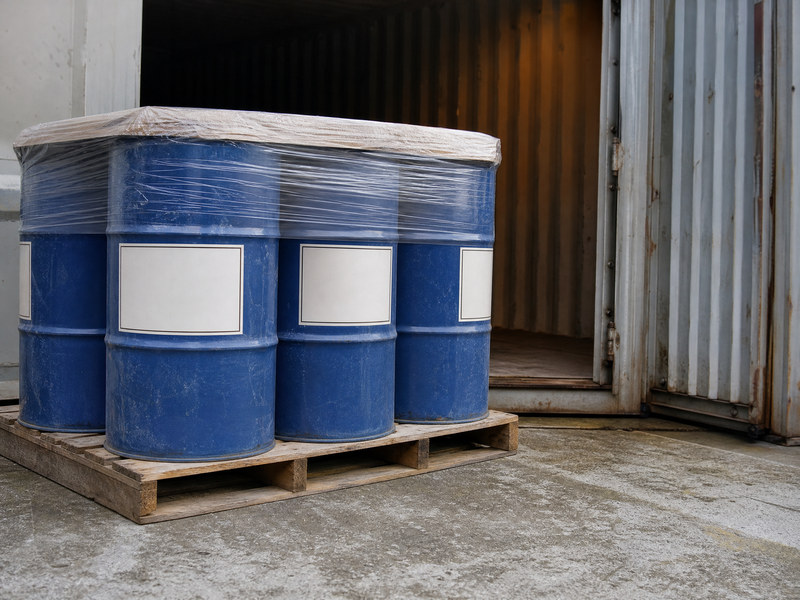
Figure 1: The drum and its paperwork have to point at the same batch. Untied, the COA describes a batch nobody can identify.
Sampling before a container
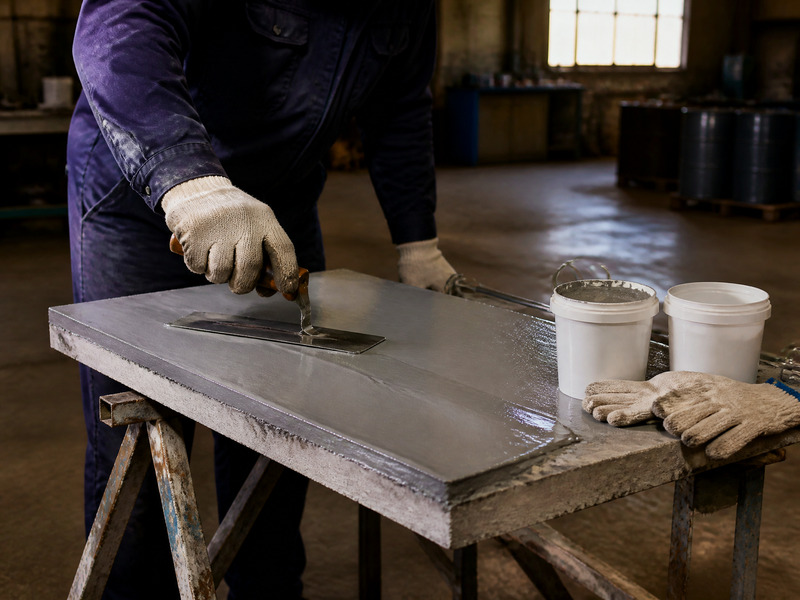
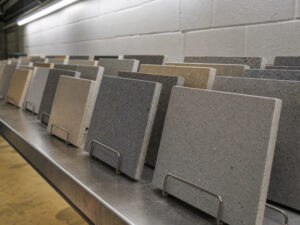
Figure 2: A trial kit answers the question a colour sample cannot: can this material be laid at the specified thickness?
Sampling is the only way to judge workability on an import resin flooring order, and a sample policy that stops at a colour chip has tested almost nothing that matters. A cured coupon tells you the colour and the texture; a trial kit tells you whether your installer can lay it at the thickness the data sheet claims.
A sample policy should be agreed before anything else. Stock samples are cheap and prove colour; made-to-order samples prove the product, and those are the ones worth paying for.
Ask for the sample to carry a batch reference and a date. A sample without either gives you nothing to check the delivery against.
Untuk private label project, sample the label as well as the product. The export documentation for a first shipment is easier when the artwork has already been through a print run.
A sample policy that credits the sample cost against the first order is common and worth asking for, but it should be in writing before the sample ships rather than negotiated after the invoice.
A trial kit is often the most useful first purchase: enough material for a small area, with the data sheets, so your installer can judge workability rather than just colour.
Incoterms, payment and inspection
Ask for the lead time from PO to loaded container in writing, and check it against the sailing schedule rather than against the promise. A lead time that fits the factory but misses the vessel is not a lead time, it is a fortnight in a warehouse. FOB is usually the right first term, because it puts the container on board and leaves the freight decision to you. CIF is convenient but obscures the freight cost, which matters when comparing asia flooring supplier quotes.
The incoterms also decides who arranges the inspection, which is why the term belongs in the first email rather than the last. Payment is usually a deposit with the balance against documents. For a first order, a pre-shipment inspection with photographs of labels and batch numbers costs little and closes most of the risk.
An export documentation set should be agreed at the same time as the delivery term, because a term like FOB changes who files what. A missing certificate of origin discovered at destination is an expensive way to learn the difference. A supplier who offers its own inspection is offering a service, not an assurance, and the distinction matters on the first container.
The incoterms should be stated per shipment rather than per contract, because a change of port or forwarder happens between orders and the term has to move with it.
Where the order is large, consider a letter of credit rather than a transfer. It costs a percentage and it converts a trust problem into a document problem, which is easier to solve.
Container loading and shelf life
The container is also the unit of risk on a first import resin flooring order. One pallet of samples and a container of production are different commitments, and the loading plan is what makes the second one predictable.
A 20ft container takes about 18 to 20 tonnes, and resin products reach the weight limit before the volume. The loading plan should show pallet dimensions, gross weight and stack height.
The container loading plan should also account for where the container sits. A box loaded near the door of a hot terminal heats more than one buried in a stack, and resin does not forget a week at 50 °C. Most epoxy and polyurethane systems have 12 months from production, and container loading in a hot container for six weeks eats into that before the product reaches your warehouse.
Plan the lead time around the shelf life, not the other way round. A asia flooring supplier that ships in the hottest month should either use a reefer or accept a shorter usable window on arrival.
An export documentation check on arrival is worth doing before the pallets are put away. Compare the label date with the COA and photograph both, because a discrepancy found later is harder to attribute.
Table 3: What to check when the container is opened.
| Check | Pass looks like |
|---|---|
| Labels | Batch and date filled in, language correct |
| Drums | No dents, no leakage, seals intact |
| Pallets | Strapped, edge protected, heat treated |
| Documents | COA matches drum batch numbers |
Questions that separate a factory from a trader
An asia flooring supplier who answers them slowly is not necessarily hiding anything, but the pace of the answers tells you how many people are involved, and that is useful when a batch goes wrong.
Before comparing two quotes for a container loading, check that both are quoting the same pack size. A price per kilogram in drums and one in pails are not comparable, and the difference is often the whole apparent saving.
- Who formulates the product?
- Which reactor or mixer makes it?
- Who signs the COA?
- What is the batch size?
- What happens if a batch fails specification?
A formulator answers all five in a paragraph. A trader answers the first two vaguely and the last three not at all, usually by offering a discount.
An incoterms that nobody on your side can explain is a term you have accepted without understanding, and that is where demurrage and clearance costs appear.
Add a sixth: can we see the plant on video, with the batch records in shot. A food grade flooring manufacturer that agrees and shows a working line is telling you more than any brochure, and one that refuses has told you something too.
One last check costs nothing: ask each supplier for the name of a customer in your region and a contact who will take a call. A factory can usually provide one, and the conversation that follows tells you more about service than any document in the folder. Ask the reference which shipment slipped and why, because that answer is where the useful information is.
None of this requires distrust. It requires the same evidence you would ask of a European supplier, applied consistently, and a willingness to walk away from a price that cannot be explained.
Frequently asked questions
How do I find a genuine food grade flooring manufacturer in China?
Ask who formulates the product, which plant makes it, who signs the COA and what the batch size is. A formulator answers all four; a trader usually answers none of them.
Is Chinese resin flooring suitable for a food plant?
It can be, where the system is a genuine 6 to 9 mm urethane or a tested epoxy and the documentation is complete. The risk is documentation and traceability, not chemistry.
What Incoterm should I use for a first order?
FOB is the simplest, because it separates the product cost from the freight and makes supplier quotes comparable. CIF hides the freight inside the price.
How long is shelf life on resin flooring?
Usually 12 months from production for epoxy and polyurethane systems. A hot container crossing in summer can consume weeks of that before arrival.
Do I need a pre-shipment inspection?
For a first container, yes. Photographs of labels and batch numbers, checked against the COA, cost little and close most of the risk.
What documents should arrive with the container?
Packing list, certificate of analysis matching the drum batch numbers, safety data sheet in the destination language, and the invoice, all consistent with each other.
Can I private label a Chinese system?
Yes, and it is common. Agree the label artwork, the batch field and the COA format before production, and check whether the certificate can be issued in your brand name.
Why food plants work with Kaida Paint
Kaida Paint formulates and manufactures epoxy, polyurethane, cementitious urethane and MMA systems for food and beverage plants, and supplies them as finished systems or as OEM and private-label production for distributors. Every batch ships with a certificate of analysis and a batch record, TDS and SDS are issued in the buyer’s language, and we will show the plant and the batch records on video before a first order.
If you are comparing a food grade flooring manufacturer, ask each one the five questions in section eight and compare the answers, not only the price.


 English
 Spanish
 Portuguese
 Arabic
 French
 Italian
 Russian
 Indonesian
 Swedish