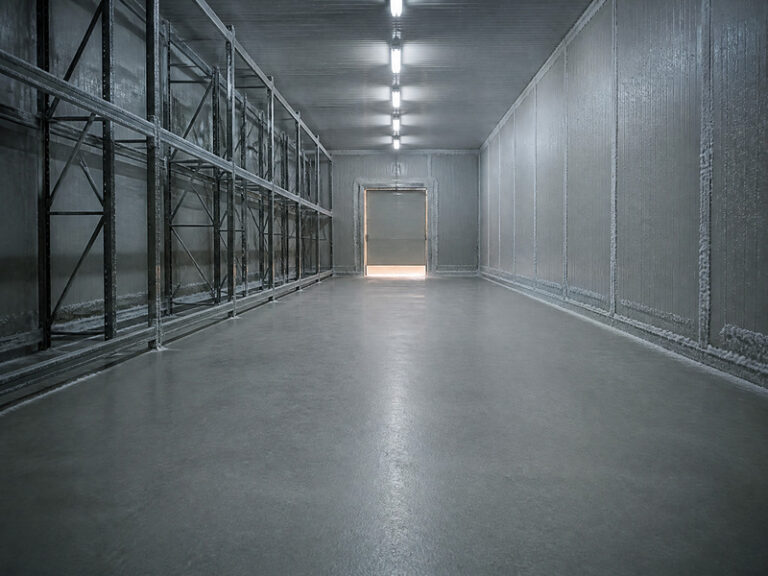
Cold storage flooring is not a warm-room system with a lower temperature on the data sheet. Below zero, the cure chemistry, the moisture behaviour and the slip risk all change, and the details at panels and thresholds decide whether the floor survives its first defrost.
Three variables separate a chilled room from a blast freezer: the temperature the floor must cure at, the rate of temperature change it must absorb, and how long the room can be out of service. Those three pick the system.
This article covers each room type, the cure question, freeze-thaw and ice, panel junctions, slip in a dry cold room, and how a freezer floor is repaired without emptying the store.
What changes below zero
Temperature changes three things at once. Resin viscosity rises and cure slows, any water in the substrate or the air becomes ice or liquid at the worst moment, and the surface that was safe when wet becomes dangerous when frosted.
The result is that a cold storage flooring specification has to answer questions a warm-room specification never asks: at what temperature will the material cure, how is condensation controlled during the work, and what happens at the first defrost.
Moisture is the dominant risk. A slab at -18 °C cannot be dried, and warm humid air entering the room condenses on every cold surface, including a freshly primed floor.
A blast freezer flooring specification also has to describe the door zone, because that is where the temperature swings hardest and where ice first appears.
That is why the programme matters as much as the product. A cold room flooring installed in a room that is warming up behaves differently from one installed in a room that is being held cold, and the difference shows up at the bond line.
Chilled rooms, freezers and blast freezers are three different jobs
A chilled room at 2 to 8 °C is close to a normal wet process environment. Standard systems cure, thermal movement is modest, and the main issues are washdown and drainage.
A freezer at -18 to -25 °C is a different problem. The floor must either be installed during a shutdown with the room warmed, or installed cold with a system that cures at that temperature.
A blast freezer is harder again. It swings from -35 °C to ambient during defrost, often several times a week, and the floor at the door and under the evaporator takes the steepest gradient in the building.
The -20 °C often quoted for MMA is an installation window, not a service temperature limit; the blast freezer is served by a system detailed for -35 °C and for the defrost cycle.
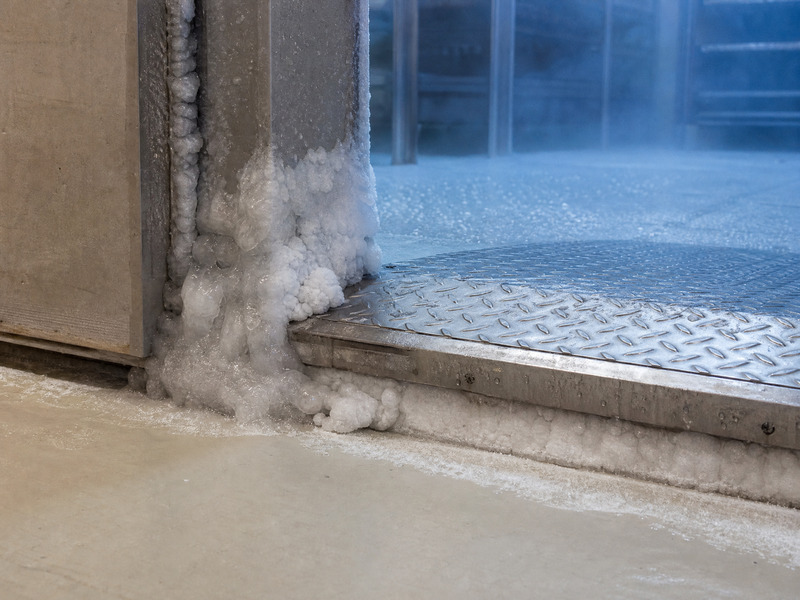
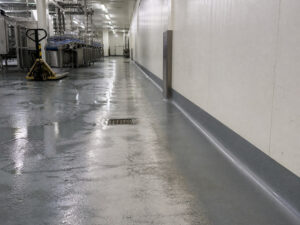
Figure 1: The blast freezer door threshold sees the widest temperature swing in the plant, and it is where most cold-store floors fail first.
In practice, a freezer floor system is chosen on three numbers: the room temperature during installation, the coldest service temperature, and the number of defrosts per week.
A blast freezer flooring enquiry usually starts with the defrost log, because the number of cycles predicts the detail life better than the room temperature does.
So blast freezer flooring is a specification about thermal range and cycle count, not about square metres. Two rooms of the same size can need different systems because one defrosts daily and the other does not.
Table 1: The three cold room types and what each one demands.
| Room | Suhu | Main demand | Typical system |
|---|---|---|---|
| Chilled | 2 to 8 °C | Washdown, drainage | Polyurethane 3-4 mm |
| Freezer | -18 to -25 °C | Cure temperature, ice | Low-temperature MMA or PU |
| Blast freezer | -35 °C to ambient | Thermal cycling, threshold detail | MMA 4-6 mm with flexible detail |
Low-temperature cure: what actually cures at -20 °C
Standard epoxy does not cure below about 10 °C. Below that, the reaction stops or proceeds so slowly that the floor is still soft when traffic arrives, and a soft floor is a floor that will fail.
Two families work for cold storage flooring at that temperature. MMA cures by a peroxide-initiated reaction that does not depend on ambient temperature, and some polyurethane systems are formulated to cure at low temperature with acceptable strength gain.
A low temperature cure claim should state the temperature, the time to walk-on and the time to full chemical resistance, because those three are not the same. A floor that can be walked on in two hours may take days to reach full strength.
For a blast freezer, low temperature cure is not a preference but the only route that avoids a full shutdown, and it has to be proven in the room rather than on paper.
A cold-cure system still needs a dry substrate. If ice sits in the pores, the cure will trap it and the floor will fail at the first cycle, whatever the data sheet promised.
The practical test is a trial patch in the actual room, at the actual temperature, with the actual substrate moisture. A laboratory result at -20 °C on a dry sample does not describe a floor over a slab with ice in the pores.
Freeze-thaw and ice adhesion
Water expands when it freezes, and any water that reached the bond line will push the floor off from underneath. That is why freeze thaw cycling is a bond problem before it is a surface problem.
Ice adhesion is the second mechanism. Ice that forms on the surface and is then scraped or walked on pulls at the film, and a rigid system loses its top layer in flakes over a season.
Freeze thaw cycling is what turns a small defect into a large one: water enters, expands, and lifts the film a little further each time the room comes back to temperature.
Flexible binders handle both better. A polyurethane or MMA system moves with the substrate and releases ice with less damage, which is why a freezer floor system in a freezer is usually a flexible system rather than a hard coating.
The third mechanism is salt. Where de-icing salt is used at a door or on a ramp, the chloride load attacks the surface and any exposed steel, and a cold storage flooring specification at that threshold should say so.
Insulated panel junctions and heated thresholds
Cold rooms are built from insulated panels that move with temperature, and the floor meets them at an insulated panel junction that is permanently at the coldest point in the room.
An insulated panel junction detail has to do three things: allow movement without cracking the resin, keep water out of the panel base, and give the cove something to finish against. A rigid cove butted to a panel does none of them.
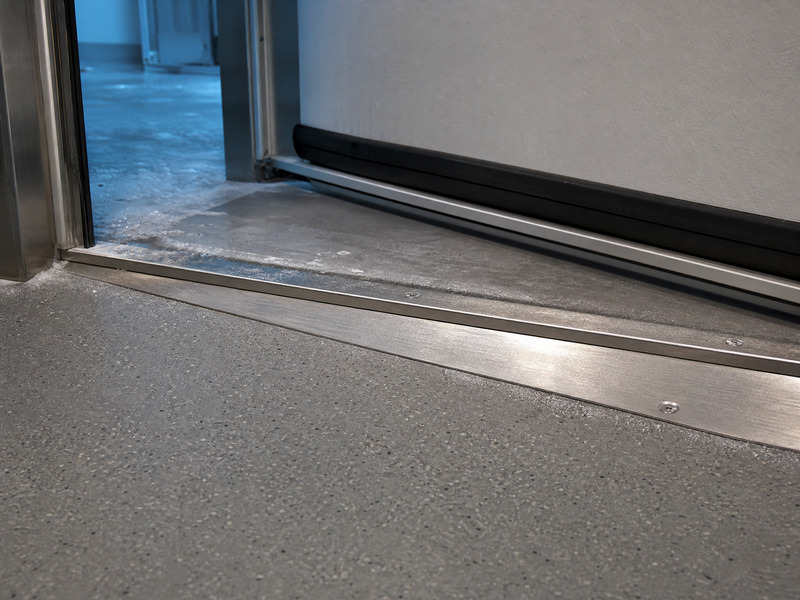
Figure 2: The threshold is the busiest and the coldest detail in the room. It needs heat, a fall and a grip finish.
At door thresholds, a heated strip or a thermal break keeps the floor above freezing and stops ice forming where the door runs. Without it, the threshold becomes a chipped, wet, slippery strip within a season.
An insulated panel junction that is sealed but not free to move will crack at the first defrost cycle, and the crack will run along the panel line rather than across the room.
The same logic applies where a cold room flooring meets a warm corridor. The transition is where moisture forms, and moisture on a cold floor at a warm door is the most common cause of slip incidents in a cold store.
Slip resistance in a dry cold room
Slip in a cold storage flooring project is not the same problem as slip in a wet process room. The floor is usually dry, the risk comes from frost, ice chips and wet air at doors, and the standard wet test does not describe it.
That is why anti slip at minus is a detail question rather than a class question. A textured surface helps at the door and on ramps, and works against cleaning in the middle of a room where nothing spills.
A practical approach is to specify the class by location: a higher class at doors, ramps and defrost zones, a moderate class in the field, and a smooth finish where pallets and trolleys run. One class everywhere is either slippery somewhere or hard to clean everywhere.
Anti slip at minus is therefore a door-and-ramp specification, not a whole-room number.
Where ice is expected, the answer is often drainage and door management. A ramp gradient is part of anti slip at minus as well, because a coarse ramp grips better and is harder to clear.
Drainage and door management buy more grip at the door than a coarser surface does, because a freezer floor system that lets water leave the room has less ice to form in the first place.
Repairing a freezer floor without a full defrost
A freezer floor repair usually happens because the store cannot be emptied. That constraint drives the method: fast-cure systems for cold rooms, small bays, temporary insulation and a fast return to temperature.
The sequence is to isolate a bay with temporary panels, keep the rest of the store at temperature, remove the failed floor and any ice, and install a system that cures at the room temperature. A low temperature cure system is not optional here.
Controlling condensation during the work is the hardest part. Warm moist air entering the bay will condense on cold surfaces, so the temporary enclosure has to be sealed and the air kept dry.
In a live store, freeze thaw cycling continues in the bays next door, so the temporary enclosure has to keep moisture out as well as cold in.
Returning the room to temperature too quickly is the classic error. The new floor needs a controlled ramp, or the thermal gradient will crack it before it has developed strength.
Table 2: Cold-store repair sequence, and the failure each step prevents.
| Langkah | Action | Prevents |
|---|---|---|
| 1 | Isolate the bay, seal the enclosure | Condensation on cold surfaces |
| 2 | Remove floor and ice to sound substrate | Freeze-thaw damage at the bond line |
| 3 | Dry or prime for the substrate condition | Ice in the pores |
| 4 | Install cold-cure system in one pass | Cold joints and trapped moisture |
| 5 | Ramp the room back to temperature | Thermal cracking of a green floor |
System table by room type
With the three variables fixed, the system choice follows. The table below is the one we use for a first pass, before the substrate survey and the programme are known.
For a freezer, the freezer floor system is usually MMA at 3 to 4 mm or a flexible polyurethane, with a heated threshold and a movement detail at every panel. For a blast freezer, the same family with a thicker build at the door.
Chilled rooms can use a standard polyurethane or a uretan yang disemen where washdown is heavy. A cold storage flooring system in a chilled room does not need cold-cure chemistry, and paying for it is a common waste.
Where the room is being converted rather than built, the existing cold room flooring condition decides more than the target specification does. A floor with ice damage needs removal, not an overlay.
Table 3: Cold storage flooring by room, with build-up and detail.
| Room | Sistem | Ketebalan | Detail |
|---|---|---|---|
| Chilled 2-8 °C | Poliuretan | 3-4 mm | Cove 75 mm, drain collar |
| Freezer -18 °C | MMA or low-temp PU | 3-4 mm | Panel movement joint, heated threshold |
| Blast freezer | MMA | 4-6 mm | Reinforced threshold, ramp detail |
| Door threshold | Same as room | As room | Heated strip, anti-slip finish |
A cold storage flooring schedule should list the insulated panel junction and the threshold as separate line items, because they are the first items a contractor drops.
In a working store, the repair sequence is often repeated bay by bay over several weeks, and each bay needs its own acceptance record.
Two acceptance tests for a cold store floor matter in the cold: adhesion, tested after the floor has been at service temperature for a week, and the flatness and fall at the door, where ice forms first. Test both before the store is reloaded.
Frequently asked questions
Can a floor be installed in a freezer that stays at -20 °C?
Yes, with a cold-cure system such as MMA or a low-temperature polyurethane. Standard epoxy will not cure at that temperature. The work still needs an enclosure to control condensation.
How long before a freezer floor can be reloaded?
Walk-on times of a few hours are possible with MMA, but the floor needs a controlled ramp back to temperature and should not take full pallet traffic immediately. Allow a day for the ramp and the first inspection.
Why do freezer floors blister?
Almost always because water or ice was trapped under the floor. Freeze-thaw then pushes the film off. The cure is removal and drying, not a surface patch.
Does a cold room need a different slip class?
It needs a different approach. The wet test does not describe frost and ice, so specify a higher class at doors, ramps and defrost zones, and a cleanable finish in the field.
What is the detail at an insulated panel?
A movement joint that keeps water out of the panel base and gives the cove a termination. A rigid cove butted to the panel will crack at the first temperature swing.
Can I repair one bay without emptying the store?
Yes. Isolate the bay, seal the enclosure, keep the rest of the store cold, and use a cold-cure system. Seal the temporary walls well, or condensation will undo the preparation.
Is a heated threshold necessary?
Where the door opens to a warm area and ice forms at the threshold, yes. It keeps the floor above freezing, protects the door track and removes the slip risk at the busiest point in the room.
Why food plants work with Kaida Paint
Kaida Paint manufactures MMA, polyurethane, cementitious urethane and epoxy systems for cold stores, freezers and blast freezers, and supplies them as finished systems or as OEM and private-label production for distributors. Each batch ships with a certificate of analysis and a batch record, and TDS and SDS documents are issued in the buyer’s language. For cold storage flooring projects we review the room temperature, the defrost cycle and the panel layout before recommending a system, and we will state the cure temperature the product needs rather than the temperature the room happens to be. If the room cannot be warmed, we will say so before a quotation is issued.
Send the room schedule with temperatures and defrost frequency, and the reply is a system table plus the detail drawings for panels and thresholds.



 English
 Spanish
 Portuguese
 Arabic
 French
 Italian
 Russian
 Indonesian
 Swedish