
Description
CK96 is a four-component, water-dispersed polyurethane cement mortar for concrete and steel floors that have to survive aggressive chemicals and heavy loads. It is laid 3-6 mm thick, reaches full chemical cure in 7 days, and is specified for food processing plants, chemical plants, laboratories and workshops.
What Is CK96 Polyurethane Mortar Flooring?
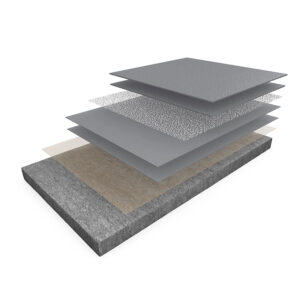
CK96 is a four-component polyurethane cement mortar, water-dispersed and pigmented, applied by trowel to concrete and steel floors. It cures into a load-bearing, chemically resistant floor rather than a coating film: the finished layer is 3-6 mm thick and carries the loads the slab was designed for.
CK96 is a mortar, not a paint and not a thin coating. That distinction is the whole point. A coating film of 0.2-0.5 mm cannot absorb the impact, thermal shock and chemical exposure that a food plant or a chemical plant floor sees every day. The 3-6 mm layer is what gives CK96 its impact resistance and its load-bearing capacity.
Two things follow from that. The substrate has to be strong enough to work with the mortar, and the floor has to be laid thick enough to do its job — which is why the construction thickness is specified rather than optional.
All figures on this page come from the CK96 technical data sheet. Physical properties are tested to JC/T 2327-2015 at 20 degrees C, with samples cured for 28 days.
What Chemicals Does CK96 Resist?
CK96 resists spillages of the chemical classes normally found in food, chemical and pharmaceutical production. The list below is the tested range, not a general claim.
Organic acids – acetic, lactic, oleic and citric acid, the acids commonly found in the food industry.
Inorganic acids – hydrochloric, nitric, phosphoric and sulphuric acid, in both dilute and concentrated form.
Alkalis – dilute and concentrated, including sodium hydroxide up to 50% concentration.
Animal fats and vegetable oils.
Sugars, flavourings and essences.
Mineral oils, kerosene, gasoline and brake fluids.
Organic solvents – methanol, xylene, ethers and chlorinated solvents.
Temperature range. The cured floor resists liquid spillage and discharge up to 65 degrees C, and remains serviceable in freezer areas down to minus 10 degrees C. Hot washdown and deep freeze in the same facility is exactly what food processing plants need, and it is a combination most resin floors cannot hold.
One limitation, stated plainly. With some chemicals, staining or discolouration can occur depending on the nature of the spillage and the housekeeping standard on site. The floor keeps its structural performance; the surface colour may shift. If a visible colour change is unacceptable in your process area, tell us which chemicals are involved and we will check them against the resistance data before you specify.
Which Plants Specify CK96?
Food processing plants – wet or dry process areas, freezers and coolers, and thermal shock areas where hot washdown meets cold surfaces.
Chemical plants – bunded areas, process rooms and plant rooms where spillage is expected rather than exceptional.
Laboratories – floors and spill zones where the chemical range is broad but the volume is small.
Workshops – areas under heavy steel-wheeled traffic, where abrasion and impact decide how long the floor lasts.
Steel decks, overpasses and platforms – properly prepared and supported steel surfaces, where a concrete pour is not an option.
CK96 is not specified for domestic garages, basements, showrooms or kitchens. Those floors are usually better served by a decorative epoxy or a thinner polyurethane coating, and we will say so if that is what your project needs.
CK96 Technical Data
| Propriété | Unit | Valeur |
|---|---|---|
| Résistance à la compression | MPa | >50 |
| Résistance à la flexion | MPa | >15 |
| Résistance de l'adhérence | MPa | >1.7 |
| Full chemical cure | days | 7 |
| Résistance aux chocs | - | Tested to JC/T 2327-2015 |
| Single construction thickness | mm | 3–6 |
| Density, mixed | kg/mm/m² | 2.0 |
| Working life at 20 °C | min | 25 |
| Light traffic at 20 °C | h | 24 |
| Standard | - | JC/T 2327-2015 |
| Standard colours | - | Green (RAL 6001), Red (RAL 3002) |
| Pack size | kg | 26.1 |
CK96 vs CK97
| Propriété | CK96 | CK97 |
|---|---|---|
| Surface | Bright | Matt, with anti-slip particles |
| Composants | Four (A : B : C : D) | Three (A : B : C) |
| Pack size | 26.1 kg | 35.5 kg |
| Construction thickness | 3–6 mm | 5–11 mm |
| Standard colours | 2: green RAL 6001, red RAL 3002 | 4: yellow RAL 1014, red RAL 3002, green RAL 6001, orange RAL 1006 |
| Choose it for | Chemical plants, laboratories, workshops, steel decks and platforms | Wet areas, ramps, walkways and stairs that need grip |
Which one to order: if the floor is judged on chemical resistance and load, choose CK96. If it is judged on grip underfoot, choose CK97. Both are the same mortar system at the same strength, so the decision is about the surface, not about performance.
What Site Conditions Does CK96 Need?
Substrate strength. Concrete compressive strength of at least 25 N/mm2, and a pull-off strength of at least 1.5 N/mm2. Test both before ordering material. A slab that looks sound but fails either figure will take the CK96 layer with it.
Temperature. Substrate temperature and ambient temperature both between +5 and +38 degrees C. The best range for mixing is 15 to 21 degrees C.
Humidity. Relative air humidity up to 85% maximum.
Dew point. The substrate and the uncured floor must stay at least 3 degrees C above the dew point. This is the most common cause of a white bloom on the finished surface in this product family. Where a site cannot hold 3 degrees C above dew point, wait for better weather rather than applying and hoping.
Substrate preparation. Prepare the concrete mechanically, by abrasive blast cleaning or scarifying, to remove cement laitance. Remove weak concrete and expose blow holes and voids. Repair, fill and level with suitable products. Grind down high spots. Remove all dust, loose and friable material by brush and vacuum before application. If in doubt, apply a test area first.
Working life. 25 minutes. When using more than one pack, draw from inventory in batch-number sequence.
Which Substrates Need a Different System?
Substrates CK96 is designed for. Sound concrete, and properly prepared and supported steel surfaces such as steel decks, overpasses and platforms.
Substrates that need a different system. Un-reinforced sand cement screeds. Asphaltic or bituminous surfaces. Glazed tile. Non-porous brick. Tile and magnesite. Copper. Aluminium. Soft wood. Urethane composition. Elastomeric membrane. Fibre-reinforced polyester composites.
Condition requirement. The substrate must be sound. Cracked or unsound substrates need repair first and, depending on the extent, a different system.
If your floor is on the second list, tell us what it is. In most cases there is another KAIDA system that fits.
CK96 Packaging and Storage
CK96 is supplied as a four-component pack totalling 26.1 kg: Part A 2.97 kg, Part B 2.85 kg, Part C 19.78 kg, Part D 0.5 kg.
Mix ratio by weight: A : B : C : D = 2.97 : 2.85 : 19.78 : 0.5.
Stockage : 12 months at +10 to +25 degrees C, in a cool, dry and ventilated store.
CK96 Frequently Asked Questions
Q: How thick is a CK96 floor?
A: 3-6 mm in a single construction. That thickness is what gives the floor its impact resistance and load-bearing capacity, so it is specified rather than optional.
Q: How soon can the floor be used?
A: Light traffic after 24 hours at 20 degrees C, with full chemical cure at 7 days.
Q: Can CK96 be laid on steel?
A: Yes, on properly prepared and supported steel surfaces such as steel decks, overpasses and platforms.
Q: What colours does CK96 come in?
A: Two standard colours: green (RAL 6001) and red (RAL 3002).
Q: Is CK96 anti-slip?
A: The standard CK96 finish is a bright surface and is not slip-resistant. Where grip underfoot matters, specify CK97, the matt grade with anti-slip particles. If you need CK96’s chemical performance and grip on the same floor, tell us and we will confirm the options before you order.
Q: Does CK96 cope with hot washdown and with freezing?
A: Yes. The cured floor resists liquid spillage and discharge up to 65 degrees C, and stays serviceable in freezer areas down to minus 10 degrees C.
Q: What is the difference between CK96 and CK97?
A: The surface and the pack. CK96 is the bright-surface grade in a 26.1 kg four-component pack, laid 3-6 mm. CK97 is the matt, anti-slip grade in a 35.5 kg three-component pack, laid 5-11 mm. Compressive, flexural and bond strength are the same.
Send us the process area, the chemicals that contact the floor, the slab compressive strength and the loads the floor will carry. We will confirm whether CK96 or CK97 is the right system, how much material the job needs, and the price.
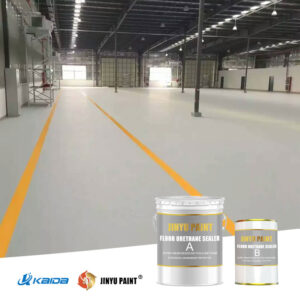
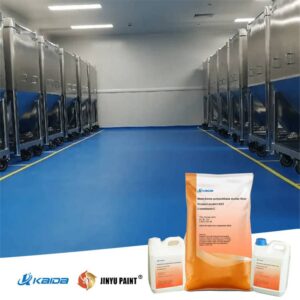
KAIDA PAINT Polyurethane Concrete Motar Flooring Project







 English
 Spanish
 Portuguese
 Arabic
 French
 Italian
 Russian
 Indonesian
 Swedish