Four documents are usually quoted when a polyurethane floor coating is specified: a product standard, a management certificate, a VOC declaration and something described as food safe. Only three of them exist in a form that can be checked.
Three of the four can be checked, and only when the document names the product family and the manufacturing site. The fourth, a food-safe certificate, is not issued for a floor at all, which is why a supplier who offers one is describing a management system rather than a product.
What can a certificate actually prove?
A certificate is a statement by somebody with authority that a defined thing meets a defined standard on a defined date. Remove any of those four and it stops being evidence.
A certificate file for a polyurethane floor coating with twelve logos is harder to assess than one with three documents. Volume is not verification, and the logos usually describe the company rather than the product.
A buyer is usually handed a folder at the first meeting. The useful response is to ask which of the documents inside would still be valid if the factory changed its name, because that question separates product evidence from corporate decoration.
The question is always the same: what exactly does this document cover, and does that include the product in this drum, installed in this building.
Everything below applies that question to the four documents buyers ask about most.
EN 13813: the product standard for resin screeds
EN 13813 is the European standard for screed materials, including synthetic resin screeds. It classifies a product by compressive and flexural strength, wear resistance and, where relevant, shrinkage.
A classification such as C40/F10/AR1 describes strength and wear, not hygiene, not slip and not chemical resistance. It is a materials classification, and it is genuinely useful for comparing two products on the same basis.
Where a supplier quotes the standard, ask for the classification string and the laboratory behind it. A claim of compliance without a class is a claim that cannot be compared with anything.
The classification also fixes the vocabulary for a VOC limit conversation. Where a client asks whether a product is low emission, the answer starts with the test method rather than with an adjective.
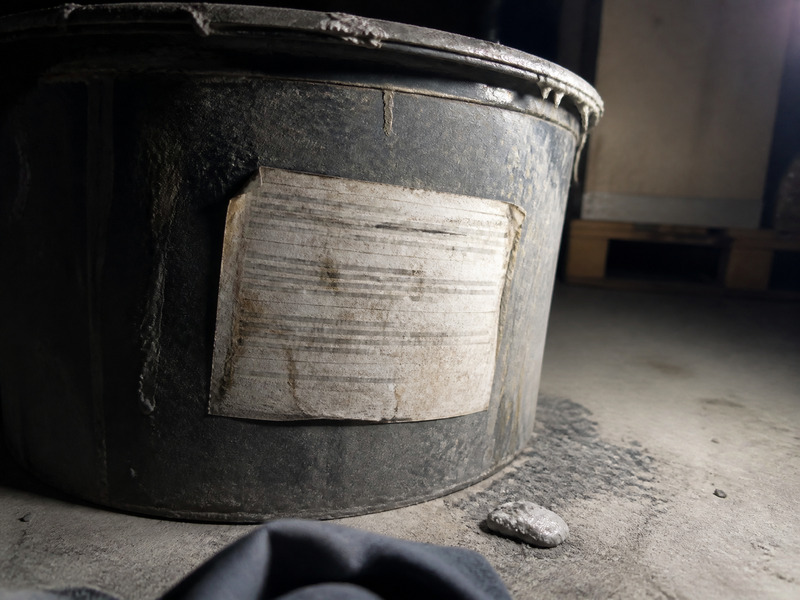
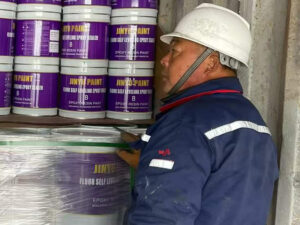
Figure 1: a drum label carrying a full classification string in the standard format.
Table 1: What each part of an EN 13813 classification describes.
| Element | Describes | Does not describe |
|---|---|---|
| C (compressive) | Strength under load | المرونة |
| F (flexural) | Bending strength | Elongation |
| AR (wear) | Abrasion class | مقاومة المواد الكيميائية |
| Class number | Declared value | Hygiene or slip |
ISO 9001 and what a management certificate covers
ISO 9001 certifies a quality management system. It says that a company describes its processes, audits them and corrects failures, and it says nothing about the product in your drum.
That is still valuable. A factory with a functioning system is more likely to have batch records, calibration and a complaint process, and those are the things a buyer needs when something goes wrong.
The failure mode is treating the certificate as a product guarantee. A well-run factory can still make a batch that fails, and the certificate will not help you at that point.
Where a factory has no management certificate, that is not automatically disqualifying. Ask instead for a batch record and a calibration schedule, because a polyurethane floor coating that can produce both is controlling its process whether or not it has been audited by a third party.
The same logic applies to a small manufacturer. A plant with twenty staff can hold a functioning system without paying for certification, and the documents that matter in a dispute are the batch record and the release test rather than the wall certificate.
Ask for the certificate number and check it against the issuing body’s register. Certificates expire, and an expired one is a document about a past state of affairs.
VOC: what the limit applies to
A VOC limit is a regulatory number for a defined product category. For decorative paints and varnishes, the European directive sets limits by type; reactive resin floor coatings are not usually in that category.
That does not make VOC irrelevant. Indoor air quality schemes for flooring exist, and a product with a low solvent content is easier to install in an occupied building.
The practical answer is to ask for the measured value and the method, not the word low. A polyurethane floor coating that quotes a figure without a test method is quoting an impression.
Where a client has an indoor air requirement, specify the scheme rather than the number. Schemes define the chamber test, the reference room and the reporting period, and those are the variables that make results comparable.
The same is true of a HACCP certification claim. Where a supplier quotes a materials certificate, ask which scheme issued it and what the criteria were, because the words hygienic and food safe appear in several schemes with quite different tests behind them.
HACCP, food contact and what is actually certified
HACCP certification is the phrase that causes the most confusion. HACCP is a management system for controlling hazards in a food business. It does not certify a floor, and no authority issues a certificate that declares a resin floor food grade.
What exists is narrower and more useful. A materials certification body can certify that a product meets hygienic design criteria, and a food contact approval can cover a material that genuinely touches food.
A floor is not normally a food contact material. It has to be cleanable, impervious and detailed so that liquid cannot collect, and those are properties of a system rather than of a drum. That system side is covered under food grade polyurethane flooring.
So when a supplier says a product is HACCP approved, ask which document they mean. The answer is usually a materials certificate, which is useful evidence and a different thing from the phrase used.
A food safety question is really a question about cleaning. If a floor can be cleaned to a microbiological standard and detailed so that nothing collects, the requirement is met in practice, and the polyurethane floor coating file should show that rather than a logo.
CE marking and the declaration of performance
CE marking is a construction products mechanism. Where a product is covered by a harmonised standard, the manufacturer issues a DoP stating the declared values and marks the product accordingly.
The declaration is a statement by the manufacturer, not by a third party. It is legally significant and it is not independent verification, which is why a test report from a laboratory is a different kind of evidence.
That matters when a project is exported. A declaration written for one market may not satisfy a customs officer in another, and the supplier is the only party who can reissue it with the correct references.
Read the declared values rather than the mark. A DoP with a low wear class tells you more about a floor than a logo on a drum, and it is the document that a competent contractor will compare line by line.
CE marking does not mean the product is approved for food use, and it does not mean it is suitable for your building. It means the declared values have been stated under a defined system.
Where a project is outside Europe, the equivalent declaration may be a national one or absent entirely. In that case the HACCP certification conversation moves to test reports and batch records, which travel better than a marking scheme.
For a polyurethane floor coating exported outside Europe, the practical pack is the classification, the reports and a batch record. Those three travel with the material, and they answer questions that a marking scheme does not reach.
Where a buyer is comparing two suppliers and both have documents, compare the scope rather than the folder. The one whose certificate names the plant and the product family is the one whose file will still make sense in three years.
Reading a test report properly
A report should name the sample, the method, the laboratory, the date and the result. Without any one of those five it is a photocopy that cannot be compared with another. How those measurements are recorded is described under QC and testing.
Separate type tests from batch tests. A slip or chemical resistance result describes a formulation tested once; a viscosity or adhesion result describes a batch. Both matter and neither substitutes for the other.
Check the sample identification against the product you are buying. Reports for a 1 mm coating are routinely submitted for a 6 mm mortar because both carry the same trade name.
The sample identification is the field to check first. A polyurethane floor coating report that describes a laboratory coupon rather than a production sample is still useful, but it describes a formulation rather than the material in the drum.
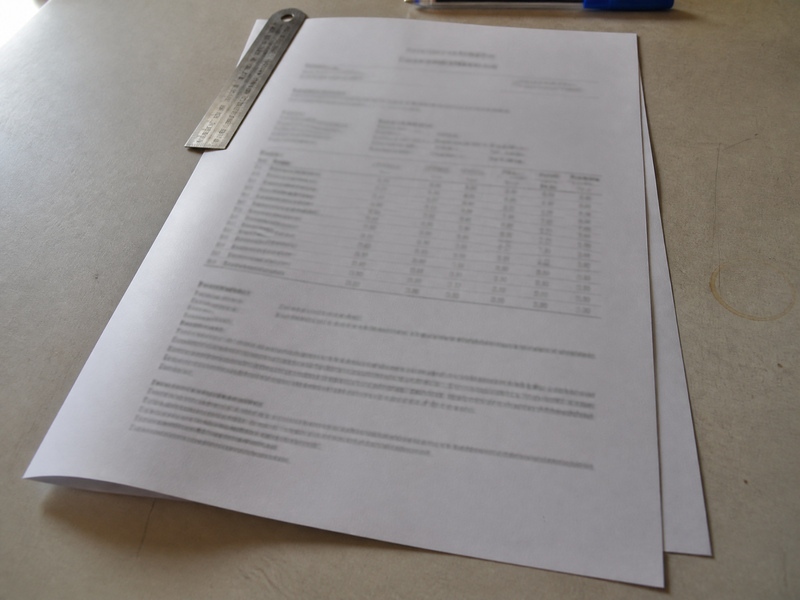
Figure 2: a laboratory report page showing sample identification, method, date and result.
Table 2: Four documents and the question each answers.
| Document | Answers | Cannot answer |
|---|---|---|
| Product classification | Strength and wear class | Hygiene or slip |
| Management certificate | Process control | Product performance |
| Test report | A value on a sample | Consistency of production |
| Declaration of performance | Declared values | Independent verification |
Certificate scope: the field that voids most claims
Certificate scope is the least read and most important part of any certificate. A document that covers a primer rarely covers a mortar, and one that covers a factory in one country does not cover a licencee in another.
Read the scope for three things: the product family, the manufacturing site and the validity dates. A certificate that names a site the material is not made at is a document about a different plant.
Where a supplier is a distributor, ask whose certificate it is. Passing on a manufacturer’s document is legitimate; implying that it is your own is not, and the distinction surfaces at the first claim. Choosing a supplier on that basis is covered under how to choose a manufacturer.
Scope also has a date range. A certificate that expired last year is a statement about the past, and a HACCP certification file assembled from expired documents is one that will fail the first serious review.
The same discipline applies to a CE marking declaration. A declaration issued by a company that does not manufacture the product is a declaration about something else.
Building a certificate file that survives an audit
A workable file has four parts: the product classification, the test reports behind the declared values, the management certificate with its scope, and the batch record for the material supplied.
Keep them in one place and index them. An auditor who asks for the evidence behind a claim should receive one document rather than a search, and the polyurethane floor coating supplier is usually the only party who can assemble it.
That single document also shortens an audit. A file with an index is read in minutes; a file without one is read by asking questions, and the questions always arrive during the busiest week of the year. An indexed file costs an hour to make and saves a week of searching at the moment when nobody has a week to spare.
Update the file when a formulation changes. A certificate pack that describes a product discontinued two years ago is worse than no pack, because it creates an expectation that cannot be met.
A simple index solves it. One page, listing each claim, the document behind it and the date, turns a polyurethane floor coating certificate file into something an auditor can follow in five minutes.
What we hold, and what we do not claim
We hold a product classification under the screed standard, an ISO 9001 certificate for the plant, and test report for slip and chemical resistance on the systems we sell most.
We do not claim that any of these make a floor food grade. We will send the classification, the reports and a declaration for the system you are buying, and we will say which documents we do not hold.
Where a project requires HACCP certification in the plural sense that buyers often mean, the honest answer is that the requirement is met by the installation and the detailing rather than by a certificate.
That is the sentence we would put at the top of any certificate pack. A polyurethane floor coating is judged by what was installed and how it was detailed, and the documents exist to describe the material rather than to replace the inspection.
Table 3: What to request, by project type.
| المشروع | Request | Do not accept in place of it |
|---|---|---|
| Industrial warehouse | Classification and wear class | A logo sheet |
| Food plant | Cleaning resistance and detailing | A food safety logo |
| Chemical area | Resistance table with conditions | A general acid claim |
| Export project | Declaration of performance | A distributor letter |
Frequently asked questions
Is EN 13813 a certification?
It is a product classification standard. A supplier declares a class such as C40/F10/AR1, which describes strength and wear and says nothing about hygiene or slip.
Does ISO 9001 certify the product?
No. It certifies the management system. It is useful evidence of process control and no evidence at all about the batch in your drum.
What is a VOC limit for a floor coating?
A regulatory figure for a defined product category. Reactive resin floors are rarely in the decorative paint category, so ask for the measured value and the method rather than the word low.
Can a floor be HACCP certified?
No. HACCP is a management system for a food business. Materials can hold hygienic design or food contact certification, which is narrower and more specific.
What does CE marking mean on a floor product?
That a declaration of performance has been issued under a harmonised standard. It states declared values by the manufacturer and is not independent verification.
Why does certificate scope matter?
Because a certificate covers a named product family and site. A document for a primer, or for a different factory, does not cover the mortar you are buying.
What should be in a certificate pack?
The product classification, the test reports behind the declared values, the management certificate with scope, and the batch record for the material supplied.
Why buyers work with Kaida Paint
Kaida Paint sends the classification, the test reports and the declaration for the system being bought, and states plainly which documents we do not hold. We would rather answer a certificate question with three accurate documents than with a page of logos that a competent buyer will question. Name the document that is being questioned; we will say what it covers and what it does not.


 English
 Spanish
 Portuguese
 Arabic
 French
 Italian
 Russian
 Indonesian
 Swedish