
Most floors that fail were installed by somebody who had never been shown the detail. Flooring applicator support exists to close that gap, and it is measured in defects avoided rather than in brochures sent.
It has four parts: resin flooring applicator training, on site supervision while the work is running, a named owner for rework responsibility, and a close-out that is signed rather than announced.
This article sets out what each part should include, what an installer certification does and does not prove, and the questions an applicator should ask a manufacturer before taking on a food plant.
Why the applicator decides the outcome
A resin system is a recipe, and a recipe is only as good as the kitchen. Flooring applicator support starts from that fact: the same product can last fifteen years on one slab and nine months on the next, and the difference is rarely the drum.
The variables that matter are preparation, moisture, temperature, mix ratio and time. All five are controlled by the applicator on site, and none of them can be checked by the manufacturer after the event.
In a food plant the margin is smaller still. A blister that would be cosmetic in a warehouse becomes a hygiene finding, because the cavity holds liquid and cannot be cleaned. The cost of a poor installation is measured in audit findings as well as in repair bills.
That is why support is worth more than a discount. A supplier who trains and supervises is protecting their own product from being blamed for someone else’s workmanship, and protecting the plant from a repair it did not budget for.
Training: what a course has to contain
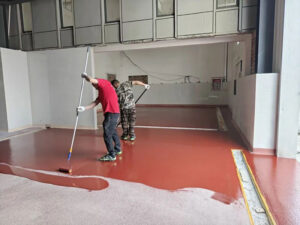
A useful resin flooring applicator training programme spends most of its time on preparation, not on topcoats. Substrate assessment, moisture testing, surface profile and defect repair decide whether the system bonds, and they are the skills a new crew usually lacks.
The second block of resin flooring applicator training is mixing and application: ratio by weight rather than by eye, pot life at the actual site temperature, and the consequence of adding thinner to make life easier.
The third block is the one most courses skip, which is what to do when something goes wrong. A crew that knows how to stop, contain and report a failure mid-pour saves a floor; a crew that keeps going saves an afternoon.
Table 1: What a training programme should cover, and how it is assessed.
| Module | Content | Assessment |
|---|---|---|
| التحضير | Moisture, profile, defect repair | Panel prepared unaided |
| الخلط | Ratio, pot life, temperature | Mix recorded and checked |
| التطبيق | Build-up, cove, finish | Panel inspected to criteria |
| Fault response | Stop, contain, report | Scenario walk-through |
Certificates are issued against assessment rather than attendance. A signature for showing up tells a plant nothing, which is why the practical test should be on a panel the trainee prepared from scratch.
Installer certification: what it proves, and what it does not
An installer certification proves that a named individual passed an assessment on a given date, for a given system. It does not prove that the crew on your project includes that individual, and it does not make a company competent.
Certification schemes also differ in what they test. Some assess a company management system, some assess a person practical skill, and some are commercial listings with an annual fee. Read what the certificate states rather than the logo on the front, because flooring applicator support built on a logo is support for the supplier, not for the plant.
That distinction matters in a tender. A contractor can hold a valid installer certification and send three subcontractors who have never seen the product, which is legal and common.
Ask two questions. Who will be on site, by name and role, and what does the certificate cover. If the answer names a company rather than a person, the document is a membership card, not a competence record.
Certification also has a scope. A certificate for a thin-film coating does not qualify a crew for a six-millimetre screed with a trowelled finish, and the two are different trades in everything but name.
On site supervision: what a supervisor actually does
On site supervision is not a site visit with photographs. A supervisor who arrives, walks the area and leaves has confirmed that the floor is being built; the useful work happens at the start of each shift.
The first job is checking conditions: slab moisture, ambient and surface temperature, dew point and ventilation. A reading outside the declared range stops the pour, and stopping it is the supervisor’s authority.
Who that supervisor is matters as much as what they do. A person employed by the manufacturer has authority over the material; one employed by the applicator has authority over the crew. On site supervision works best when the same person holds both, or when the contract says who decides when the two disagree.
The second is checking what was built yesterday. Edges, coves and any patch repair are inspected before they are covered, because the defects that matter later are the ones that got buried early.
The third is the record. A short daily note with conditions, areas completed and any deviation is what makes a toolbox talk at the end of the week useful rather than ceremonial.
The method statement as a training document
A method statement written for a tender is usually a compliance document. A method statement written for a crew is a training document, and the difference is whether it says what to do when the slab is damp at nine in the morning.
The version that gets used on site has four things: a sequence by area, the acceptance criteria before each coat, the stop conditions, and the name of the person to call.
That document belongs in the toolbox, not in a folder in the site office. Flooring applicator support that stops at submission has trained a reviewer, not an installer.
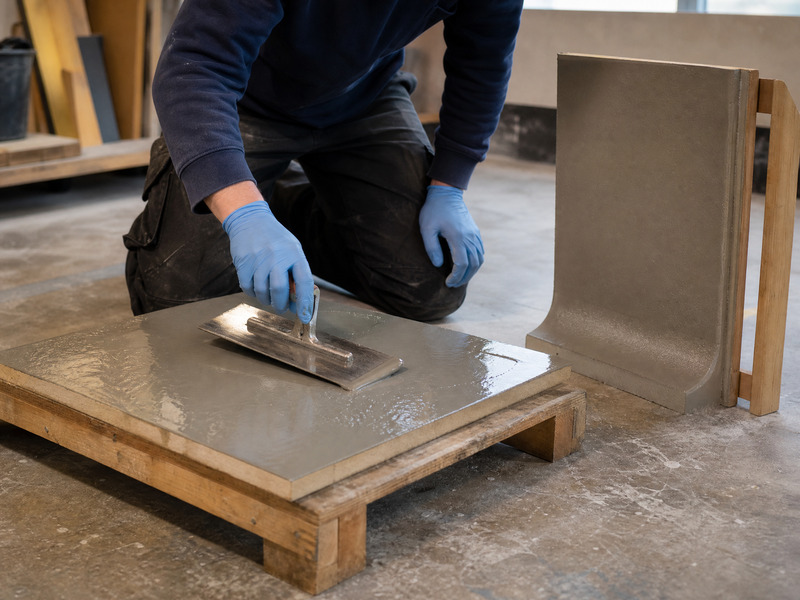
Figure 1: Assessment on a panel the trainee prepared, not on a slide deck.
Toolbox talk: fifteen minutes at the start of a shift
A toolbox talk is the cheapest quality tool in the industry and the first thing dropped when the programme slips. Fifteen minutes on the day’s risk, the detail and the stop condition prevents most of the errors that cost a week.
Flooring applicator support is mostly made of small habits, and the toolbox talk is the smallest of them. Fifteen minutes also sets the tone: a crew told what matters, and why the auditor will look at the cove first, installs differently from one handed a drawing.
Keep it specific. A talk about general site safety is forgotten by the gate; a talk about the cove at bay four, and why it is formed in two passes, is remembered at the trowel.
Record it with names and topics. The record is worth little on its own, but it shows a plant auditor that the crew was briefed on the detail rather than handed a datasheet.
Rework responsibility: who pays when it goes wrong
Rework responsibility is the clause nobody reads at tender and everybody argues about at month six. It should be settled before mobilisation, in writing, with the boundary between material fault and workmanship fault named.
The honest position is that most failures are a mixture. Moisture from the slab and a preparation shortcut produce the same blister, and apportioning blame after the fact costs more than the repair.
A workable split is by cause: material that fails a test supplied by the manufacturer is the manufacturer’s, installation that departs from the agreed method is the applicator’s, and substrate conditions nobody disclosed belong to the client.
Table 2: Who carries the cost, by cause, and the evidence that decides it.
| Cause | Carries the cost | Evidence |
|---|---|---|
| Material off specification | الشركة المصنعة | Batch test record |
| Departure from method | Applicator | Daily site record |
| Undisclosed slab condition | Client or main contractor | Pre-start survey |
| Damage by other trades | Party causing damage | Inspection note |
The clearest orders name a joint inspection within a fixed number of days of a defect being reported, with both parties present and photographs taken. Disputes that reach that inspection are usually settled there.
Write the split into the order, and name the third-party inspection route if the parties disagree. A clause that requires a joint inspection within seven days resolves most disputes by existing.
The snag list and how it gets closed
A snag list is a working document, not a verdict. It should be raised early, walked with the client, and closed item by item with a date and a photograph rather than a verbal assurance.
The items that belong on it are visible defects: pinholes, colour variation, a cove that is not uniform, a joint that stands proud. The items that do not belong are arguments about scope, which need a variation rather than a snag.
Two habits close a list quickly. Photograph each item when it is raised, and photograph it again from the same position when it is closed. The pair ends the argument about whether a repair is acceptable, without a meeting.
Closing the snag list is a precondition for the final walk. A floor handed over with open items stays a project in everybody’s mind, and the retention is held for reasons that have nothing to do with the resin.
Handover: the pack, the walk and the signature
Handover is a small ceremony with a large effect. The client walks the floor, the open items are confirmed closed, and the documents that describe the installed system change hands in a form somebody can find in three years.
Timing matters as much as content. A pack assembled after the crew has left the site is assembled from memory, and the details that look obvious on the day are the ones that disappear from the record first.
The pack should include the as-built system by area, the installer certification of the crew who installed it, the daily records, the cleaning regime and the repair method. None of it is expensive to assemble if it was kept during the works.
Table 3: The documents in a completion pack, and who needs them later.
| Document | Used by | Why it matters |
|---|---|---|
| As-built system by area | Plant engineer | Future repair and extension |
| Crew and certificate | Auditor | Competence on record |
| Daily site records | Warranty claim | Conditions at the time |
| Cleaning and repair method | Hygiene team | Service life |
Keep one copy on site with the current revision marked. A crew working from a superseded revision is a common and entirely avoidable reason for a rejection at the final walk.
The signature matters because it fixes the date. Warranties run from handover, not from the invoice, and a plant that cannot show the date has a guarantee it cannot enforce.
What support looks like after the first project
The test of flooring applicator support is the second project, not the first. A supplier who trains a crew once and disappears has produced a certificate; one who reviews the first job afterwards has produced a capability.
That review should be short and specific: what failed, what was nearly missed, and what the method should say next time. It is also where a manufacturer learns which details its own documentation explains badly.
The list also protects the plant from the cheapest quote. When an approved crew is a condition of the warranty, a low bid from an unknown team stops looking like a saving, and flooring applicator support that ends at the first project is a sales activity.
For a plant, the practical value is a list of approved applicators who have been assessed on this product, with the date of the last review beside each name. That list is worth more at tender than any brochure.

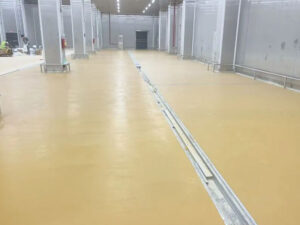
Figure 2: Conditions are checked at the start of the shift, not at the end.
We keep that list, and we update it when a job goes badly as well as when it goes well. An applicator who is removed from it is a stronger signal than one who was never on it.
Frequently asked questions
What does applicator support include in practice?
Four things: training before the first job, a supervisor on site during it, a written split of who pays for repairs, and a close-out process with dates. Anything less is a phone number and a brochure.
How long does a training course take?
Long enough to prepare and finish a panel unaided, which is usually three to five days depending on the system. A one-day session can explain a product but cannot produce a competent hand with a trowel.
Does a certificate mean a crew is approved?
It means a named individual was assessed on a date for a stated system. Approval is a separate decision by the plant, and it should name the people who will actually be on site.
Who pays when a floor fails?
It depends on the cause, which is why the split is written before work starts. Material that fails its own test is the manufacturer’s; a departure from the agreed method is the applicator’s; undisclosed slab conditions belong to the client.
How often should a supervisor attend?
At the start of every shift for the first two days, and at each change of phase afterwards. Continuous attendance is not normally necessary, but unannounced visits are what keep a daily note honest.
What is a snag list for?
It records visible defects so they can be closed one by one with a date and a photograph. It is not a place to settle scope questions; those need a variation, or they delay the close-out.
Can a plant buy material direct and use its own contractor?
Yes, and in that case the split of responsibility matters more, not less. The plant becomes the party between a manufacturer and a crew that has no relationship with each other, which is where most disputes begin.
Why food plants work with Kaida Paint
Kaida Paint treats flooring applicator support as part of the product rather than an after-sales favour. We run resin flooring applicator training for approved crews, attend the first pour on a food plant, and put the split of repair costs in writing before the order. We also keep an approved list per market, updated after every project, and we will tell you when someone has come off it. Send the project location and the system you are considering, and the reply is a training and supervision plan rather than a price list.











 English
 Spanish
 Portuguese
 Arabic
 French
 Italian
 Russian
 Indonesian
 Swedish