
Antimicrobial flooring does exist as a product category, and it does something real. It also does far less than most sales literature implies, and the gap between the two is where food plants waste money and, occasionally, relax a cleaning routine they should have kept.
The additive in most systems is a silver compound that releases ions into the surface film. Those ions interfere with bacteria that land on the floor, but they do not remove soil, they do not reach into a scratch, and they fade as the surface wears.
This article separates what is tested from what is claimed, explains where an additive earns its cost, and sets out how to specify it without turning a floor into a substitute for cleaning.
What antimicrobial means when it is printed on a floor
In a coating, the word describes an additive that is intended to reduce bacterial numbers on the surface. It does not describe a sterile floor, a self-cleaning floor, or a floor that compensates for a weak cleaning regime.
The distinction matters legally as well as technically. A product that kills organisms on a surface is a treated article in most markets, and the claims allowed are narrower than the ones that appear in brochures. Any marketing claim should be traceable to a test, not to an adjective.
A antimicrobial flooring purchase is therefore a decision about margin rather than about compliance, and the margin has to be argued in the room where it will be installed. Where the soil load is high and the drying time is short, the additive has something to work with. For a plant, the practical question is narrower still: does the additive change the hygiene outcome in this room, at this cleaning frequency, with this soil load? That question has an answer, and it usually comes from the cleaning routine rather than the drum.
How silver ion additives work, and where the effect stops
A silver ion flooring system carries the silver compound in the binder or the topcoat. Moisture releases ions slowly, the ions disrupt bacterial cell function, and the surface shows lower counts in a laboratory test.
The effect stops at the surface. A scratch, a worn patch or a joint exposes material that has less additive available, and the numbers rise accordingly. That is why a antibacterial floor limits reading from year one cannot be assumed in year four.
A silver ion flooring system is also not the only formulation on the market, and the alternatives differ in how much silver they release and how quickly they deplete. Ask for the loading, not just the presence. The additive also needs contact time and moisture. A dry floor in a dry bakery gives the ions little to work with, while a wet process room gives them plenty, which is the opposite of where most buyers assume the value lies.
A washdown that removes the surface layer removes some of the additive with it, and the biocide leaching figure for a system is what tells you how much leaves in a year. Release is also a depletion mechanism. Silver leaves the film as it works, and biocide leaching into wash water is the reason the effect declines with cleaning cycles rather than with calendar age alone.
Biofilm is the target that matters, and the additive is not enough
Biofilm is a community of organisms held in a matrix that sticks to a surface. Once it forms, it resists both the biocide in the coating and the detergent in the mop, because the matrix is the protection.
This is the point most marketing claim misses. A surface that reduces planktonic bacteria in a suspension test has not been shown to prevent the matrix, and a biofilm is what a hygiene team actually fights.
A cleanability test run on a swabbed joint, after the shift, is the only measurement that reflects both the additive and the brush. The controls that work on biofilm are mechanical and chemical: a surface that can be scrubbed, a detergent that dissolves the matrix, and a drying cycle that removes the water the community needs. An additive supports those controls; it does not replace them.
A cleanability test done after cleaning, on the same square metre every week, will show whether the routine is working faster than any laboratory report. Where a floor cannot be scrubbed, because the profile is too coarse or the joints are too many, no additive will rescue the hygiene outcome, and no test standard result will change that. Geometry beats chemistry in every audit I have walked.
What the test standards measure, and what they do not
Most test standard used for coatings is a suspension or surface test against one or two organisms, run in a laboratory, on a clean sample, for a stated contact time. That is a legitimate measurement of a material property.
It is not a measurement of a floor. The cleanability test that matters in a plant is done on site, after production, with a swab or an ATP meter, and it measures soil and organisms together. The two tests answer different questions, and a plant that only holds the first will be surprised by the second.
Ask for the organism, the inoculum, the contact time and the method. A claim that names none of them is a marketing claim rather than a result, and a specification built on it will be difficult to defend when an auditor asks what the number means.
Table 1: Three kinds of evidence, and what each proves.
| Evidence | What it proves | What it does not prove |
|---|---|---|
| Laboratory surface test | The material reduces counts under stated conditions | Performance in a worn, soiled floor |
| On-site swab or ATP | The cleaning routine works today | That the additive is responsible |
| Wear and abrasion data | How long the surface keeps its properties | That the additive remains active |
Where an additive earns its cost
A silver ion flooring system costs more per square metre than the same system without it, usually by a small percentage of the installed price. That is not the argument against it; the argument is that the same percentage spent on a drain collar changes more.
There are rooms where the extra cost is defensible. A high-care ready-to-eat area with a known persistent organism, a drainage zone that is hard to dry, and a floor between two hygiene zones are the three that come up most often.
In each case the additive is one part of a package: a smooth cleanable surface, correct falls, a joint detail that can be swabbed, and a cleaning routine that is verified. The additive adds a margin, not a mechanism.
That is the honest test of antimicrobial flooring: does the room have a soil load and a moisture film that the additive can act on?
In a dry store or a warehouse, the same money buys more hygiene as a better cove radius or a better drain. That is not a criticism of the product; it is a statement about where the marginal gain sits in each room. A plant that buys the additive for every room has usually spent the hygiene budget on the easiest place to specify it. An additive that is asked to work in a hygiene zone it cannot reach is simply a line on an invoice. A hygiene zone boundary is decided by airflow, traffic and cleaning method, and an additive on the wrong side of that boundary changes nothing.
Claims worth questioning, and the questions to ask
Three phrases appear in almost every brochure: kills 99.9 percent of bacteria, inhibits growth, and permanently active. Each can be true in a defined test and misleading in a plant, and the difference is in the conditions that are left out.
Ask for the report behind the number, the organism tested, the contact time, and whether the sample was new or aged. A supplier who can answer those four questions is selling a material; one who cannot is selling a marketing claim. The answers also protect the buyer: a claim that cannot be compared is a claim that cannot be challenged later.
A test standard that names the organism and the contact time is worth more than a page of percentages, because it can be compared with the next supplier’s report. Ask also what happens after abrasion. A claim on antibacterial floor limits that survives wear is a different product from one that only holds on a new sample. A statement on antibacterial floor limits that holds for a new sample and fails after 500 cycles is not wrong, but it is not useful for a floor that will see ten years of pallet traffic.
Table 2: Claim, question, and the answer that should end the conversation.
| Claim | سؤال | Weak answer |
|---|---|---|
| 99.9 percent reduction | Which organism, which method, what contact time? | A number without a method |
| Permanently active | What is the result after abrasion? | It is in the binder |
| Approved for food contact | Approved by whom, under which scheme? | It is food grade |
Cleaning is still the control, and the floor should make it easy
Every audit finding I have seen on a floor was a cleaning or condition finding, not an antimicrobial one. The biocide leaching story is the same: what leaves the film is a small quantity of silver, and what stays on the floor is the soil that the mop did not lift. The floor that passes is smooth enough to squeegee, falls to a drain, has coves that can be brushed, and is repaired before a crack becomes a reservoir.
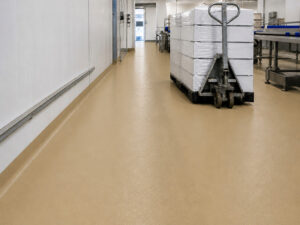
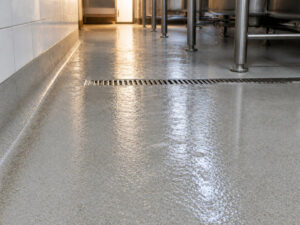
A antimicrobial flooring system helps most when it is also a good floor: a dense, sealed surface with a fine profile, a radius at the wall, and a joint detail that does not trap soil. Those properties are testable, and they survive wear better than an additive does.
Where a plant wants both, specify both separately. One clause for the physical and cleanability requirements, one clause for the additive with its evidence. Mixing them produces a document that cannot be evaluated, and a contractor who is asked to price both in one line will price the cheaper interpretation.
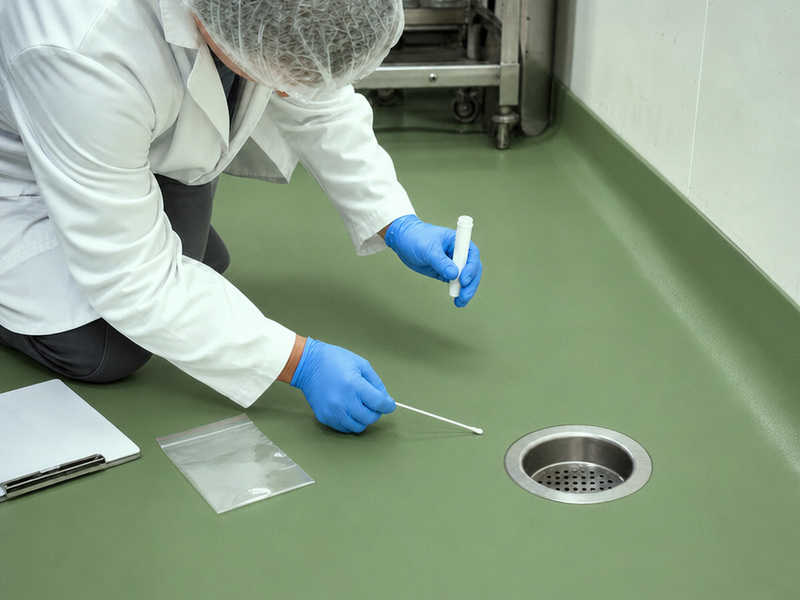
Figure 1: The swab measures the cleaning routine; the additive never shows up in the result on its own.
Specifying antimicrobial flooring without overclaiming
Write the physical requirements first: system family, thickness, profile, cove radius, drain detail and slip class. Those decide whether the floor can be cleaned, and they are the clauses a contractor can price and an auditor can check.
Then write the additive clause with its evidence: the active substance, the test method, the organism, the contact time, and the abrasion state of the sample. Require the report at submittal, not after award.
Finally, write what the floor is not. A line stating that the coating does not replace cleaning, and that the hygiene routine remains the control, protects the plant in an audit and keeps the marketing claim out of the maintenance file.
The same sentence gives the maintenance team a reason to keep the swab log. That log, not the brochure, is the evidence an auditor actually reads, and it is the only record that shows the routine working over months rather than on the day of the visit.
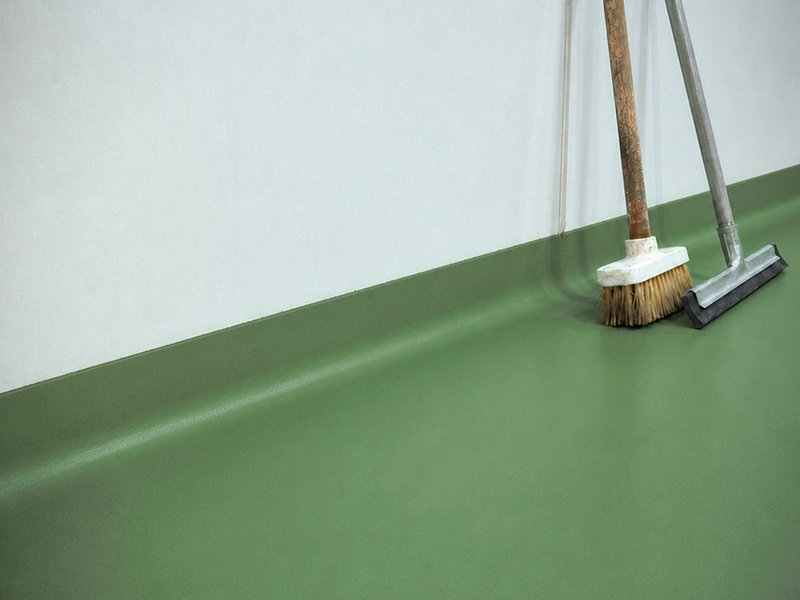
Figure 2: A cove that can be brushed does more for hygiene than an additive that cannot be reached.
Table 3: Where the additive is worth specifying.
| Room | Worth it? | Better spend |
|---|---|---|
| High-care RTE with persistent organism | Yes, as part of a package | Drain detail and cleaning validation |
| Wet process, well drained | Marginal | Falls and cove radius |
| Dry store | لا يوجد | Joint reduction |
| Cold room | لا يوجد | Threshold and defrost detail |
Frequently asked questions
Does antimicrobial flooring kill bacteria?
The additive reduces the number of organisms that land on the surface, under the conditions of a laboratory test. It does not sterilise the floor, and it does not remove the soil that organisms feed on. Treat it as a margin on top of cleaning, not as the cleaning itself.
Is silver ion flooring safe in a food plant?
Silver compounds are used in food-contact-adjacent materials, and the release is small. The questions worth asking are the migration data and the local regulatory position, because both vary by market. A supplier who cannot produce migration data for the destination market has not finished the paperwork.
Does the effect wear off?
Yes. The active substance is released as it works, and abrasion exposes material with less of it available. Expect the effect to be strongest when the floor is new and to decline with cleaning cycles and traffic.
What is the difference between antibacterial and antimicrobial?
In marketing, very little; in a test report, the organism and the method. Antibacterial usually refers to bacteria only, while antimicrobial can include fungi and yeasts. Neither word tells you the contact time, which is the number that matters.
Can antimicrobial flooring replace a cleaning regime?
No, and no supplier should suggest it. A floor that is not cleaned will develop a biofilm regardless of the additive, because the matrix protects the organisms from the biocide. Cleaning is the control; the additive is a supplement. Treat any claim that says otherwise as a warning sign.
Which test should I ask for?
Ask for the surface test used, the organism, the inoculum, the contact time and the ageing or abrasion state of the sample. If the answer is a percentage without those details, the claim cannot be compared with another supplier’s claim.
Is it worth the extra cost in a high-care room?
Sometimes. In a high-care ready-to-eat room with a persistent organism and a floor that is hard to dry, the margin is defensible. In a dry store the same money buys more hygiene as a better cove and fewer joints.
Why food plants work with Kaida Paint
Kaida Paint supplies epoxy, polyurethane, يوريتان أسمنتي يوريتان and MMA systems, with and without silver additives, and we will tell you which rooms in your plant justify the additive. Ask us for the test report, the organism and the contact time rather than a percentage, and we will send the same document we would send an auditor. Where antimicrobial flooring is being considered, the useful conversation starts with the cleaning routine and the hygiene zone layout, not with the drum.

 English
 Spanish
 Portuguese
 Arabic
 French
 Italian
 Russian
 Indonesian
 Swedish