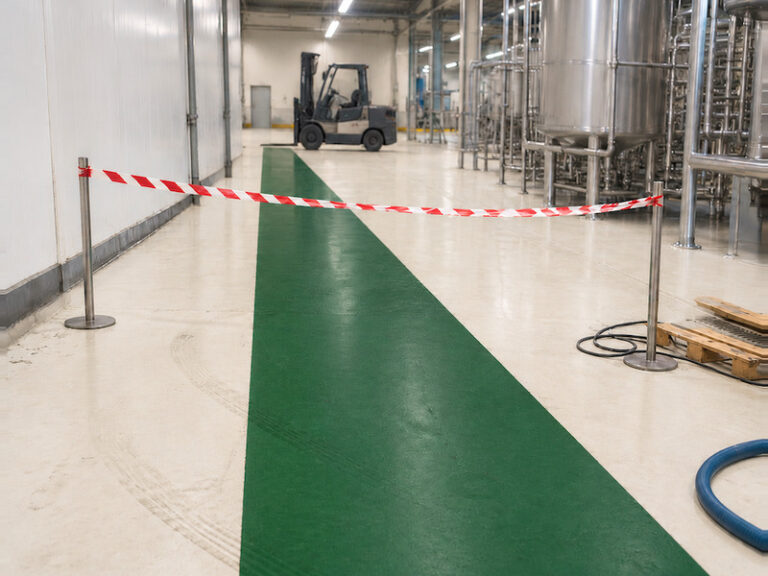
Urethane cement cure time is not one number. It is three, and a plant that plans to the first one instead of the third will damage a floor that was installed correctly.
The three are walk-on, light duty and full chemical resistance. They are hours, days and a week apart.
This article sets out what each milestone means, how the slab temperature moves them, and which site tests prove that a floor has actually reached one.
The short answer
Walk-on is typically four to twelve hours at 20 °C. Light duty, including pallet trucks, arrives at 24 to 48 hours. Full chemical resistance arrives at about seven days.
Those figures assume a substrate at 20 °C and a room at normal humidity. A slab at 10 °C roughly doubles every one of them, and a urethane cement cure time quoted without a slab temperature is a laboratory figure rather than a site forecast.
Fast grades exist for cold stores, and they trade working life for speed, which changes the mix ratio and pot life plan as well as the schedule, so the product changes the numbers as well as the room. The third milestone is the one that matters in a washdown room, and the one most often missing from a program.
Table 1: The three milestones at three slab temperatures.
| Milestone | 10 °C | 20 °C | 30 °C |
|---|---|---|---|
| Walk-on | 18-24 h | 4-12 h | 3-6 h |
| Light duty | 3-4 d | 24-48 h | 18-24 h |
| Химическая стойкость | 14-21 d | 7 d | 4-5 d |
What cure means in this material
Two reactions run at once. The resin cross-links and the cement hydrates, and each contributes a different part of the final strength.
The resin reaction is fast. It gives early handling strength and it is the reason a floor can be walked on within hours.
The cement reaction is slower. It continues for days and it is the reason a floor that can be walked on is not yet resistant to caustic.
The gap between them is the reason a walk-on time is not a handover time, and the reason a plant that plans to the first will complain about the third.
A urethane cement cure time of six hours and a chemical resistance of seven days are not a contradiction. They describe two different reactions at two different stages, and a program that treats them as one will fail at the second.
Hydration and cross-linking run at different speeds, which is why the milestones are separated by so much. The material becomes hard long before it becomes chemically resistant.
Walk-on time and what it does not mean
Walk on the floor and it holds a footprint without marking. That is the whole claim.
It does not mean a pallet truck can cross it, a ladder can stand on it, or a cleaning machine can run over it.
A cure test at this stage is a thumb, not a gauge. The gauge reading on day one is noisy, and it becomes useful from day three onwards.
A point load on a film that is hard at the surface and soft underneath produces a permanent mark within an hour of the first trolley, and thickness selection decides how much material there is to spread that load.
A walk-on time inside a urethane cement cure time is also not a permit to drag anything across the floor. Drag marks are the most common early damage we are asked to look at, and they are always avoidable.
Where a plant needs to move equipment during the cure, put plywood down and keep the route to one line.
Hardness development over the first week
Hardness rises quickly for the first 24 hours of a urethane cement cure time and then more slowly, and the shape of that curve is why day two feels so different from day five.
That curve is why hardness development is worth recording rather than eyeballing. A floor that is behind the curve on day three is telling you the room is too cold, and there is still time to act.
A floor at 24 hours is hard enough to resist a thumb but not hard enough to resist a dropped tool.
By day three of the cure time, most products have reached the majority of their final hardness, and the remaining change is small.
Hardness development also explains why a patch can look perfect and fail later. The new material is harder than the old at the boundary for the first week, and the stress concentrates there.
That is also why a repair made at day three and one made at day thirty behave differently at the interface.
Full chemical cure at seven days
Chemical resistance is the last milestone, and it depends on the cement phase as much as the resin.
At 20 °C, most products reach their declared resistance at about seven days. The data sheet fields behind that figure are what turn it into a schedule. At 10 °C, it can be three weeks.
Caustic washdown before that point dulls the surface, and the dulling is permanent. It is the single most common cause of a complaint on a floor that was installed correctly.
A plant that starts its normal cleaning regime in week one will blame the coating for a problem it caused.
Substrate temperature beats air temperature
The slab governs the reaction, and the slab can sit 10 °C away from the room.
A warehouse in February can read 14 °C of air and 6 °C of concrete, and a floor placed at 6 °C will cure at a fraction of the rate on the sheet.
Measure the slab with a contact probe or an infrared gun on a dull surface, and take the reading in several places.
The same applies in summer. A slab under a roof light can be at 35 °C while the air is at 24 °C, and the working life of the mix collapses.
Record the slab temperature at the start and end of every shift, and compare it with the cure schedule.
Overcoating windows
Where a second coat or a seal is specified, the overcoating window is a separate constraint from cure.
Inside the window the next coat bonds chemically. Outside it the surface must be abraded, and abrasion on a fresh floor is slow work.
A urethane cement cure time that fits a program may still leave an overcoating window that does not, particularly in cold weather.
The same applies to the return to service date. A plant that needs the room on Monday needs the seal on Saturday, which sets the body pour on Friday, which sets the preparation on Thursday.
Plan backwards from the window rather than forwards from the pour.
Cure tests that work on site
Three cure tests are available to anyone on site, and none requires a laboratory.
A thumb test answers whether the walk-on time has been reached. A solvent rub answers whether it has reached chemical resistance. A Shore D reading at fixed points answers whether hardness is developing normally. A rebound hammer is the wrong instrument here, because its measuring depth runs past a 6 mm layer into the slab beneath.
Take the readings at fixed points and record them with the substrate temperature.
A cure test is also the only defense a contractor has when a client walks on a floor early. Two readings and a photograph settle a question that would otherwise become a retention argument.
A cure test without a temperature is a number without a context, and a schedule built on it will be wrong by days.
Table 2: Site checks and what each proves.
| Проверить | Proves | Limit |
|---|---|---|
| Thumb test | Walkable | Not traffic strength |
| Shore D trend | Hardness developing | Trend only, not an acceptance value |
| Retained coupon | Strength at age | Needs a laboratory |
| Solvent rub | Химическая стойкость | Small destructive area |
What ruins a cure
Three of the four causes are a decision that the floor is ready before it is. Water on the surface too early dilutes the cement phase at the top and leaves a weak skin. Traffic too early leaves a mark in the first 48 hours that stays for the life of the floor. Chemical cleaning too early leaves the permanent dull patch that owners notice first.
The fourth cause is environmental. A floor at 5 °C may never reach its declared resistance in a reasonable time, whatever the sheet says.
Wind, sun and dehumidifiers belong to the same group. The cement phase takes its water from the mix rather than from the room, and a floor that dries at the surface loses that water before it can react, which leaves a weak and dusty top layer. Wind, sun and dehumidifiers all accelerate moisture loss, and a floor placed in a draft is the classic case. Airflow is the cause and moisture loss is the mechanism, so a temporary screen costs less than a weak surface and takes ten minutes to set up.
A short walk at day three and again at day seven finds all four in time to act. Each one is a program decision rather than a product failure.
Writing the cure schedule into the submittal
A cure schedule belongs in the submittal, with the three milestones and the substrate temperature each assumes.
It should name who enforces each closure and what happens if it is breached.
It should require the temperature record, because that is the only evidence that the schedule was realistic.
Where a plant cannot accept the window, the options are heat, a faster product or a phased handover, and each has a cost that belongs in the comparison.
Table 3: Downtime by milestone and what it costs.
| Milestone | Typical | If breached |
|---|---|---|
| Walk-on | 4-12 h | Footprints, marks |
| Light duty | 24-48 h | Wheel marks, rutting |
| Химические | 7 d | Permanent dulling |
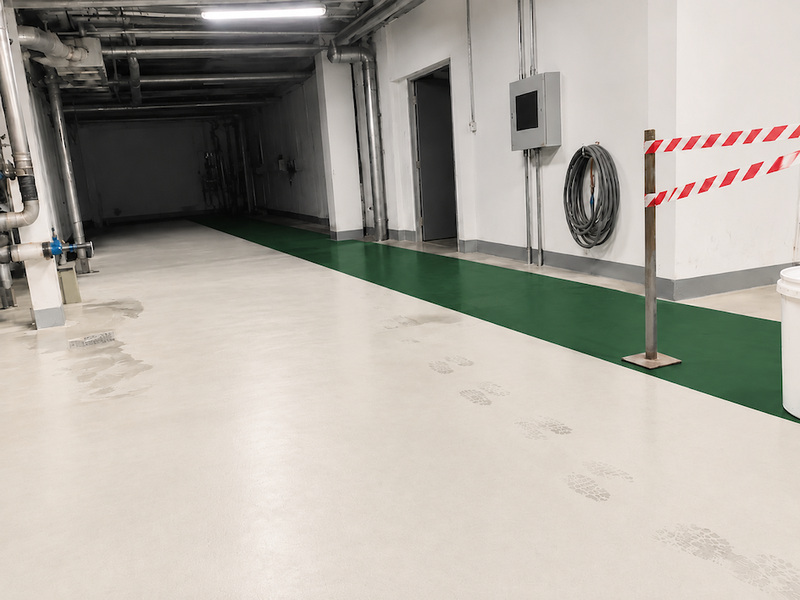
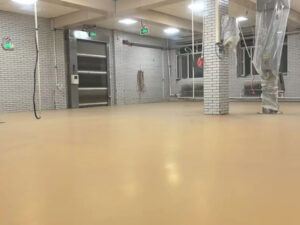
Figure 1: the closure is a management decision, not a material property.
Reading a cure schedule against a real program
A urethane cement cure time is only useful once it is attached to a date the plant cares about, so a cure schedule runs forwards from the pour. The program around it is read backwards from the day the plant has to run. Both directions are needed, and confusing them is how a closure plan ends up with a walk-on date before the pour.
There are five dates, not one: pour complete, walk-on, light duty, chemical resistance and overcoating. A program that carries a single closure figure has quietly assumed the other four. A urethane cement cure time is therefore five dates rather than one, and most projects are planned around a downtime window rather than around a curing curve.
The downtime window is usually set by production, and it is usually shorter than the third milestone requires.
Forwards, the arithmetic is short. Pour on Friday, walk on Saturday morning, light duty on Monday, washdown on the Friday after.
Backwards from a delivery date the order reverses. Subtract the chemical resistance from the delivery date and the answer is the latest pour date. Subtract the light duty window from that and the answer is the latest date for light duty, which is what the production plan actually needs. Removing the light duty window a second time does not produce a walk-on date, because walking on happens after the pour rather than before it.
A urethane cement cure time of seven days and a forty-eight hour downtime window are not incompatible, provided the plant accepts a restricted cleaning regime for the first week. That is the trade most projects make, and it is worth making explicitly rather than discovering it at the first wash.
A short return to service is a legitimate choice when it is made knowingly, and a failure when it is discovered at the first wash. Where appearance matters, the return to service date has to move, or the cleaning regime has to change for the first week.
A five-day plant usually lands like this. Materials and moisture readings on Wednesday, preparation on Thursday, pour on Friday, walk-on across the weekend, light duty on Monday, and washdown on the Friday after that. The weekend carries the part of the cure that needs an empty room, and the two working days before it carry the preparation.
Where a plant returns to caustic washdown on day three, the surface dulls permanently. Strength is unaffected, so the floor keeps working, but appearance cannot be recovered by cleaning and only a new wearing layer brings it back. That is the comparison to price: a replacement top layer against one more day of downtime.
The cure test belongs in the same plan. Take a reading at the start and the end of the closure, and record it with the slab temperature. Where the readings do not follow the curve, the program is already behind, and a decision is cheaper on day two than on day five.
The hardness development record also protects the contractor. A floor walked on early by the client becomes a client problem, and the record shows when the closure was breached.
The overcoating window fits into the same table. On a sealed system it is the constraint between the body and the seal, and it expires before the floor is ready for traffic.
A downtime window written as five dates is a schedule. One written as a single closure figure is a guess that will be renegotiated on site. Leave one of the five out and it becomes the subject of the first meeting after handover.
Часто задаваемые вопросы
How long before a urethane cement floor can be walked on?
Four to twelve hours at 20 °C substrate temperature. At 10 °C expect 18 to 24 hours.
When can forklifts use it?
Light duty at 24 to 48 hours at 20 °C. Heavier traffic and point loads are better left until day three.
When is it resistant to chemicals?
At about seven days at 20 °C. Cold rooms take longer, and caustic washdown before that point dulls the surface permanently.
Does air temperature matter as much as slab temperature?
No. The slab governs the reaction, and it can be 10 °C away from the air. Measure the concrete.
Can cure be accelerated?
Heat is the reliable method. Accelerating additions require the manufacturer’s approval and change the mix ratio.
Why does the surface stay soft?
Usually moisture loss from wind or sun. The cement phase needs its water, and a draft takes it before it can react.
What is the first cleaning that is safe?
Neutral detergent and water once the floor is walkable. Caustic and acid wait until full chemical resistance, which is usually the full week at 20 °C.
Working with Kaida Paint
Kaida Paint states the three cure milestones at 10, 20 and 30 °C on every urethane cement data sheet, and we will help you build a closure plan around the substrate temperature you actually have. Send the room, the slab reading and the hours you can close, and we will say whether the program fits the cure you need, not the one the schedule assumes.






 English
 Spanish
 Portuguese
 Arabic
 French
 Italian
 Russian
 Indonesian
 Swedish