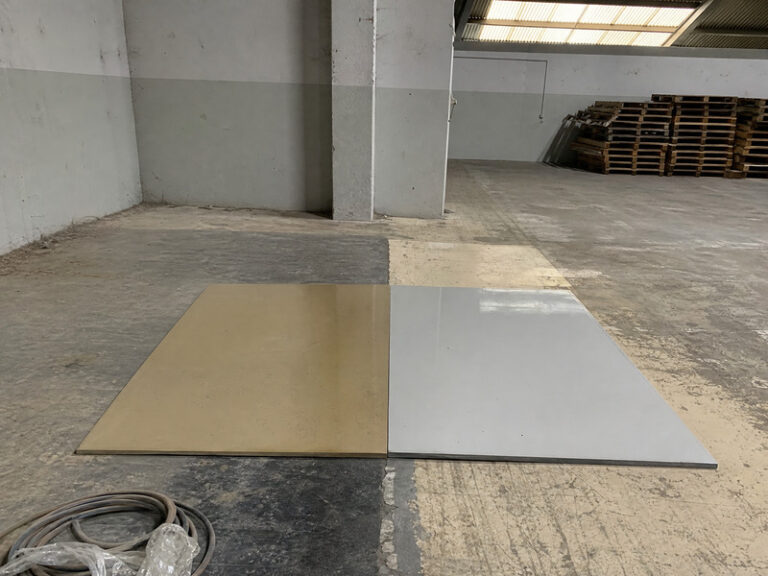
Choosing between an aromatic and an aliphatic polyurethane floor coating is a cost decision and a colour decision, and almost nothing else.
Both are two-component polyurethane, applied the same way, with the same chemical resistance and the same traffic performance. The difference is a ring in the isocyanate, and what that ring does under daylight.
This article sets out the cost premium in real numbers, explains why the colour moves, and gives a room-by-room method for deciding which grade each area needs. It also shows how to write the decision into a specification clause so the site finishes with the right product in the right place.
What actually differs between the two grades
The difference between the two grades is colour stability under daylight and the price of the wearing surface.
An aromatic binder is built on toluene diisocyanate, which carries a benzene ring. An aliphatic polyurethane floor coating is built on hexamethylene diisocyanate, an open chain. That is the whole chemical difference, and it is declared on a proper datasheet.
The ring does not change strength. Abrasion resistance, compressive strength and chemical resistance come from the resin body and the filler, not from the isocyanate.
Everything else in this comparison follows from those two facts.
Table 1: Aromatic and aliphatic polyurethane side by side.
| Недвижимость | Aromatic | Aliphatic |
|---|---|---|
| Isocyanate | TDI or MDI, ring structure | HDI, open chain |
| Colour under daylight | Ambers over 6-24 months | Stable for years |
| Abrasion and strength | Equivalent | Equivalent |
| Химическая стойкость | Equivalent | Equivalent |
| Topcoat material cost | Baseline | 40-80% higher |
| Best use | Unlit areas | Visible areas |
One line in that table decides most projects: the two grades are interchangeable on performance. The choice is appearance and money, in that order of importance to the client and the reverse order in most tender documents.
Why the colour changes, and who notices
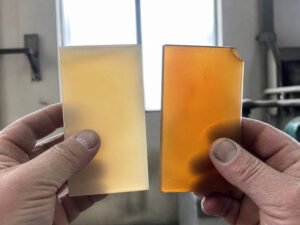
Ultraviolet light breaks the aromatic ring in the presence of oxygen, so the film turns amber at the surface first and then slowly inward. The people who notice are clients and cleaners rather than the crew, because the change is gradual and only reads as a change against something new.
The rate follows light exposure. A distribution centre with a solid roof may never show it, while a filling hall with four per cent roof lights will show a colour shift inside one summer.
The colour shift deepens for about two years and then slows. It is also irreversible. No cleaning agent reverses it, and a clear sealer applied over an ambered floor locks the colour in place.
Who notices matters more than the photochemistry. A warehouse operator reads a colour change as normal ageing. A retail client reads it as a defect, and the argument that follows costs more than the upgrade would have.
Pigment decides the visible result as much as the binder does. Titanium white and the pale greys show a change within a season, while a mid-grey or an oxide red absorbs most of it. Two clients with the same resin and different colours will describe the product differently.
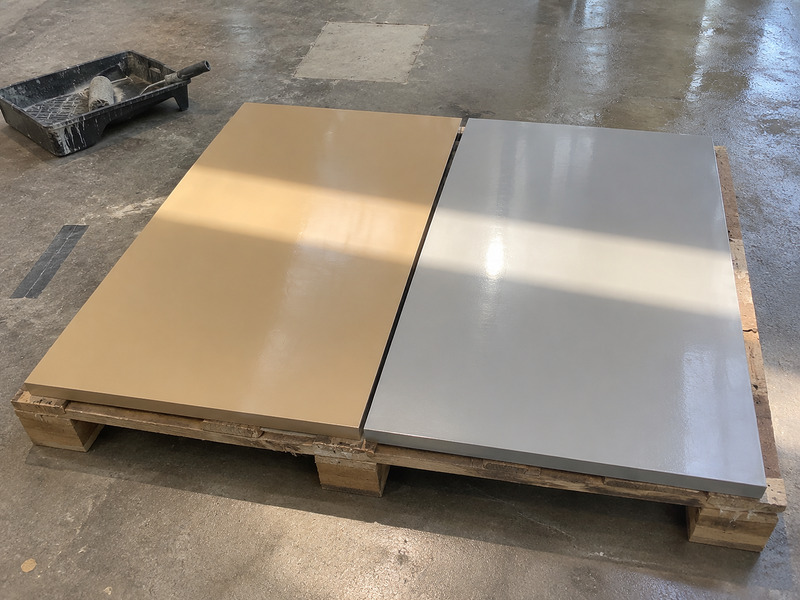
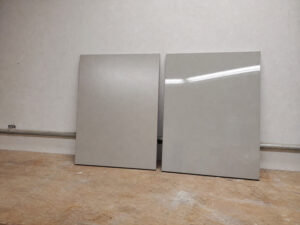
Figure 1: the two panels are laid on one pallet, and the roof light crosses the joint between them.
The cost premium, measured honestly
The cost premium is 40 to 80 per cent on the topcoat material, depending on supplier and solids content. That range is wide because aliphatic resin is a smaller market with fewer producers, and because an aliphatic polyurethane floor coating is often bought as a seal in small packs rather than by the tonne.
On the installed price the gap is much narrower, because the topcoat is a fraction of the build. On a 6 millimetre body with a 0.5 millimetre seal, the seal is under a tenth of the material volume.
Run the arithmetic on 1,000 square metres and the difference usually lands near five to eight per cent of the installed contract. On a small repair, the arithmetic reverses, because material is bought by the pack rather than by the kilogram.
Table 2: Where the money goes on a 1,000 square metre build with a 6 mm body.
| Layer | Share of material | Grade that matters |
|---|---|---|
| Primer, 100-150 microns | About 5% | Aromatic is fine |
| Body, 6 mm | About 80% | Aromatic is fine |
| Seal, 400-500 microns | About 15% | Aliphatic if lit |
| Installed price impact | 5-8% total | Upgrade the seal only |
Presenting the number matters as much as the number itself. A four-figure difference on a six-figure contract is easy to approve once it is set against the cost of a repaint, and impossible to approve when it arrives as a line item called UV upgrade. Show the seal separately from the body, show what a maintenance seal costs later, and let the client choose with both numbers in front of them.
The number that surprises clients is that nobody is quoting a fully aliphatic build. Only the wearing surface needs the stable grade, so the price follows the surface and not the body.
Where an aromatic floor belongs
An aromatic system is the correct specification wherever daylight does not reach the floor. That is more of a building than most clients expect when they first ask about colour.
- Distribution warehouses with a solid roof and no roof lights.
- Plant rooms, sprinkler rooms and electrical areas.
- Under fixed racking, where the floor is only seen during a stock take.
- Walk-in freezers and cold stores, which have no daylight at all.
- Back-of-house corridors between production halls.
Specifying aromatic in those rooms is not a compromise. It is the correct grade selection, and paying for colour stability where no light arrives is a quiet waste of money that recurs on almost every project we quote. The same logic runs in reverse for an aliphatic polyurethane floor coating: it is the right answer in a lit room and an expensive answer in a dark one.
Colour also moderates the risk. A mid-grey or a dark green absorbs a colour shift that a white or a pale grey would show plainly, so the room and the pigment matter as much as the binder.
Where aliphatic is the only defensible choice
An aliphatic topcoat is justified in three situations: a floor visible to customers, a brand colour, or glazing and roof lights above it. Where the driver is speed rather than colour, a fast polyaspartic coating is usually the cheaper route to a light-stable finish.
A fourth is a clear sealer over decorative flakes or a polished concrete effect. A clear aromatic film develops an amber cast within a year, and it reads as a defect even when the film is perfectly sound.
The zone schedule for a mixed building rarely needs to be all or nothing. Most projects that use an aliphatic polyurethane floor coating use it in two or three rooms and leave the rest in the aromatic grade, which is both cheaper and easier to defend.
Food plants deserve a separate note. Washdown chemistry attacks the film, and the visible production rooms usually carry roof lights, so an aliphatic polyurethane floor coating is often the only specification an auditor will accept for a pale floor.
Retrofitting is the expensive route. Lifting a sound floor to change grade doubles the cost of the original seal, which is why the decision is worth an hour of design time at the start rather than a review after the first summer.

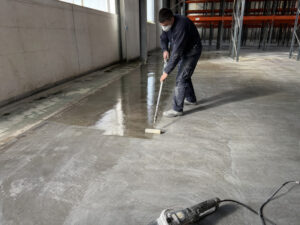
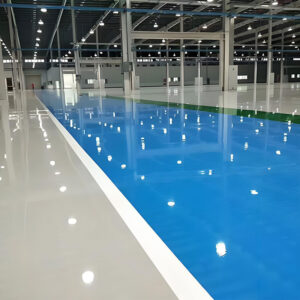
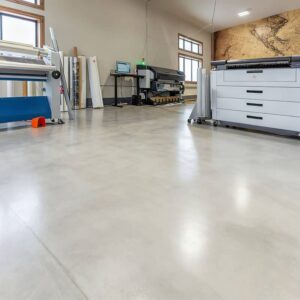
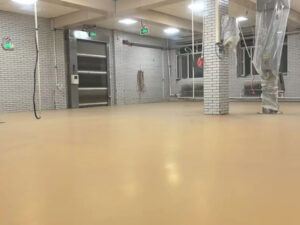
Figure 2: the daylight enters at a low angle from the left, and the floor keeps the same tone from the door to the back of the bay.
One building, two grades: how to build the map
A zone schedule is a floor plan with the rooms coloured by grade. It takes an hour and it settles the argument before anyone orders material, which is the only point at which the decision is still free.
Start from the roof plan. Mark every roof light, glazed wall and roller door that stands open in service. Those are the lit zones, and they are usually fewer than the client fears.
Then add the rooms where appearance is contractual: reception, canteen, customer walkways. Everything left is a candidate for the aromatic grade, including most of the production area.
Table 3: A worked room map for a mixed food and distribution building.
| Zone | Grade | Reason |
|---|---|---|
| Reception and canteen | Aliphatic | Glazed, customer-facing |
| Filling hall | Aliphatic | Roof lights, pale floor |
| Dry store | Aromatic | Solid roof, no daylight |
| Packing, under racking | Aromatic | Floor rarely seen |
| Loading bay strip | Aliphatic | Door open daily |
Two grades on one job means two batches, and the two must still agree where they meet at a doorway. That is a colour match question, and it is worth raising at order stage rather than at handover.
Writing the decision into the specification
A specification clause should name the isocyanate family and the test, not the adjective. The phrase UV stable has no defined meaning in any standard we work to, and it cannot be enforced at handover.
A workable specification clause reads: topcoat to be aliphatic polyurethane, HDI based, colour verified against a retained reference panel at twelve months. That is auditable, and it costs a supplier nothing to accept. Add the solvent content limits for the destination market to the same clause, because colour stability and compliance are usually checked in one submittal.
The reference panel is the part most often left out. Keep one from the delivered batch, store it in the dark, and compare it with the floor at the agreed interval.
Where a client asks for a warranty against colour shift, read the wording before signing. Most industrial warranties cover adhesion and wear and exclude colour, which is the honest limit of what a coating supplier controls.
The maintenance coat, and when it pays
A maintenance coat every three to five years restores both the wear surface and the colour. On a lit floor that has ambered, a fresh maintenance coat in the stable grade brings the appearance back without removing the body.
That option is why the original grade selection is not permanent. A floor built aromatic can be upgraded at the first maintenance cycle for the cost of a seal, which is a fraction of a rebuild.
It only works if the body is sound and the bond is good. Where the existing film is blistering or lifting, a maintenance coat over it is money spent on a problem it cannot fix.
For a client weighing the cost premium now against a maintenance cycle later, the honest comparison puts the two numbers side by side. Sometimes the second number is smaller.
Five grade-selection mistakes we see
The five below are the mistakes that appear on almost every grade selection sheet we see, and between them they cost more than the grade upgrade itself.
The first is paying for the stable grade in a windowless warehouse. It happens more often than the reverse, because the phrase UV stable sounds like an upgrade rather than an option.
The second is specifying aromatic under a clear sealer over flakes. The colour shift is at its most visible through a clear film against a decorative base.
The third is comparing two quotes without checking which grade each assumes. A twenty per cent gap between two aliphatic polyurethane floor coating offers is usually a grade difference, not a margin difference, and the cheaper offer may be the correct one.
The fourth is forgetting the light exposure at a loading door that stands open all day. A strip of floor two metres deep can be the only place in the building where the colour changes, and it is the first thing a visitor sees.
The fifth, and the most expensive, is discovering the question after the material has landed. At that point the only options are to accept the colour or to pay for a second order.
None of these is a product problem. They are grade selection problems, and they are cheap to avoid with a plan and a reference panel.
Matching colour where the two grades meet
Where an aliphatic polyurethane floor coating meets an aromatic floor at a doorway, the two surfaces have to read as the same colour on day one, even though they will diverge later. That is a colour match problem, and it is solved at order stage rather than on site.
Pigment is added at the plant, so one colour code in two binders will be close but rarely identical. The difference usually passes at a doorway and fails across a wide opening.
Ask for both batches to be tinted to one reference and delivered together. Where that is impossible, put the joint at a wall, a threshold or a drain line rather than in the middle of a lit floor.
Check the colour match under the lighting that will actually be used. Factory daylight, sodium lamps and LED high bays render a grey differently, and a floor approved under one will look wrong under another.
The same discipline applies to the light exposure on the day of inspection. A floor judged at dusk looks different from the same floor at noon, and clients remember the worse of the two.
None of this is expensive. It is one sentence in the order and a joint in a sensible place, and it prevents the most common complaint on a two-grade project.
Часто задаваемые вопросы
Is aliphatic polyurethane worth the extra cost?
Only where the floor is visible. It keeps its colour and an aromatic does not, and it costs five to eight per cent more on the installed price of a full build.
Does aliphatic polyurethane last longer than aromatic?
Not under traffic. Abrasion and chemical resistance are equivalent, and thickness matters far more than grade for wear. Both grades sit in the same band of abrasion test results, and film build decides wear life.
Can I put an aliphatic topcoat over an aromatic body?
Yes, and it is how most projects get colour stability without paying for it throughout. Only the layer that sees light needs the stable grade.
How long before an aromatic floor changes colour?
Between six months and two years in daylight, depending on the dose and the pigment. A white floor under roof lights shows it first.
Can a yellowed floor be brought back?
Only by covering or removing the affected layer. Cleaning will not reverse it, and a clear sealer locks the colour in.
What should a specification say instead of UV stable?
Name the isocyanate family and require verification against a retained reference panel at a stated interval. That can be checked at handover.
Do I need both grades on one project?
Often yes. A zone schedule usually puts the stable grade in two or three visible rooms and leaves the rest aromatic.
Почему предприятия пищевой промышленности сотрудничают с компанией «Kaida Paint»
Kaida Paint supplies both grades from the same plant and states the isocyanate family on every datasheet, so an aliphatic polyurethane floor coating can be compared with an aromatic offer on equal terms. Send a roof plan and a room list and we will return a zone schedule with the rooms that need the stable grade marked, plus a reference panel from the batch you would receive.



 English
 Spanish
 Portuguese
 Arabic
 French
 Italian
 Russian
 Indonesian
 Swedish