
ESD epoxy flooring is generally the preferred solution for facilities requiring permanent, facility-wide static control and ANSI/ESD S20.20 compliance. Anti-static mats are better suited for localized protection, temporary setups, and individual workstations.
Selecting the right static control solution is critical for protecting sensitive electronic components from electrostatic discharge (ESD) damage. This comprehensive guide compares ESD epoxy flooring and anti-static mats across performance, installation, durability, cost, and compliance factors to help you make an informed purchasing decision for your electronics manufacturing, cleanroom, or data center facility.
ESD Epoxy Flooring vs Anti-Static Mats
| Фактор | ESD Epoxy Flooring | Anti-Static Mats |
|---|---|---|
| Лучшее для | Large factories, cleanrooms, data centers, aerospace facilities | Individual workstations, temporary setups, small repair benches |
| Покрытие | Permanent, facility-wide protection | Localized, workstation-specific protection |
| Surface Resistance | 10⁶ – 10⁹ ohms (static dissipative range) | 10⁴ – 10⁹ ohms (varies by type) |
| Продолжительность жизни | 10+ years with proper maintenance | 1-3 years (regular replacement required) |
| ANSI/ESD S20.20 Compliance | Supports facility-wide compliance | Workstation-level compliance only |
| Время установки | 3-5 days (professional installation required) | Minutes (DIY placement) |
| Initial Cost | Higher upfront investment | Lower upfront investment |
| Long-Term Value | Better cost per square foot over 10+ years | Higher replacement frequency increases long-term cost |
What Is ESD Epoxy Flooring?
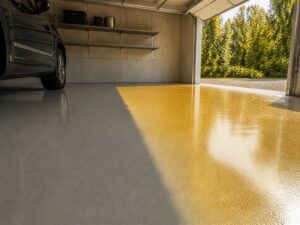
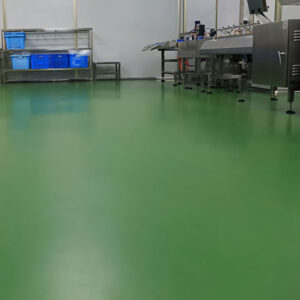
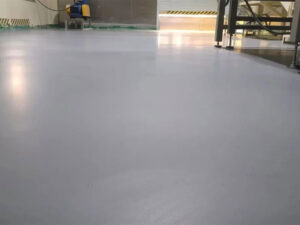
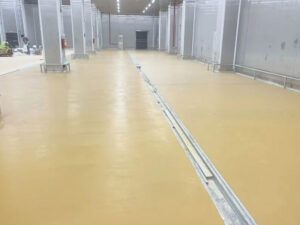
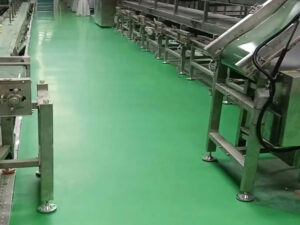
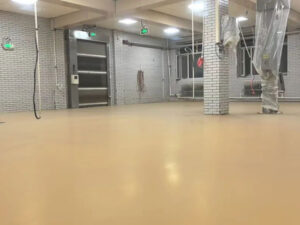
ESD epoxy flooring is a specialized static dissipative coating system designed to safely control electrostatic discharge by creating a grounded, conductive pathway across the floor surface. This permanent, seamless system is applied as a liquid coating that cures to form a continuous static-dissipative surface. The system comprises multiple functional layers: a primer, a conductive copper tape grid for grounding, a conductive middle coat, and a self-leveling static dissipative top coat. Conductive materials such as specialized carbon or anti-static additives are incorporated into the epoxy formulation to create a consistent electrical pathway throughout the entire floor surface.
This permanent flooring solution ensures that any person or equipment contacting the floor establishes a safe path to ground, preventing electrostatic charge accumulation across entire facilities.
Ключевые особенности:
- Seamless, joint-free surface that resists dust and particle accumulation
- Excellent chemical resistance against solvents, acids, and industrial cleaners
- High mechanical durability supporting heavy equipment traffic
- Professional, aesthetically pleasing finish suitable for client-facing environments
What Are Anti-Static Mats?
Anti-static mats are portable, standalone protective surfaces manufactured from rubber, vinyl, or conductive fabric materials. These mats are placed at specific workstations or in high-traffic areas where static protection is required. Unlike permanent flooring, mats provide localized protection and can be easily moved, replaced, or reconfigured as workspace needs evolve.
Most anti-static mats connect to electrical ground through attached grounding cords or snap fasteners. Personnel standing on the mat dissipate static charges through the mat’s conductive or static dissipative surface, protecting the specific work area where sensitive components are handled.
Ключевые особенности:
- Quick and easy installation without specialized skills or equipment
- Portable and reconfigurable as workspace layouts change
- Lower initial investment compared to permanent flooring systems
- Suitable for rental facilities or temporary operations
Key Differences Between ESD Epoxy Flooring and Anti-Static Mats
Static Control Performance
ESD Epoxy Flooring: Creates a uniform electrical equipotential plane across an entire facility when properly installed with a complete grounding system. The surface resistance consistently falls within the static dissipative range of 10⁶ to 10⁹ ohms, supporting ANSI/ESD S20.20 compliance requirements when combined with appropriate footwear and grounding procedures. Advanced Generation 3 epoxy formulations provide reliable static control performance that ensures body voltage generation remains below 100 volts.
Anti-Static Mats: Provide effective localized protection but offer limited coverage. The mat’s conductive properties dissipate charges from personnel standing or working on the mat surface. However, once personnel step off the mat, static protection ceases, making mats unsuitable for facilities requiring comprehensive, facility-wide static control.
Coverage Area
ESD Epoxy Flooring: Protects every person and piece of equipment within the facility regardless of location. This comprehensive coverage is essential for large-scale electronics manufacturing, semiconductor fabrication, and data center operations where sensitive components move throughout production areas.
Anti-Static Mats: Only protect personnel who remain within the mat’s surface area. This limitation creates unprotected zones where personnel handling components may generate and transfer damaging static charges.
Durability and Lifespan
ESD Epoxy Flooring: Provides exceptional durability with a typical lifespan exceeding 10 years under normal industrial conditions. The seamless, joint-free surface resists wear from heavy foot traffic, forklift movement, and chemical exposure. Regular sweeping and occasional damp mopping with ESD-compatible cleaners maintain both appearance and electrical performance.
Anti-Static Mats: Experience regular wear at edges and high-traffic areas, requiring replacement every 1-3 years depending on usage intensity. Mat effectiveness diminishes as the material wears or becomes contaminated, potentially compromising static control properties. While mats can be replaced individually, the cumulative replacement cost over a 10-year period often exceeds the initial investment in permanent ESD epoxy flooring.
Installation Process
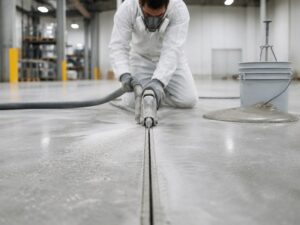
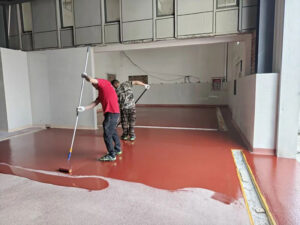
ESD Epoxy Flooring: Requires professional installation with specialized equipment and expertise. The multi-layer application involves comprehensive surface preparation including concrete profiling, moisture testing (below 5%), and contaminant removal. Primer, copper tape grounding installation, conductive middle coat, and self-leveling top coat are applied sequentially. Professional ESD epoxy coating installation ensures consistent electrical performance and long-term reliability. The complete installation typically requires 3-5 days depending on facility size and curing conditions.
Anti-Static Mats: Installation is straightforward, requiring no specialized skills or equipment. Mats are simply placed on existing floors at designated workstations. Some mats require connecting to grounding points via attached grounding cords. Installation is measured in minutes rather than days.
Maintenance Requirements
ESD Epoxy Flooring: Minimal maintenance requirements: regular sweeping or vacuuming removes abrasive particles, while occasional damp mopping with ESD-compatible cleaners maintains both appearance and electrical performance. The smooth, seamless surface inhibits dust accumulation, making it ideal for cleanroom environments.
Anti-Static Mats: Require regular cleaning to remove debris and contaminants that might affect static dissipative properties. Mats must be monitored for signs of wear, cracking, or surface damage that could reduce effectiveness. Unlike permanent flooring systems, mats cannot be repaired and require full replacement when damaged.
ESD Epoxy Flooring vs Anti-Static Mats Cost Analysis
| Cost Factor | ESD Epoxy Flooring | Anti-Static Mats |
|---|---|---|
| Material Cost per sq ft | $3 – $10 (varies by system specification) | $1 – $5 (varies by material type) |
| Installation Cost | Higher (professional required) | Minimal (DIY placement) |
| Replacement Frequency | Every 10+ years | Every 1-3 years |
| 10-Year Cost per sq ft | Lower overall | Higher (cumulative replacement) |
| Стоимость обслуживания | Низкий | Умеренный |
Примечание: ESD epoxy flooring typically costs between $3 and $10 per square foot depending on system design, thickness, substrate preparation, and installation requirements. Anti-static mats may appear cheaper initially, but cumulative replacement costs over a decade often make permanent flooring more economical for large facilities.
ESD Flooring Testing and Verification
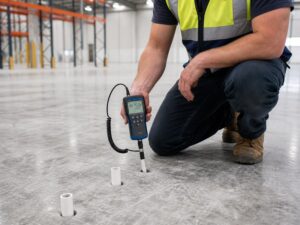
After installation, ESD epoxy flooring should be tested using appropriate resistance measurement equipment to verify performance. Key tests include:
- Resistance to Ground (RTG): Measures the electrical resistance between the floor surface and the facility grounding point, ensuring proper grounding continuity.
- Resistance Point-to-Point (RTT): Measures resistance between two points on the floor surface, verifying consistent static dissipative properties across the entire installation.
- Walking Body Voltage Testing: Measures the voltage generated on personnel walking across the floor, confirming the floor’s ability to keep body voltage below 100 volts as required by ANSI/ESD S20.20.
- Grounding Continuity Verification: Ensures all copper tape connections maintain proper continuity to the building’s electrical ground.
Regular testing, typically performed annually or after any significant facility modifications, ensures long-term compliance and reliable static protection.
ESD Epoxy Flooring vs Anti-Static Mats: Application Comparison
Where Is ESD Epoxy Flooring Recommended?
ESD epoxy flooring is the preferred solution for facilities where comprehensive static protection, regulatory compliance, and long-term durability are critical. Common applications include:
- Semiconductor manufacturing facilities – protecting wafer fabrication and assembly areas
- PCB assembly plants – preventing ESD damage during component placement
- Electronics factories – continuous protection across production lines
- Data centers – protecting server infrastructure and sensitive equipment
- Medical device manufacturing – meeting FDA and ISO requirements
- Aerospace facilities – protecting mission-critical avionics and communication systems
- Cleanrooms and laboratories – seamless surfaces with minimal particle generation
- Automotive electronics production – protecting control modules and sensors
Real-World Example: A 50,000 sq ft electronics manufacturing facility handling sensitive semiconductor components required continuous static protection across all production areas. Installing ESD epoxy flooring created a uniform grounding surface throughout the facility, reducing dependence on individual mats, improving compliance management, and eliminating unprotected zones where ESD damage could occur. The facility significantly improved its ESD control program and achieved better compliance consistency after installation.
Where Are Anti-Static Mats Recommended?
Anti-static mats remain practical solutions for:
- Individual workstations in repair facilities
- Testing and inspection areas with limited sensitive component handling
- Temporary setups or rented facilities
- Small operations with limited budgets
- Areas requiring frequent reconfiguration
- As supplemental protection for specific high-risk zones within larger facilities
ANSI/ESD S20.20 Compliance Requirements
Understanding industry standards helps facilities select appropriate static control solutions. The ANSI/ESD S20.20-2021 standard establishes ESD control program requirements for electronics handling. Key program elements include:
- Flooring Resistance: Flooring must provide resistance below 1×10⁹ ohms at all locations within the ESD Protected Area (EPA)
- Personnel Grounding: Appropriate footwear, wrist straps, or other grounding methods must be used
- Body Voltage Generation: Body voltage must remain below 100 volts when personnel are properly grounded
- Verification Testing: Regular testing must be performed to verify the effectiveness of ESD control measures
ESD epoxy flooring systems are specifically designed to meet these requirements through proper system specification and professional installation. Choosing the right ESD epoxy coating system depends on resistance requirements, traffic conditions, and facility regulations. Anti-static mats may provide localized compliance but cannot ensure facility-wide adherence to these standards. Telecommunications and data center facilities frequently reference MOTOROLA R56 standards (10⁶ – 10⁹ ohms) and IBM requirements (below 2×10¹⁰ ohms), all of which are compatible with properly specified ESD epoxy systems.
Which Solution Should You Choose?
| Your Situation | Recommended Solution |
|---|---|
| Large electronics factory with multiple production lines | ESD Epoxy Flooring |
| ISO Class 5 or higher cleanroom | ESD Epoxy Flooring |
| Data center with server racks throughout facility | ESD Epoxy Flooring |
| Aerospace or defense manufacturing | ESD Epoxy Flooring |
| Individual workstation in a repair shop | Anti-Static Mat |
| Temporary facility or rental space | Anti-Static Mat |
| Budget-limited small operation | Anti-Static Mat |
| Supplementing existing ESD flooring in high-risk zones | Anti-Static Mat |
Часто задаваемые вопросы
Can ESD epoxy flooring replace anti-static mats entirely?
In many facilities, ESD epoxy flooring can significantly reduce dependence on anti-static mats by providing facility-wide static control. However, additional mats may still be used for specific high-risk workstations or where ESD footwear compliance is not feasible. The combination often provides the most comprehensive protection.
What is the difference between static dissipative and conductive flooring?
Static dissipative flooring releases static charges gradually through controlled resistance, typically 10⁶ to 10⁹ ohms, making it suitable for most electronics handling environments. Conductive flooring provides faster charge transfer with resistance below 10⁶ ohms, appropriate for explosive environments or munitions handling.
Is ESD epoxy flooring suitable for cleanrooms?
Yes, ESD epoxy flooring is ideal for cleanrooms. The seamless, joint-free surface inhibits dust and particle accumulation, simplifies cleaning protocols, and maintains static control while meeting ISO cleanroom classifications.
What resistance range is required for ESD flooring?
ANSI/ESD S20.20 requires flooring resistance below 1×10⁹ ohms within the ESD Protected Area, with the optimal static dissipative range between 10⁶ and 10⁹ ohms. This range provides adequate protection while preventing excessively rapid discharge that could damage sensitive components.
How long does ESD epoxy flooring last?
With proper installation and maintenance, ESD epoxy flooring typically lasts 10-15 years. The seamless, durable surface resists wear, chemical exposure, and heavy equipment traffic, providing long-term static control performance.
Does ESD flooring require special maintenance?
No special maintenance is required beyond regular sweeping or vacuuming and occasional damp mopping with ESD-compatible cleaners. Avoid harsh detergents that could affect surface electrical properties.
Can ESD epoxy flooring be repaired if damaged?
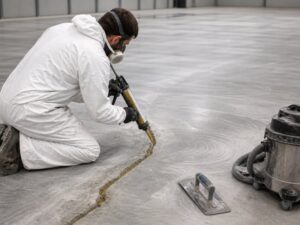
Yes, localized damage to ESD epoxy flooring can be repaired by trained professionals. Repairs typically involve cleaning the damaged area, applying touch-up materials matched to the existing system, and confirming electrical properties after repair. Unlike mats, flooring repairs maintain the seamless, permanent nature of the system.
Is ESD flooring available in different colors?
Yes, modern ESD epoxy flooring systems are available in a wide range of colors. This allows facilities to incorporate safety markings, zone identification, or branding elements while maintaining static control performance.
What type of footwear is required with ESD flooring?
ANSI/ESD S20.20 standards require ESD-protective footwear, including conductive heel straps, toe straps, sole straps, or ESD shoes, when using ESD flooring. This ensures effective personnel grounding and maintains the electrical continuity essential for static control.
Does ESD epoxy flooring work with existing grounding systems?
Yes, ESD epoxy flooring integrates with facility grounding systems through the installation of copper tape at floor peripheries and across expansion joints. This connects the floor’s conductive layer to the building’s electrical ground, creating the equipotential plane necessary for effective static dissipation.
How much does ESD epoxy flooring cost per square foot?
ESD epoxy flooring typically costs between $3 and $10 per square foot depending on system design, thickness, substrate preparation, and installation requirements. This represents the complete installed system cost, including materials and professional labor.
How is ESD epoxy flooring tested after installation?
ESD flooring is typically tested using resistance-to-ground (RTG), resistance point-to-point (RTT), and walking body voltage measurements. These tests verify that the installed system meets the specified resistance range and grounding requirements.
ESD epoxy flooring provides superior static control performance for facilities requiring comprehensive protection, regulatory compliance, and long-term durability. The permanent, seamless system offers consistent electrical properties across entire facilities, professional appearance, and minimal maintenance requirements.
Anti-static mats serve as effective temporary or localized solutions where budget constraints, temporary operations, or limited static control requirements exist. Mats offer flexibility and lower initial investment while providing adequate protection for individual workstations.
For operations prioritizing long-term static control reliability, regulatory compliance, and comprehensive protection across entire facilities, ESD epoxy flooring systems represent the optimal investment. The seamless, durable nature of these systems, combined with their proven performance in meeting industry standards, establishes them as the preferred solution for professional facilities demanding uncompromising static control.
Need an ESD Flooring Solution for Your Facility?
KAIDA PAINT provides professional ESD epoxy flooring systems for electronics factories, cleanrooms, laboratories, and industrial facilities worldwide. Our technical team can help you determine the optimal system for your specific requirements.
Contact our technical team to discuss your project requirements:
- Facility floor area and layout
- Required surface resistance specifications
- Application environment and traffic conditions
- Existing substrate conditions
- Installation timeline and budget considerations
Why Choose KAIDA PAINT for ESD Epoxy Flooring?
KAIDA PAINT stands at the forefront of industrial flooring solutions, delivering innovative ESD epoxy systems engineered to meet the most demanding static control requirements. With decades of experience in protective coating technology, we understand the critical importance of reliable static dissipation in today’s electronics manufacturing, data center, and aerospace environments.
Our ESD epoxy flooring systems utilize advanced Generation 3 formulation technology, ensuring consistent electrical performance that supports ANSI/ESD S20.20 compliance requirements when properly specified, installed, tested, and maintained. Each system is designed as a complete, tested assembly including moisture-tolerant primers, conductive copper tape networks, and self-leveling static dissipative top coats.
Технические преимущества:
- Proven Electrical Performance: Achieves surface resistance within the optimal dissipative range of 10⁶ – 10⁹ ohms
- Complete System Design: Moisture-tolerant primers, conductive grids, and static dissipative top coats engineered as integrated systems
- Professional Technical Support: Expert assistance from specification through installation
- Всестороннее соблюдение нормативных требований: Systems designed to meet ANSI/ESD S20.20, MOTOROLA R56, and IBM requirements
- Durable Construction: Seamless surfaces resistant to chemicals, impact, and heavy equipment traffic
Обеспечение качества:
- Professional technical support from specification through installation
- Comprehensive product documentation including application instructions and performance data
- Training programs for approved applicators ensuring proper installation
- Dedicated customer service for ongoing facility support
Our commitment to quality, technical excellence, and customer satisfaction makes KAIDA PAINT the preferred partner for facilities requiring uncompromising static control protection. Contact our technical team today to discuss your ESD flooring requirements and discover how our solutions can protect your valuable equipment and ensure regulatory compliance.



 English
 Spanish
 Portuguese
 Arabic
 French
 Italian
 Russian
 Indonesian
 Swedish