Produsen Cat Industri & Kontraktor Solusi Lantai Global

Menampilkan 17–17 dari 17 hasil
A waterborne polyurethane mortar system is a seamless floor in which a mineral aggregate and a polyurethane resin are combined into one cured film. The film is inorganic-organic rather than resin alone, which is why the material holds its properties at temperatures where a pure resin floor does not.
| Properti | Waterborne polyurethane mortar | Conventional epoxy floor |
|---|---|---|
| Cured film | Mineral aggregate bound in polyurethane resin | Resin and hardener |
| Softening temperature | Above 150 °C | Begins to soften around 60 °C |
| Continuous service limit | 120 °C | Around 60 °C |
| Short-term thermal shock | 140 °C | Not specified |
| Service life | Over 5× ordinary epoxy; over 20 years on the heavy builds | Baseline |
Thickness on this material is a temperature specification, not a cost decision. Each build has its own envelope for peak temperature, low temperature and steam cleaning.
| Build | Peak temperature | Low temperature | Steam cleaning |
|---|---|---|---|
| 4 mm | 60–70 °C | −15 to −18 °C | Not specified |
| 6 mm | 80 °C | −25 °C | Light steam |
| 9 mm | 120 °C | −40 °C | Heavy steam |
| 12 mm | 130 °C; occasional spill to 150 °C | −40 °C | Heavy steam |
The range is organised as eight series. Five are floor builds. Three are the texture, the finish and the detailing that go with them.
| Series | Build | Jenis |
|---|---|---|
| SL | 2 mm | Self-levelling (p4) |
| MF | 4–6 mm | Self-levelling (p4) |
| MF-ES | 4 mm | Anti-static, 1×10⁶ to 1×10⁹ Ω (p5) |
| MT | 6 mm | Mortar, micro anti-slip texture (p5) |
| UD | 9–12 mm | Mortar, medium pitted anti-slip (p6) |
| TC300 | — | Roller-applied anti-slip texture |
| TC200 | — | Waterborne polyurethane clear finish |
| NZ | — | Arc-angle putty |
Every series is tested against the same national standard, and the measured result is reported next to the requirement. These are the seven items a specifier checks.
| Test item | National standard | Measured result |
|---|---|---|
| Operational time | Agree | 15–20 minutes, all series |
| Working time | ≤ 24 h | 20 h, all series |
| Kekuatan ikatan | ≥ 2 MPa | 3 MPa (MT: 3.8 MPa) |
| Compressive strength, 7 d | ≥ 40 MPa | SL 40–45 · MF 40–50 · MF-ES 45–55 · MT 45–60 · UD 45–55 MPa |
| Flexural strength, 7 d | ≥ 10 MPa | 15 MPa, all series |
| Abrasion resistance | ≤ 0.15 g | 0.03 g (MT: 0.06 g) |
| Dry friction coefficient | ≥ 0.6 | SL 0.65 · MF 0.75 · MF-ES 0.65 · MT 0.60 · UD 0.65 |
Three inputs decide the grade. Work through them in order and the thickness follows.
Anti-slip and cleanability pull against each other, and the answer is a cleaning plan rather than a surface texture. A rough floor stops a slip when something spills. A smooth floor lets the spill be cleared before anyone walks through it. Both are correct. The choice depends on how often spills happen and whether they are harmful.
| Pendulum test value (4S rubber, wet) | Slip risk |
|---|---|
| Below 24 | Tinggi |
| 25 to 35 | Sedang |
| Above 35 | Rendah |
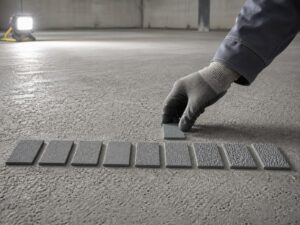
Texture runs from smooth, through a light and a moderate pitted finish, to a sand-broadcast heavy texture. A heavy texture raises daily cleaning effort, so it should be chosen against the cleaning frequency that area will actually get, not against the worst case. Where a very high slip resistance is needed, full coverage over the aggregate during the broadcast leaves only a small part of the grit exposed, which holds the slip resistance and cuts the cleaning load.
The same material covers seven groups of process environment. The grade changes with the temperature, not with the industry.
| Group | Environments |
|---|---|
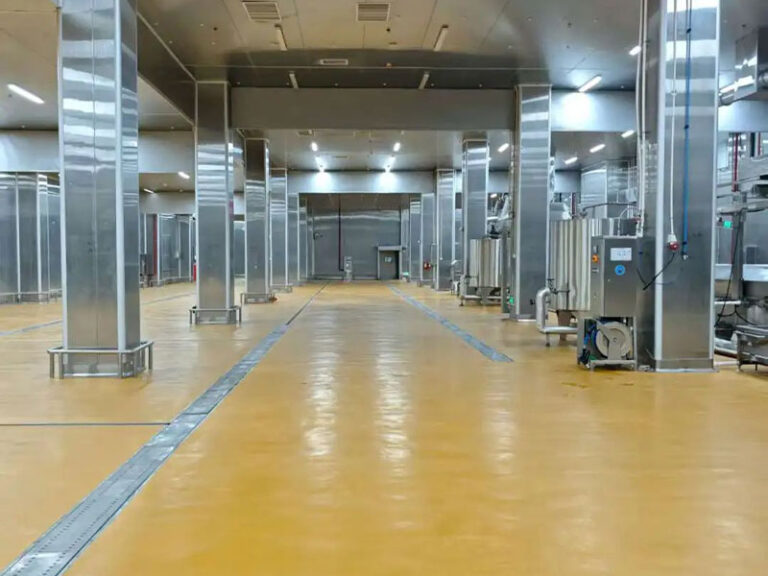
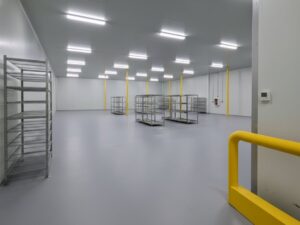
| Food preparation | Central and commercial kitchens, pre-prepared meals, airline and railway catering, clean dish areas |
| Meat, poultry and seafood | Slaughter lines, heat treatment areas, fish and freshwater product processing |
| Beverage, dairy and soy | Breweries and filling rooms, juice and mineral water lines, milk powder, tofu and soy milk |
| Pickles, sauces and condiments | Pickled vegetables, compound sauces, condiment brewing |
| Baking and pasta | Bread, cake, biscuit and pasta lines, breakfast food production |
| Cold chain | Cold stores, blast freezers, seafood and meat freezers, supermarket cold rooms |
| Pharmaceutical and chemical | Raw material workshops, cleanrooms, chemical storage and transport areas, battery plants, ESD-protected zones |
It depends on the thickness. Continuous service runs to 120 °C on a 9 mm build and 130 °C on a 12 mm build, with an occasional spill to 150 °C on the 12 mm only. The material itself softens above 150 °C, and a short thermal shock of 140 °C is within its rating.
A cooking line that reaches 100 °C needs 9 mm. Where the area also takes an occasional spill above 120 °C, or runs a flash freezer, specify 12 mm. A dry food area or a visiting corridor is served by 4 mm.
At 6 mm it takes light steam cleaning. Heavy steam cleaning needs 9 mm or more. The 4 mm build is not specified for steam.
A waterborne polyurethane mortar is a functional floor, and a slight colour shift in service is normal. It does not affect performance.
Twenty hours. The material stays workable for 15 to 20 minutes once mixed, and the finished build is left for 20 hours before it goes back into use.
Send the area, the peak temperature and the steam regime the floor will see, the chemicals it will meet and the load it has to carry. We will come back with the thickness grade, the surface texture and the pack quantities.
KAIDA PAINT® and JINYU PAINT® are brands of the same manufacturing group.
Epoxy resins, curing agents, pigments, fillers and solvents are sourced from established international chemical suppliers. Every incoming batch is inspected and released to production only after it passes the factory’s incoming-material check. Each batch record is filed so that a finished product can be traced back to the materials it was made from.
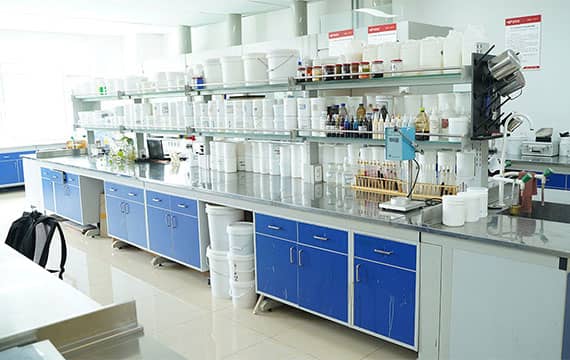
Formulations are developed and adjusted in the factory laboratory. Each production run is blended to a recorded formula with a fixed mixing ratio and mixing sequence, and the batch is checked for viscosity and gel time before it is released for filling. Formulations are tuned to specific performance targets – adhesion, chemical resistance, abrasion resistance or VOC content – rather than to a single generic specification.
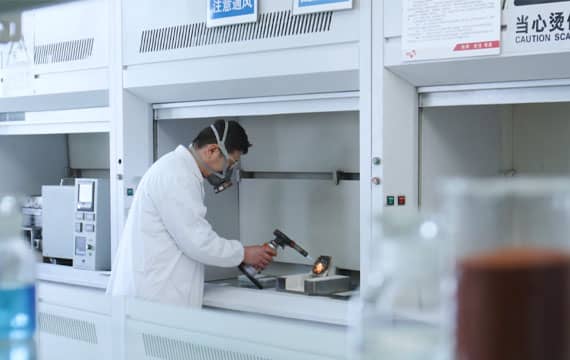
Each batch is tested before packing. Testing covers the properties that determine how the coating performs on site – adhesion, abrasion resistance, hardness, gloss level and solids content – against the product’s technical data sheet. Test reports are issued per batch and can be supplied with the shipment.
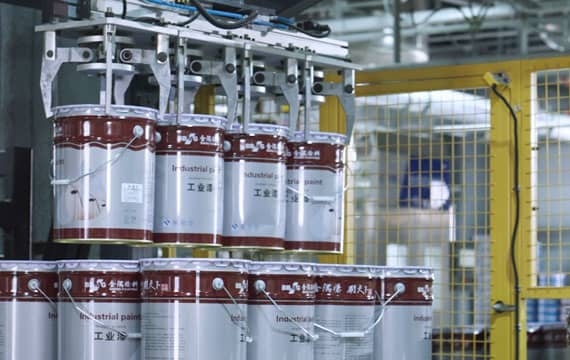
Production runs on the factory’s coating lines, where the coatings are mixed in large batches and filled into pails or drums. Every container is labeled with the product code, batch number and production date, and the label carries the KAIDA PAINT® brand, so a delivered container can always be matched back to its batch record.
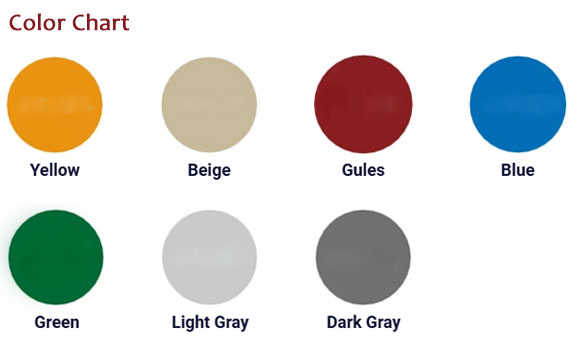
Color matching is carried out in-house against the factory’s standard color range. Where a project needs a specific shade, a color chip is prepared and submitted to the customer for written approval before production starts, so the delivered material matches what was approved.
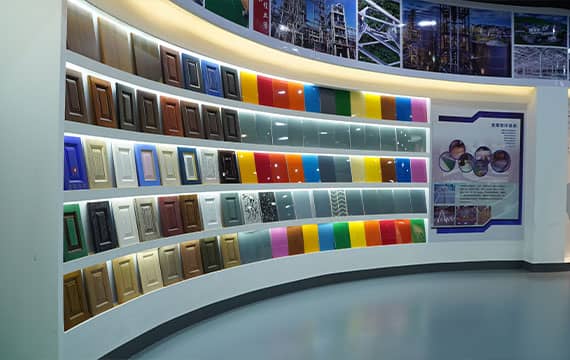
Water-based and solvent-free systems are formulated to meet the VOC limits that apply in the destination market. The VOC content of each product is stated in g/L on its technical data sheet, so a specifier can check compliance against the regulation for their own project rather than relying on a general claim.

Technical support covers system selection, substrate assessment, application guidance and fault diagnosis – before, during and after delivery. Where a project requires it, application is carried out by installers, and the team that advised on the specification stays involved during application.
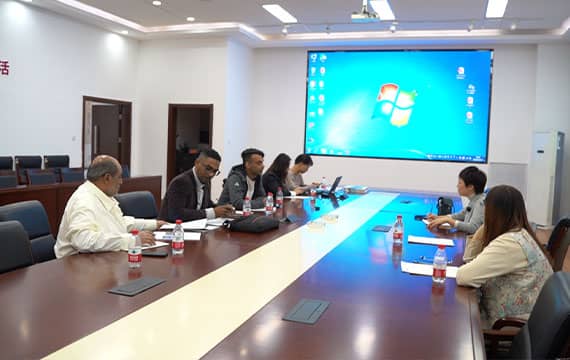
Orders are packed for export with the documents a project needs – technical data sheet, safety data sheet and batch test report. Packing and labeling are adjusted to the requirements of the destination market. Recent projects shipped from the factory include a 10,000 m² food plant floor in Venezuela, an industrial flooring project in Sweden, and a battery plant renovation in Hungary.

Kontak: Ibu Sabella Wei
Telepon: 86-022-83859963
Whatsapp: 15822925523