KAIDA PAINT® · Manufacturer & Installer

Chemical Resistant Flooring, Built for Acid and Solvent Duty

Four system families — vinyl ester, epoxy mortar, polyester FRP and ceramic brick — specified from the medium, made at our own plant in Hebei, and installed by our own crews or by applicators we train. 42 years of coating production behind them.

4

System families

1–20 mm

Build range

55%

HF ceiling

7–14 d

Stock dispatch
01

What we supply

Four families, one specification logic

We do not sell one resin and call it chemical resistant. Four families cover the range from a 1 mm sealer to a brick lining, and each is specified against the medium rather than sold by the square metre.
The four chemical resistant families, their build range and their declared ceiling
FamilyBuildDeclared ceilingSpecify it forDetail
Vinyl ester2–5 mm laminate
5–20 mm mortar
75% sulfuric acid as a laminate; 95% as a mortar; 55% HF as mortarBunded areas, tank farms, plating lines, sumps, immersion dutyVinyl ester systems
Mortero epoxi2–10 mm65% sulfuric acid; good on alkaliLoad-bearing floors with moderate acid, where impact matters more than immersionMortero epoxi
Polyester FRP2–5 mm75% sulfuric acid, quoted 3–5 yearsMedium duty where the budget sets the ceiling and replacement is plannedFRP flooring
Ceramic brickBrick lining on bedding99.8% acid resistance, 0.2% water absorption, −20 to +130 °CHot concentrated acid, abrasion, impact; the step above every resinAcid-resistant brick
Alongside these, our standard flooring line covers six chemistries — epoxy, polyurethane, cementitious urethane, polyaspartic, polyurea and MMA — for the areas around a chemical plant that are not themselves chemical duty: corridors, offices, warehouses and clean rooms.
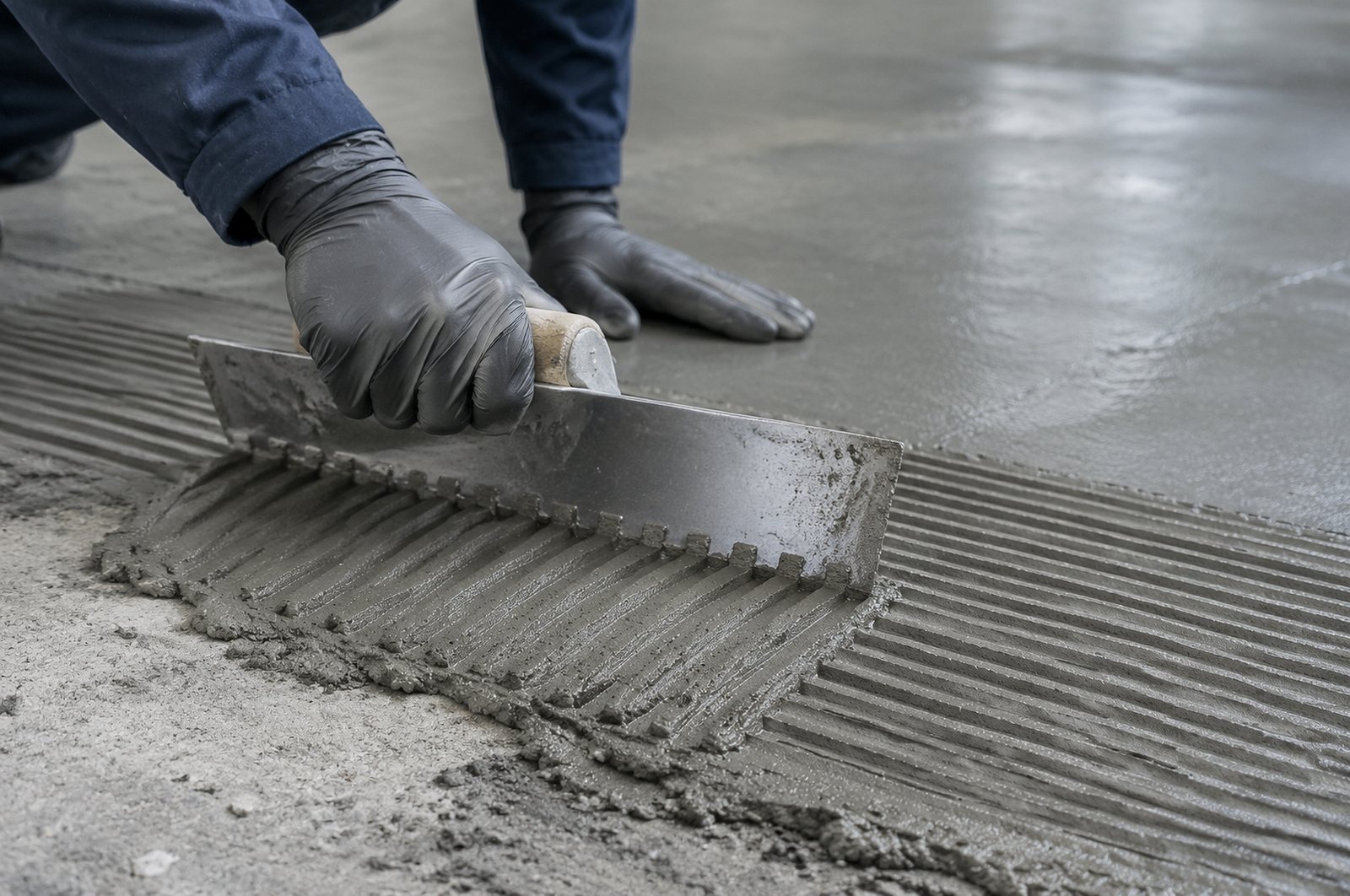
Applicator trowelling grey vinyl ester mortar to a notched bed on a prepared concrete floor
Illustrative
Vinyl ester mortar laid to a notched bed. The aggregate, not the film, is what holds 95% sulfuric acid.
One supplier for the bund, the tank lining, the aisle outside it and the brick under the reactor.
02
Where these systems go

The medium decides the sector

Chemical duty is not one condition. The same word covers a battery plant handling hydrofluoric-bearing electrolyte and a dairy washing with 2% caustic. Six sectors account for most of what we supply.

Chemical and petrochemical

Bunded tank farms, pump plinths, sumps and transfer areas. Sulfuric, hydrochloric and solvent spillage, often with thermal cycling.
Vinyl ester mortar · 5–20 mm

Electroplating and metal finishing

Pickling and rinse lines, where hydrochloric and sulfuric acid stand in the channel and chloride attacks the bond line.
Vinyl ester laminate + coved skirting

Battery and EV

Electrolyte handling and formation areas: fluoride-bearing salts, solvent carry-over, and a static-dissipative requirement in the same system.
Anti-static vinyl ester · copper foil earthing

Pharmaceutical and API

Solvent transfer, spill containment and washdown, where the cleaning sequence is as aggressive as the process medium.
Vinyl ester or novolac epoxy · 3–5 mm

Alimentación y bebidas

Caustic CIP at 70–80 °C, lactic and peracetic acid, with drains and coving that decide where bacteria collect.
Cementitious urethane or vinyl ester

Water and effluent treatment

Hypochlorite, ferric chloride and polymer make-down, where oxidisers destroy an epoxy that handles acid without difficulty.
Vinyl ester · oxidiser duty
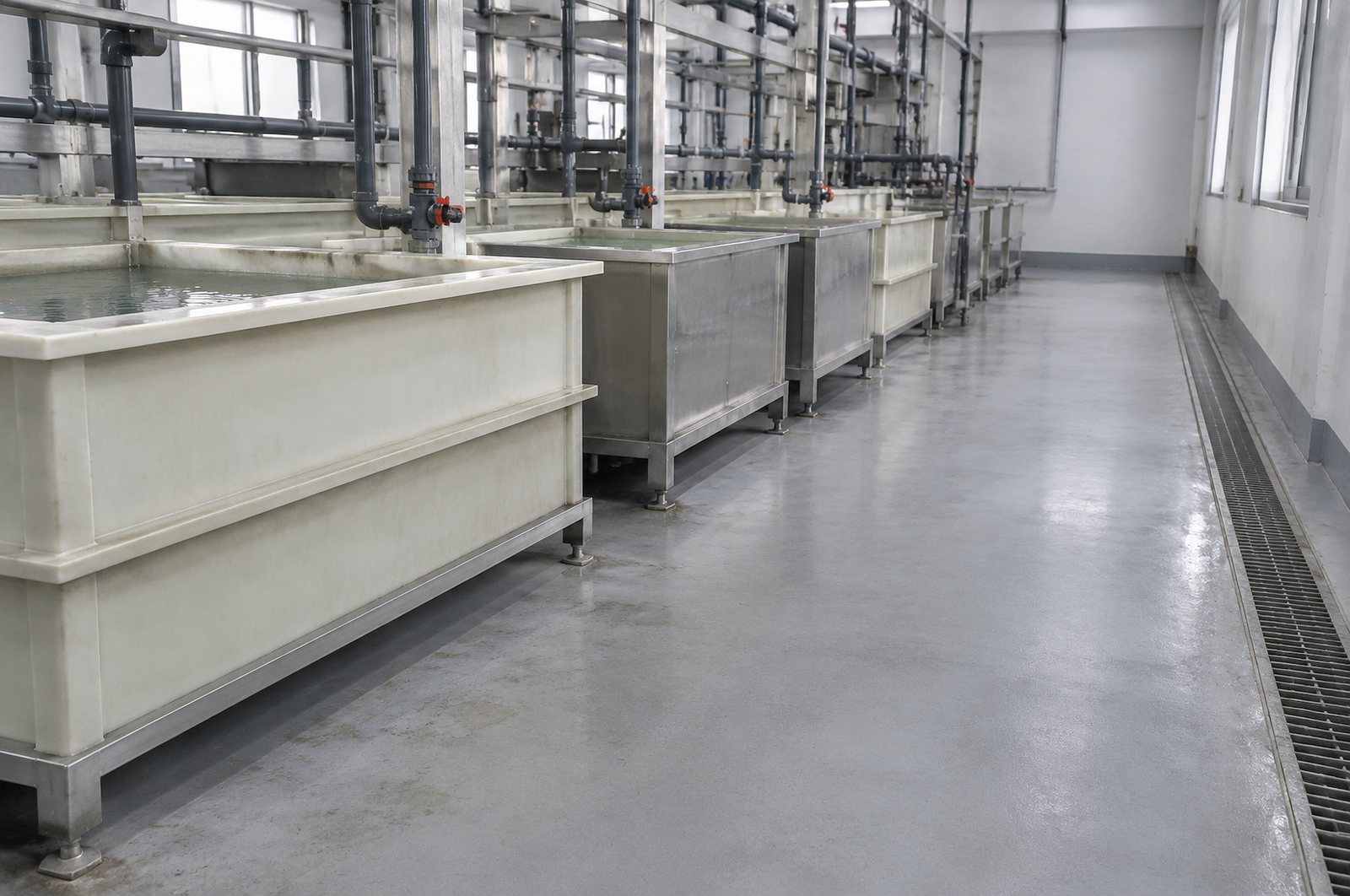
Acid-resistant resin floor along a pickling and plating line with a covered drainage channel
Illustrative
Pickling line: acid-resistant resin floor, coved skirting and a covered channel carrying washdown to the sump.
If your sector is not listed, the medium still decides the system — send the chemical and its concentration and we will answer on that basis.
03
How a project runs

From survey to signed handover

A chemical floor fails on the details decided before anyone opens a drum: substrate, moisture, falls, drains and joints. That is why the first two steps are engineering, not logistics.

01

Site assessment

Substrate strength, moisture, existing contamination, falls and drain positions, access and shutdown window.

02

Written specification

System, build thickness, and the detail at bunds, coves and penetrations — issued within 24 hours of the survey.

03

Material from stock

3,000+ tonnes held at the plant, dispatched in 7–14 days instead of the 30 typical of made-to-order supply.

04

Instalación

Our own crew mobilised from the plant, or your contractor supervised on site, or your team trained and signed off.

05

Testing and handover

Film thickness and pull-off adhesion measured, results and batch records issued as a documentation pack.

Three delivery models

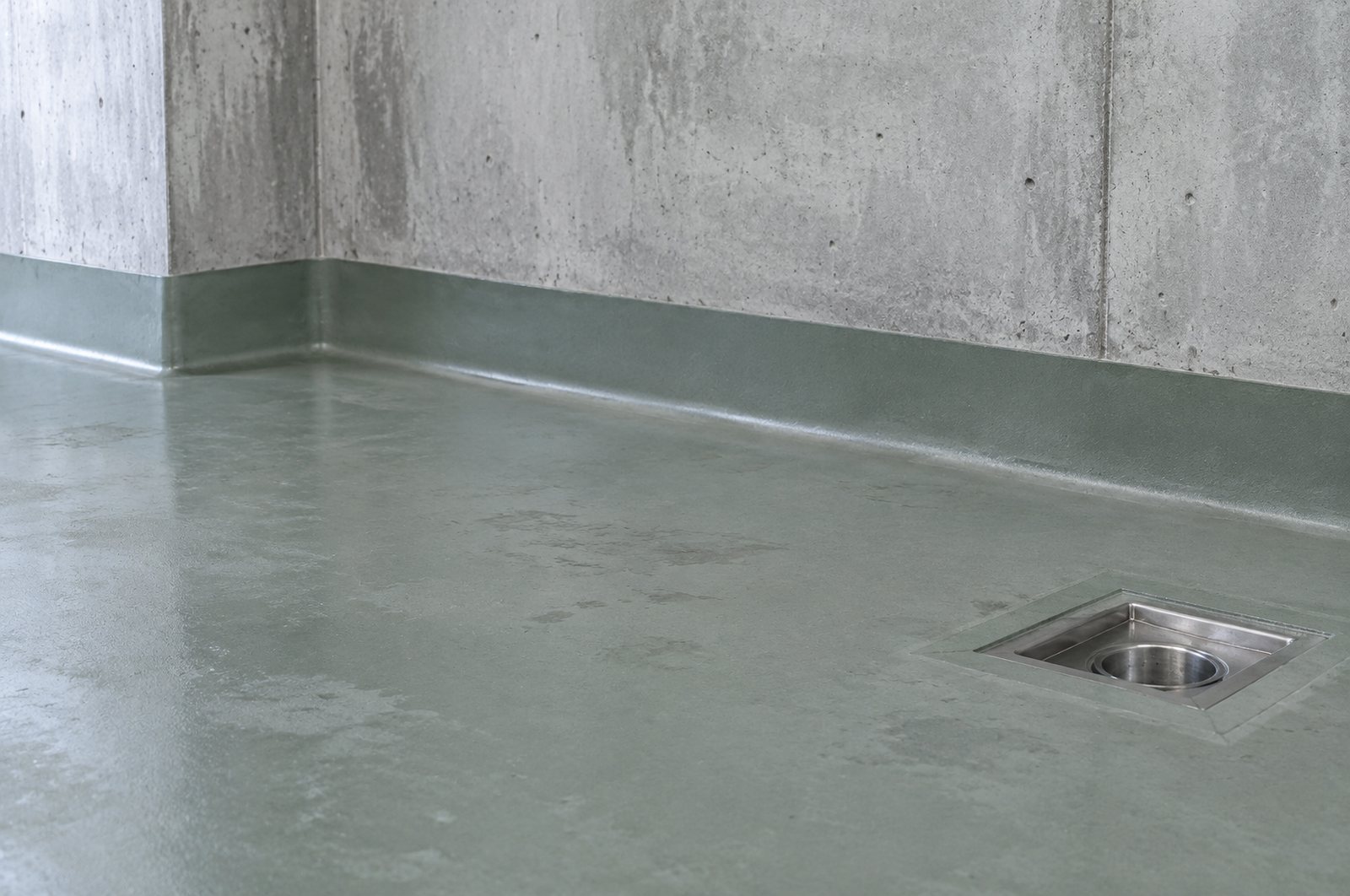
Radius cove at the floor to wall junction and a resin-dressed floor drain in a bunded area
Illustrative
What a handover inspection looks at: the cove radius and the drain surround, not the middle of the field.
04
The technical spine

What each system is declared against

Every figure below is the concentration a system is declared against after a 7-day immersion test at ambient temperature. It is a laboratory envelope, not a warranty of continuous service — and where no figure exists, we say so.
Medium, family and declared ceiling — the six that decide most specifications
MedioFamilyDeclared ceilingAbove that
Sulfuric acidVinyl ester75% laminate; 95% mortarCeramic brick; oleum moves to carbon brick
Hydrochloric acidVinyl ester35–40%Ceramic brick
Hydrofluoric acidVinyl ester mortar55% mortar; 25% in glass-reinforced coatingCarbon brick or PTFE — HF attacks silica in ceramic
Phosphoric acidVinyl ester80%Ceramic brick
Sodium hypochloriteVinyl esterNo published ceiling immersion testNot specified without a test
Solvents (aromatic, ketone, chlorinated)None by defaultImmersion test requiredLining, not a floor
WHERE WE STOP
Above 55% hydrofluoric acid, resin flooring stops. HF attacks the silica in ceramic brick and in the aggregate of a resin mortar, so the specification moves to carbon brick or a PTFE lining. We will tell you that rather than quote a system that fails in year two.
A deep technical treatment — the ASTM test set, temperature derating, the four claims to reject in a supplier’s resistance chart — sits in our article on chemical resistant flooring by medium, so this page stays about what we build.
05
Installed, not supplied

Four projects, and the problem each one solved

An area figure proves nothing on its own. What follows is the constraint that made each floor difficult — moisture, thermal shock, a deadline, static — and how the system answered it.

Hungría

Battery plant
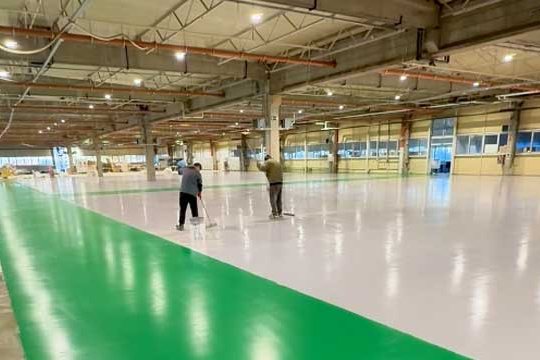
Floor grinding before rebuild in the battery plant hall
Polyurethane wear topcoat going down across the ESD zones
Grinding the old surface back to sound concrete / Polyurethane wear topcoat going down across the ESD zones
Zona
11,000 m², old floor removed and rebuilt
Sistema
Heavy-duty epoxy with polyurethane ultra-wear topcoat
Scope
Full removal of existing epoxy-quartz floor, substrate repair, new build
The constraint: stable electrostatic discharge protection across a live battery plant, plus dust control on a floor that had lost its surface, plus forklift traffic — and chemical exposure on top of all three.
Static discharge in that environment damages components rather than people, so the earthing has to hold for years, not for the handover test. Removing the old epoxy-quartz layer rather than coating over it is what made the ESD path continuous.

Venezuela

Seafood, cold chain
Ice on the cold-room floor before the rebuild
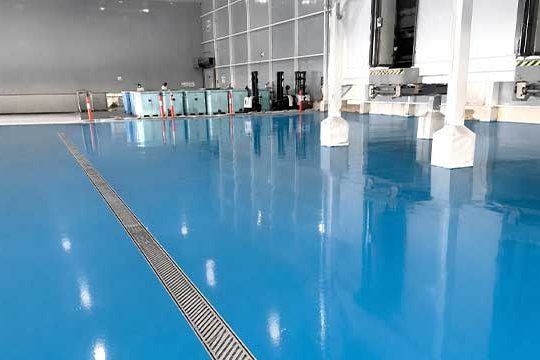
Finished blue polyurethane mortar floor after handover
Ice standing on the cold-room floor before the rebuild / Finished blue polyurethane mortar floor after handover
Zona
10,000 m², Maracaibo cold storage and shrimp plant
Sistema
Polyurethane mortar: moisture-tolerant primer, high-impact mortar body, slip-resistant topcoat
Scope
Material, supervision, coving training for the local crew, hygiene inspection
The constraint: substrate moisture measured at 27%, and a floor cycling between hot washdown and freezer temperature with ice standing on it.
Moisture was reduced and stabilised below 10% before the mortar went down, because a PU mortar over a damp slab delaminates regardless of how good the mortar is. The coving was trained on site: a seamless radius at the wall is what removes the joint where bacteria collect.

Suecia

Manufacturing
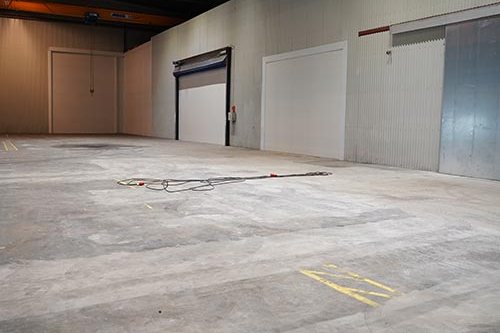
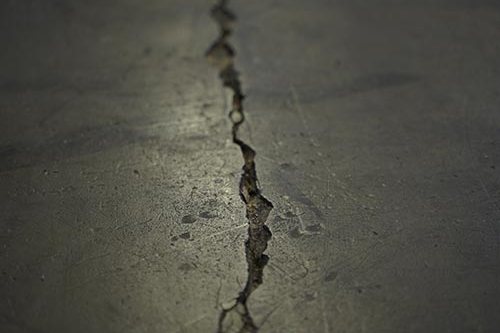
The cracked, dusty slab before work started
Crack repair and preparation before the epoxy build
Cracked, dusty slab in the warehouse before work started / Crack repair and preparation before the epoxy build
Zona
7,000 m² floor, within 17,500 m² of renovation
Sistema
High-build epoxy mid-coat with water-based polyurethane topcoat
Scope
7,000 m² floor + 6,150 m² roofing + 4,400 m² walls
The constraint: 17,500 m² of surfaces across floor, roof and walls, in 27 calendar days, on concrete that was cracked, dusty and uneven.
The floor could not be specified in isolation — the primer, mid-coat and exterior systems had to be compatible so one programme could run across all three surfaces. Substrate restoration came first: mechanical preparation and a high-penetration epoxy primer before any build went down.

Ruanda

Fish food processing
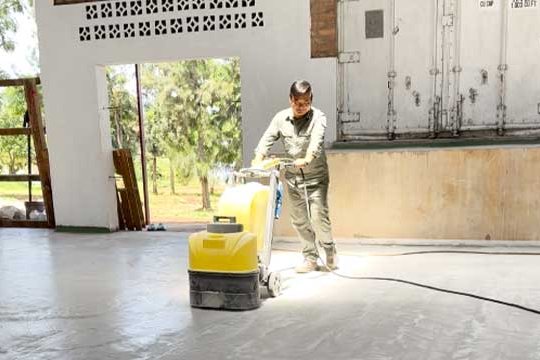
Diamond grinding the wet processing floor
Finished seamless polyurethane mortar, 1,000 m²
Diamond grinding the wet processing floor / Finished seamless polyurethane mortar, 1,000 m²
Zona
1,000 m², wet processing area
Sistema
Polyurethane mortar, anti-slip, seamless
Scope
System design, material supply, application and construction guidance
The constraint: a small plant with the same duty as a large one — continuous damp, frequent cleaning, thermal shock, and no local applicator experience with the system.
The scope was material, system design, written application instructions and construction guidance, with inspection at the end — the model most overseas distributors need at this size.

Scenario coverage, stated plainly

Battery and EV — electrolyte handling, ESD
Hungary · 11,000 m²
Food and beverage — cold chain, washdown, thermal shock
Venezuela · Rwanda
General manufacturing — heavy traffic, large-area renovation
Sweden · 7,000 m²
Chemical and petrochemical — bunded tank farms, acid spillage
Case available on request
Electroplating — pickling lines, chloride attack
Case available on request
Pharmaceutical and water treatment — solvents, oxidisers
Case available on request
Across these four projects and the other references on our installation page, 65,850 m² of flooring has been installed by our crews. Across our export markets, over 10,000,000 m² has been installed, with material references including Huawei, PetroChina and Sinopec.
We are not going to present a food plant as a chemical reference. Where we have no project at your medium, we will say so and show you the closest system instead — that is more useful than a logo wall. More domestic projects are listed in our China coating engineering portfolio.
06
Behind the systems

The plant, the laboratory, the paperwork

Chemistry is not bought in and relabelled. Resins are reacted, dispersed and filled on the same site the flooring crews are dispatched from.

Producción

Laboratory

Certification

Brand structure

KAIDA PAINT® is the export brand; JINYU PAINT is the manufacturer behind it and the producer of the material specified on this page. One plant, one laboratory, one set of batch records.
07
Before you ask

Commercial questions

Volume is agreed against the system and the colour rather than as one blanket figure, because a 20 mm mortar and a 3 mm coating consume very different quantities per square metre. Send the area and the medium and we will quote at that size.

7–14 days for standard systems held in stock, against the 30 days typical of made-to-order supply. 3,000+ tonnes is held at the plant for that reason.

Yes. Crews are mobilised from the plant for turnkey work, or we supervise your contractor, or we train your team and sign off the first project. All three models have been used on overseas projects, including Sweden, Hungary, Venezuela and Rwanda.

Yes. A trial batch in the exact colour and system is sent before the first production run, so adhesion and cure are tested on your substrate rather than ours.

Film thickness and pull-off adhesion results, batch records, and the system specification as built. That pack is what an auditor or a client’s engineer asks for later.

We will say it. Above 55% hydrofluoric acid, or continuous solvent immersion, the answer is a different class of lining and we will tell you that instead of quoting a system that fails.

08
Next step

Send your chemical list, get a system schedule
Six inputs are enough to name the family, the build and the detail at the bunds — and to tell you honestly if the duty sits outside what we make.
01
Medium and concentration, with pH for oxidisers
02
Surface temperature at the floor, not the tank
03
Splash, spillage or immersion
04
Area and bund layout
05
Substrate age, moisture and surface strength
06
Site country, and whether you install or we do
You get a written specification within 24 hours of the survey, and a system schedule with the build thickness and the joint detail before any material is quoted.
KAIDA PAINT® chemical resistant flooring systems are manufactured by JINYU PAINT and installed by our own crews or by trained applicators. Declared ceilings refer to 7-day immersion testing at ambient temperature and are not a warranty of continuous service at other conditions. The paired photographs in the case section are from the named projects. The three system photographs elsewhere on the page illustrate system type and are labelled as such.