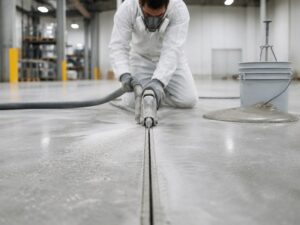
شركة متخصصة في تصنيع الطلاءات الصناعية ومقاول عالمي لحلول الأرضيات
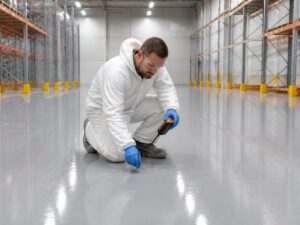
Epoxy floor coating is a resin floor system applied on site over prepared concrete, built in three layers: a primer that seals the slab and forms the bond, a mid-coat that adds thickness and levels the surface, and a top coat that provides the wear, grip and chemical resistance.
The same system can be delivered by three carriers — solvent-based, solvent-free و water-based — and the choice is set by the substrate and by what the building can tolerate during application, not by the finish you want.
Scope: indoor concrete floors at ambient temperature. Outdoor or UV-exposed areas need a polyurethane top coat; continuous sub-zero service needs a low-temperature system.
عرض 17–17 من أصل 17 نتيجة
| System family | What defines it | Typical build | Service life |
|---|---|---|---|
| Solvent-Free Epoxy Self-Leveling Floor Coating Series | No volatile carrier; placed thick and left to flow. The route for seamless, heavy-duty floors | 1–5 mm (adjustable) | 3–10 years |
| Solvent-Free Epoxy Roller/Trowel Floor Coating Series | Roller- or trowel-applied solvent-free build where self-leveling is not required | 0.3–1 mm | 3–5 years |
| Anti-Static Epoxy Floor Coating Series | A conductive path through every layer, from primer to surface, with a documented earth connection | 0.5–3 mm | 3–10 years |
| Epoxy Quartz Sand Flooring Series | Aggregate broadcast into the build coat for a hard, textured, slip-resistant surface | 3–10 mm | أكثر من 10 سنوات |
| Epoxy Terrazzo Floor Coating Series | Decorative aggregate surface — speckled or terrazzo appearance, with grip | 5–10 mm | أكثر من 15 عاماً |
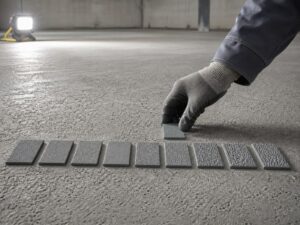
| Anti-Slip Epoxy Floor Coating Series | Texture is the specification: the surface is designed for wet or oily areas | 0.5–5 mm | 3–10 years |
| Water-Based Epoxy Floor Coating Series | Water replaces the solvent. Low odour and low VOC, for occupied buildings | 0.5–3 mm | 3–10 years |
| Epoxy-Polyurethane Hybrid Floor Coating Series | A polyurethane surface over an epoxy base, where UV stability or flexibility is needed at the surface | 0.5–3 mm | 5+ years |
Each part of the system is a separate product range. Follow the links for the products in each one.
| المعلمة | Requirement | How it is verified |
|---|---|---|
| Substrate hardness | Concrete grade ≥ C20 | Compressive strength test on the slab |
| Ambient temperature | 5–30 °C (41–86 °F) | Tolerance varies by product |
| Surface roughness | Peak-to-peak wave distance below 1 mm | Surface profile assessment (see the ICRI CSP guide) |
| Top concrete layer thickness | [TO BE COMPLETED — minimum slab thickness] | Slab survey; affects load-bearing capacity |
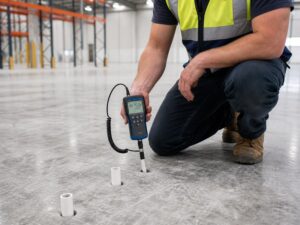
| Substrate moisture content | ≤ 8% | ASTM D4263 |
| Ambient air humidity | 30–85% | Hygrometer |
| التهوية | Moderate — two-part epoxy releases heat and moisture as it cures | Site assessment |
| Cleanliness | Dust-free, no loose cement particles | Visual inspection before priming |
Industrial floors — the systems in this range are specified for:
Commercial floors — where appearance and indoor air quality matter as much as load:
Three details decide the specification: the slab (age, strength, moisture reading), the traffic (foot, pallet truck, forklift, point loads) and what the floor has to resist (chemicals, thermal shock, static, slip). Send us those three and we will tell you which system family applies, what build thickness it needs and which carrier suits the building.
We offer a range of epoxy floor coatings for concrete that are specifically formulated to provide a durable, long-lasting finish that resists stains, chemicals, and moisture
Yes, you can apply epoxy floor coating over tile or wood, but it requires surface preparation, including sanding or priming, to ensure strong adhesion
Service life is set by the system you specify and by the traffic the floor carries, not by epoxy as a material. Published figures across our range run from 3 years for the lightest builds to 15+ years for heavy-duty constructions, with a general-purpose industrial floor typically giving 5–8 years before recoating. Substrate preparation and moisture control decide whether the rated figure is actually reached.
Coating cost is driven by the system you specify, not by floor area alone: the family, the build thickness, the substrate preparation and the site conditions all move it. Send us the floor area, the slab condition and the loads the floor will carry, and we will quote the system.
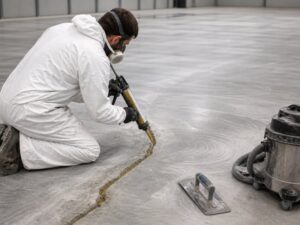
Epoxy floor coating is installed by trained applicators. Substrate preparation, priming, mixing and placing need equipment and experience, and most failures trace back to that stage rather than to the material. We supply the systems to contractors and installers — contact us and we will discuss your project.
Build thickness is set by the system family. Across our range the published builds run from 0.3 mm for a thin sealed coating to 10 mm for a heavy-duty construction, with a general-purpose floor typically 0.5–5 mm. Thickness is specified from the load and the service conditions, not from the floor area.
Resistance depends on the resin system and the exposure, so it is specified per chemical rather than claimed in general. Our water-based system is documented against 30% sulfuric acid, 40% sodium hydroxide, 120# gasoline and lubricating oil over 7 days without change. For concentrated acids, hot liquids or continuously wet chemical service, give us the chemical, its concentration and the temperature and we will specify the system.
Uncured epoxy resin and hardener are skin and eye irritants, so mixing and application require gloves, eye protection and ventilation. Once fully cured — after the hardening period stated on the TDS — the film is inert and suitable for normal occupancy, and for food-processing areas where the specified system is rated for them. Always work from the product SDS for handling.
Only over terrazzo that is sound, fully bonded, free of wax and polish, and abraded to give a profile the primer can grip. Wax, polish and sealers are the usual reason adhesion fails on an existing terrazzo floor. Test adhesion on a small area before committing, and confirm slab moisture is at or below 8%.
KAIDA PAINT® and JINYU PAINT® are brands of the same manufacturing group.
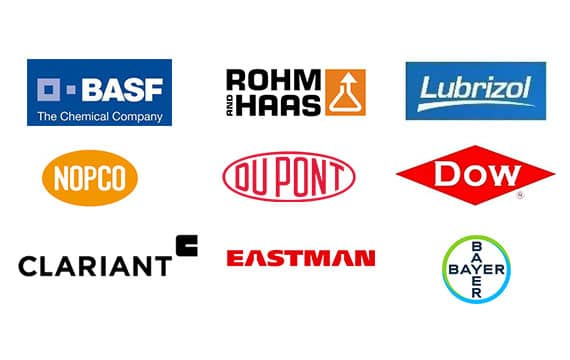
Epoxy resins, curing agents, pigments, fillers and solvents are sourced from established international chemical suppliers. Every incoming batch is inspected and released to production only after it passes the factory’s incoming-material check. Each batch record is filed so that a finished product can be traced back to the materials it was made from.
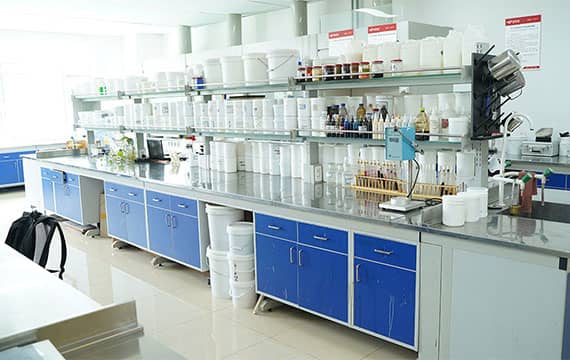
Formulations are developed and adjusted in the factory laboratory. Each production run is blended to a recorded formula with a fixed mixing ratio and mixing sequence, and the batch is checked for viscosity and gel time before it is released for filling. Formulations are tuned to specific performance targets – adhesion, chemical resistance, abrasion resistance or VOC content – rather than to a single generic specification.
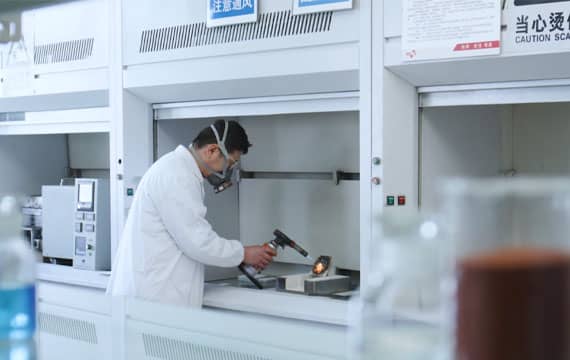
Each batch is tested before packing. Testing covers the properties that determine how the coating performs on site – adhesion, abrasion resistance, hardness, gloss level and solids content – against the product’s technical data sheet. Test reports are issued per batch and can be supplied with the shipment.
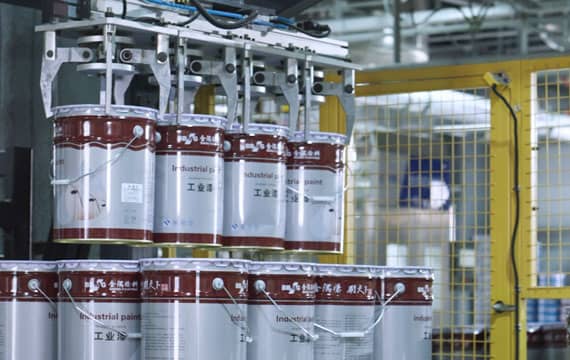
Production runs on the factory’s coating lines, where the coatings are mixed in large batches and filled into pails or drums. Every container is labeled with the product code, batch number and production date, and the label carries the KAIDA PAINT® brand, so a delivered container can always be matched back to its batch record.
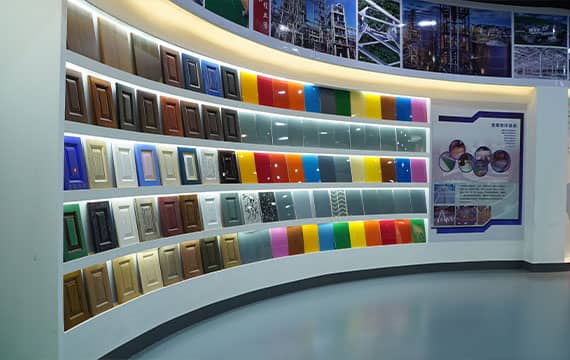
Color matching is carried out in-house against the factory’s standard color range. Where a project needs a specific shade, a color chip is prepared and submitted to the customer for written approval before production starts, so the delivered material matches what was approved.
Water-based and solvent-free systems are formulated to meet the VOC limits that apply in the destination market. The VOC content of each product is stated in g/L on its technical data sheet, so a specifier can check compliance against the regulation for their own project rather than relying on a general claim.

Technical support covers system selection, substrate assessment, application guidance and fault diagnosis – before, during and after delivery. Where a project requires it, application is carried out by installers, and the team that advised on the specification stays involved during application.
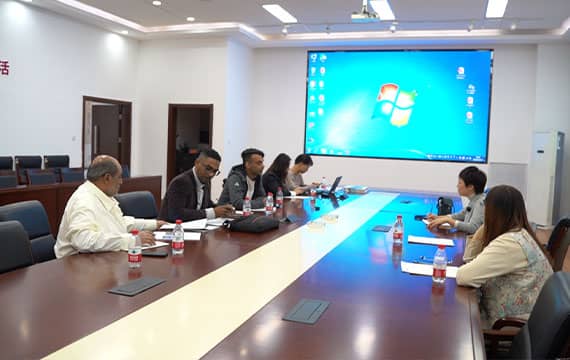
Orders are packed for export with the documents a project needs – technical data sheet, safety data sheet and batch test report. Packing and labeling are adjusted to the requirements of the destination market. Recent projects shipped from the factory include a 10,000 m² food plant floor in Venezuela, an industrial flooring project in Sweden, and a battery plant renovation in Hungary.

الاتصال بـ السيدة سابيلا وي
الهاتف: 86-022-022-83859963
واتساب 15822925523