7 خطوات من الخبراء لمنع أضرار الصدمات الحرارية في أرضيات تجهيز الأغذية
من الأفضل منع الضرر الناتج عن الصدمات الحرارية في أرضيات تجهيز الأغذية من خلال تحديد نظام يوريتان أسمنتي سميك وغير ملحوم (خرسانة يوريتان) وتركيبه بشكل صحيح، والذي يتناسب مع الحركة الحرارية للبلاطة الخرسانية الأساسية. تتضمن الإستراتيجية الأكثر فاعلية اختيار مادة عالية الأداء مثل أسمنت البولي يوريثان، وضمان الإعداد الدقيق للركيزة الأساسية، وتفصيل المناطق الحرجة مثل المصارف والوصلات للحفاظ على ختم قوي ومتجانس. هذا النهج الشامل ضروري لتحقيق نظام أرضيات متين وصحي يتحمل التدوير الحراري المستمر والظروف القاسية لمناطق الغسيل اليومية.
1. لماذا تعتبر الصدمة الحرارية السبب الرئيسي لفشل الأرضيات في مصانع الأغذية؟
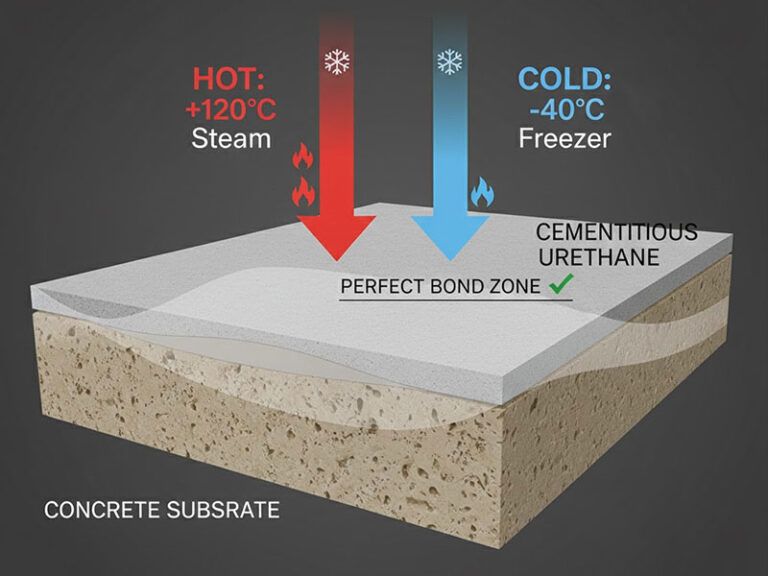
تحدث الصدمة الحرارية عندما تتسبب التقلبات السريعة والشديدة في درجات الحرارة في حدوث معدلات تمدد متباينة بين طلاء الأرضية والركيزة الخرسانية. الطلاءات القياسية مثل الإيبوكسيات الرقيقة ذات الأغشية الرقيقة لها معامل تمدد حراري مختلف (أ) مقارنة بالخرسانة. عندما يتم تنظيف الأرضية الباردة (على سبيل المثال، 4 درجات مئوية في المجمد) بسرعة باستخدام بخار 95 درجة مئوية، يتمدد الإيبوكسي الصلب بسرعة بينما تتفاعل الخرسانة ببطء. يخلق هذا التباين إجهاد شد وقص مكثف عند خط الرابطة، مما يؤدي إلى الشكلين الأكثر شيوعًا للفشل: تفريغ الأرضية (التقشير) وتشقق الأرضية.
- شرح المبدأ: يتناسب الإجهاد (σ) الناتج عن التغير في درجة الحرارة (ΔT) مع الفرق في معامل التمدد الحراري للمادة ومعاملها المرن (E). لا يمكن للمواد الصلبة مثل الإيبوكسي القياسي امتصاص هذا الإجهاد.
- مصدر الاقتباس: وفقًا لوزارة الزراعة الأمريكية ومختلف معايير معالجة الأغذية والمشروبات، يجب أن تتحمل الأرضيات إجراءات التنظيف اليومية، والتي غالبًا ما تتضمن بخارًا أو ماءً ساخنًا أعلى بكثير من 82 درجة مئوية (180 درجة فهرنهايت)، مما يجعل المقاومة الحرارية العالية غير قابلة للتفاوض.
2. اختيار المادة المناسبة: لماذا خرسانة اليوريثان هي المعيار الذهبي
اليوريثان الأسمنتي (يُعرف أيضًا باسم أسمنت البولي يوريثان أو Ucrete) يوفر أعلى مقاومة للصدمات الحرارية بين خيارات الأرضيات الراتنجية لأن معامل التمدد الحراري الخاص به يتطابق بشكل وثيق مع معامل التمدد الحراري للخرسانة. ويسمح هذا التشابه للطلاء والبلاطة بالتمدد والتقلص معاً بشكل متناغم، مما يقلل بشكل كبير من الإجهاد عند خط الترابط ويزيل فعلياً خطر تشقق الأرضية.
مقارنة خرسانة اليوريثان مقابل الإيبوكسي عالي الحرارة
في حين أن بعض أنظمة الإيبوكسي ذات درجات الحرارة العالية تقدم أداءً محسنًا مقارنةً بالإيبوكسيات التقليدية، إلا أنها لا تستطيع عمومًا أن تضاهي متانة الأسمنت البولي يوريثان في بيئات التدوير الحراري الشديد والمستمر.
| الميزة | اليوريثان الأسمنتي | إيبوكسي قياسي | إيبوكسي عالي الحرارة |
| مقاومة الصدمات الحرارية | ممتاز (مصمم للتعرض من 40-40 درجة مئوية إلى 120 درجة مئوية) | ضعيف (عرضة للفشل فوق 65 درجة مئوية) | معقول إلى جيد (تركيبة محسنة، ولكن غالبًا ما تكون أكثر صلابة من أسمنت البولي يوريثان) |
| السُمك | عالية (عادةً من 6 مم إلى 9 مم) | منخفض (عادةً من 2 مم إلى 4 مم) | متوسطة (عادةً من 4 مم إلى 6 مم) |
| مطابقة التوسعة للخرسانة | مرتفع جداً (مطابق تماماً) | منخفضة | معتدل |
| الاستخدام الموصى به | مناطق الغسيل، والمجمدات، والأفران، ومنع تلف أرضية مصنع الأغذية | إنتاج جاف، حركة مرور خفيفة | المناطق ذات الماء الساخن الدوري، ولكن ليس البخار |
3. التحضير الأساسي للركيزة من أجل رابطة موثوقة
من المستحيل الحصول على نظام أرضيات متين ومقاوم للصدمات الحرارية دون إعداد الركيزة الخرسانية بشكل صحيح، حيث أن فشل الالتصاق هو السبب الجذري لمعظم حالات فشل الأرضيات. والهدف من ذلك هو تحقيق شكل مناسب للسطح الخرساني (CSP) والتخفيف من مشاكل الرطوبة المحتملة.
- المشكلة ستمنع الملوثات المتبقية، أو التلاشي السطحي (طبقة ضعيفة من عجينة الأسمنت)، أو ارتفاع معدل انتقال بخار الرطوبة (MVT) من تكوين رابطة كيميائية قوية، مما يؤدي إلى تشقق الأرضية.
- الحل (خطوة بخطوة):
- التآكل الميكانيكي: يجب إعداد الخرسانة ميكانيكيًا، عادةً عن طريق السفع بالخرسانة أو الطحن بالماس الثقيل لتحقيق شكل CSP-3 إلى CSP-5 وفقًا لمعايير المعهد الدولي لإصلاح الخرسانة (ICRI).
- اختبار الرطوبة: قبل التطبيق، يجب اختبار البلاطة قبل الاستخدام. تتطلب معظم المواد الراتنجية أن تكون الرطوبة النسبية (RH) داخل الخرسانة أقل من 80%. إذا كانت الرطوبة النسبية عالية، يجب وضع حاجز بخار رطوبة مخصص أو نظام تخفيف الرطوبة.
- الإصلاح: يجب إصلاح جميع التشققات والتشققات الموجودة بالأرضية باستخدام ملاط إصلاح الإيبوكسي أو البوليمر قبل تطبيق الطلاء الرئيسي.
4. إدارة المناطق الحرجة ذات الضغط العالي: الوصلات والمصارف
تعتبر نقاط الإنهاء الحرجة وذات الازدحام الشديد، وتحديداً فواصل التمدد ومصارف الأرضيات، أكثر المواقع التي يحدث فيها عطل في الأرضيات ويجب تفصيلها بشكل صحيح لتثبيت الأرضيات غير الملحومة.
لماذا يمنع القفل تشقق الأرضية عند المصارف
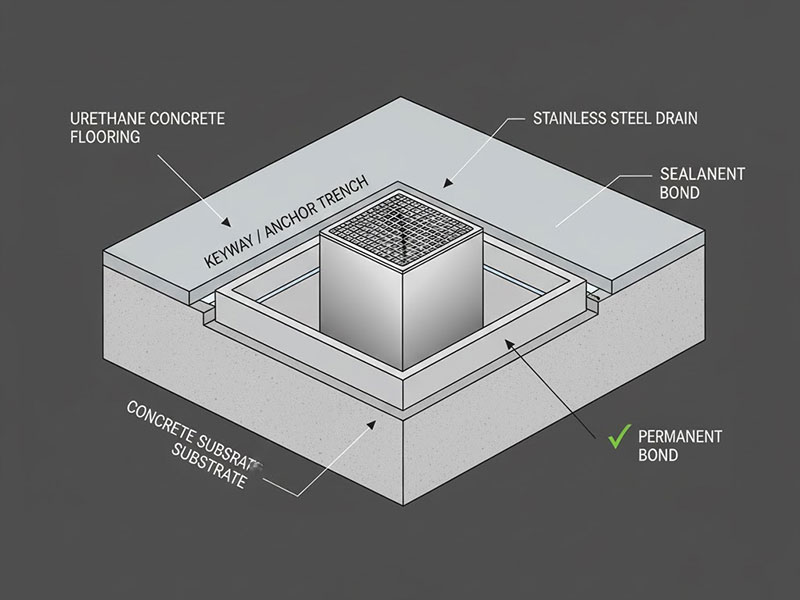
لمنع حافة الأرضيات الراتنجية من الرفع أو التقويض عن طريق التنظيف العنيف، يلزم وجود مرساة ميكانيكية حول المصارف والخنادق المحيطة.
- التنفيذ: يجب أن يقطع المقاول خندقًا صغيرًا أو أخدودًا صغيرًا (ممر أو خندق تثبيت) حول محيط المصرف بالكامل. يجب أن يكون أرضيات خرسانية من اليوريثان ثم يتم سكب المادة في هذا الممر الرئيسي، مما يؤدي إلى قفل الطلاء بفعالية ومنع الحركة الجانبية الناجمة عن الإجهاد الحراري.
- قياسي: يجب ألا يقل عمق مجرى المفتاح عن 6 مم (0.25 بوصة)، بما يتناسب مع سُمك نظام الأرضية.
[رسم تخطيطي لتفاصيل خندق التثبيت بمفتاح حول مصرف أرضي لمنع تعطل الأرضية].
5. سماكة التطبيق: العامل الحاسم في المتانة
السُمك المطبق لـ نظام اليوريثان الأسمنتي الأسمنتي يرتبط مباشرةً بقدرتها على تحمل الإجهاد الحراري والصدمات الشديدة في بيئات الأرضيات الصناعية. يعمل التطبيق الأكثر سمكاً كعازل فائق، مما يقلل من سرعة وشدة انتقال الحرارة إلى البلاطة الخرسانية الموجودة تحتها.
- توصية قياسية: بالنسبة للمناطق ذات التنظيف الخفيف إلى المعتدل، عادةً ما يكون سمك 6 مم (1/4 بوصة) مقبولاً.
- ركوب الدراجات الحرارية القصوى: بالنسبة للمناطق ذات الحرارة العالية، مثل مناطق التنظيف المباشر بالبخار، ومناطق الغلايات ومحطات الطهي، يوصى بشدة باستخدام سمك 9 مم (3/8 بوصة) أو حتى 12 مم لتوفير أقصى قدر من العزل والمرونة ضد التدوير الحراري.
6. الصيانة وأفضل الممارسات التشغيلية
في حين أن اختيار المواد هو المفتاح، فإن تقليل معدل التغير في درجة الحرارة أثناء العمليات اليومية يحمي نظام الأرضيات غير الملحومة من الإجهاد الحراري على المدى الطويل.
- تغيرات تدريجية في درجة الحرارة: إذا أمكن، قم بتنفيذ فترة تبريد قبل بدء الغسيل بدرجة حرارة عالية. على سبيل المثال، اترك منطقة الإنتاج الساخنة لتبرد بشكل طبيعي لمدة 10-15 دقيقة قبل إدخال مياه الغسيل.
- التحكم في درجة حرارة التنظيف: قم بمعايرة معدات التنظيف لتجنب استخدام بخار أو ماء أعلى من الحد المحدد من الشركة المصنعة لنظام الأسمنت متعدد اليوريثان (عادةً 100 درجة مئوية -120 درجة مئوية).
- تجنب البقع الساخنة الموضعية: تدريب العاملين على تجنب توجيه البخار عالي الضغط والحرارة العالية مباشرةً على بقعة واحدة على الأرض لفترات طويلة، حيث يمكن أن يتسبب ذلك في إجهاد حراري موضعي وفشل مبكر للأرضية.
7. ضمان الامتثال التنظيمي: إدارة الغذاء والدواء الأمريكية والأرضيات الصحية
يعد اختيار نظام مقاوم للصدمات الحرارية شرطًا أساسيًا أيضًا للحفاظ على نظام أرضيات متوافق حقًا مع إدارة الغذاء والدواء الأمريكية وتلبية معايير سلامة الأغذية الهامة.
- المتطلبات الصحية: نظرًا لأن الأرضيات الخرسانية المصنوعة من اليوريثان يتم تطبيقها بسلاسة وتتحمل التنظيف القوي اللازم للقضاء على مسببات الأمراض، فإنها تمنع التشققات والشقوق والتشققات التي تتسبب فيها البكتيريا (مثل الليستيريا و السالمونيلا) يمكن أن تأوي. يؤدي تفريغ الأرضية إلى خلق جيوب لا يمكن الوصول إليها، مما يجعل المنشأة غير متوافقة.
- مرجع السلطة: تتطلب معايير إدارة الغذاء والدواء الأمريكية والمبادرة العالمية لسلامة الأغذية ضمنيًا أسطحًا غير مسامية ومتينة وسهلة التنظيف، مما يستلزم مباشرةً طلاءً ذا مقاومة كيميائية وحرارية عالية مثل أسمنت البولي يوريثان.
بيان مرجعي وخبرة موثوق به
كتب هذه المقالة أخصائي محتوى ذو خبرة في الأرضيات الصناعية، متخصص في بيئات معالجة الأغذية والمشروبات. تستند التوصيات إلى معايير المعهد الدولي لإصلاح الخرسانة ICRI (المعهد الدولي لإصلاح الخرسانة) وبيانات علم المواد الخاصة بالإجهاد الحراري على طلاءات البوليمر.
المؤلف: [جيسون زانغ، كبير استشاريي الأرضيات الصناعية]
تاريخ آخر تحديث ديسمبر 2025
بيان بمزايا العلامة التجارية KAIDA PAINT
شركة KAIDA PAINT هي شركة رائدة في مجال تصنيع حلول الأرضيات الصناعية عالية الأداء، المصممة خصيصًا لتلبية المتطلبات القصوى لقطاع معالجة الأغذية والمشروبات. صُممت أنظمة أرضيات اليوريثان الخرسانية الرائدة لدينا، المصممة بتقنية أسمنت البولي يوريثان المتقدمة، لتحمل عمليات الغسيل القوية في درجات الحرارة العالية والدراجات الحرارية الشديدة - وهي الأسباب الرئيسية لتشقق الأرضيات. وباعتبارنا شركة تصنيع موثوق بها، فإننا نقدم أنظمة مثبتة تضمن حصول منشأتك على أرضيات سلسة حقاً وأرضيات متوافقة مع إدارة الغذاء والدواء الأمريكية، مما يقلل من مخاطر تعطل الأرضيات ويزيد من وقت التشغيل. اتصل بمقاول طلاء KAIDA اليوم للحصول على استشارة بشأن مشروع أرضيات معالجة الأغذية الخاص بك.


 English
 Spanish
 Portuguese
 Arabic
 French
 Italian
 Russian
 Indonesian
 Swedish